

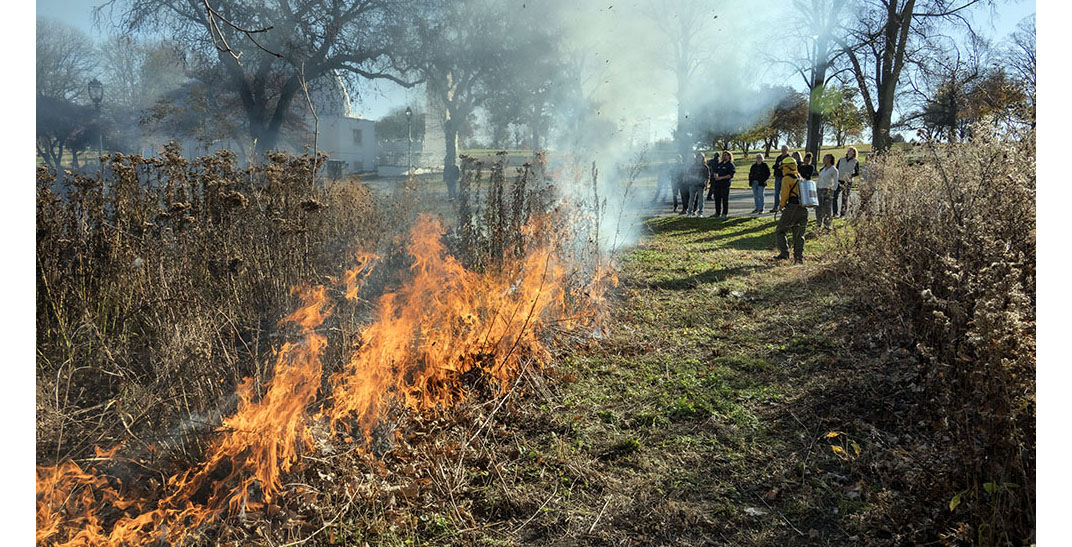
The Urban Ecology Center blazes the way with its burn school!
November 23, 2026 | Topics: Stories
By Natalie Pierson
With an introduction and photography by Eddee Daniel
Introduction
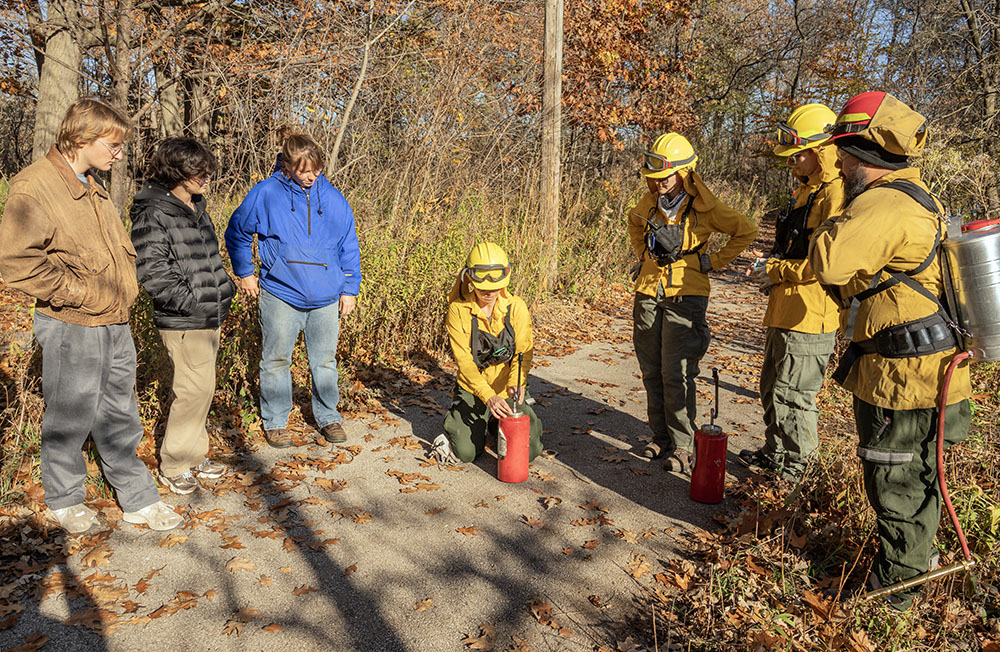
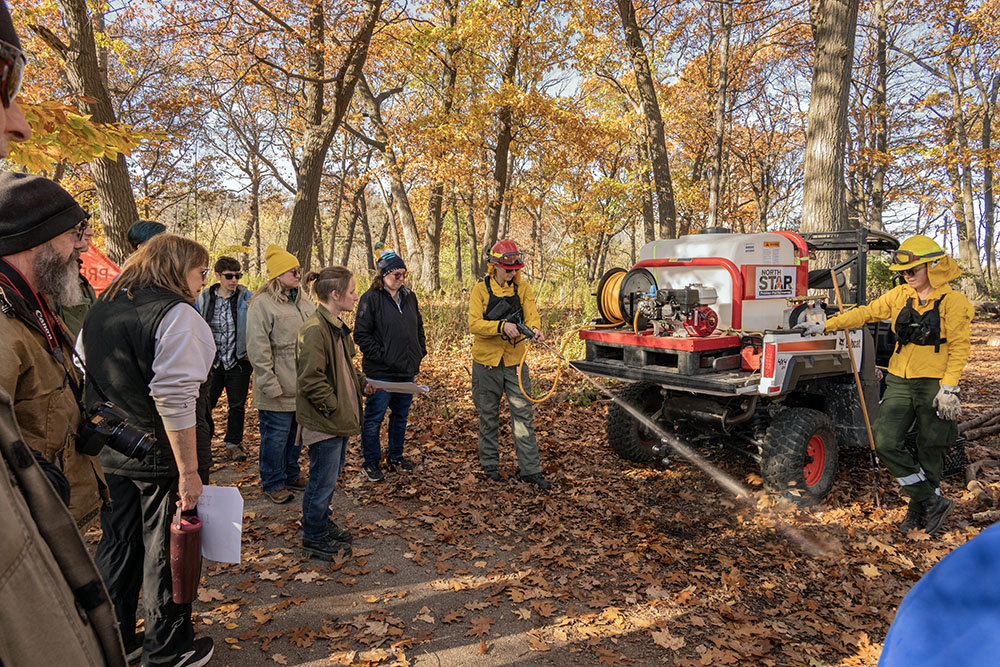
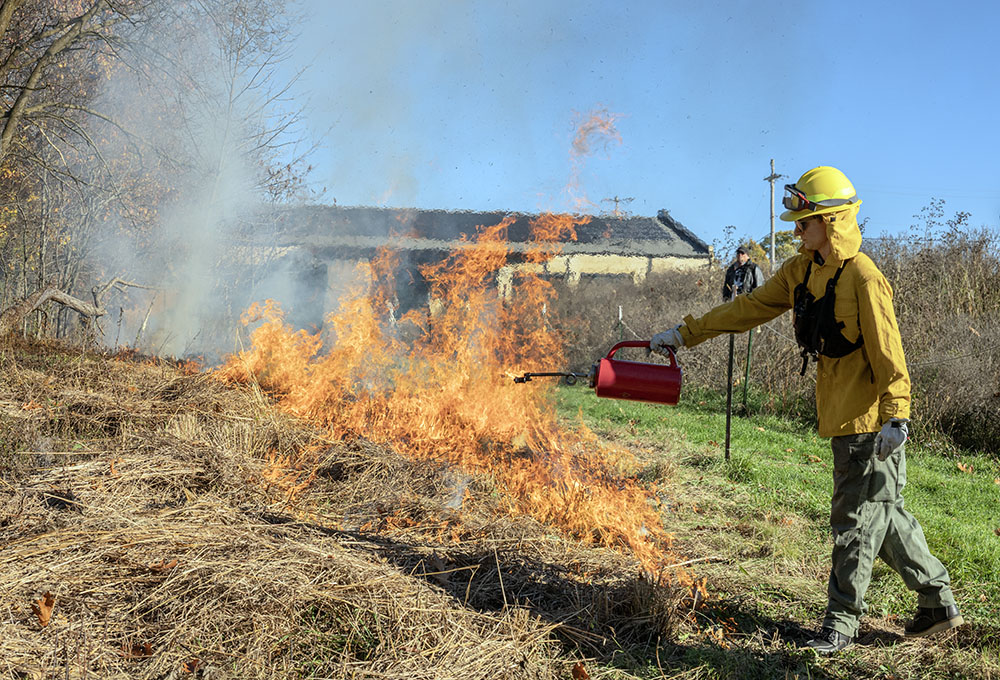
The images that accompany this story are from two workshop sessions hosted by the Urban Ecology Center. The first was at Washington Park in fall of 2025 and the second in Riverside Park in fall of 2026 (They are indicated in the captions as WP and RP). As prescribed burns go they were both relatively small, being primarily for educational purposes. What made them especially attractive to me was the presence of the workshop participants as spectators. Every prescribed burn I’ve witnessed has been conducted with an emphasis on safety, which is why they are also referred to as “controlled burns.” Being able to control the fire is a matter of education and practice. I am delighted to be able to present this aspect of burns, so eloquently described by Natalie.
~Eddee
The Urban Ecology Center blazes the way with its burn school!
Prescribed burns are an essential part of managing many natural communities in Wisconsin; prairies, oak openings, oak woodlands and even wetlands have all evolved with fire. The land has experienced fire for hundreds if not thousands of years. Lightning started some fires, but largely it has been people caring for the land that have set fires. When European settlement displaced indigenous tribes, traditions and knowledge were lost and fires were largely suppressed. Wisconsin is no exception and the indigenous communities’ dominance on the land diminished. Over the last few decades, land managers have strived to incorporate this essential stewardship practice with fire-dependent habitats.
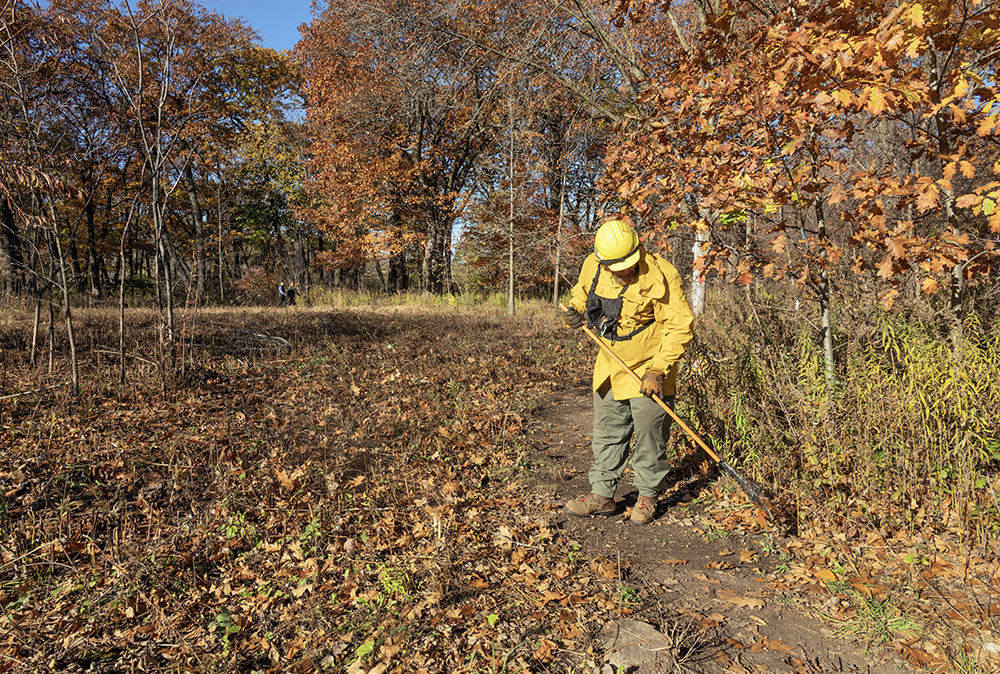
Urban Ecology Center land managers are among them. We conduct prescribed burns in the heart of the city of Milwaukee! Some key aspects to consider ahead of any burn, but especially in a city, are wind speed, wind direction, temperature, and relative humidity. Too much or too little of any component may make the day ineffective or result in out-of-control conditions. This is why the word ‘prescribed’ is attached to setting fire to the land. All these components need to be within the ‘prescription window’ to safely and effectively burn, which is decided by the burn boss. Smoke management is critical in an urban setting. To keep the public and firefighters on the ground safe, minimum mixing height and transport wind speed are established to ensure necessary lift plus movement of particulates, so that they go up and disperse quickly.
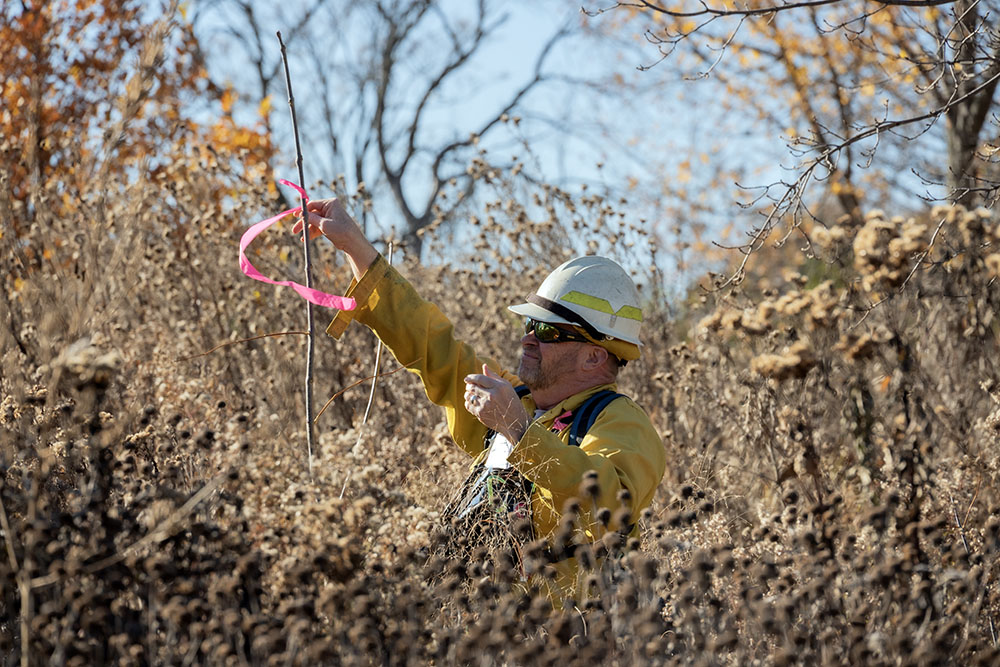
Fire has numerous benefits. Prairie plants need all the sun they can get and fires keep small, fast-growing trees from shading out keystone plant species. Did you know, some prairie plants such as the compass plant, can live to be over 100 years old? Talk about some deep roots! Prairie plants thrive with fire because their roots can withstand low intensity surface fires compared to many non-native, shallow-rooted plants that have degraded our natural areas.
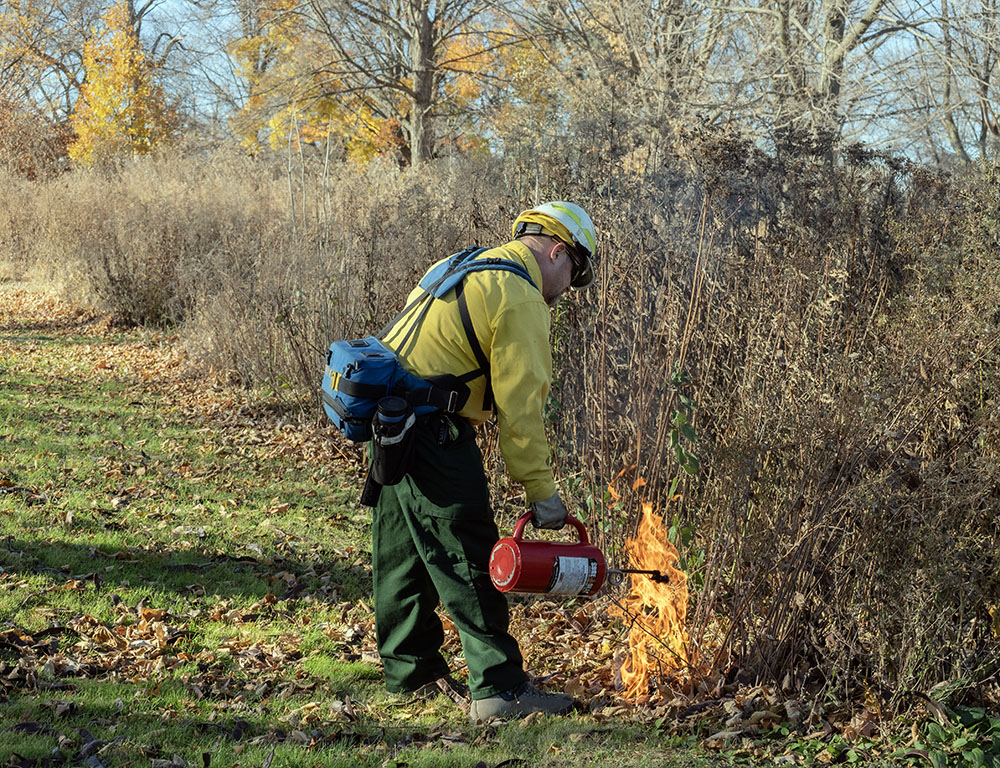
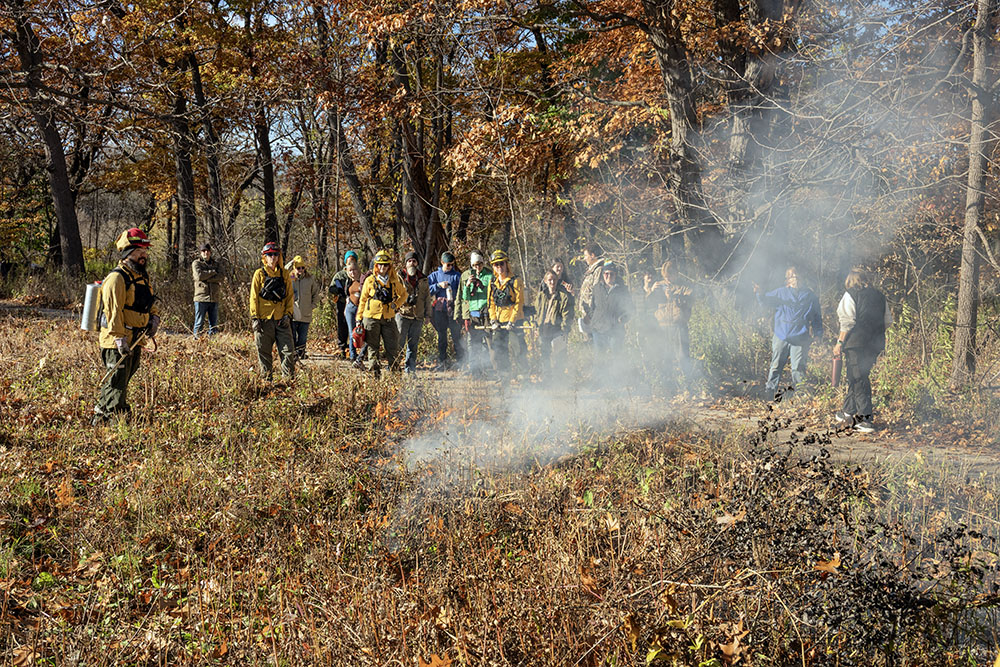
Oak and hickory tree species have evolved to survive low intensity fires with their thicker and uniquely furrowed bark. Oaks and hickories benefit from having time to grow before their faster growing counterparts shade them out. The third major reason fire is beneficial to the land is that it consumes a lot of dead plant material from past years. When plants sprout in the beginning of spring, they have full access to sunlight and moisture after a prescribed burn.
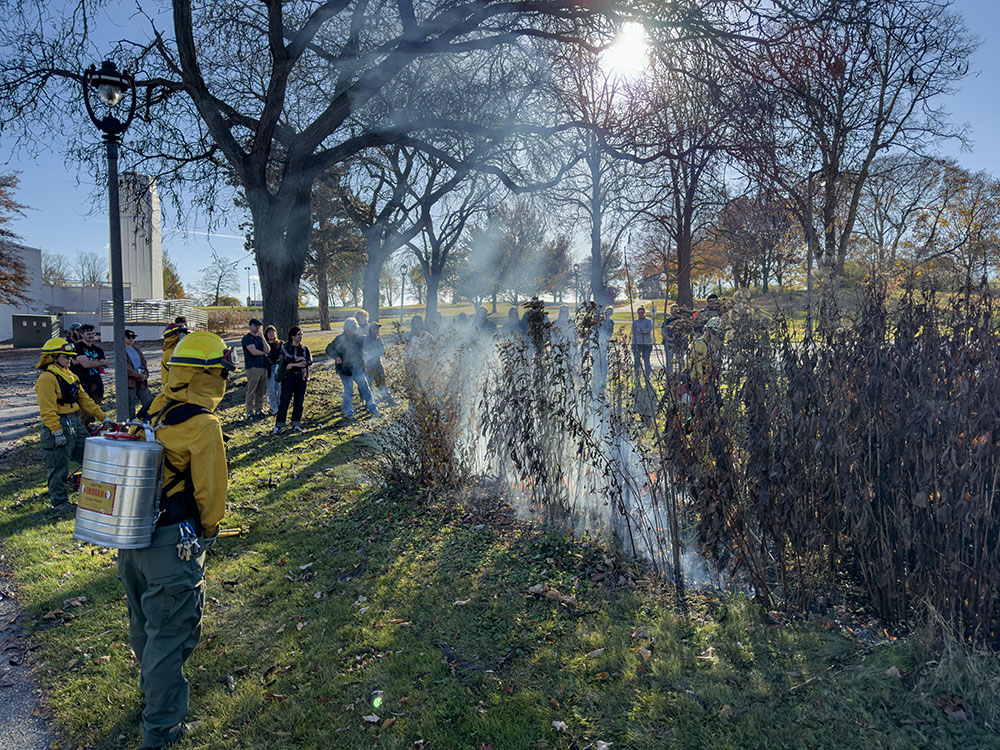
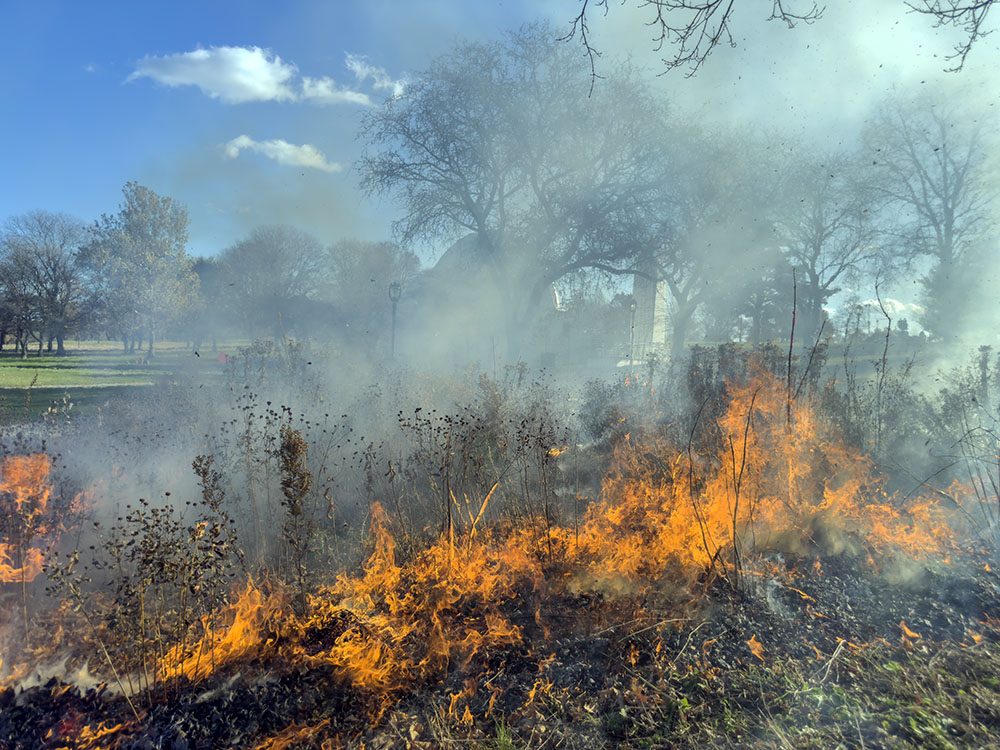
That said, a land owner or manager does not want to set fire to an entire parcel of land all at once. Best practices state that up to half of an area should be burned to maintain habitat for animals. Insects hibernate in plant stalks. Rodents, snakes, and birds take refuge in unburned areas as well.
Society is catching up to what was common practice of yesteryears. Prescribed burns are becoming more prevalent and necessary across the country. With your curiosity and support, we can preserve and conserve the dynamic diversity of the land with good fire.
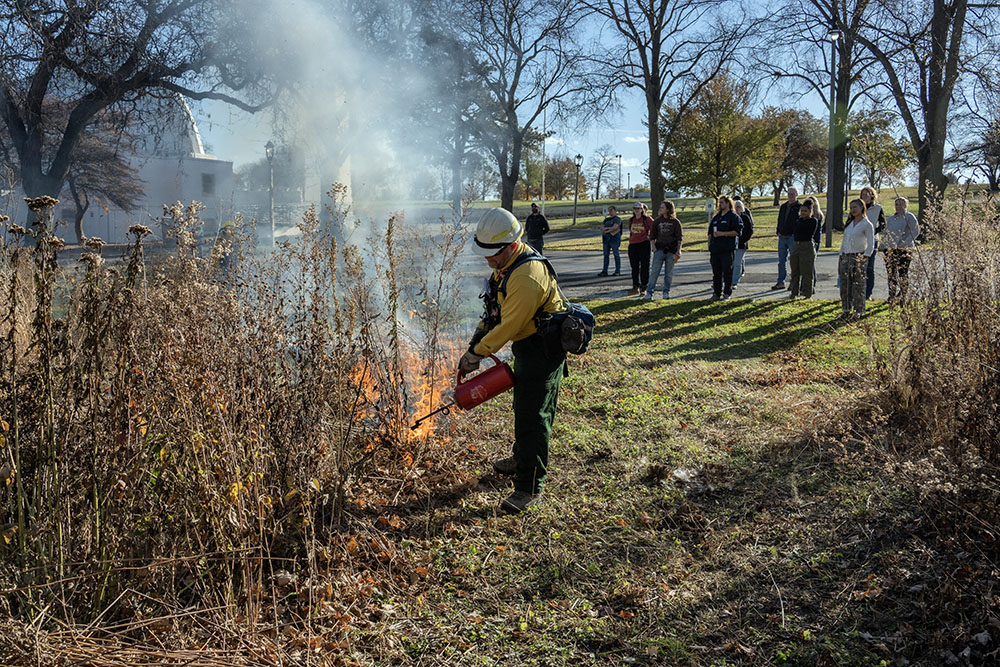
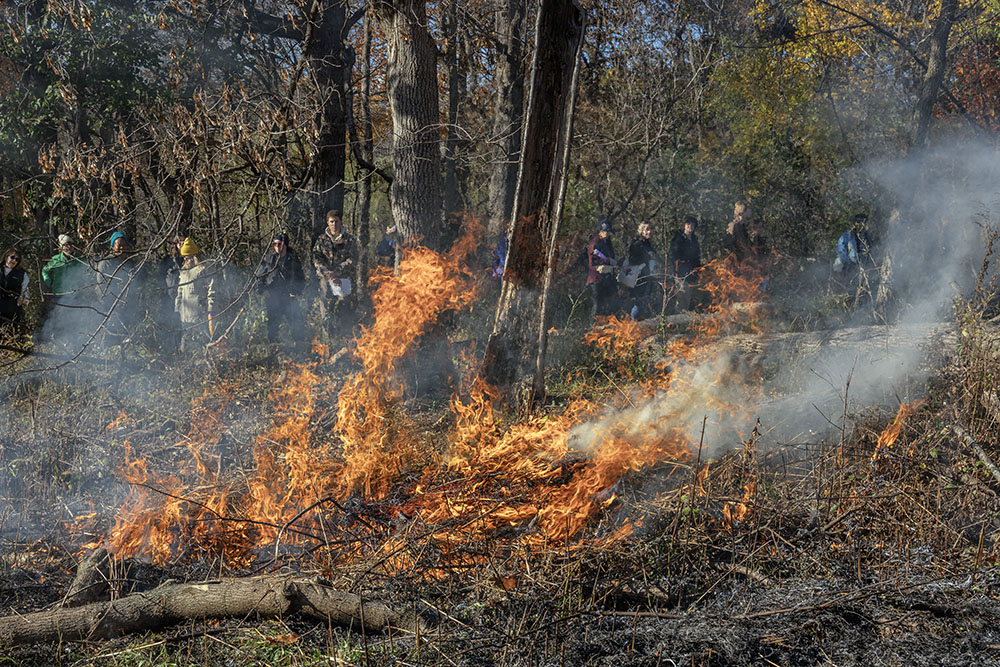
The Urban Ecology Center (UEC) offers annual, day-long workshops to community members to deepen their understanding of fire’s role within natural area management and build a volunteer base for fire line crew participation within UEC managed park lands. Workshop participants are introduced to the history of fire on the landscape as an indigenous cultural and cultivation practice that has shaped ecological relationships in nature over millennia. Discussion of fire science illustrates the evolving awareness of the elements and environmental conditions effecting fire behavior, ignition and suppression strategies as well as floral and faunal impacts.
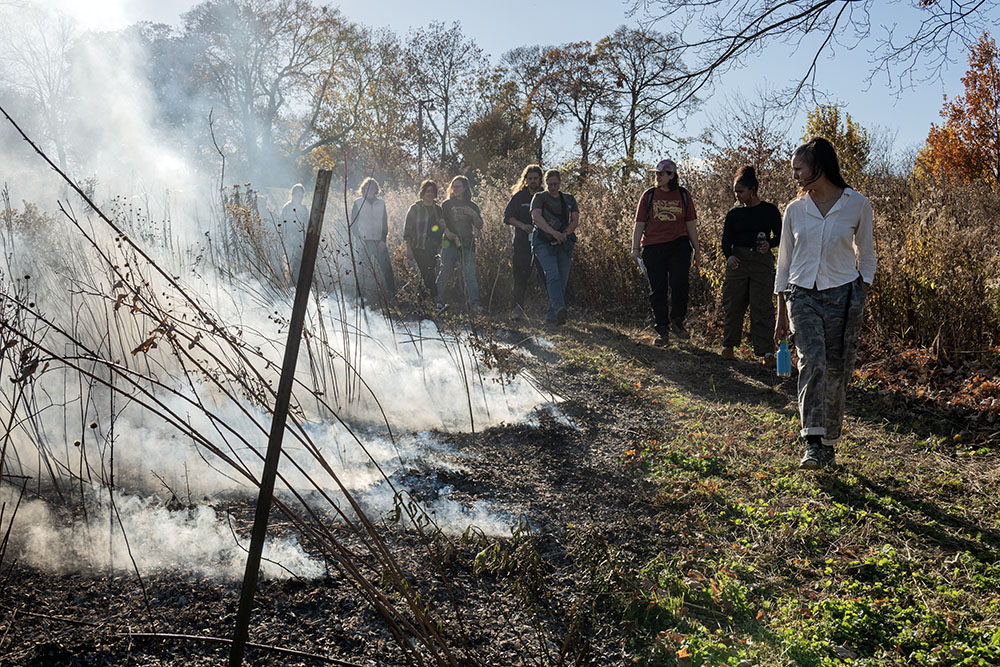
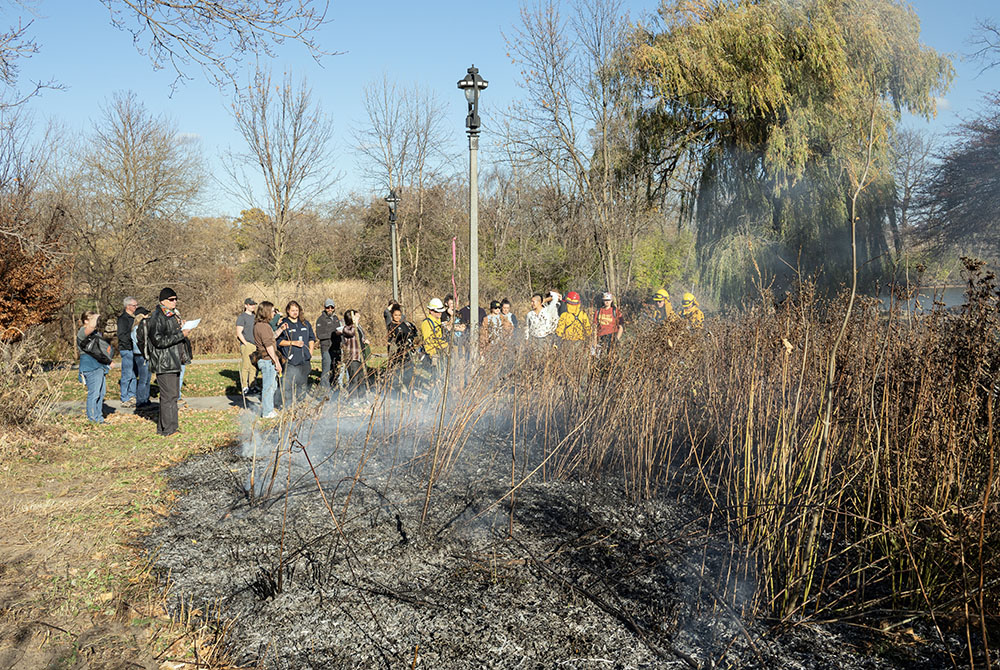
After reviewing a site-specific burn plan, workshop attendees go outside to walk and talk about a burn site, identifying fuel types and hazards, measuring weather conditions, and learning about equipment used to conduct prescribed fire. If conditions fall within the ‘prescription window’ the UEC fire crew conducts a test fire, then begins ignition, displaying the various techniques discussed. As fire moves through the site, participants are encouraged to monitor flame length and height, smoke movement, rate of fire spread, and any developing hazards. As the fire fades, attendees partake in a burn debrief to discuss and record observations. After the demonstration burn, interested participants confirm their names and contact information to be added to a volunteer list for future UEC prescribed fire event support.
If you would like to learn more, consider getting involved and certified through the Wisconsin Fire Council, The Prairie Enthusiasts, or The Nature Conservancy, which host National Wildfire Coordinating Group (NWCG) trainings. Information about future UEC workshops can also be found on the Urban Ecology Center website. Burning the old allows for new growth to thrive!
Related stories:
Prairie burning at Schlitz Audubon Nature Center: Good for ecology and education!
To burn or not to burn: Three prescribed burns in three days!
Under Control: Burning Lakeshore State Park!
A controlled burn at Forest Beach Migratory Preserve
Emphasizing the “Control” in Controlled Burn at Pringle Nature Center
Fellenz Woods Preserve: A controlled burn
An Earth Day Success Story: MMSD’s Greenseams® Program Rejuvenates a Restored Prairie
Natalie Pierson is Land Manager at the Menomonee Valley Branch of the Urban Ecology Center; she was on the burn crew at Riverside Park in 2026.
Eddee Daniel, writer/photographer, is a board member of Preserve Our Parks, the Program Director of A Wealth of Nature, editor of The Natural Realm blog—and a member of the Urban Ecology Center.
The Natural Realm blog is part of A Wealth of Nature, which is a program of Preserve Our Parks. Urban Ecology Center is a project partner of A Wealth of Nature.
About Preserve Our Parks
Preserve Our Parks, Inc. is an independent nonprofit organization dedicated to the preservation of parks and green spaces. Our mission: To advocate for and promote Milwaukee area parks and open spaces and to strive to protect the tenets of Wisconsin’s Public Trust Doctrine.
For more than 25 years, we have been a leader in advocating for the protection of Milwaukee County park lands, halting many proposals to develop, privatize, or sell local parkland and lakefront spaces. More information about POP, including past accomplishments, is available at www.preserveourparks.org.