

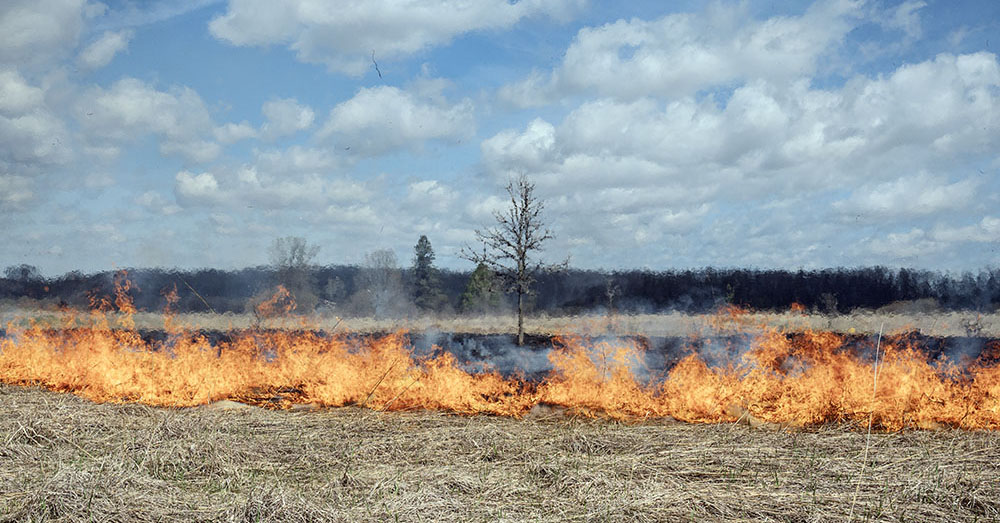
To burn or not to burn: Three prescribed burns in three days!
June 8, 2026 | Topics: Stories
By Eddee Daniel
Fellenz Woods Preserve, West Bend
The text came in around 9:00 am that Monday morning. Just as I was about to head out to shoot a different story I was being invited by Ryan Wallin, Stewardship Director of Restoring Lands, to shoot a controlled burn at their Fellenz Woods Preserve. It was scheduled to begin at 10:00. I immediately shifted gears and drove the forty minutes it takes to get there. I love to shoot burns and this was just the beginning of a week that would prove to be outstanding!
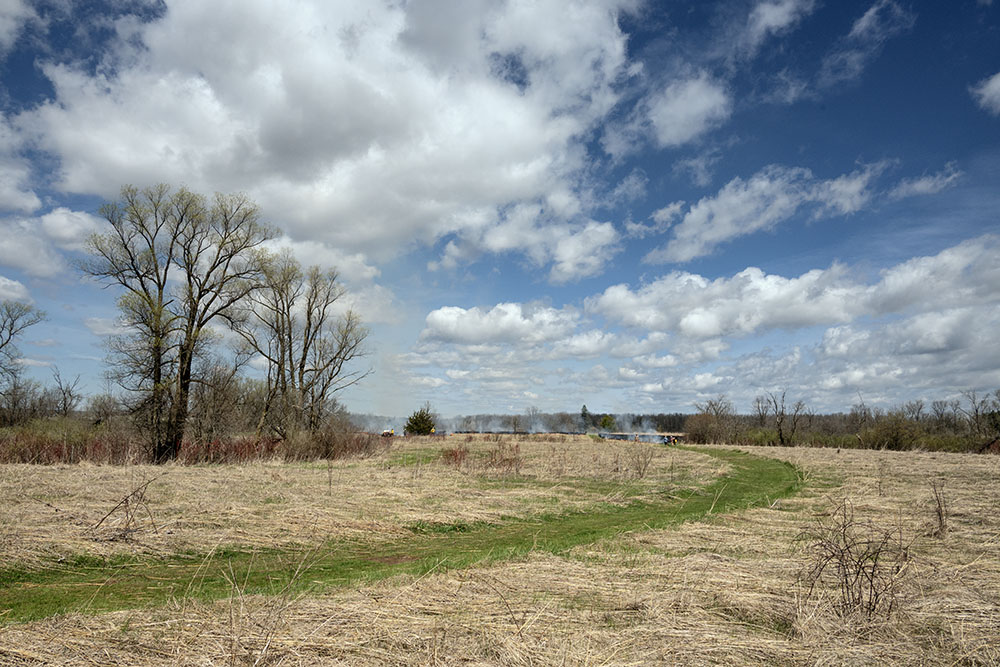
Although unexpected, the invitation on short notice wasn’t a complete surprise. The spring burn season had been delayed. The art and science of prescribed fire is absolutely weather dependent and scheduling a burn is always tentative and subject to change with changing conditions. April, as you may recall, was a highly volatile month, weather-wise. We had summer-like heat and winter-like cold. And we had a deluge. It was the rainiest April on record. Which made for especially poor conditions for burning since the fuel—the thatch and dead grasses left over from winter—needs to be dry enough to burn.
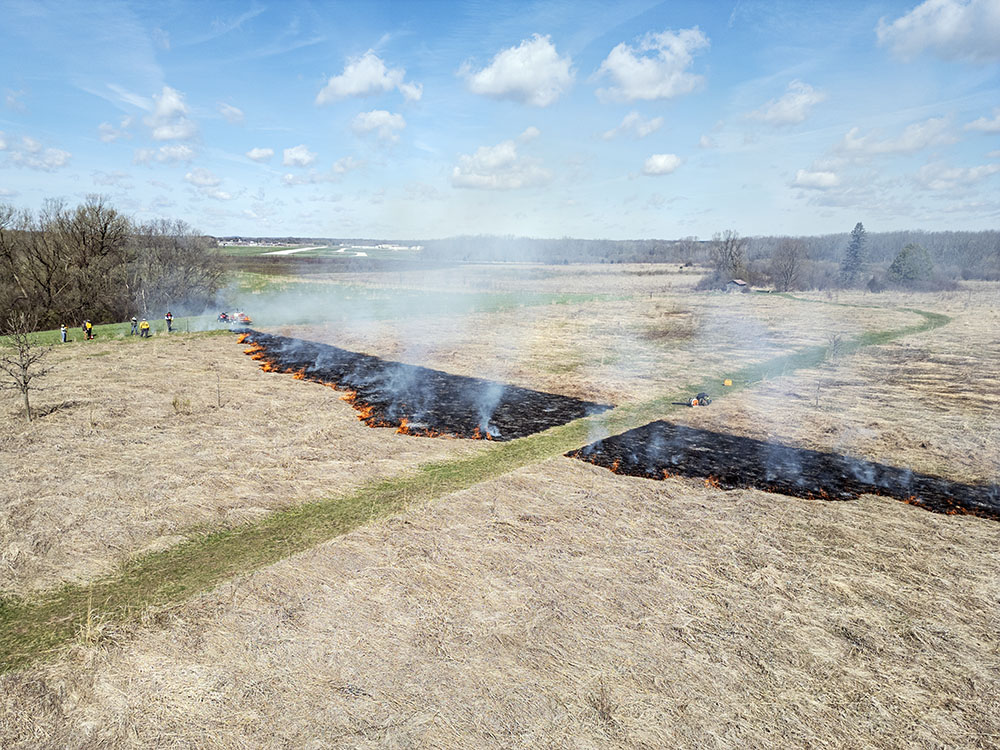
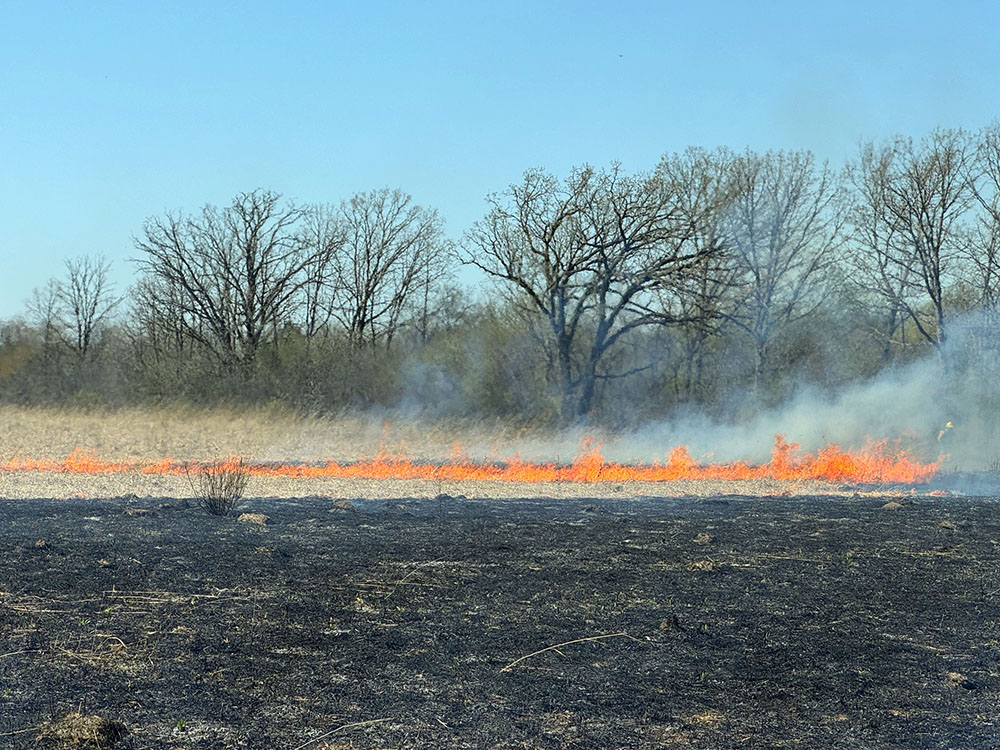
Because they have the expertise in-house, rather than depending in outside contractors for burns, Restoring Lands may be more flexible than others. When the conditions were finally ripe they were ready to go. When I arrived at Fellenz Woods the burn was already underway. I could see thin plumes of smoke rising in the distance. Acres of dried grasses made the need for burning pretty obvious—to the tutored eye.
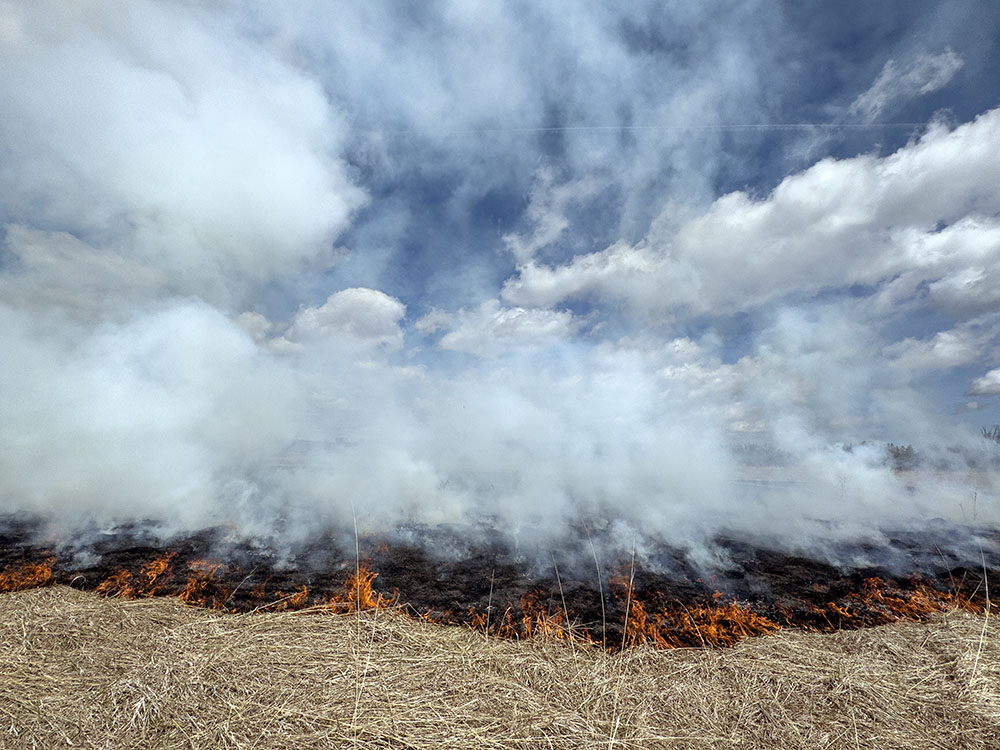
“We burn the prairie for various reasons but mostly to set back woody encroachment from native and non-native invasive species, set back cool-season grass species that form dense sod that limits germination of forbs and native grasses, and promote diversity of native plants in our grasslands. This occurs either naturally by enabling light and growing space, or via enhancement through seeding after the burn.” ~ Ryan Wallin
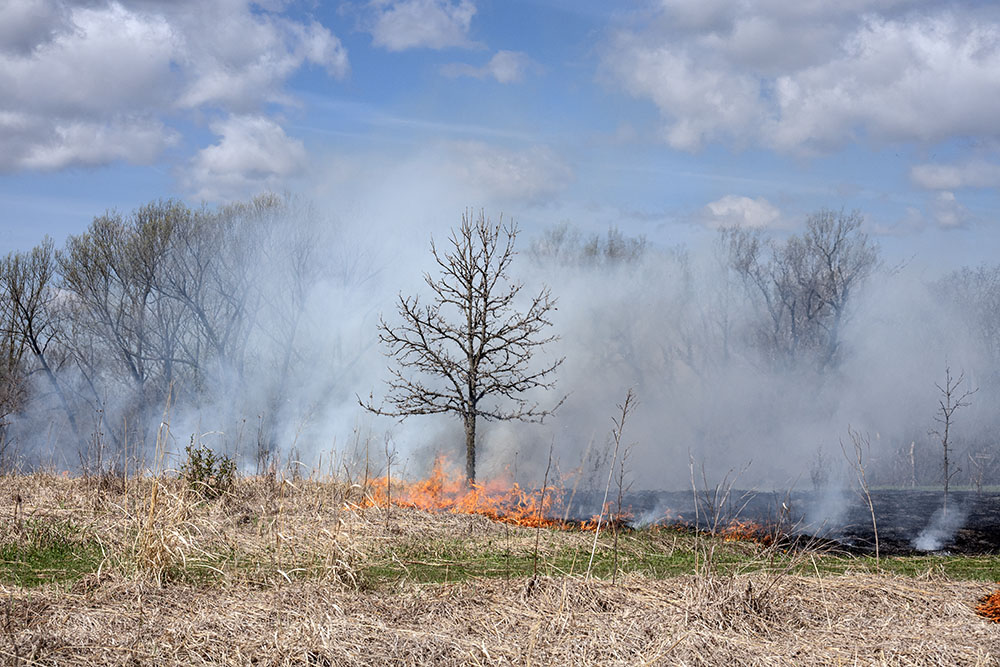
One of the distinctive characteristics of Fellenz Woods is its location adjacent to the West Bend Airport. Small planes took off and rose over our smoke at regular intervals during the burn. “The airport has always been very supportive and never given us any issues or held up a burn,” said Wallin. “We let them know a day in advance if possible and they relay the message to all their customers.”
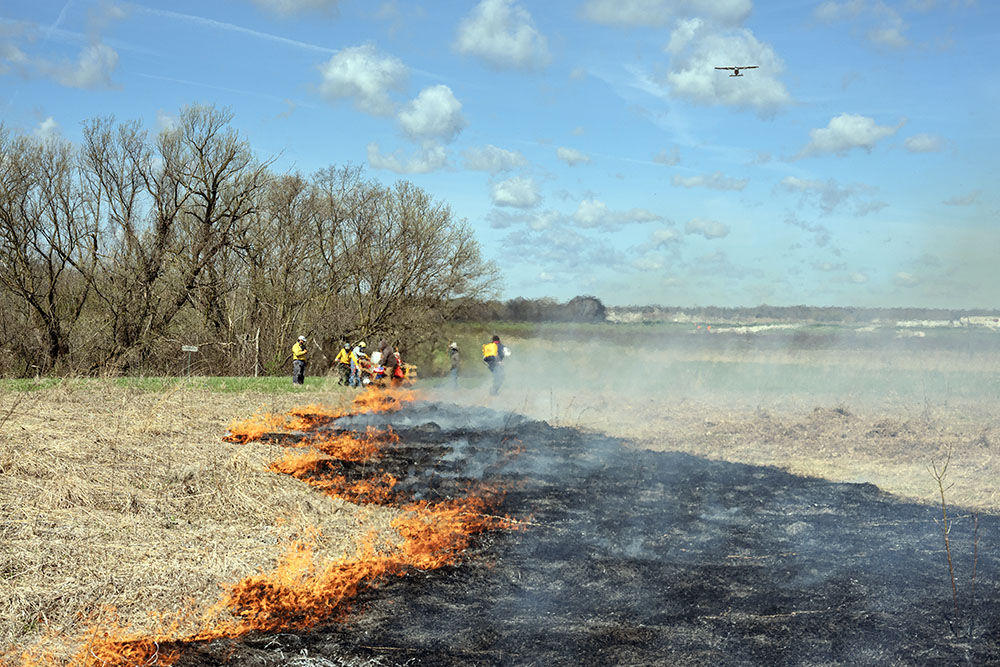
I was unable to stay for the entire process. But while I was out there in the field shooting I got a second text message inviting me to another burn the following day at Ryan Creek Prairie in Franklin. It would prove to be a very different experience!
By the end of the day Monday, I got a third message: A burn I’d been expecting would be taking place on Wednesday at Wehr Nature Center. Good things come in threes, I guess. Everyone, it seemed, was taking advantage of the window of opportunity.
Ryan Creek Prairie Preserve, Franklin
With advance warning I arrived at Ryan Creek Prairie ten minutes early at 9:50. No one around. Lady Luck is fickle and today she was just getting started…. While I was waiting for the burn crew to arrive, I took note of a beautiful broad band of cumulonimbus clouds beginning to form to the west. I walked around trying to get a few photos of the landscape with the clouds as backdrop, not considering them a threat. After all, there had been no rain in the forecast. But by the time the crew from Midwest Prairies arrived at 10:30, the chance of rain went from zero to probable. We’d have to wait it out and hope the rain wouldn’t cause a cancellation.
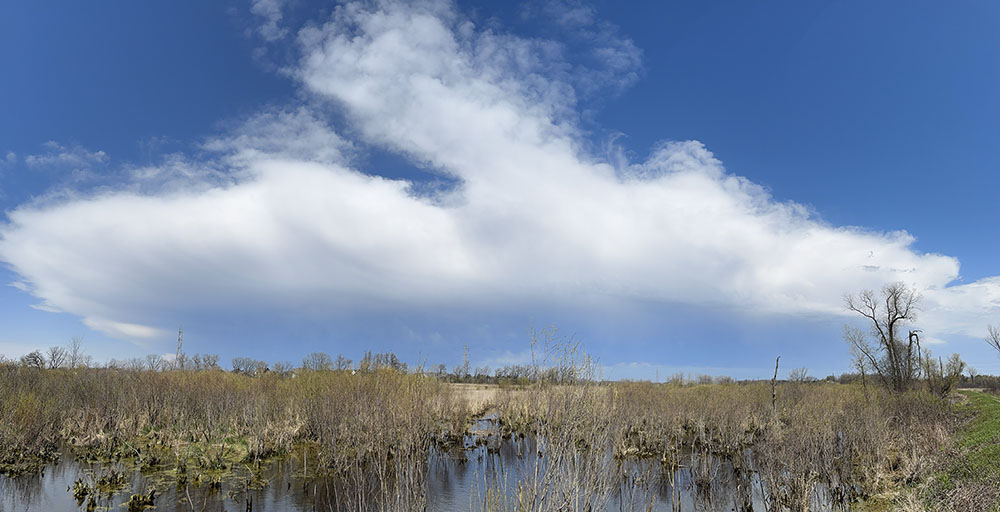
Ryan Creek Prairie Preserve in Franklin was originally purchased by the Milwaukee Metropolitan Sewerage District as part of its Greenseams program. Ownership was then transferred to the Milwaukee Area Land Conservancy, one of two land trusts operating in Milwaukee County.
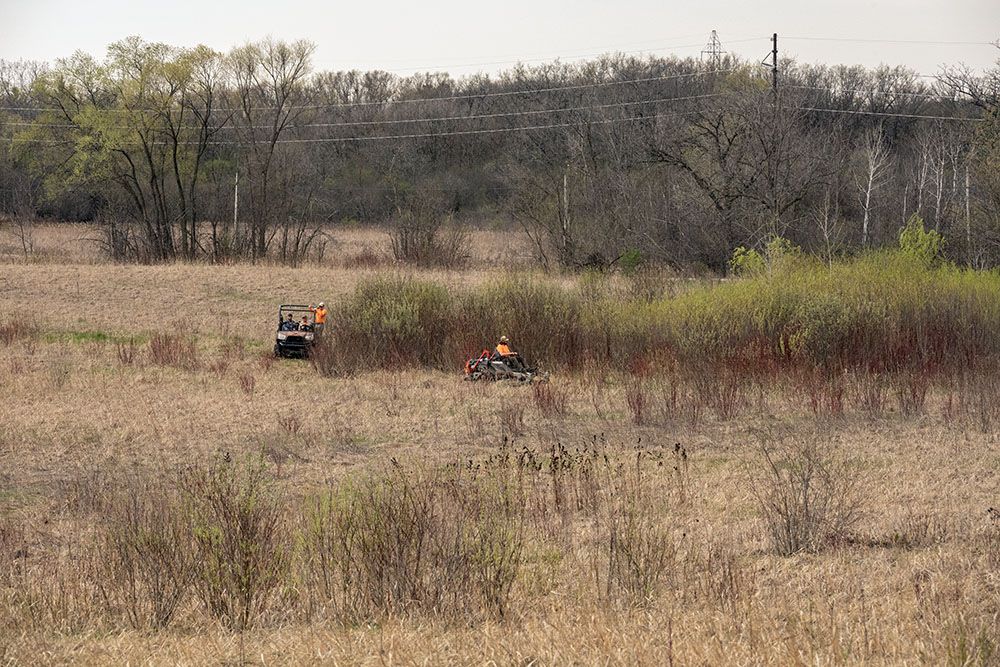
At first, there was work that could be done while waiting. I watched as the team used two rugged mowing machines to cut a fire break around the entire 40-acre preserve. Fire breaks, a necessary part of the “control” in controlled burn, help prevent the fire from jumping outside the area prescribed for burning. That work, however, was done well before the storm arrived. We waited.
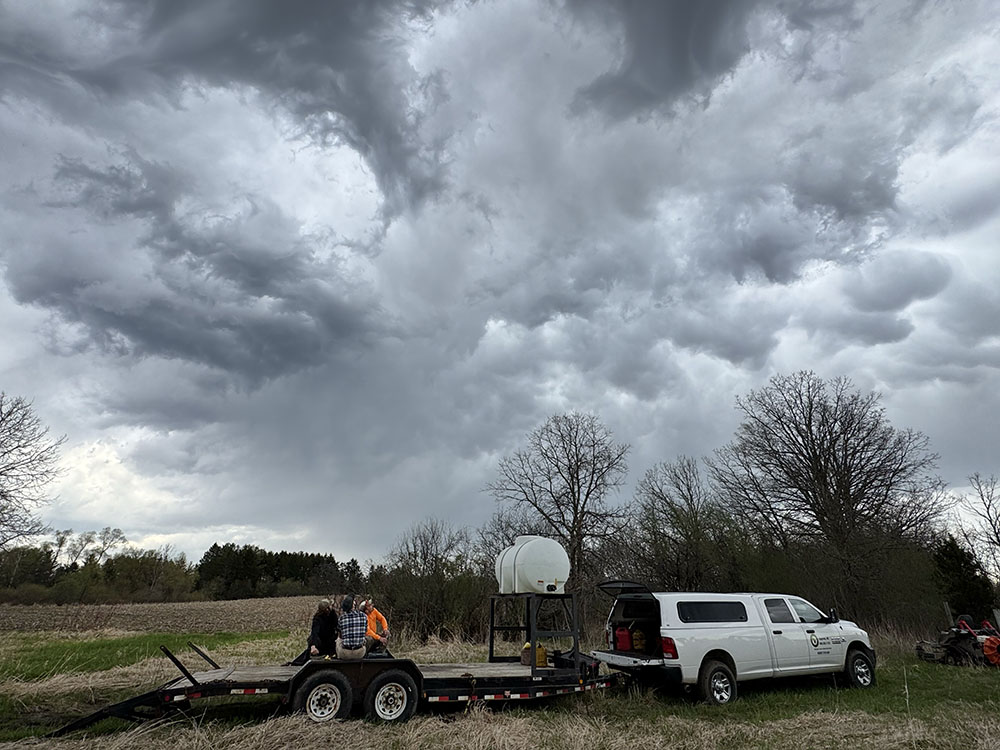
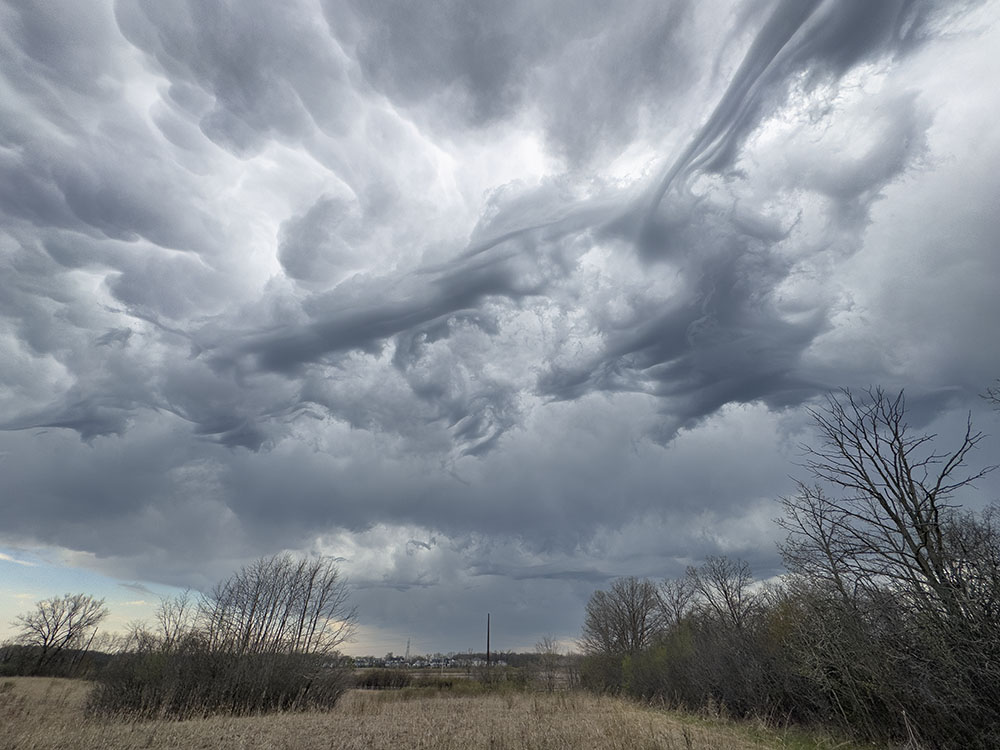
But the waiting turned out to be a gift! As the storm front rolled over our heads the sky went crazy. The rain held off while the clouds boiled and bubbled like an inverted cauldron that spread from horizon to horizon. We all looked on in awe. Then, right around noon, it finally poured. We dashed for our vehicles. The downpour lasted about fifteen minutes, enough to delay the burn. The storm passed on as quickly as it had arrived and the sun returned. The crew hoped things would dry out enough to conduct the burn a little later. Unfortunately, for me Lady Luck backed out on me again: I had two appointments that afternoon and had to leave before the burn could begin.
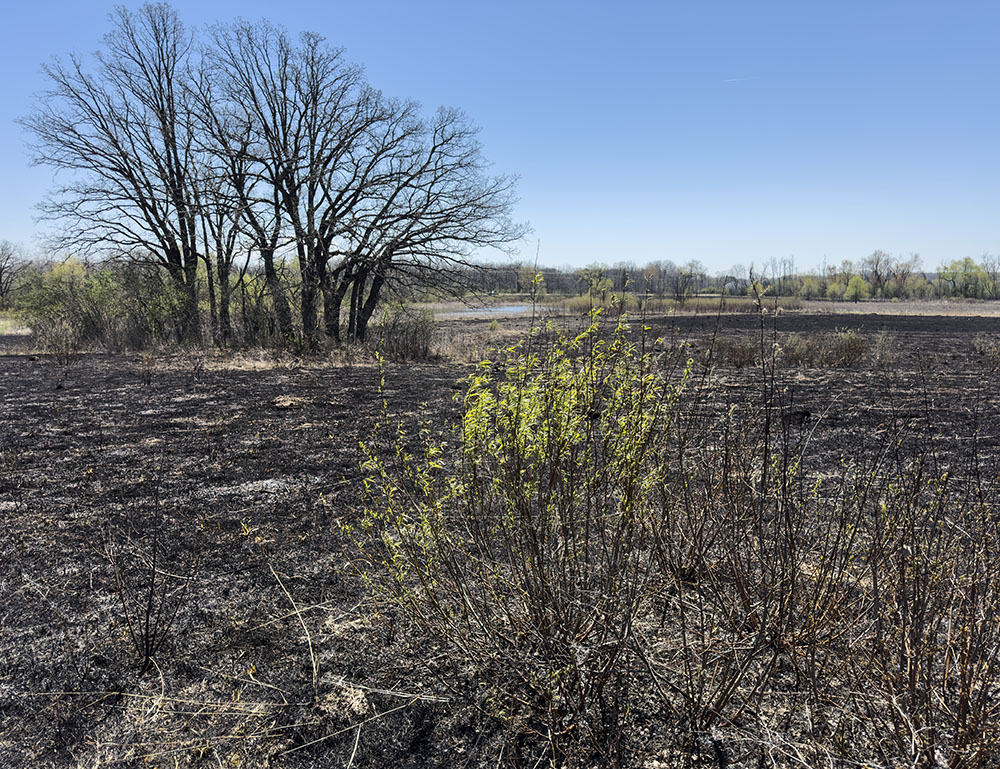
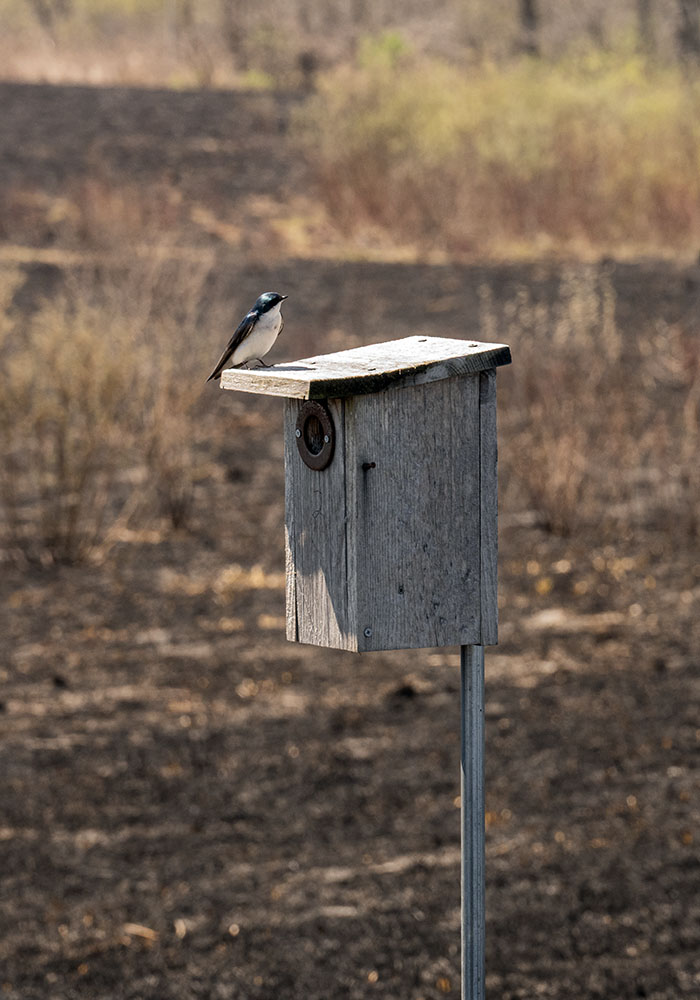
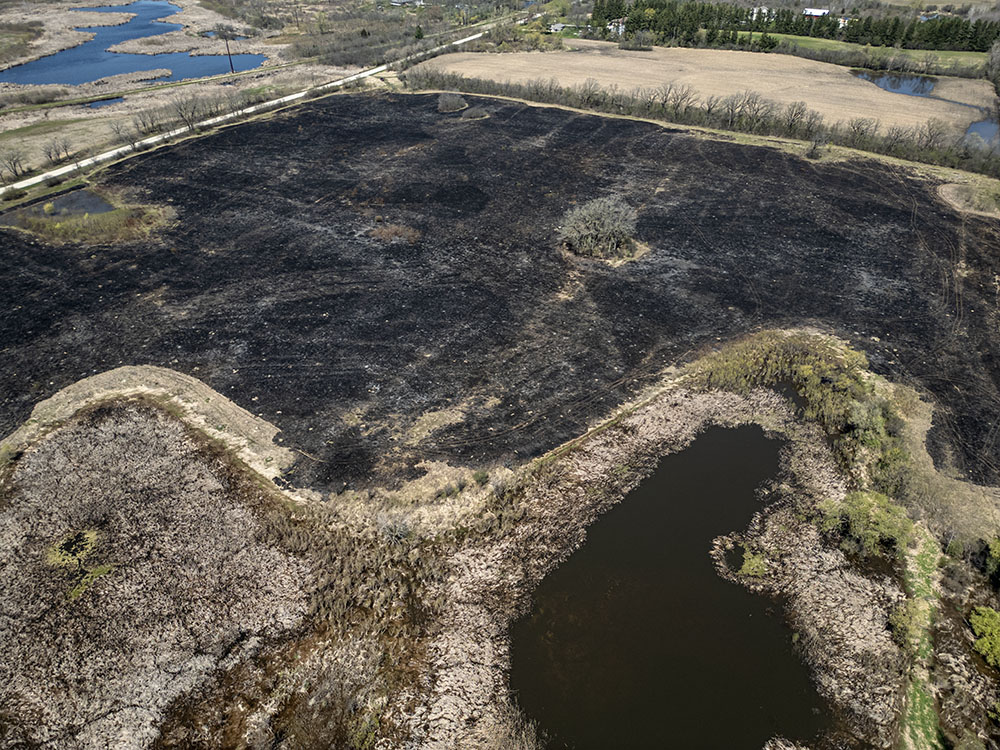
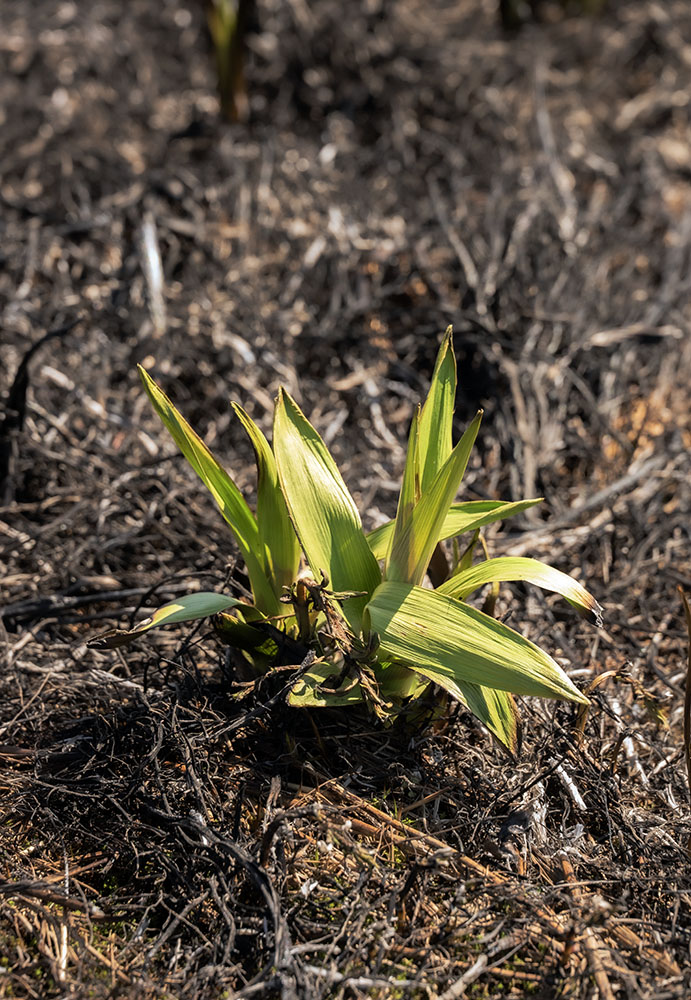
The third burn of the week, on Wednesday, provided an antidote to all of the setbacks of the first two. But before I get to that, I did go back to Ryan Creek Prairie the following day. I beheld forty acres of blackened terrain, neatly outlined by the fire breaks at the edges of the preserve. By midafternoon conditions had dried out sufficiently to proceed and proceed they did. I strolled through the ashes, noting the resilience of nature. While the thick garment of thatch and dead grasses had turned to ash, taller, more mature and fire-resistant species remained vibrant with new green spring buds. Tree swallows had taken no time to return to their unharmed nesting boxes.
“Prairies always burned, whether the fire was set deliberately by Indians or incidentally by lightning. It’s important to remember that nearly every habitat of North America burned on at least an irregular basis. The importance of a prairie burn in the spring is that the blackened ground heats up more quickly than it otherwise would, encouraging faster growth by the native plants and helping them outcompete any Eurasian weeds or cool season grasses, which grow earlier but are set back by the burn. Of course, only fire-tolerant woody plants are also selected for by the burn (burr oak, New Jersey tea, etc.) while aggressive and foreign brush like buckthorn and Russian olive are set back. It’s a continual process and no prairie can thrive without at least occasional fire.” ~ Perry Rossa, Milwaukee Area Land Conservancy
Wehr Nature Center, Whitnall Park, Milwaukee County
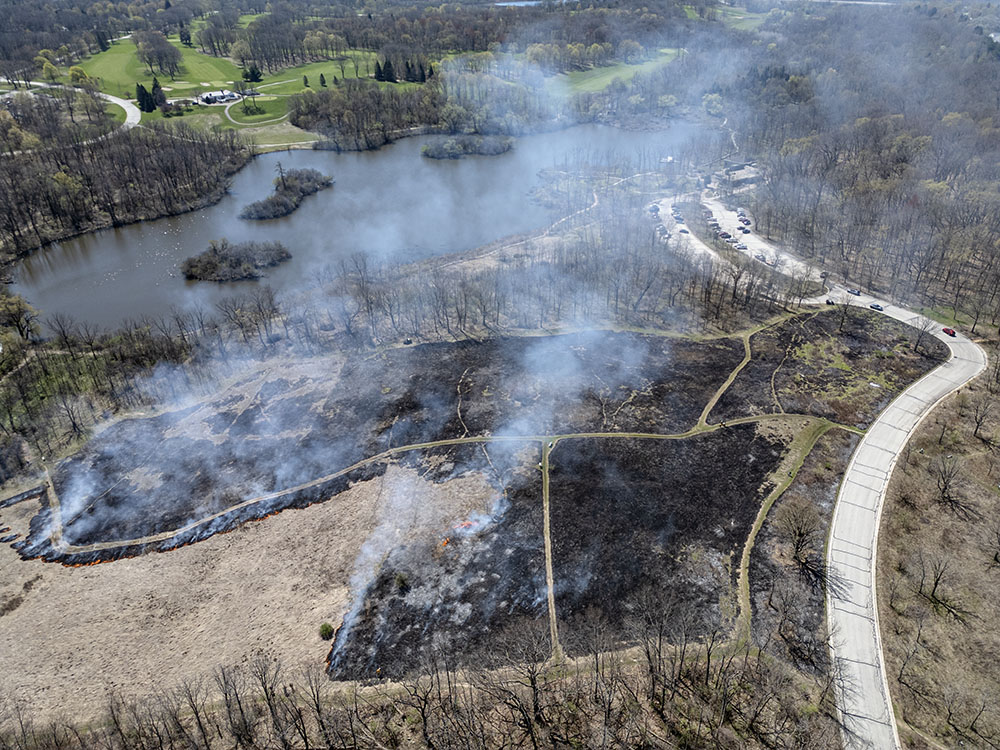
Unlike Fellenz Woods or Ryan Creek Prairie, both of which are protected primarily as wildlife habitats with human visitation a secondary benefit, Wehr Nature Center in Whitnall Park commonly bustles with visitors. This was immediately apparent. Not only was the parking lot adjacent to the burn full of cars, but a dozen or so spectators were lined up along the road next to the prairie to watch the action. While the purposes of prescribed fire are the same as anywhere else, layered on top of the ecological benefits is the opportunity it provides to further the mission of environmental education.
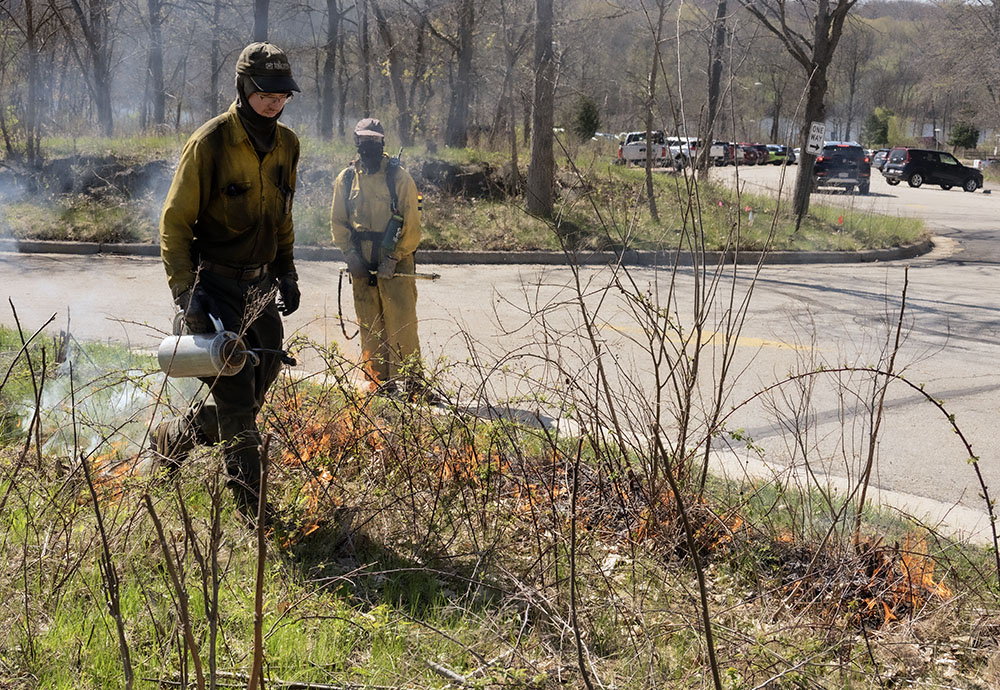
“We welcome visitors and spectators to view the prescribed burn from a safe distance and to avoid walking the trails in the areas being burned. These opportunities are good for educating the public on the benefits of prescribed burns, and how necessary they are for maintaining various native plant communities.” ~ Jeff Veglahn, Land Manager, Wehr Nature Center
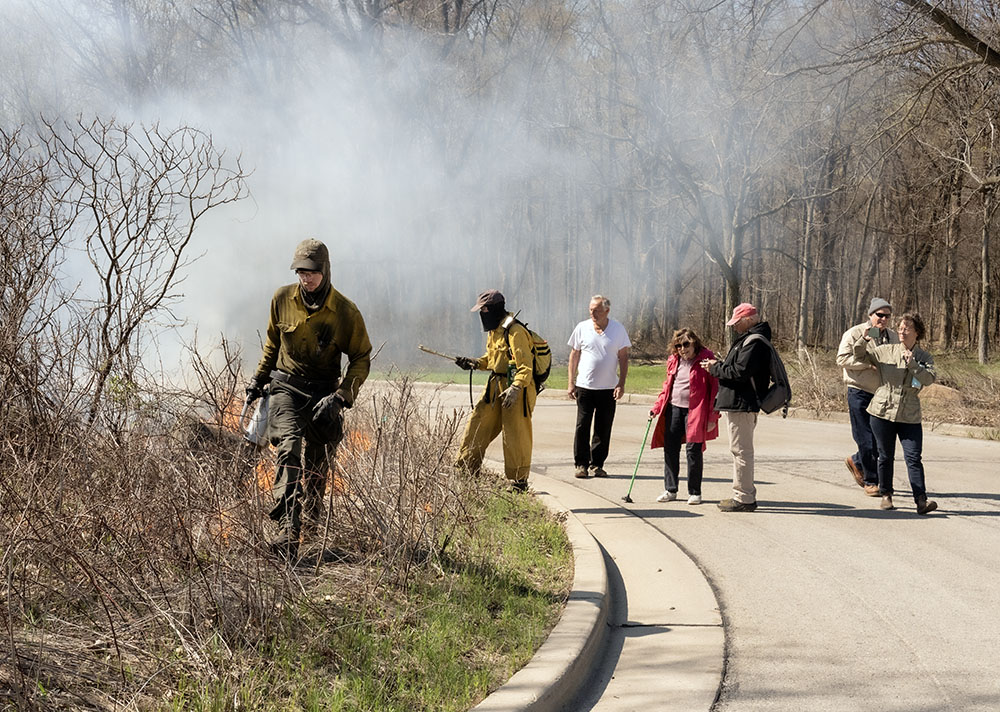
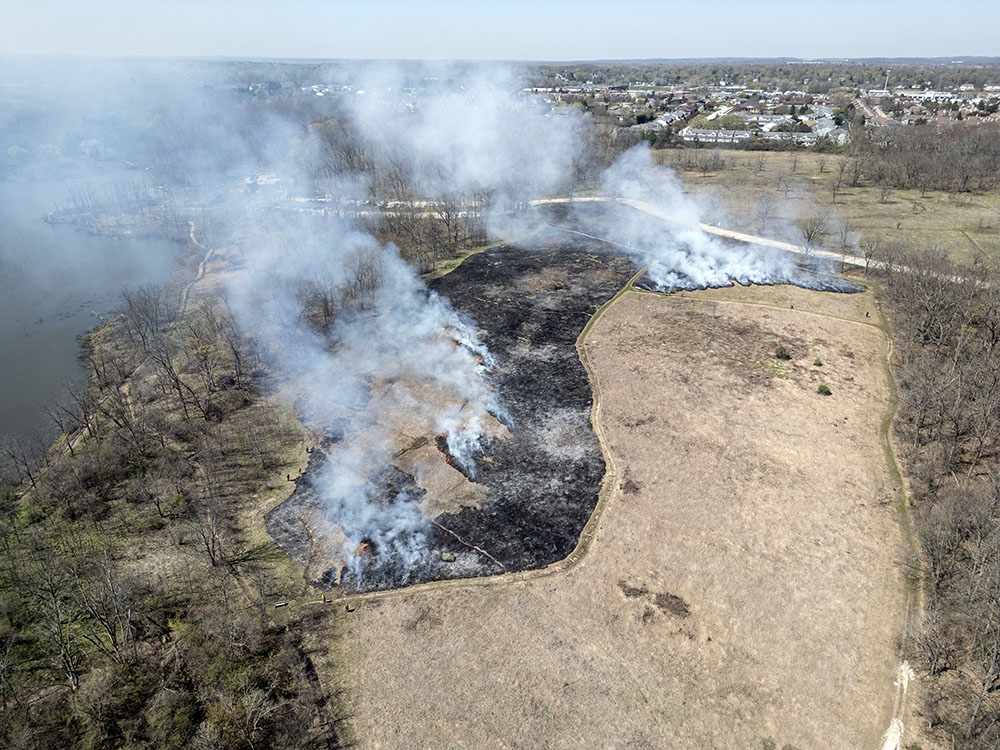
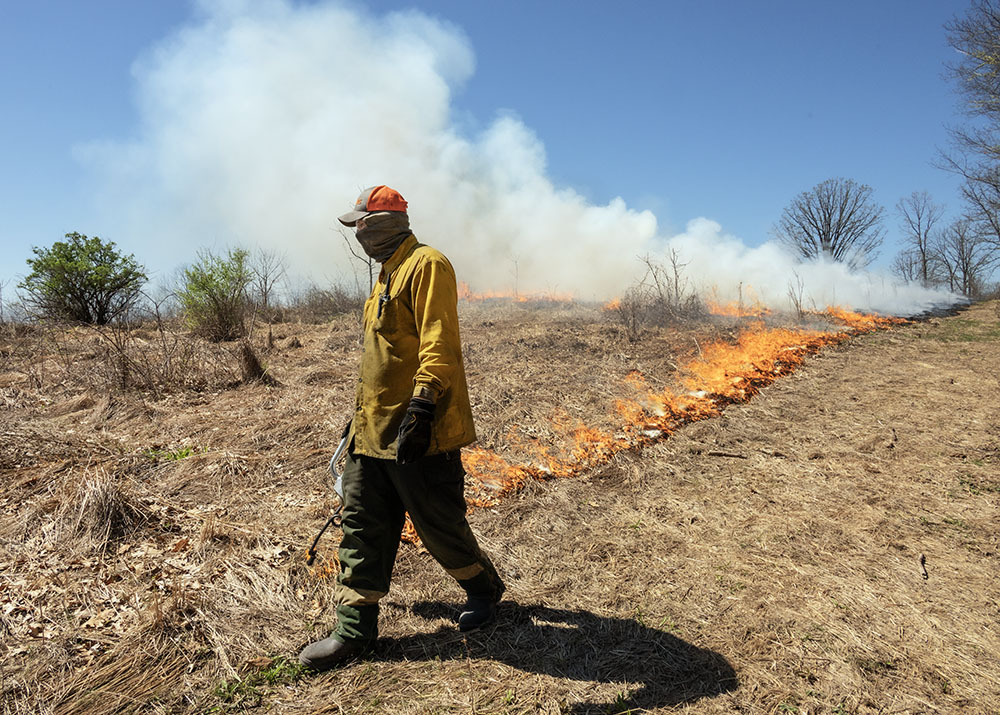
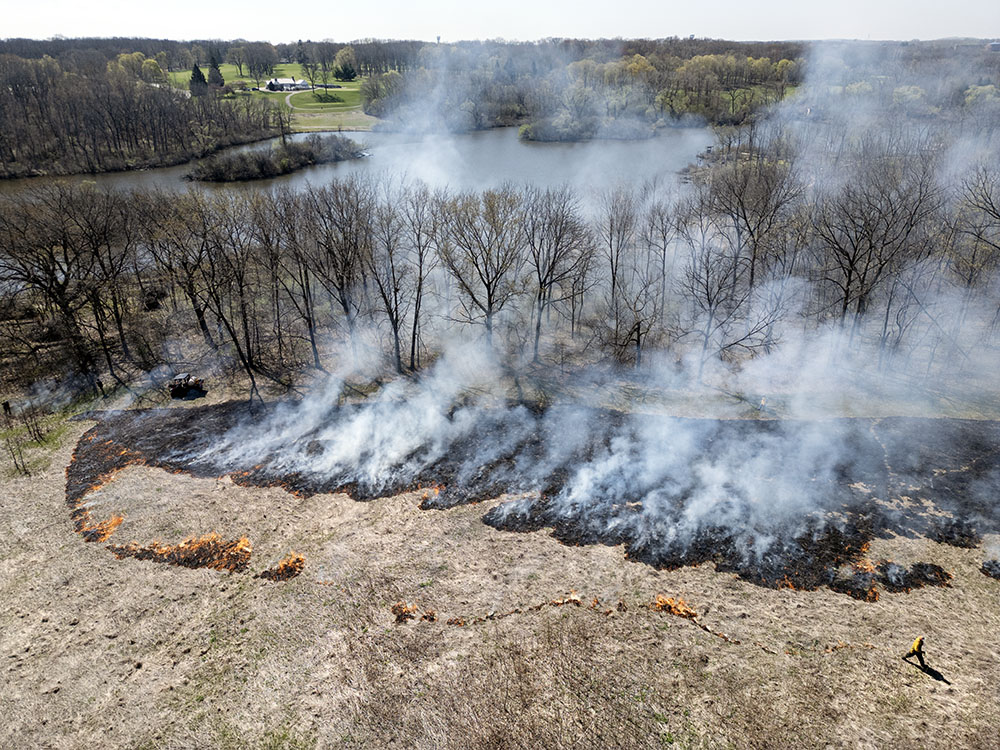
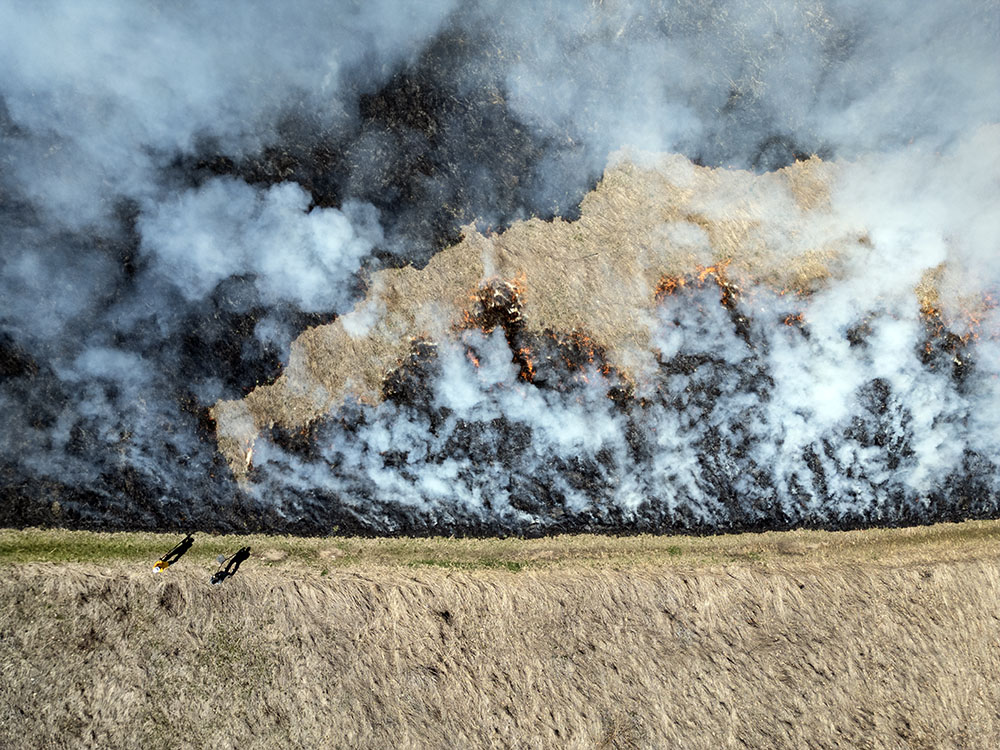
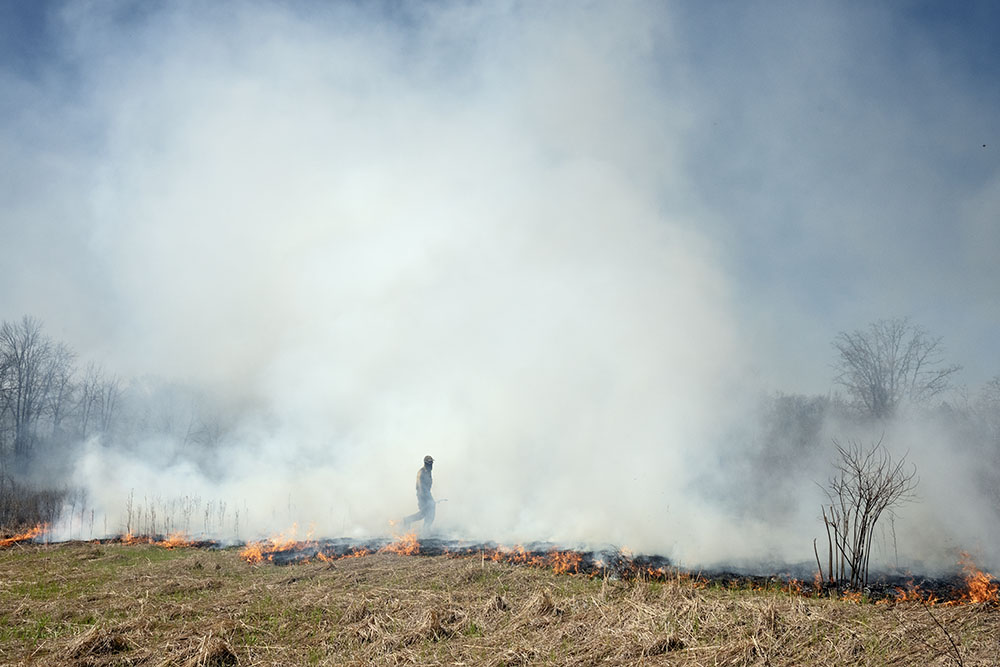
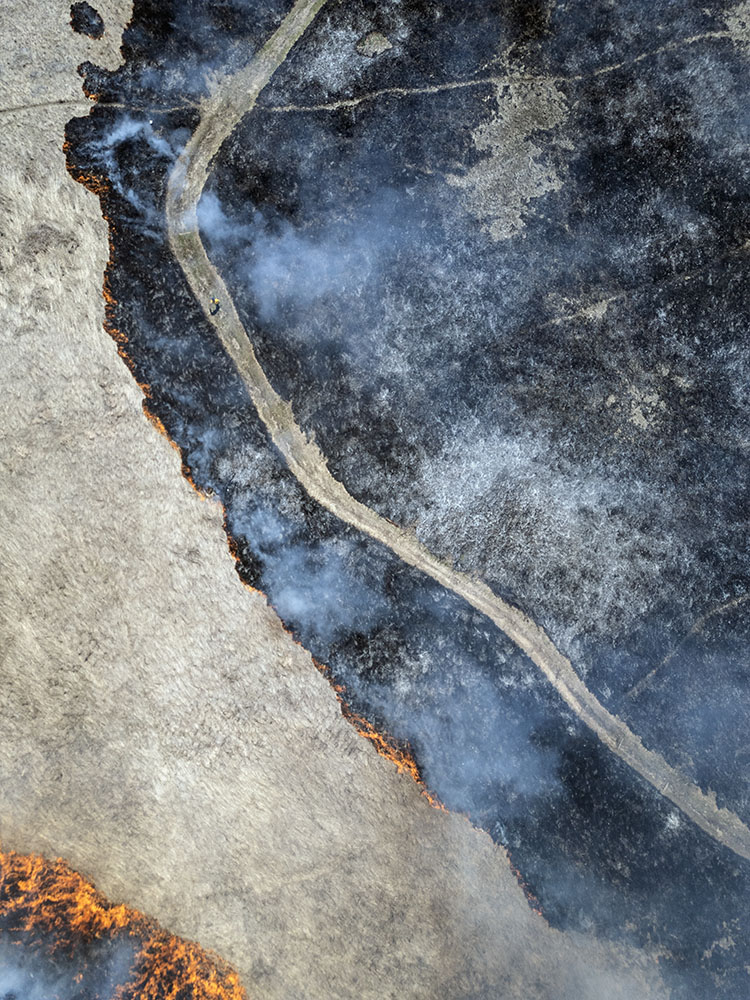
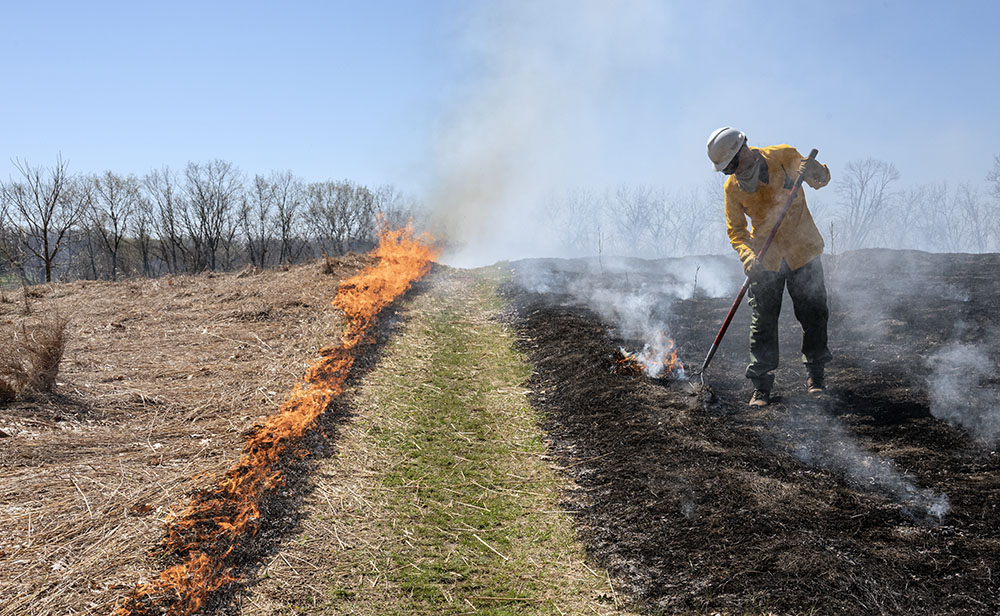
For a change, I was free all day—and determined to make the most of it. For a change, there were no disappointments! I alternated my time between shooting from ground level with my camera and aerial views from my drone, as you can see from the photos. Due to the wind direction, ignition began on the high ground at the southwest corner of the prairie and proceeded towards the northeast. The fire is more easily controlled when it advances against a light prevailing wind. (Too much wind or shifting winds are among the unpredictable meteorological contingencies that can delay or cancel a burn—or simply make it less successful.)
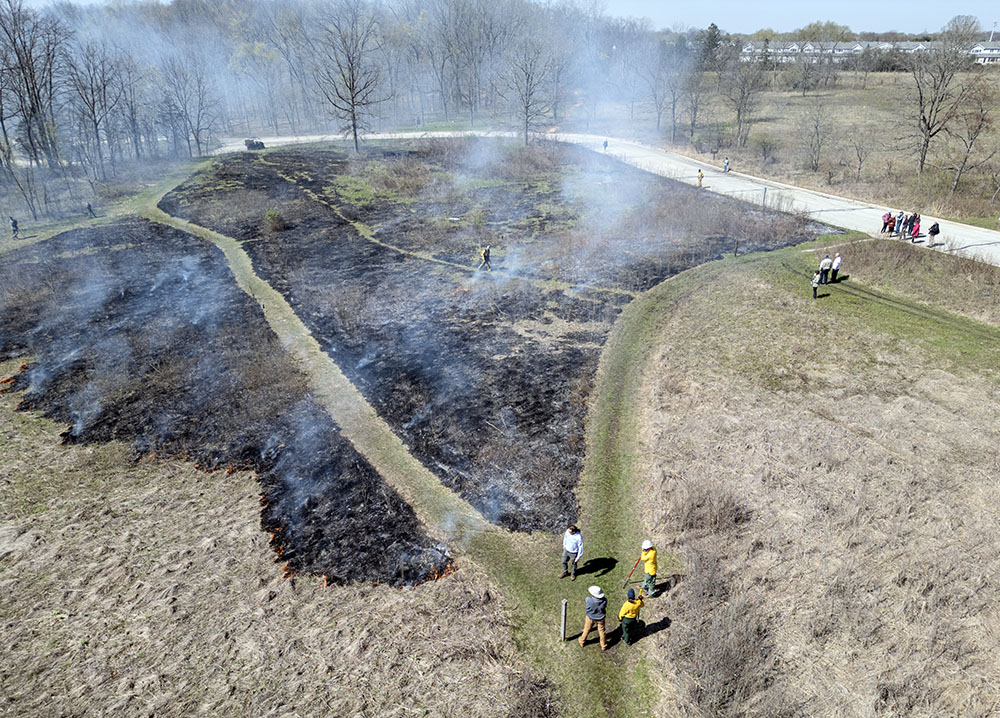
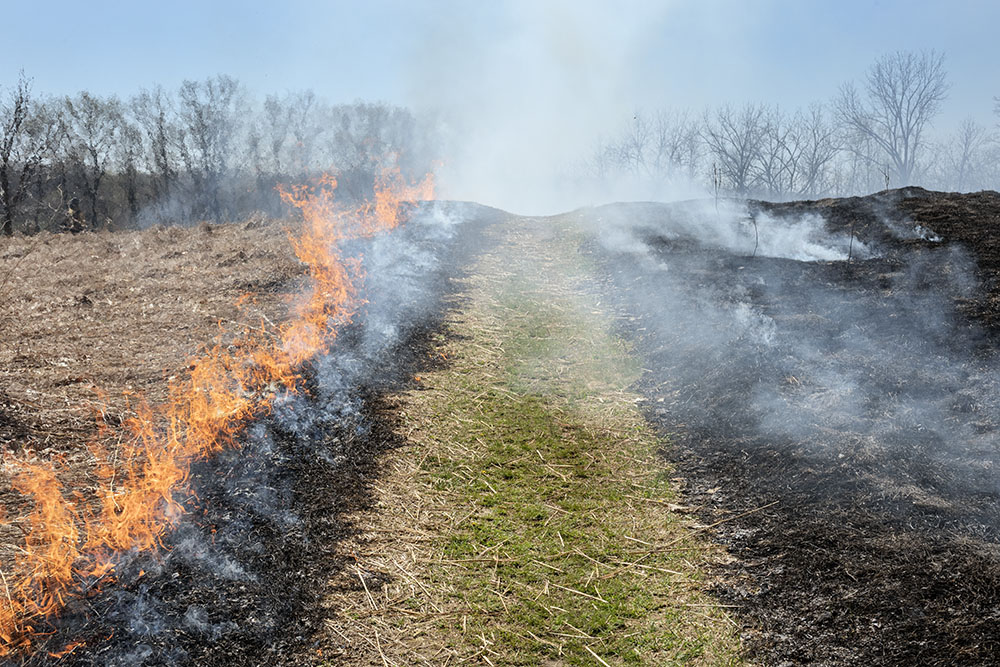
The burn progressed steadily and precisely, divided up into segments by the existing trails, which act as fire breaks. By the time the crew finished tamping down the last of the dying embers I was the only spectator left.
“Despite how green the fuel was that day, it turned out to be a really good burn! We didn’t have a lot of issues with fire not continuing through the area, except in places where the soil was wet due to storms and seepage. Though, because portions of the prairie were green, we did have thicker smoke than we would’ve liked.” ~ Jeff Veglahn
Smoke can be problematic for a number of reasons, but looking at the bright side, it makes for some dramatic photographs!
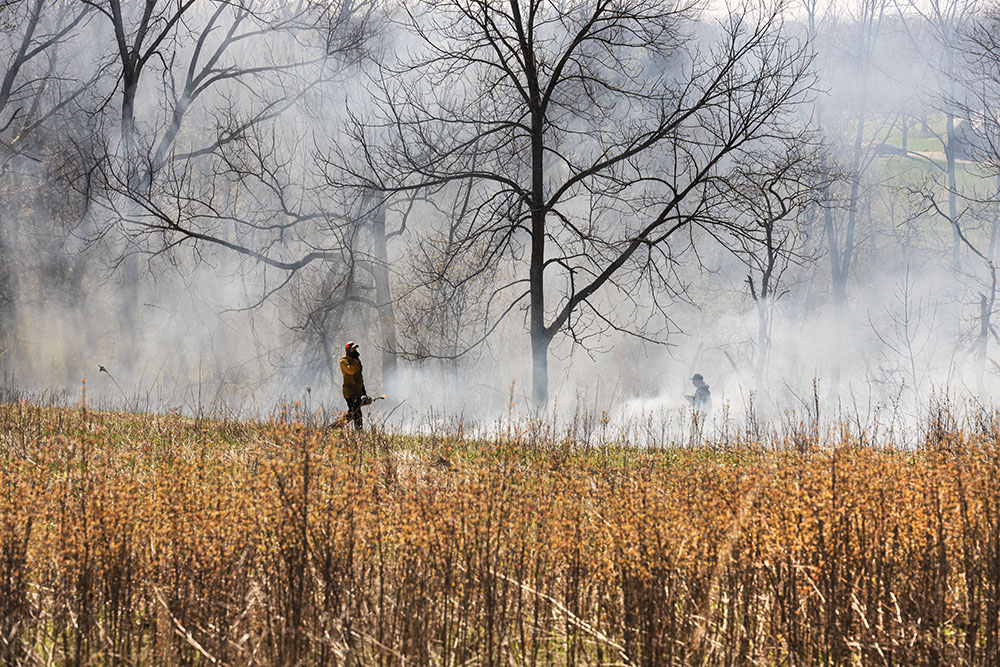
Gallery of Wehr Burn Photos
Related stories:
Under Control: Burning Lakeshore State Park!
A controlled burn at Forest Beach Migratory Preserve
Emphasizing the “Control” in Controlled Burn at Pringle Nature Center
Fellenz Woods Preserve: A controlled burn
An Earth Day Success Story: MMSD’s Greenseams® Program Rejuvenates a Restored Prairie
Eddee Daniel, writer/photographer, is a board member of Preserve Our Parks, the Project Director of A Wealth of Nature, and editor of The Natural Realm blog. All photos by Eddee Daniel except as noted.
The Natural Realm blog is part of A Wealth of Nature, which is a program of Preserve Our Parks. Restoring Lands, MMSD and Milwaukee County Parks are project partners of A Wealth of Nature.
About Preserve Our Parks
Preserve Our Parks, Inc. is an independent nonprofit organization dedicated to the preservation of parks and green spaces. Our mission: To advocate for and promote Milwaukee area parks and open spaces and to strive to protect the tenets of Wisconsin’s Public Trust Doctrine.
For more than 25 years, we have been a leader in advocating for the protection of Milwaukee County park lands, halting many proposals to develop, privatize, or sell local parkland and lakefront spaces. More information about POP, including past accomplishments, is available at www.preserveourparks.org.
One thought on "To burn or not to burn: Three prescribed burns in three days!"
Comments are closed.
These are amazing photos and a great narrative. Eddee Thanks for what you do!