

Exploring the Mukwonago River wilderness: A road less taken.
August 25, 2026 | Topics: Places, Stories
By Eddee Daniel
“To those devoid of imagination a blank place on the map is a useless waste; to others, the most valuable part.”
~ Aldo Leopold, A Sand County Almanac
I didn’t know I’d be entering a forest primeval. It was quite literally a blank spot on the Google map app I used to get there. Which, as Aldo Leopold suggests, made it especially intriguing to me, eager as I am always to imagine wilderness even in unlikely places. I happened upon this particular tract of land by chance, when looking for another preserve (Lakewood Farms Preserve, which I subsequently learned was across the street—more about that later).
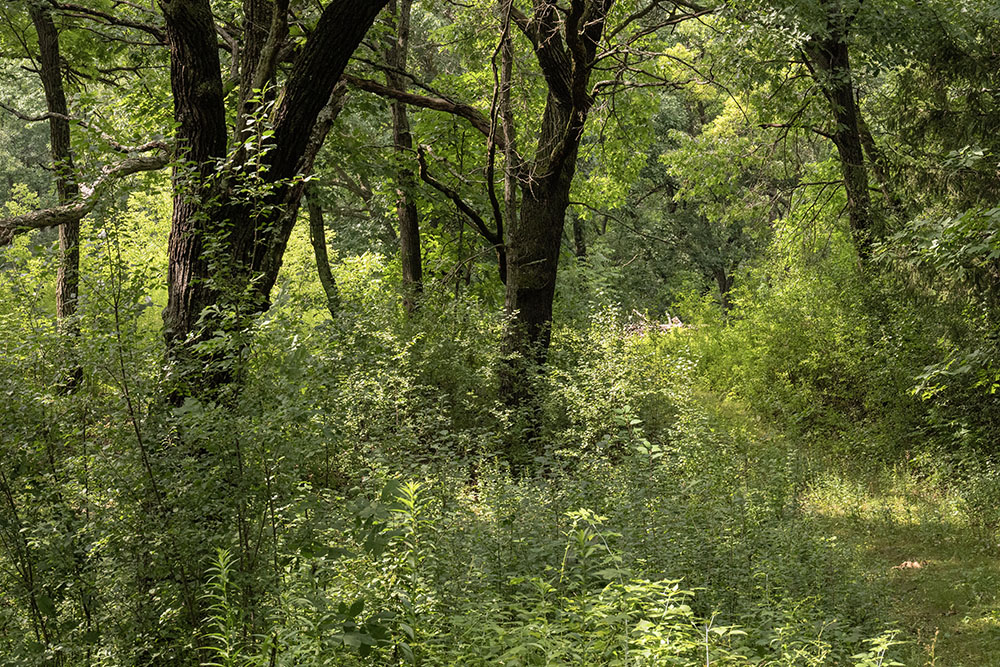
The miniscule size of the parking lot—three cars might squeeze into it if they don’t mind backing out without turning around—makes it more inviting rather than less. Welcoming without being encouraging; it seems to create the expectation of solitude. I am immediately entranced.
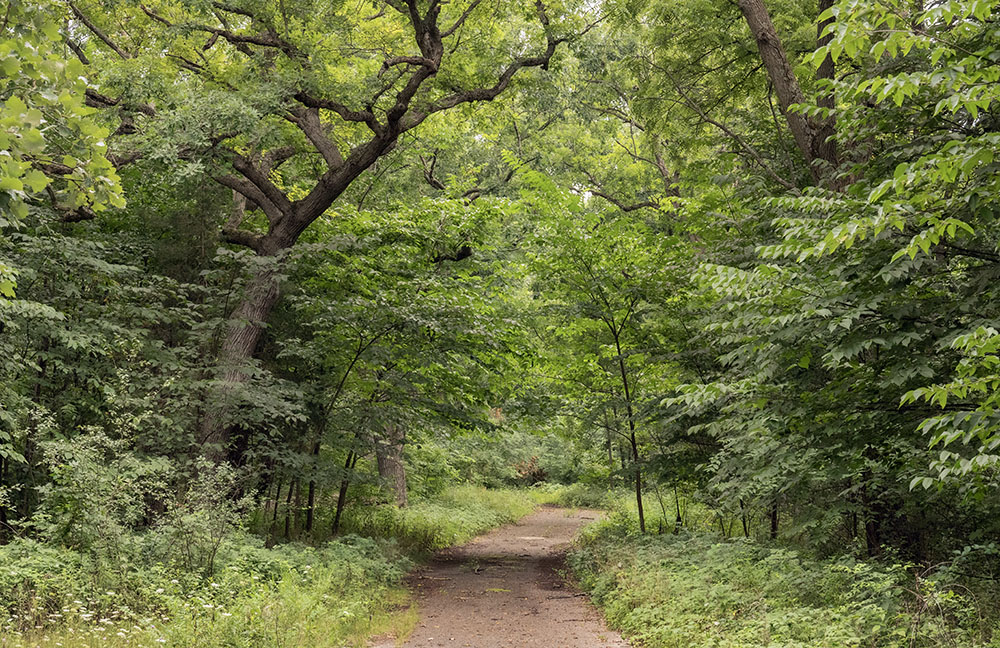
A gated drive leads into the park, if indeed it is a park. A sign on the gate reading “Waukesha County Parks” seems to indicate as much. But the absence of a name contradicts the impression. Sidestepping the gate, I head down decaying asphalt into the forest with no expectations, but prepared for disappointment. What I find proves better than anything my imagination might have produced.
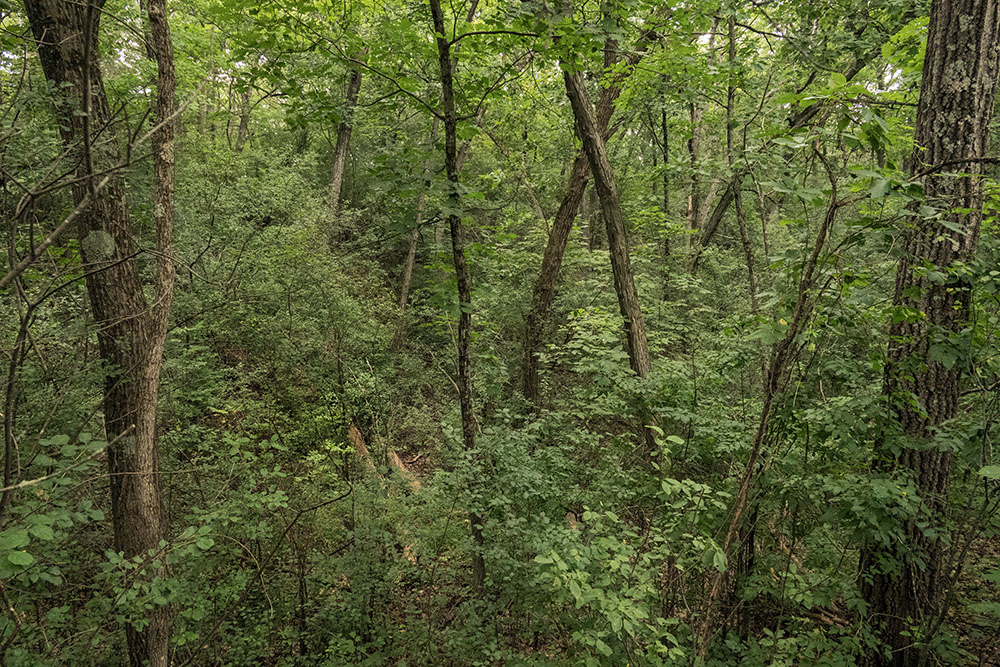
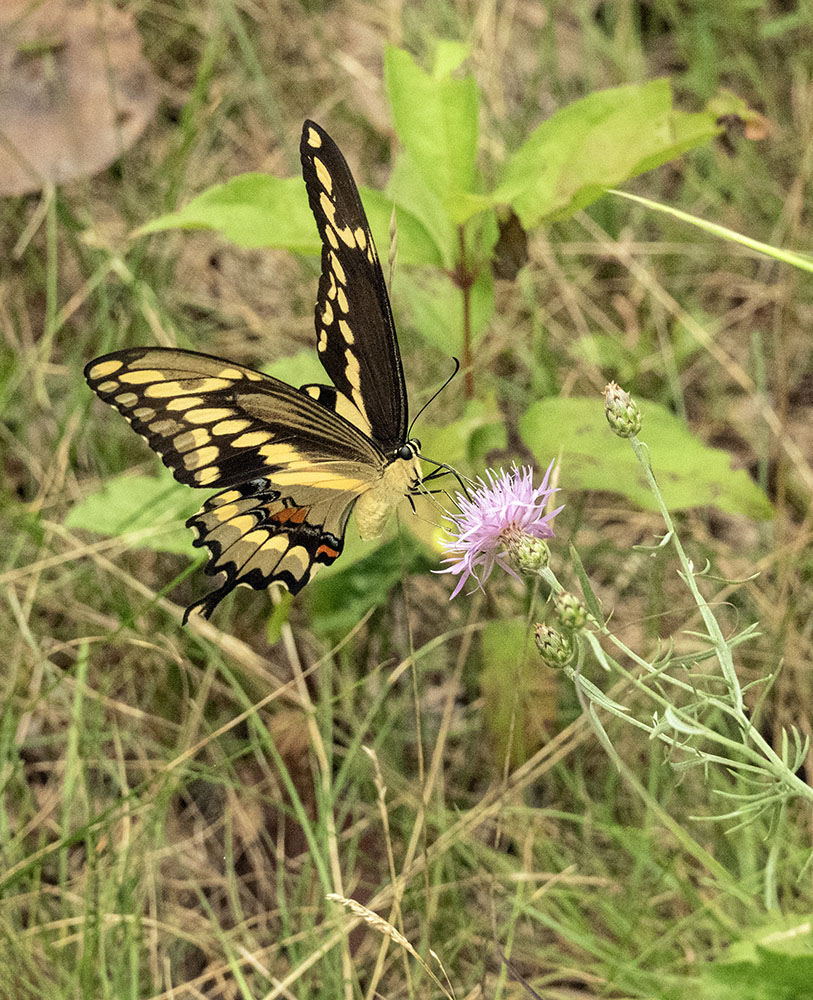
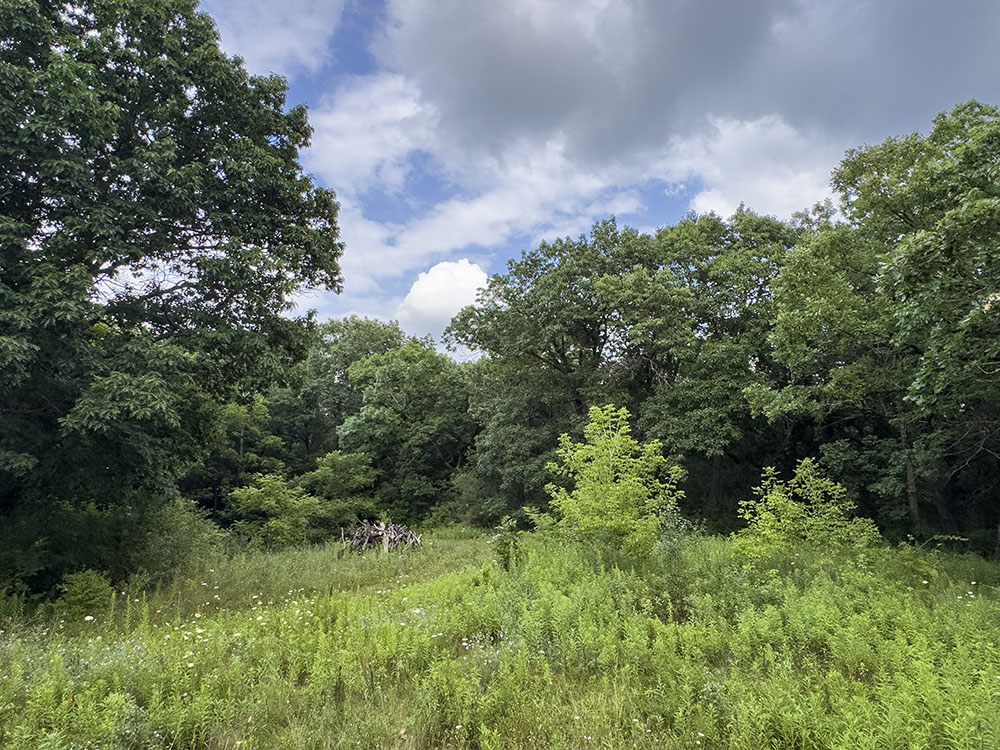
The asphalt tunnels through the forest along a ridge between two wooded depressions that might be glacial kettles. After about a quarter mile the drive dips, then rises again to a broad opening and a square of pavement. No doubt a house and garage once stood here, someone’s castle in the wilderness. I wade across the open space dominated by spotted knapweed and Queen Anne’s lace. Small patches of brown-eyed Susans and flowering spurge stand out amongst the invasives. A giant eastern swallowtail flutters past my nose and dozens of grasshoppers spring out of my path like popcorn on a hot buttered pan.
On the far side a pair of dirt tracks lead off in different directions. Characteristically at such forks the poetic musing of Robert Frost comes to mind: “Two roads diverged in a wood and I …. ” As Frost famously did, I also take the one less traveled by, far more overgrown and leading straight on into the forest ahead, continuing along high ground. The other one, clearly more used and not just with foot traffic, shoots off sideways and down a slope. However, my impulse diverges from Frost’s at this point because I vow to return and explore it too.
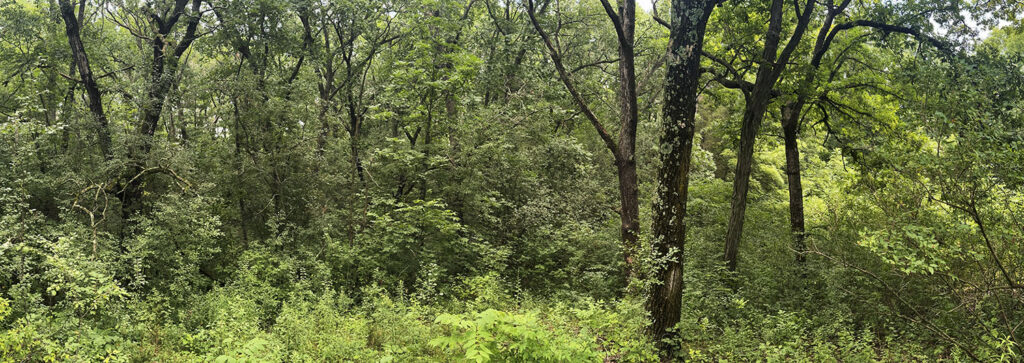
The track I choose had once been used by vehicles but is now reduced to a narrow footpath through the woodland grasses, sedges and wildflowers, overhung with an oak canopy. Brambles lining one side and a steep drop-off on the other keep me on the straight and narrow. Birdsong trills from the treetops like an invisible sound track accompanying me deeper into the wilds.
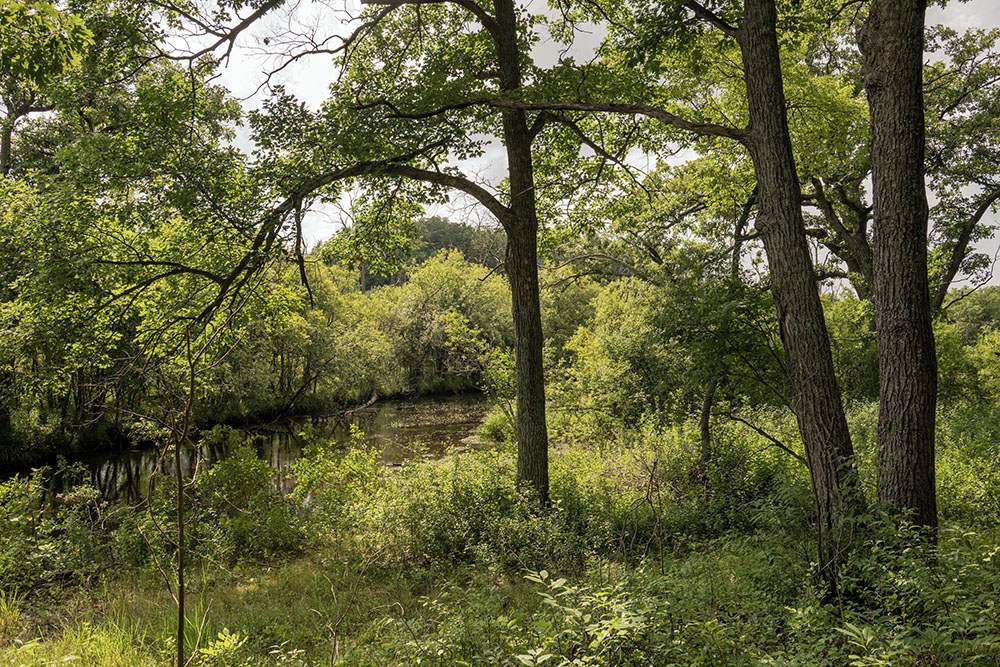
Before long the trail begins to descend. Then, through a screen of sandbar willows I catch a glimpse of water ahead. When I arrive at the verge of a swift-flowing stream I realize it isn’t some random pond or wetland but the fabled Mukwonago River itself. I reach down and dip my hand into the pure, cool water, reveling in its clarity. As I have written previously, the Mukwonago is renowned for its pristine water quality. An astonishing fifty-six species of fish make their home along its fourteen-mile length.
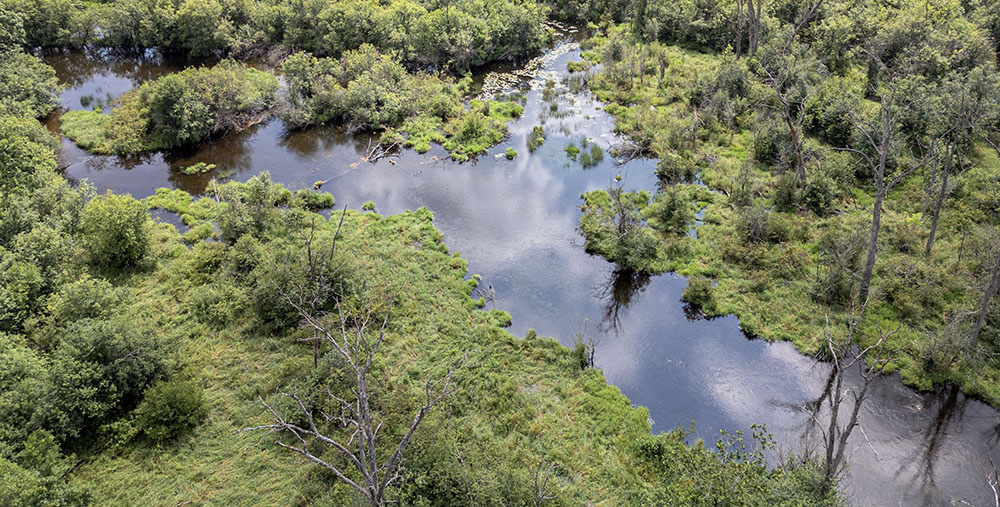
I pause my excursion at this point to raise aloft my drone, which I’ve been carrying in a backpack for the purpose. The bird’s-eye perspective it gives me reveals just how wild this place is. I have stumbled upon a puzzle piece—that blank spot on the map—that fits neatly into the U-shape of the Mukwonago River Unit of the Kettle Moraine State Forest. Of course I can’t see any boundaries. From the air it appears to be unbroken, impenetrable wilderness. The river meanders extravagantly through dense forest—twistier than just about any waterway I’ve ever encountered.
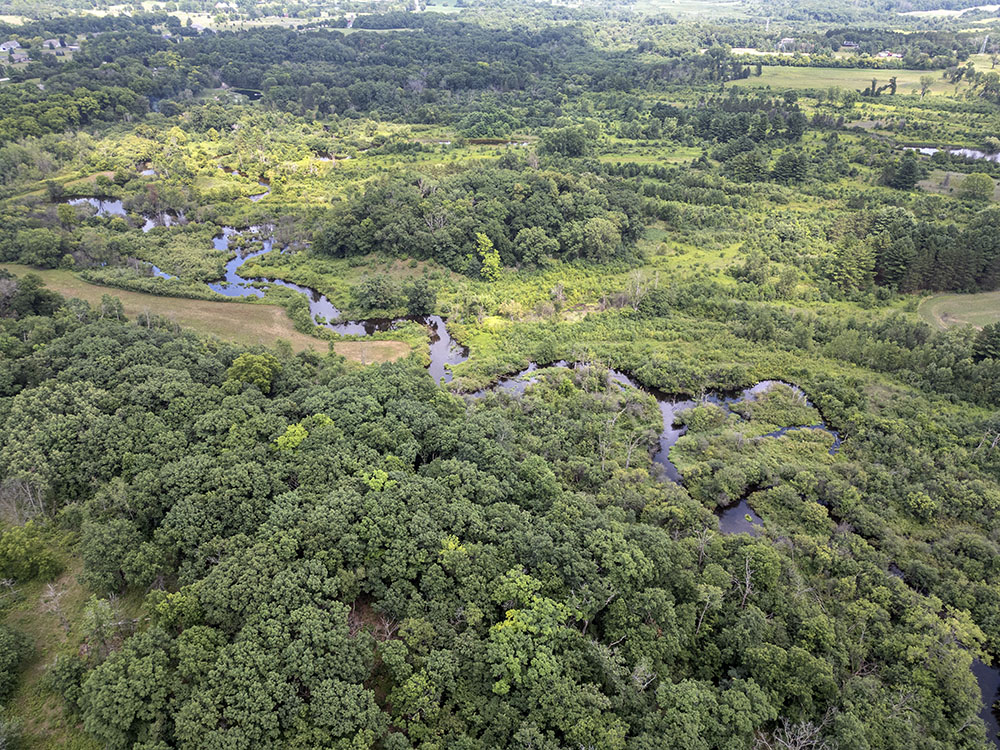
Protecting this remarkable puzzle piece was a well-considered attempt to mend and make seamless this critical portion of the Mukwonago watershed. The Wisconsin DNR acquired the bankrupt 970-acre Rainbow Springs Golf Club in 2008, turning it into the newest unit of the Kettle Moraine State Forest. Waukesha County purchased this missing piece in 2019 as intrinsically valuable remnant oak opening habitat—a globally threatened ecosystem. It is lightly managed using regular controlled burning to knock-back invasives and aid fire-adapted native white and bur oaks, keystone species of oak savannas. It isn’t maintained for recreation—as I’m discovering. However, the Waukesha County Parks Department reports it is popular during hunting season.
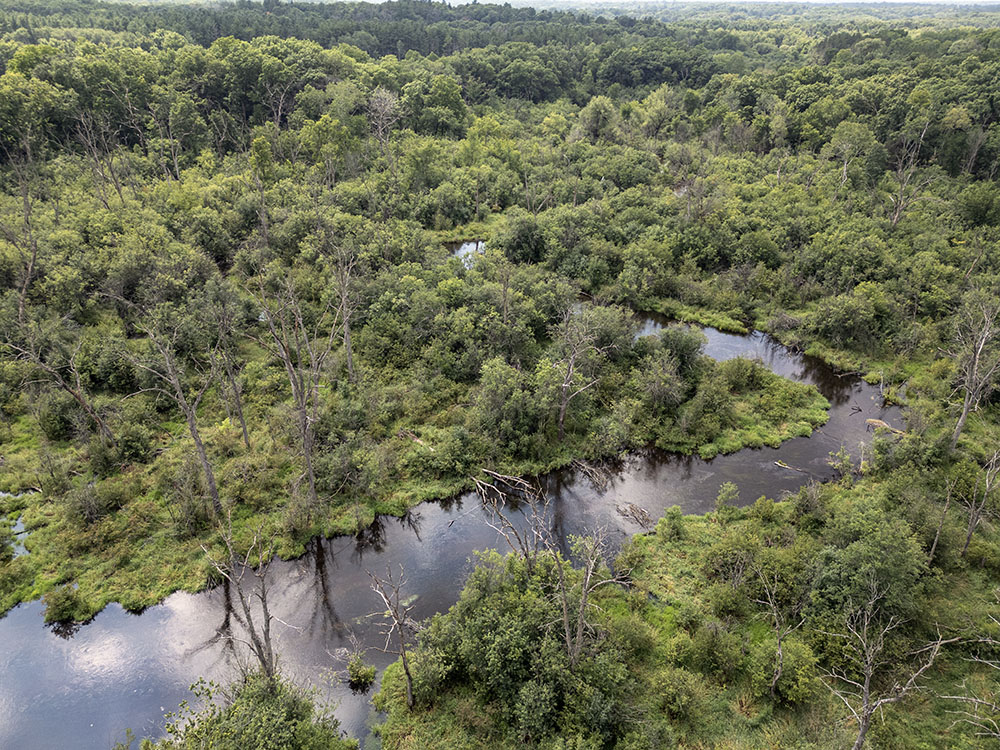
I’ve hiked in less than a mile. But it feels as if I’ve gone a great distance, if not in space then in time, back to a period when talk of wilderness was neither metaphorical nor casual. The words of Henry David Thoreau come to mind: “We need the tonic of wildness…. At the same time that we are earnest to explore and learn all things, we require that all things be mysterious and unexplorable, that land and sea be indefinitely wild, unsurveyed and unfathomed by us because unfathomable. We can never have enough of nature.”
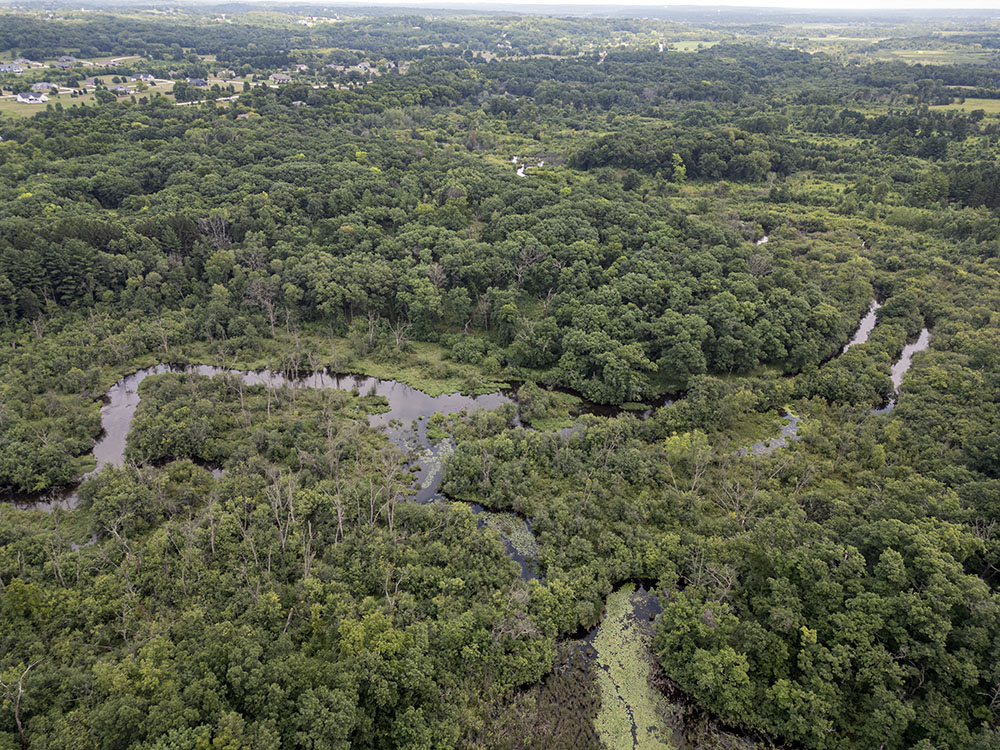
Continuing my journey, the footpath I’ve been walking follows the river around the base of the hill I came down. Around the far side I come to another fork. This time the one “less traveled,” which I take again, goes only a short way before sinking into riparian wetland. I backtrack and take the other, which rises up the hill to loop back and join the trail I came in on. Retracing my steps, I return to the original fork and, with apologies to Frost, make good on my vow to explore the “more traveled road” this time. After all, “way did not lead on to way,” as predicted in the poem, my progress stymied by my encounter with the wilderness.
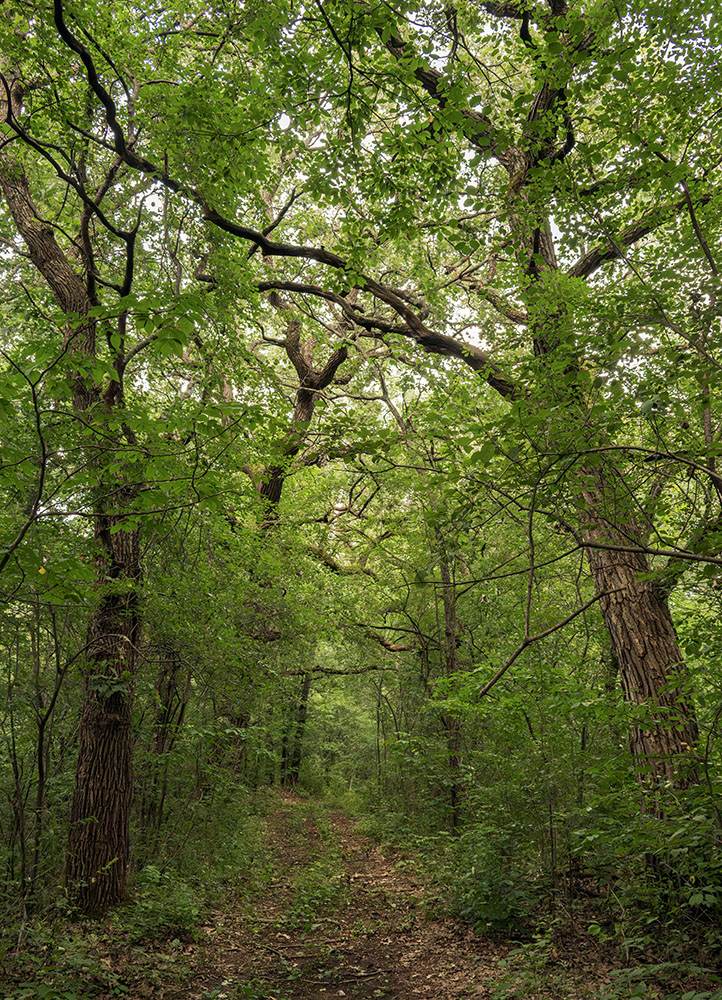
Although pretty rugged, tire wear indicates this other track has seen vehicular traffic in the not-distant past. It twists like the meandering river along the rambling ridge top before dropping, rather abruptly. You’d need a pretty sturdy vehicle, I muse, to negotiate the incline. At the bottom the track spills out into open space. A sign reveals that I’ve reached the boundary of the Kettle Moraine Forest lands. I’ve inadvertently discovered a back door to the park. I walk out into bright sunlight and onto coarsely cropped stubble. Although it’s being restored with native prairie plants, it’s still easy to imagine the neatly mowed fairway that was here when it was a golf course.
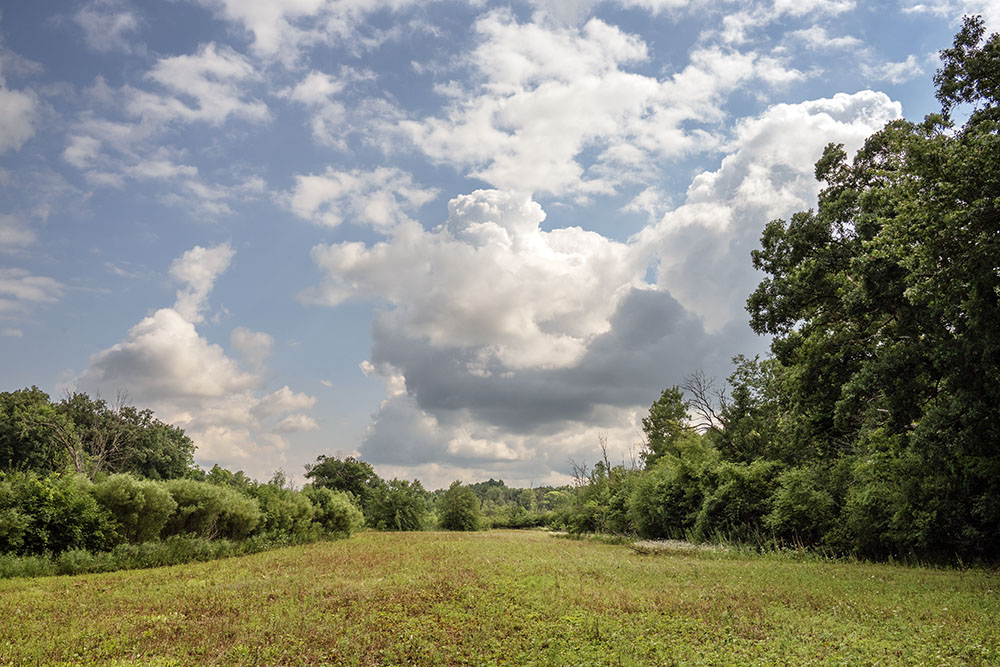
A Memo of Understanding for mutual cooperation between Waukesha County and the DNR allows for access to this rather remote portion of the State Forest, as well as for other management activities. Conservation, when effective, is an active verb and not a passive condition. I look forward to revisiting when this field looks more like a prairie and less like a fairway!
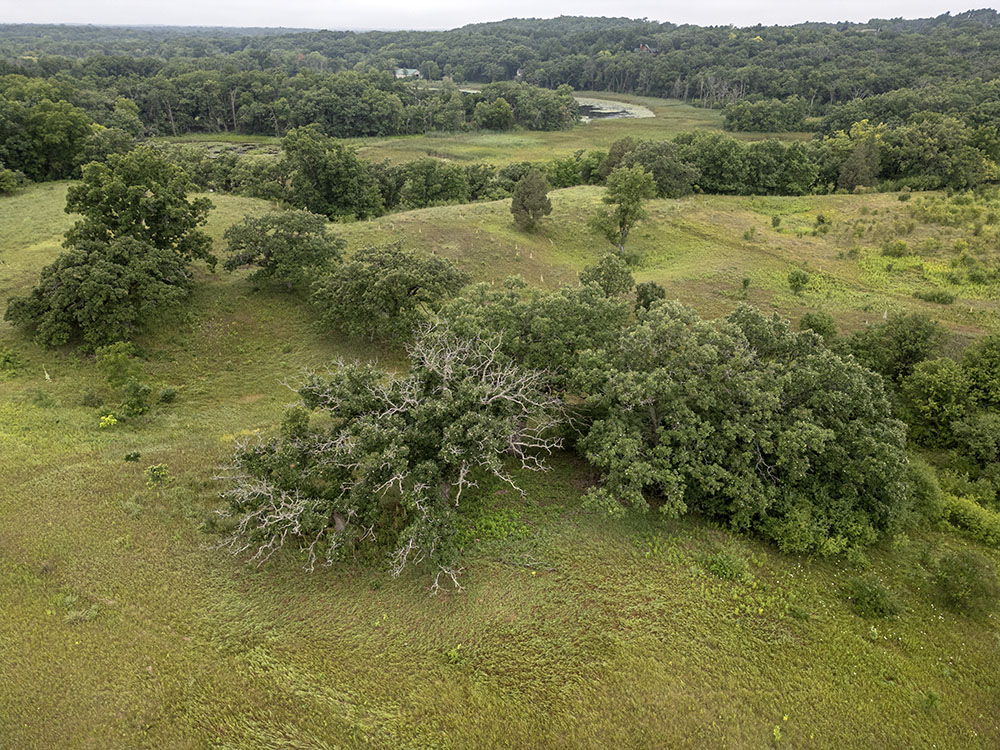
I return to my car. An ancient bur oak beckons me towards Lakewood Farms Preserve across the road, yet another of the many beautiful preserves that have been established in order to help maintain the reputation of the Mukwonago River watershed as one of the most pristine in the state. I’ll save the first for another day and even though way leads on to way …, well, I promise I will come back. Frost was clearly wistful when he finished his famous poem. He claims that taking the road less traveled “made all the difference” and yet he titles the poem “The Road Not Taken” (my emphasis) as if he continues to wonder what might have transpired if he had.
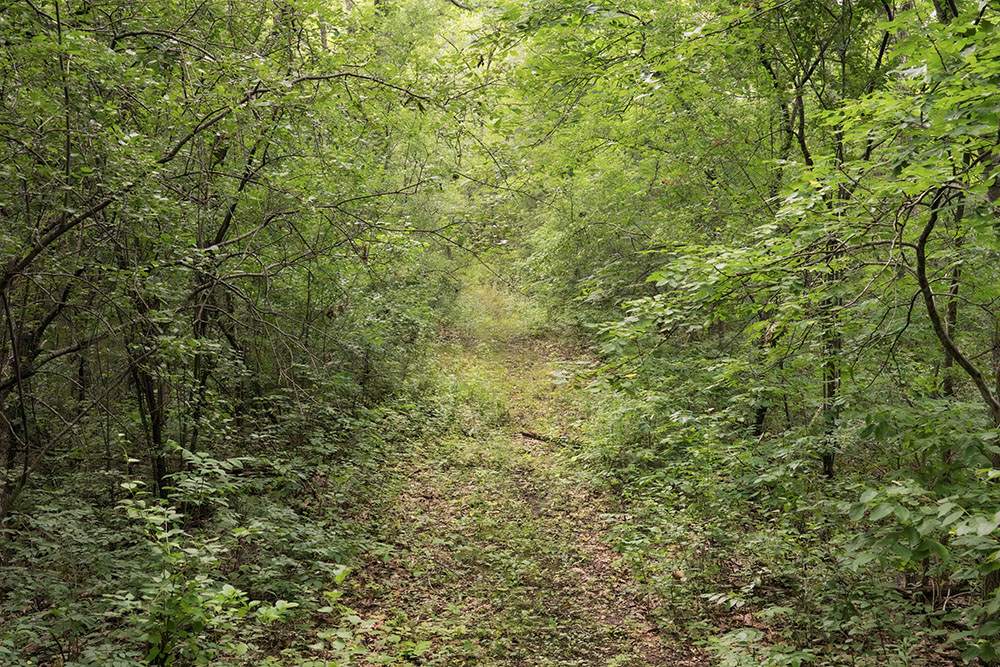
We as a society, in fact as a human species, are faced with a choice of roads towards the future. I hope—and believe—it’s not too late to take the one less traveled, the one that ends in a sustainable planetary ecosystem, with greater, not lesser biodiversity and with respect for the interdependent web of life. The Mukwonago River watershed is a symbol of this hope.
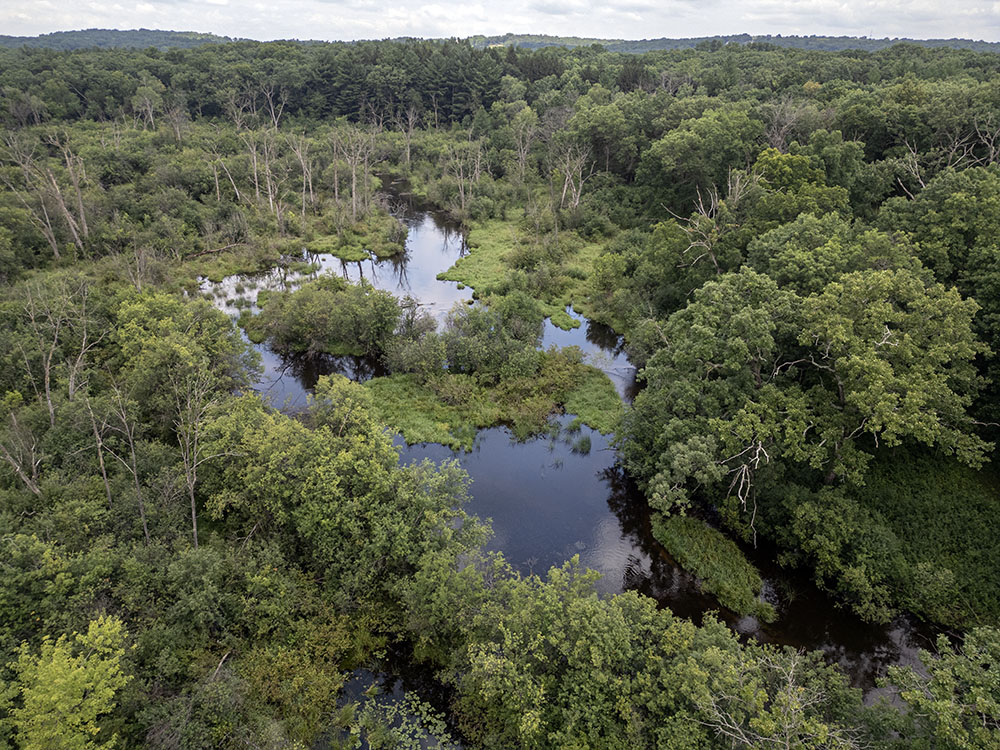
“Something will have gone out of us as a people if we ever let the remaining wilderness be destroyed … We simply need that wild country available to us, even if we never do more than drive to its edge and look in.”
~ Wallace Stegner
Note: I would like to thank the Waukesha County Parks Department for providing much of the factual information for this story.
Related story:
Mukwonago River: A Guide to Preserves in a Surprisingly Pristine Watershed
Eddee Daniel, writer/photographer, is a board member of Preserve Our Parks, the Program Director of A Wealth of Nature, and editor of The Natural Realm blog. Read more or subscribe at awealthofnature.org. Also available by arrangement for group presentations and guided tours.
Waukesha County Land Conservancy and Waukesha County Parks are project partners of A Wealth of Nature.
The Natural Realm blog is part of A Wealth of Nature, which is a program of Preserve Our Parks.
About Preserve Our Parks
Preserve Our Parks, Inc. is an independent nonprofit organization dedicated to the preservation of parks and green spaces. Our mission: To advocate for and promote Milwaukee area parks and open spaces and to strive to protect the tenets of Wisconsin’s Public Trust Doctrine.
For more than 25 years, we have been a leader in advocating for the protection of Milwaukee County park lands, halting many proposals to develop, privatize, or sell local parkland and lakefront spaces. More information about POP, including past accomplishments, is available at www.preserveourparks.org.
One thought on "Exploring the Mukwonago River wilderness: A road less taken."
Comments are closed.
Thanks again, Eddee, for taking us to a beautiful and wild place.