

Martin’s Woods State Natural Area: Hotspot of Biodiversity!
May 12, 2026 | Topics: Events, Places
By Eddee Daniel
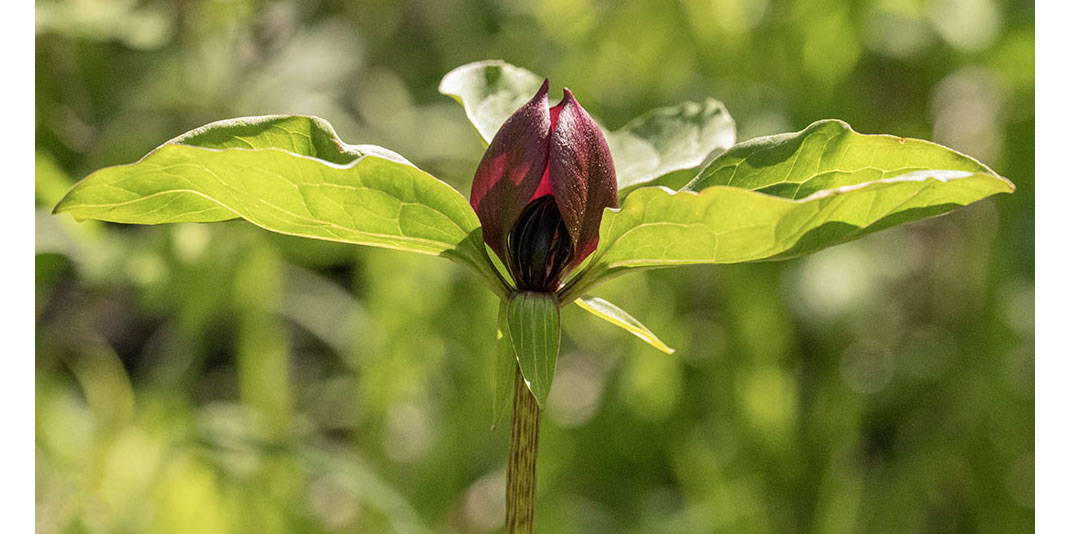
The first thing I noticed, not counting the fresh, greenish-yellow sheen of leaves budding throughout the forest, were the trilliums. Especially the prairie trillium, aka “bloody butcher” (above), with its distinctive deep burgundy, flame-like flower. Although rare in Wisconsin and therefore considered a “species of concern,” they were everywhere I looked. It was just the first introduction to the magic of Martin’s Woods State Natural Area in Waukesha County, a hotspot of biodiversity.
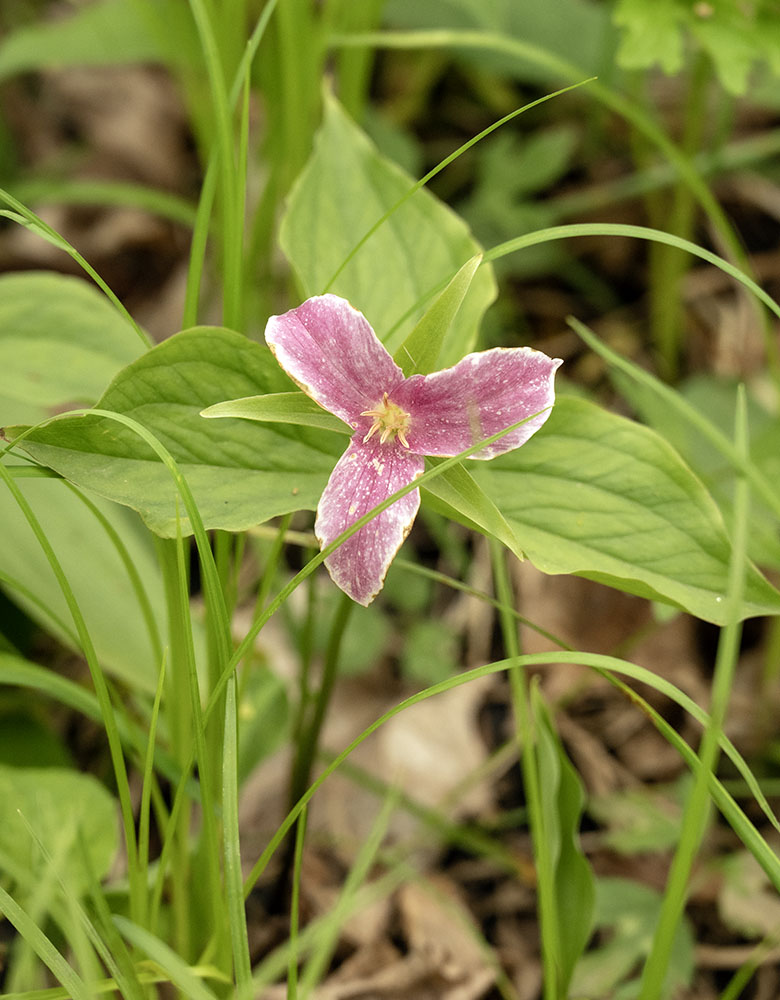
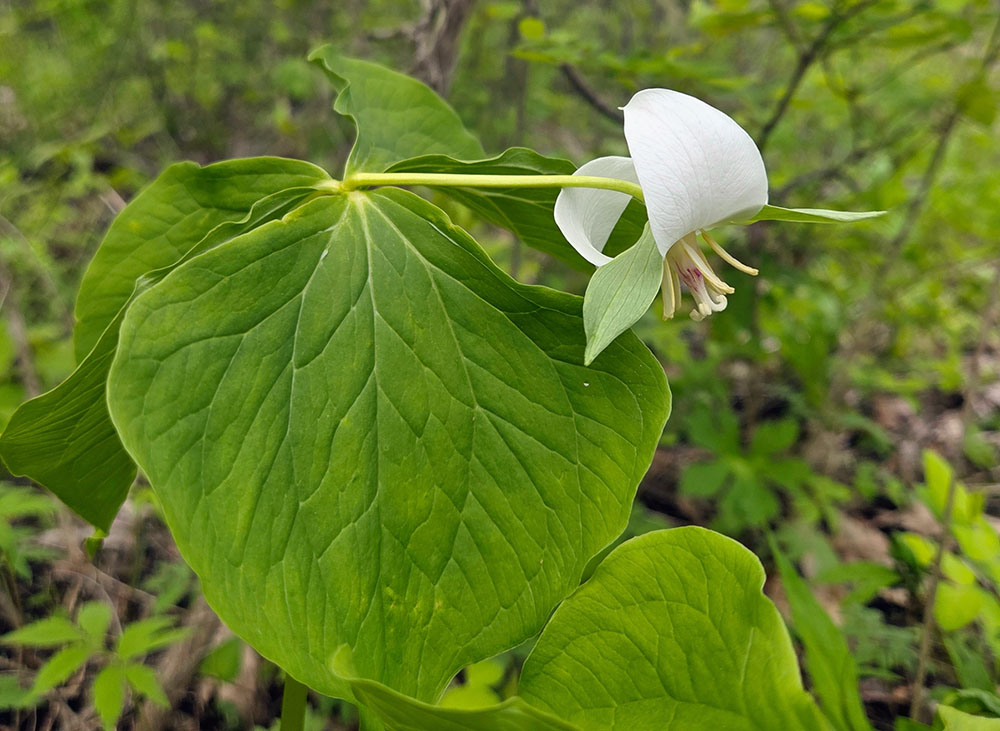
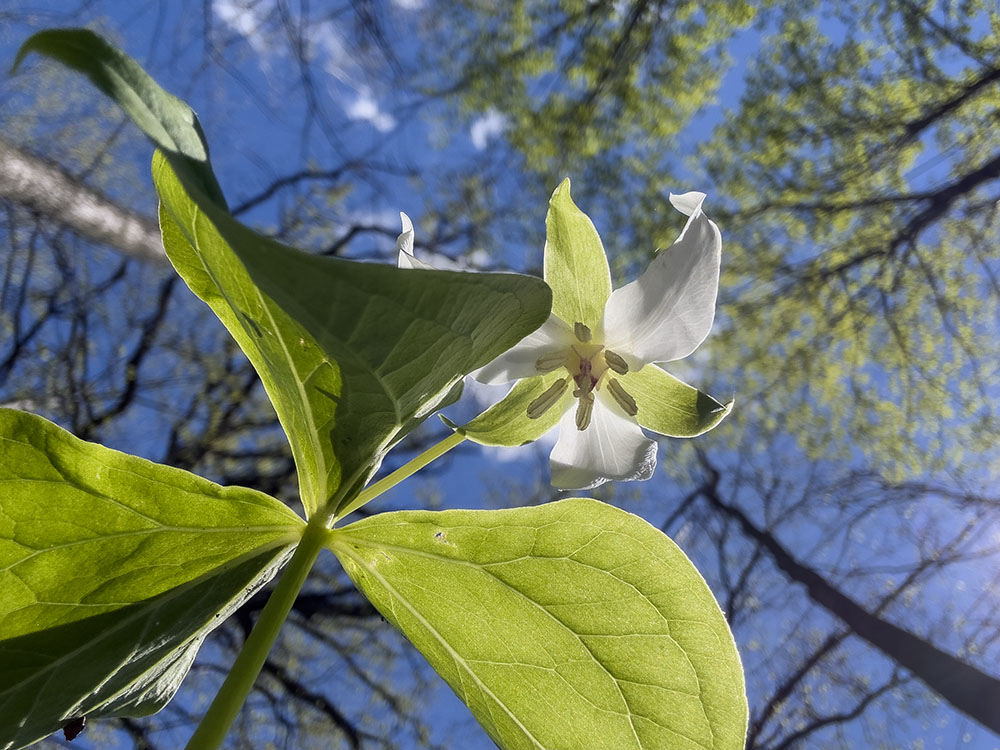
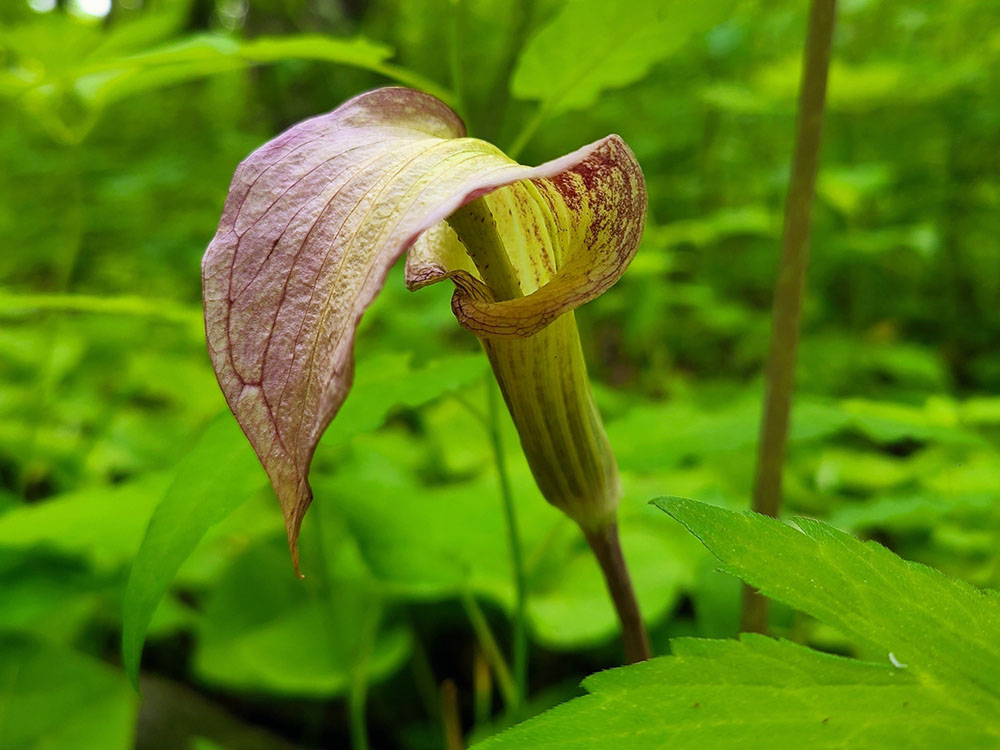
The more common bright white trilliums were about as plentiful as the prairie trilliums but not as widely dispersed, seen more in clusters. The best example of one I caught with my lens wasn’t white, however, but a rich pink, something that happens very briefly as the flower begins to fade. Within another day the pink blossom likely will fade further, droop and die. Talk about ephemeral! But speaking of drooping…, a third, far less common, species of trillium showed up here and there as we made our way through the woodland: the drooping, or nodding, trillium has a flower that hangs downward, droops or nods, dangling below its leaves. “Hiding in plain sight unless you know to look for it,” said one of our guides. “Finding all three together is more than just a nice surprise,” she went on. “It’s a reminder of how special these protected areas truly are.”
The multitudinous trilliums were not the most surprising find of the day.
It was Mother’s Day. I joined a spring ephemerals tour of Martin’s Woods. The tour was guided by three highly informative members of Waukesha County Land Conservancy (WCLC), which owns the property, and organized through the field trip program of the Natural Resources Foundation of Wisconsin. Our group included visitors from as far away as Indiana, Missouri, and Texas! Another surprise.
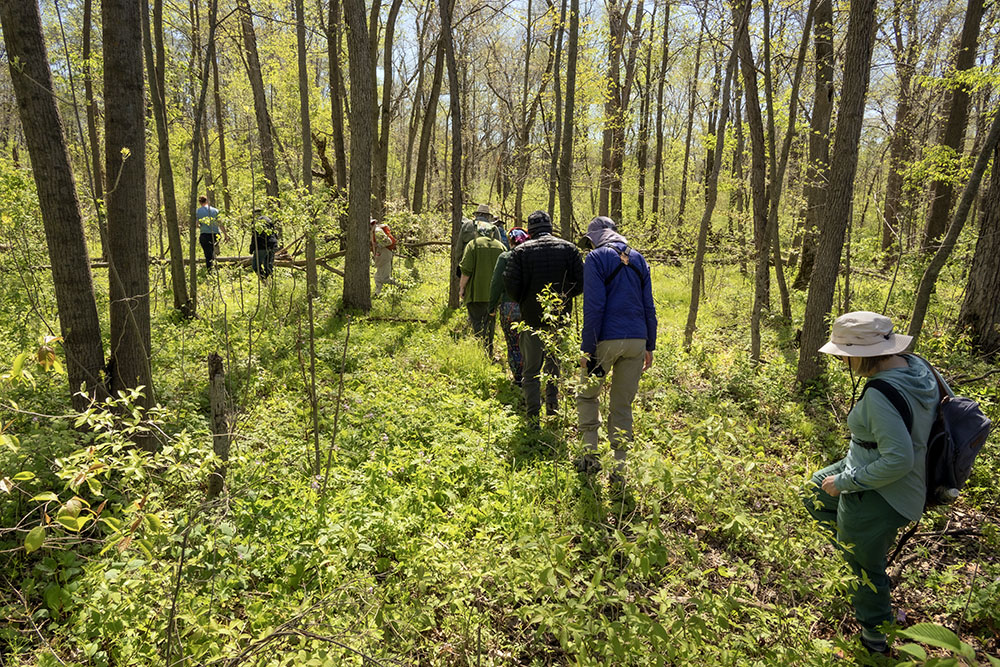
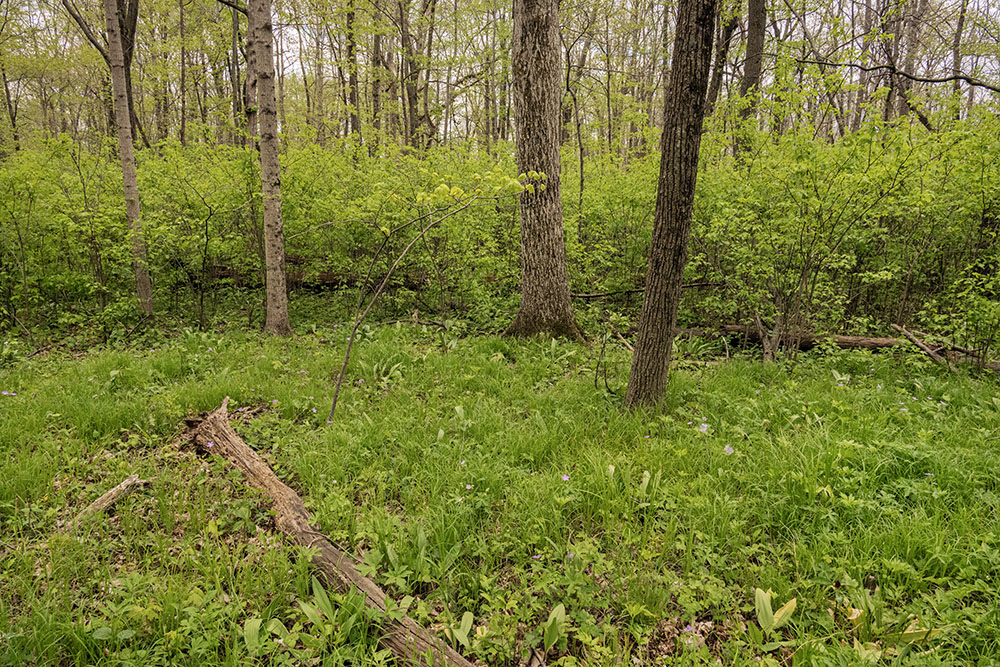
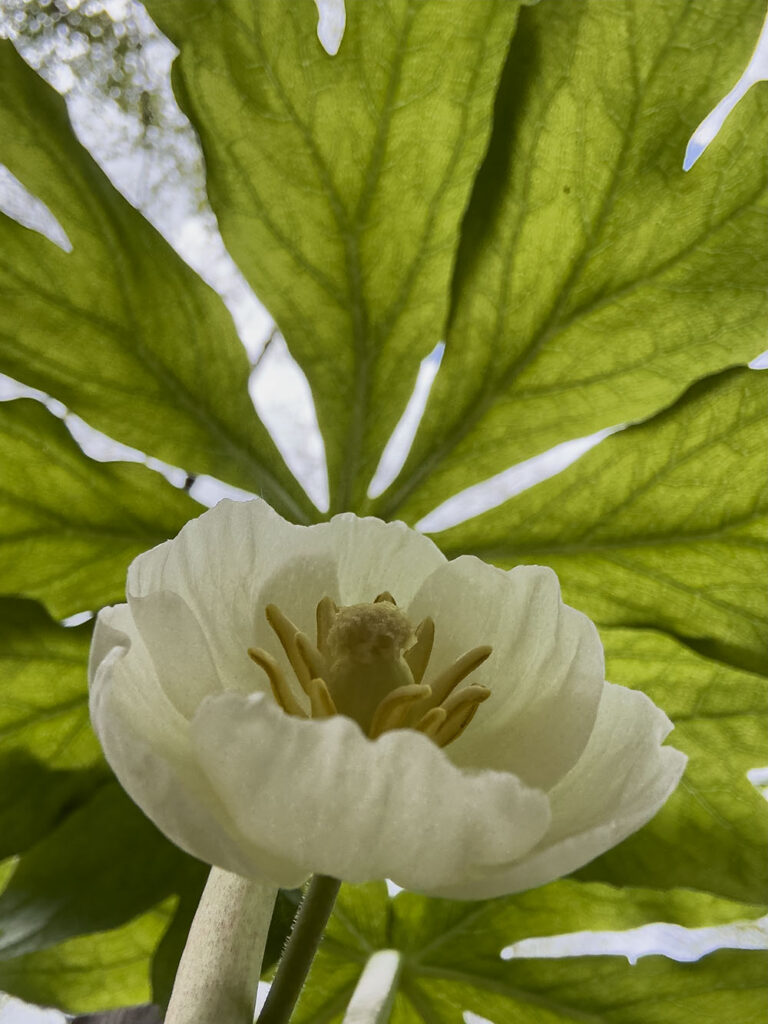
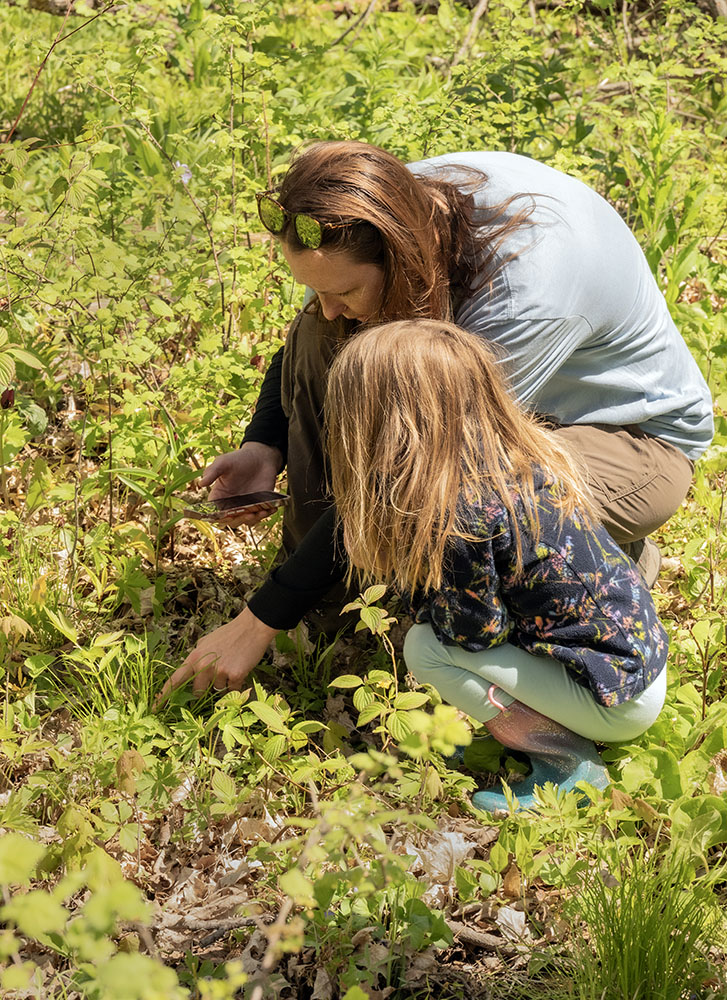
Martin’s Woods is considered a mesic forest, which means it’s fairly wet throughout the growing season. A remarkable variety of tree species make their home in this forest. Sugar maple and basswood dominate. Other species include chinquapin oak, basswood, American elm, red maple, black ash, bitternut hickory and black walnut. We saw a Kentucky coffee tree, which is native but uncommon in Wisconsin. But we were not there to look at the trees. We were there to, as one of our guides put it, get down on our hands and knees. It is the best way to appreciate the abundance and beauty of spring ephemeral flowers.
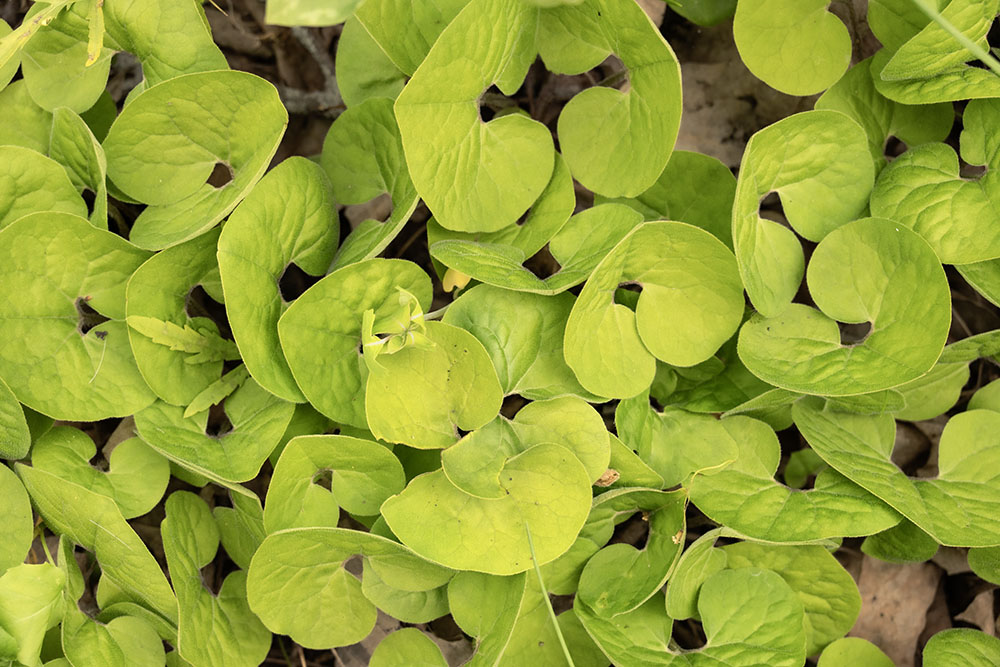
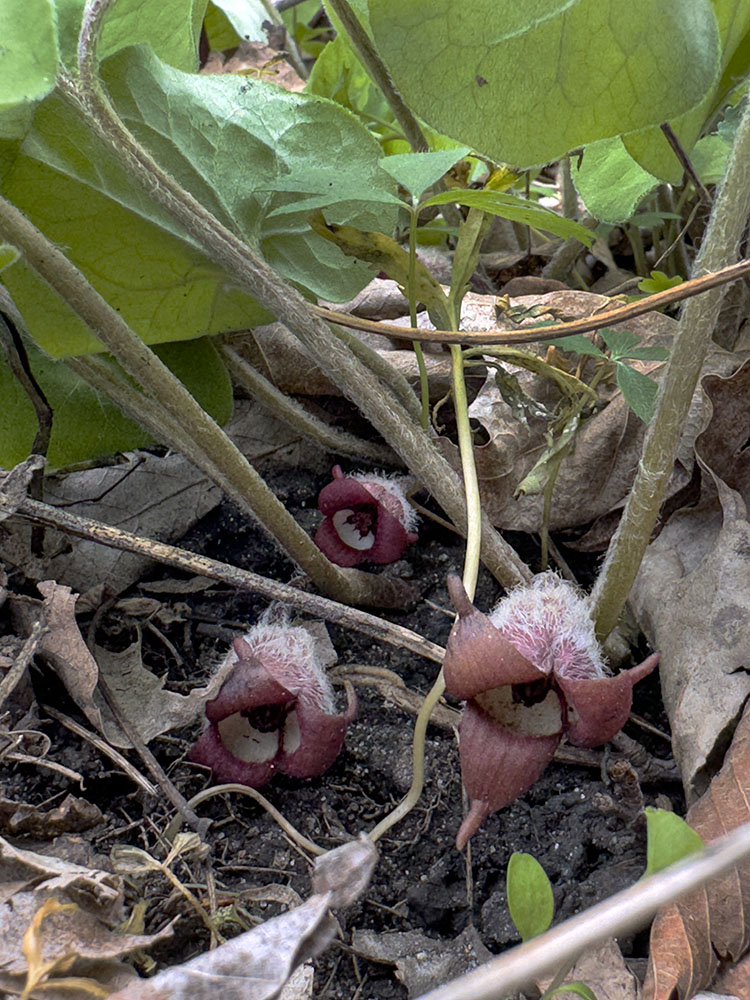
Take the wild ginger, for example. Its flower came as a huge surprise. Tiny though it is. Wild ginger is common; I’ve seen the curlicue patterns of its leaves many times in many places. But I’ve never seen its flower, until one of our guides knelt down and lifted a leaf. There they were, completely hidden. I did it too. The flowers were everywhere, lying on the ground under every ginger leaf, a demure reddish-brown, triangular with curled edges, like a tricorn hat.
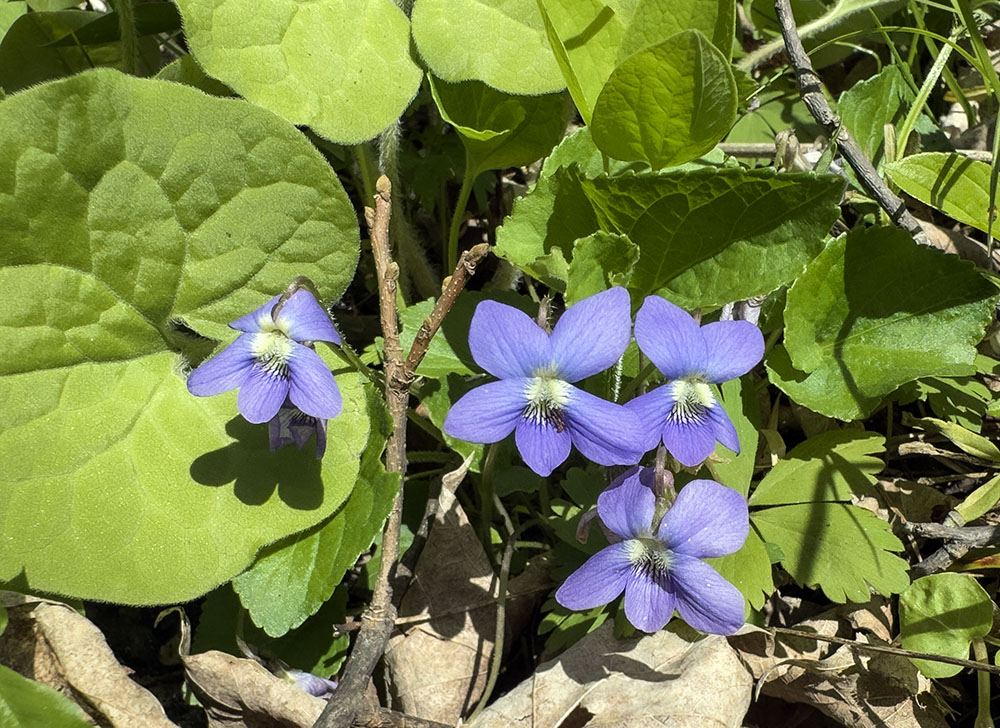
What is a spring ephemeral flower anyway? The key concept here is “ephemeral,” meaning transient. It’s a relative term. Consider this: thinking in terms of geologic time frames, a human live is ephemeral. By comparison, a spring ephemeral flower is a blink of the eye. However, the briefness of our appearance on Earth, whether human or flower, is not a measure of inherent worth. Ephemeral flowers are woodland plants that take advantage of the brief period of warming, sunny spring weather before the trees leaf out and close over the canopy, thereby casting dense shade across the forest floor. The flowers bud, blossom and die in a fleeting moment–some in the span of a week or two, some in only a day or two. You have to be out in the woods at just the right time to catch sight of them.
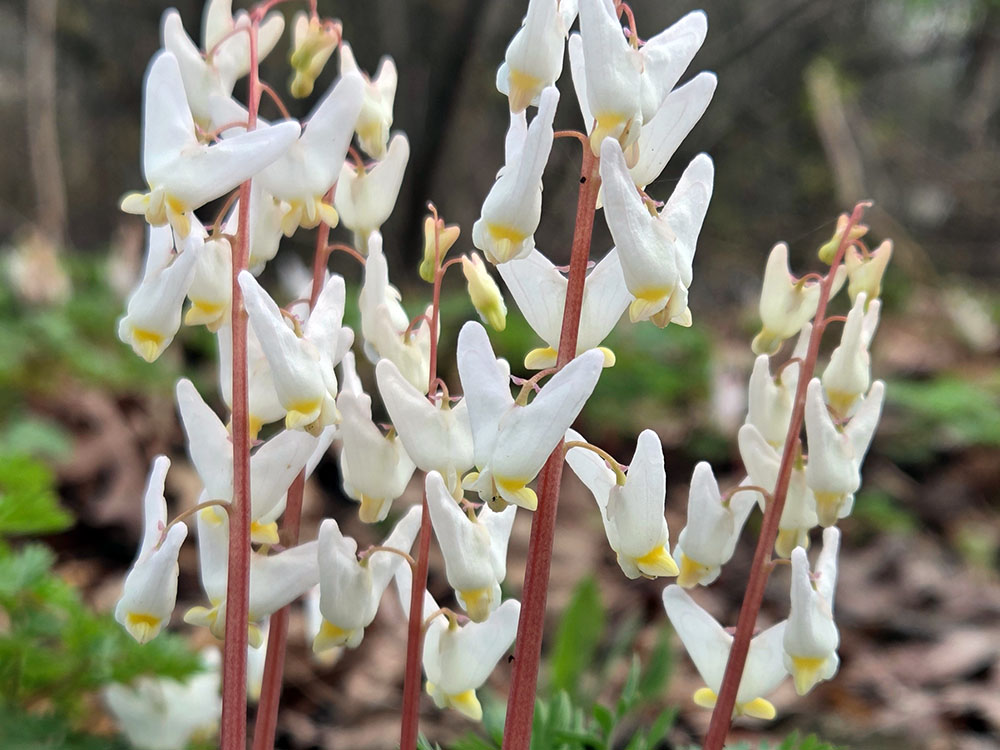
Right now, mid-May, is the perfect time in Wisconsin. Perfect for a large number of species, although being ephemeral, some have already come and gone, such as the hepatica and bloodroot. Others have yet to bloom, like Virginia bluebells. “The timing of everything in the forest is tightly choreographed,” said our guide.
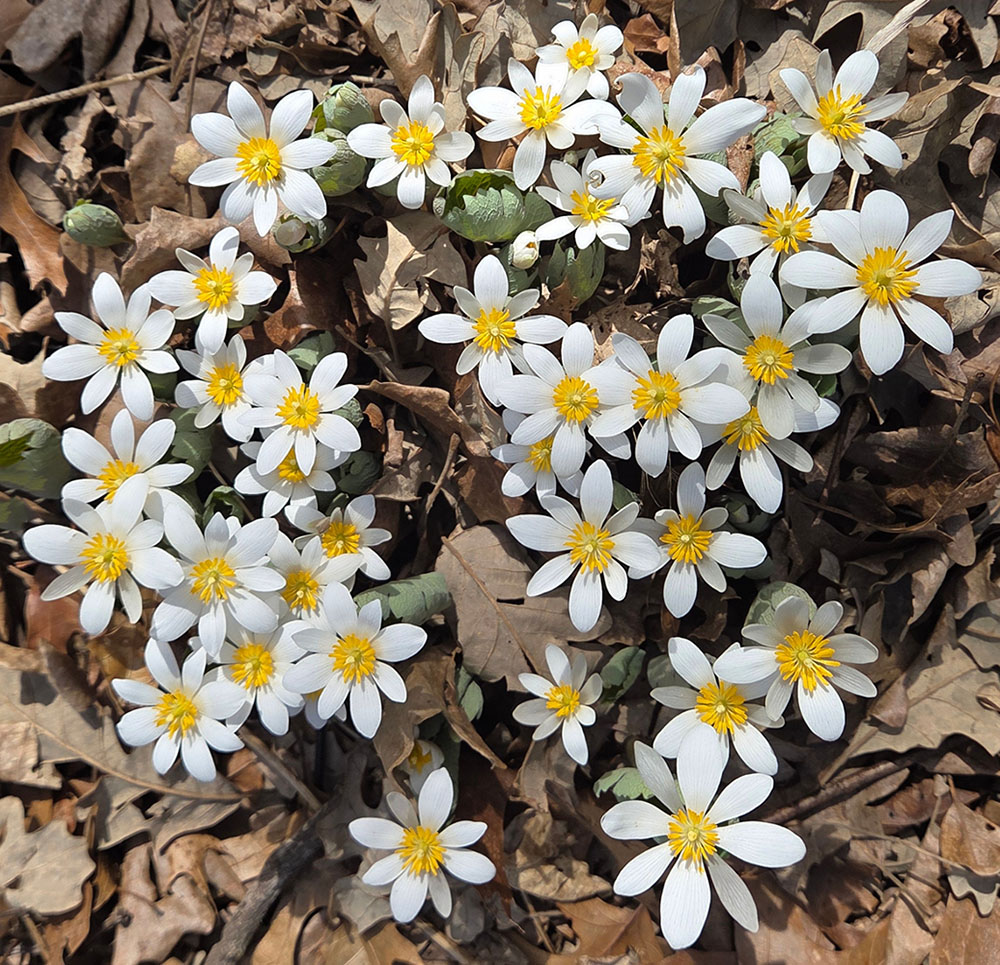
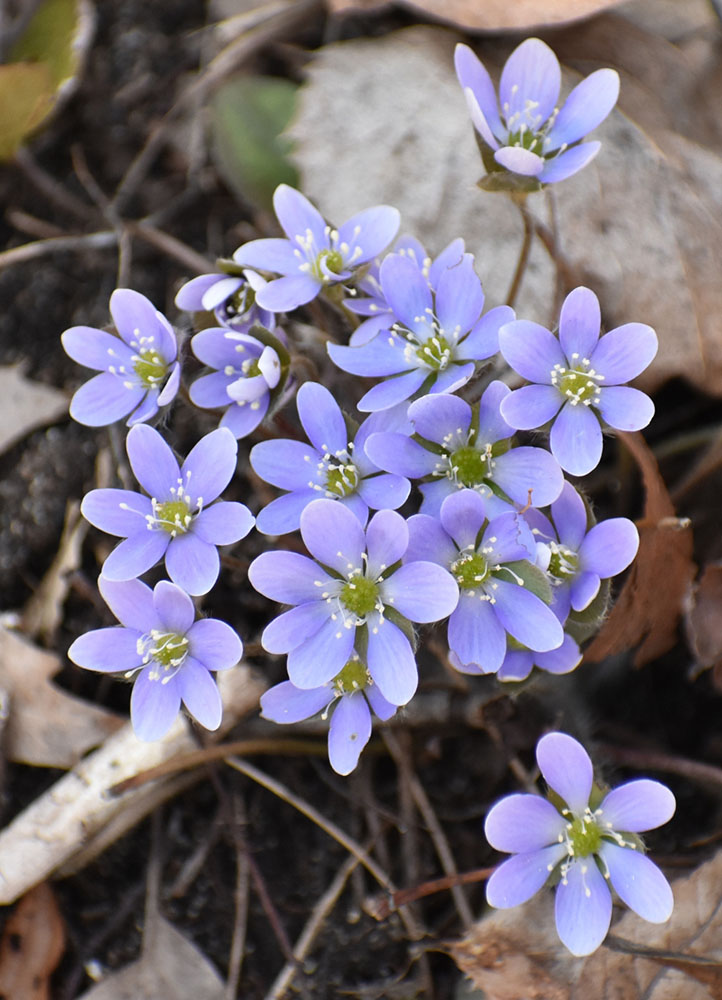
According to our guides, the 32 acres of the State Natural Area contains no fewer than four distinct plant communities: Bur Oak-Swamp White Oak Mixed Bottomland Forest, Maple-Ash-Elm Swamp, North-Central Maple-Basswood Forest, and Red Oak-Sugar Maple Dry-Mesic Forest. That technically precise mouthful of descriptions boils down to this: an amazing amount of biodiversity within a small area. WCLC purchased the property in 1993 and the WI DNR designated it a State Natural Area in 2002 in recognition of its outstanding ecological significance.
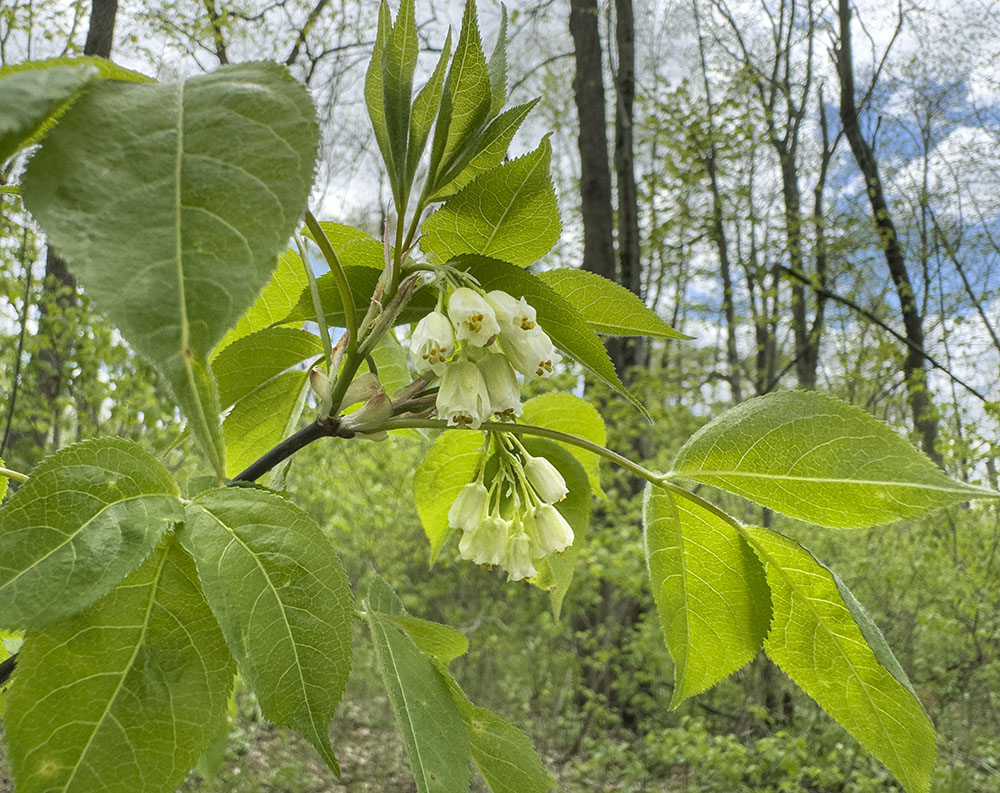
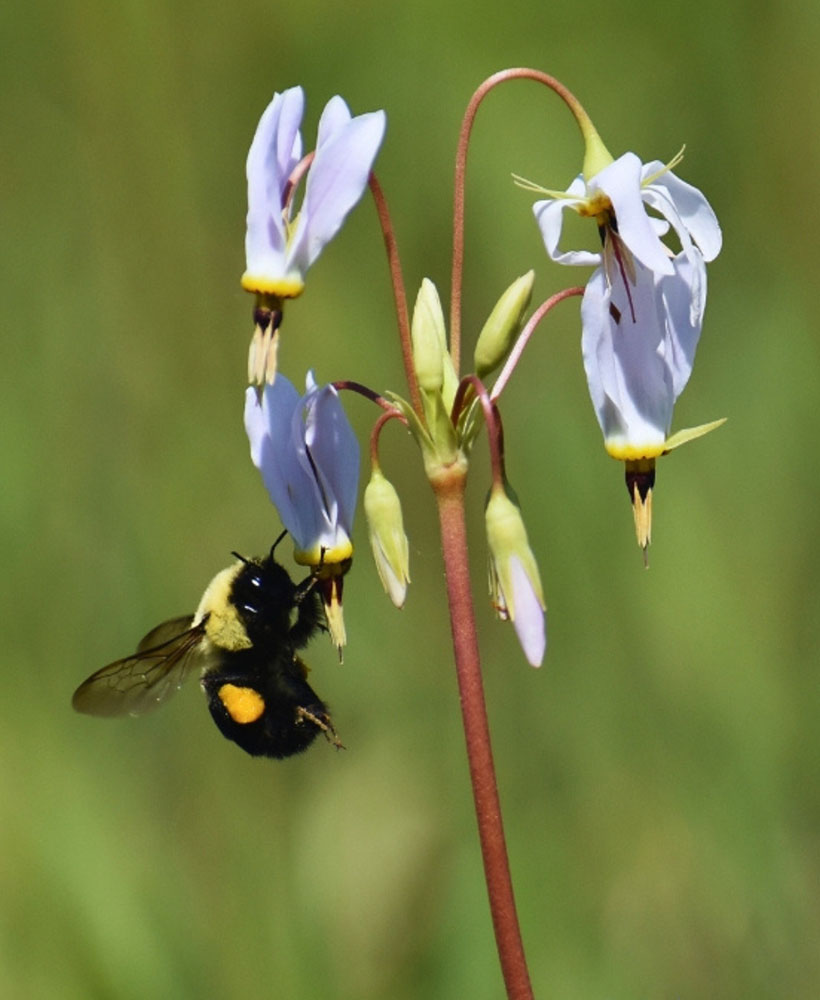
The most surprising thing I learned on this tour was not about an individual flower species but how the seeds are dispersed. Like most people, I’ve long known about the importance of birds and bees as pollinators, but once they’ve been pollinated, do you know how the seeds of most of Wisconsin’s spring ephemeral flowers are dispersed? The answer came as a big surprise to me. Neither birds nor bees. The spring ephemeral flowers in the woods are overwhelmingly pollinated by…, drumroll, …ants. Of all the things I learned on this guided tour, that fact caught my attention the most.
Here’s how our guide explained it in a follow-up email:
“The seeds of many ephemeral plants have a nutritious, fatty structure called an elaiosome that attracts ants. The ants carry the seeds back to their underground nests, eat the elaiosome, and then discard the intact seed in a protected, nutrient-rich environment where it has a great chance to germinate and grow. Think of an undercooked popcorn kernel. There are soft, edible parts around a hard center that you can eat around and then discard the “un-popped” core. In a similar way, ants are drawn to the fatty elaiosome on spring ephemeral seeds, consume that nutritious “snack,” and leave the actual seed behind.”
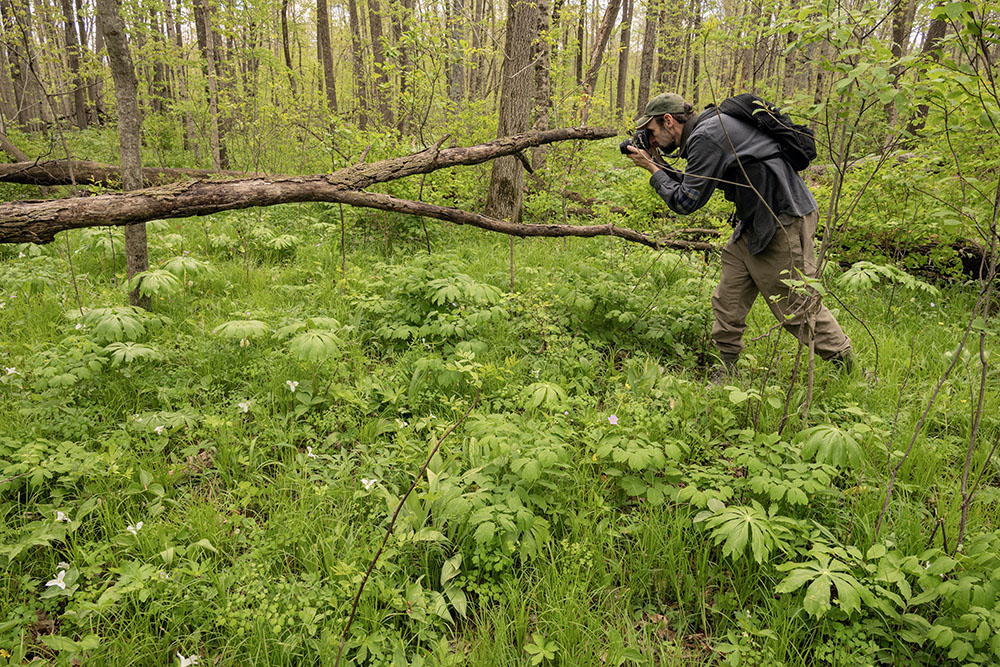
Visiting Martin’s Woods State Natural Area can be a bit of a challenge. It is located about half a mile west of downtown Big Bend on Edgewood Ave. There is a sign identifying the property, but it is about 500 ft east of the entrance to the parking lot, which has no signage. But it is the first driveway west of the Martin’s Woods sign on the south side of the road. The parking lot is on Waukesha County land and is shared by the Waukesha County Land Conservancy. From the parking lot a long narrow (gated) drive leads south to Waukesha County’s Fox Bend Park, taking you straight past the State Natural Area.
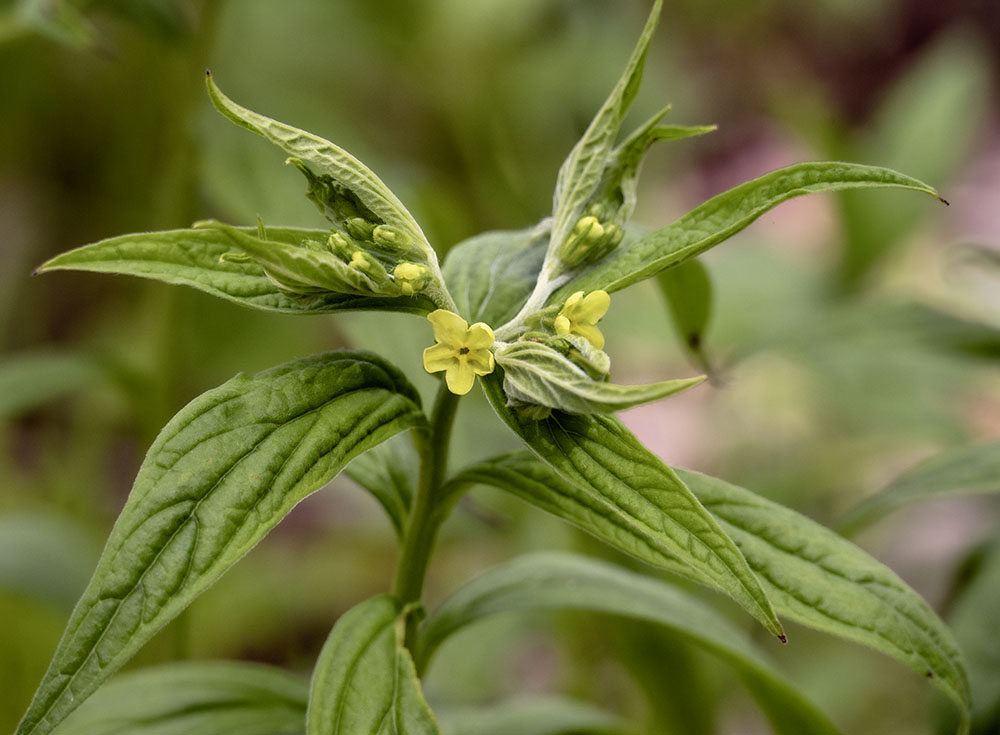
There are no developed trails in Martin’s Woods and so entering it involves actual bushwhacking. Anyone who does attempt to do so should remain mindful of the ecological sensitivity and significance of the woods (and check for ticks afterwards!) Our tour definitely discovered how easy it would be to trample unseen flowers, along with the essential minute critters that live in the leaf litter. No foraging is permitted.
You may want to simply enjoy the views of the woods as you walk past to access the trails in the county park, which lead all the way back to the Fox River–when they are not flooded. (I’m told that they currently are flooded from all the spring rains.) Fox Bend Park isn’t exactly a secret, but it also isn’t listed on the Waukesha County Parks website, nor does it have any signage.
If you do venture into the woods, tread lightly. You may not know whose fleeting moment on Earth you trample on.
As I said, this tour was sponsored by the Natural Resources Foundation of WI. For more information about the hundreds of similar field trips they offer every year, go to their website.
Related stories:
Spring wildflowers
A Glorious—and Ephemeral—Spring Morning!
A spring bouquet of wildflowers!
The Importance of the “Wild” in Wildflowers!
12 “Awards” for Spring Wildflowers and Wildlife in the Milwaukee Area
Ephemeral ponds
Vernal and Ephemeral: These Ponds Are Essential Habitats!
Waukesha County Land Conservancy and Natural Resources Foundation of Wisconsin and Waukesha County Parks are all project partners of A Wealth of Nature.
All photographs by Eddee Daniel except as noted.
Eddee Daniel, writer/photographer, is a board member of Preserve Our Parks, the Program Director of A Wealth of Nature, and editor of The Natural Realm blog. Read more or subscribe at awealthofnature.org. Also available by arrangement for group presentations and guided tours.
The Natural Realm blog is part of A Wealth of Nature, which is a project of Preserve Our Parks.
About Preserve Our Parks
Preserve Our Parks, Inc. is an independent nonprofit organization dedicated to the preservation of parks and green spaces. Our mission: To advocate for and promote Milwaukee area parks and open spaces and to strive to protect the tenets of Wisconsin’s Public Trust Doctrine.
For more than 25 years, we have been a leader in advocating for the protection of Milwaukee County park lands, halting many proposals to develop, privatize, or sell local parkland and lakefront spaces. More information about POP, including past accomplishments, is available at www.preserveourparks.org.
2 thoughts on "Martin’s Woods State Natural Area: Hotspot of Biodiversity!"
Comments are closed.
You have preserved fleeting beauty. Beautifully! Thank you for your generosity.
Always enjoy your commentary. So much to learn.j