

“Lichen, Fungi, and Moss. Oh My!” at Havenwoods State Forest
May 5, 2026 | Topics: Places, Stories
By Andie Zei
Photography by Eddee Daniel
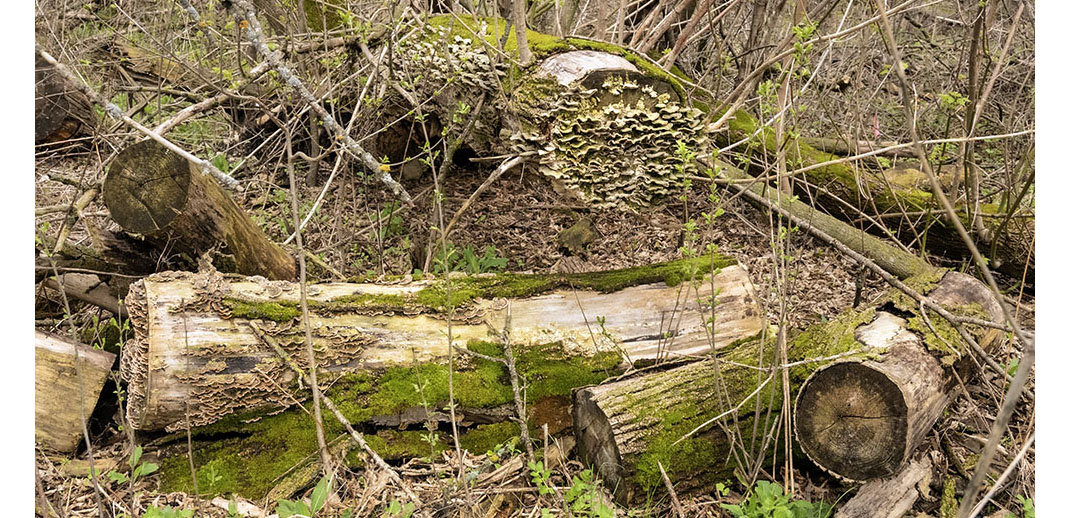
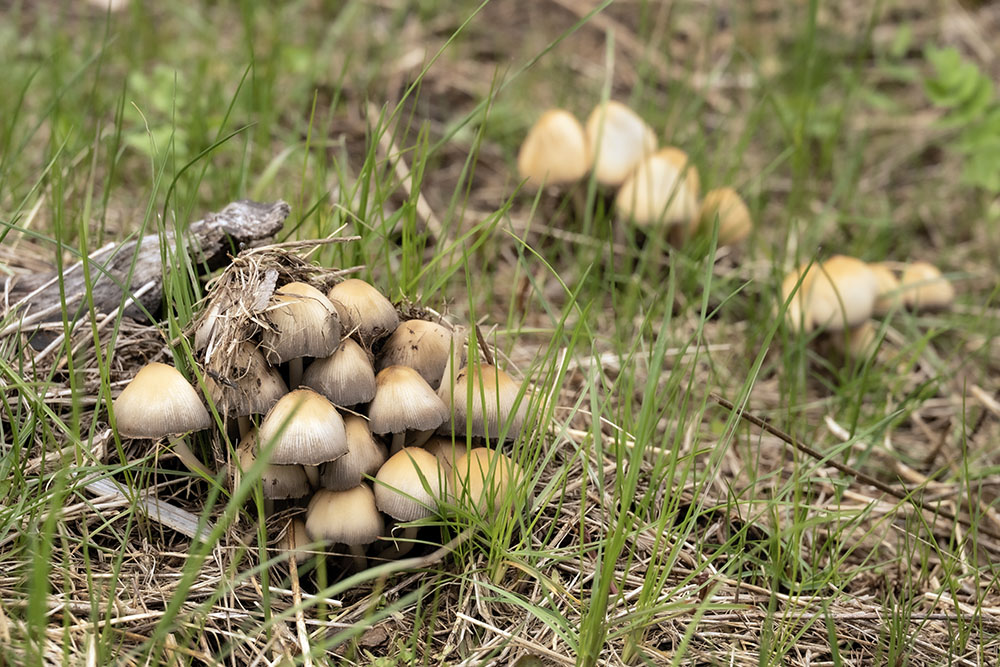
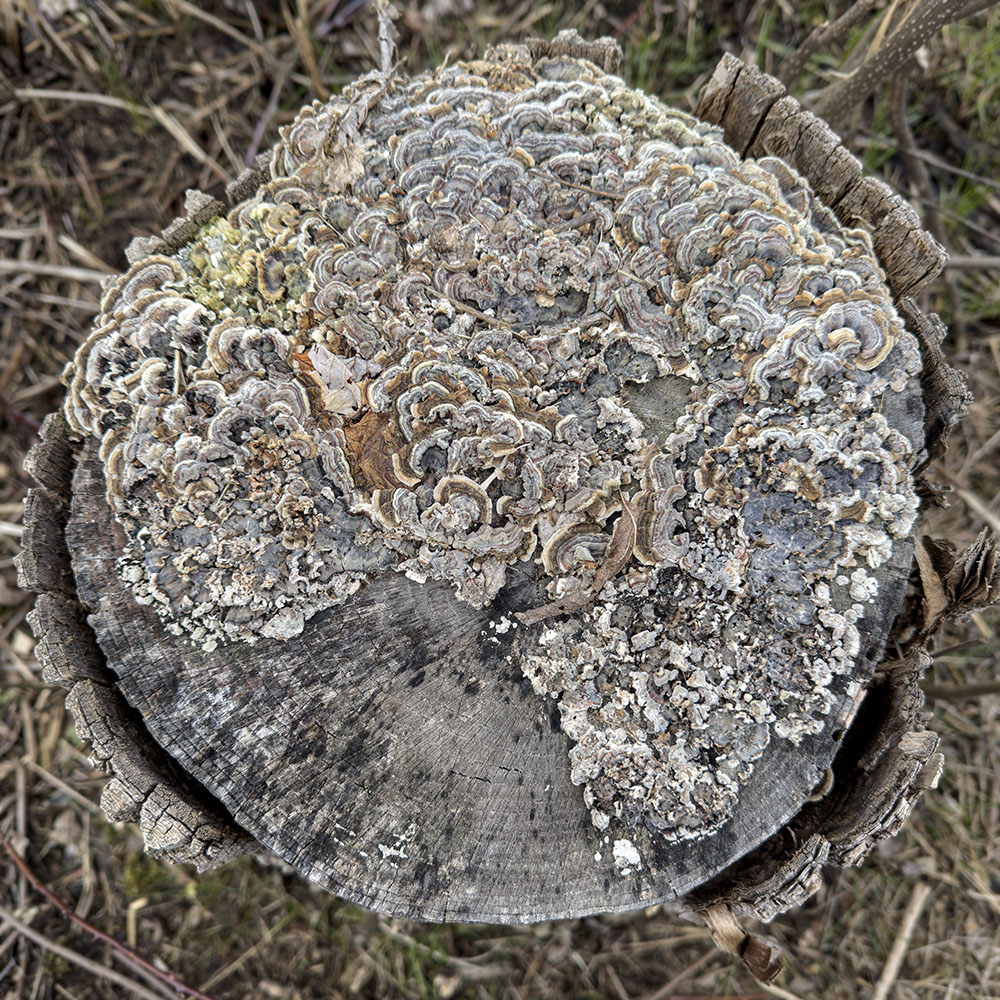
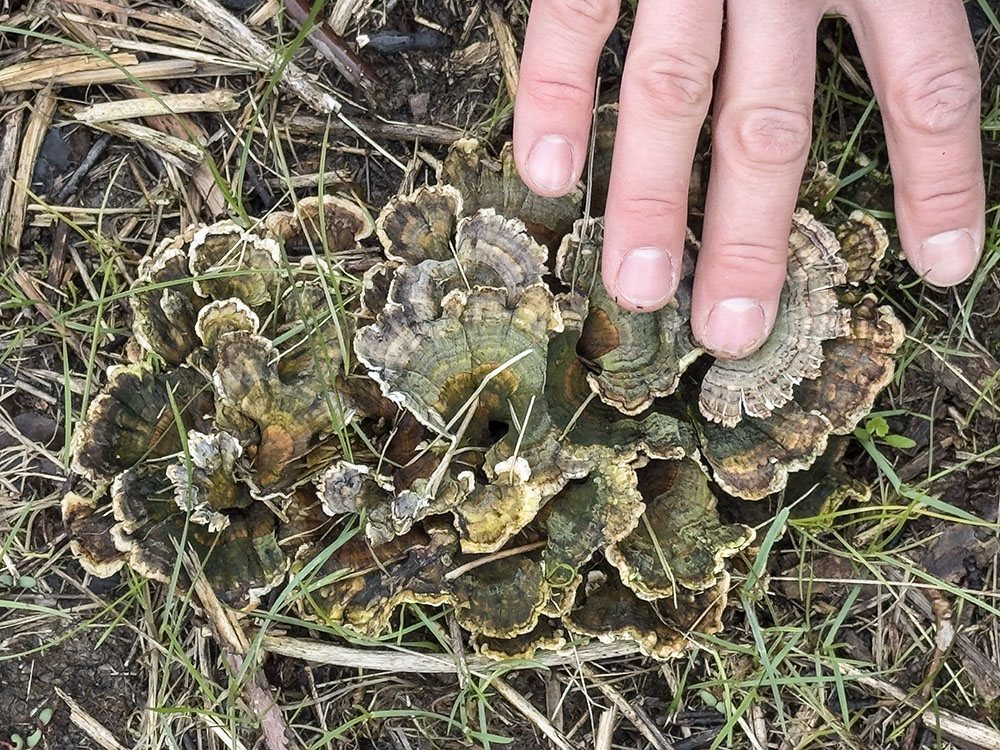
Fungi, moss and lichen are among the least understood residents of the forest. They share some characteristics and can often be found living together in close proximity. In fact, right at the start of our tour we came upon a bonanza in the form of a pile of dead logs in a small copse of trees, not far from the Havenwoods Nature Center (photo above). Everything, it seemed, was encrusted. Bright green moss stood out the most. Mushrooms made up for their somber colors with vibrant textures. It took a little more scrutiny to find the more modest lichens.
I graduated from UW-Milwaukee with a BA in Conservation and Environmental Science in December 2025. Shortly thereafter I began working at Havenwoods as a park ranger and naturalist educator. I’ve been eager to share my new knowledge and excitement with my community. So, I decided that my first program should be about these lesser-known forest denizens. Everyone who attended the hike brought their curiosity with them, which created an engaging group dynamic that I am very grateful for.
Moss are ancient land plants that are missing many of the characteristics people associate with plants. They have simplistic water transportation systems; they lack roots and vascular structures (circulatory systems). They do not reproduce with flowers or seeds; rather they have sporangia that produce spores. Most mosses are not easily identified without a microscope. Verdant patches of moss invite us to look closely and feel their soft foliage.
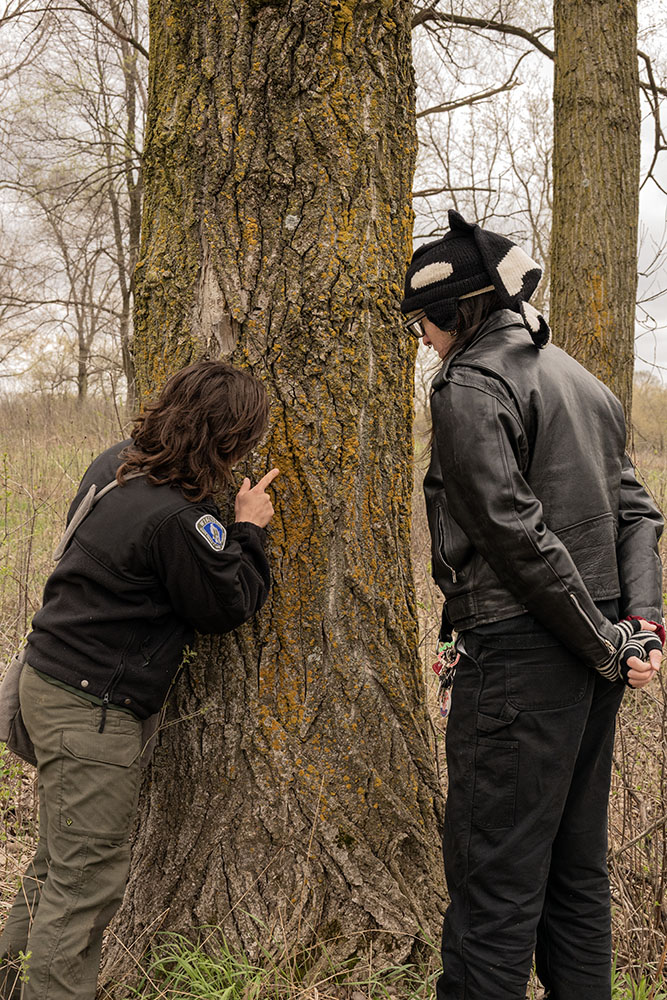
Lichens may superficially look like mosses or other plants, but they are not plants. Lichen are symbiotic colonies of algae or cyanobacteria combined with fungi. The fungus provides structure and helps collect water and nutrients from the air to share with its photosynthetic counterpart, which produces carbon that it also shares. Lichen requires good air quality and a lot of time to grow, so we find only a few species in urban parks. They colonize trees, rocks, manmade structures, and the ground by spreading spores or fragmenting. Lichen does not uptake nutrients from, nor damage the trees they grow on. Mosaics of colorful lichen covering mature trees are beautiful reminders of how interdependent life is.
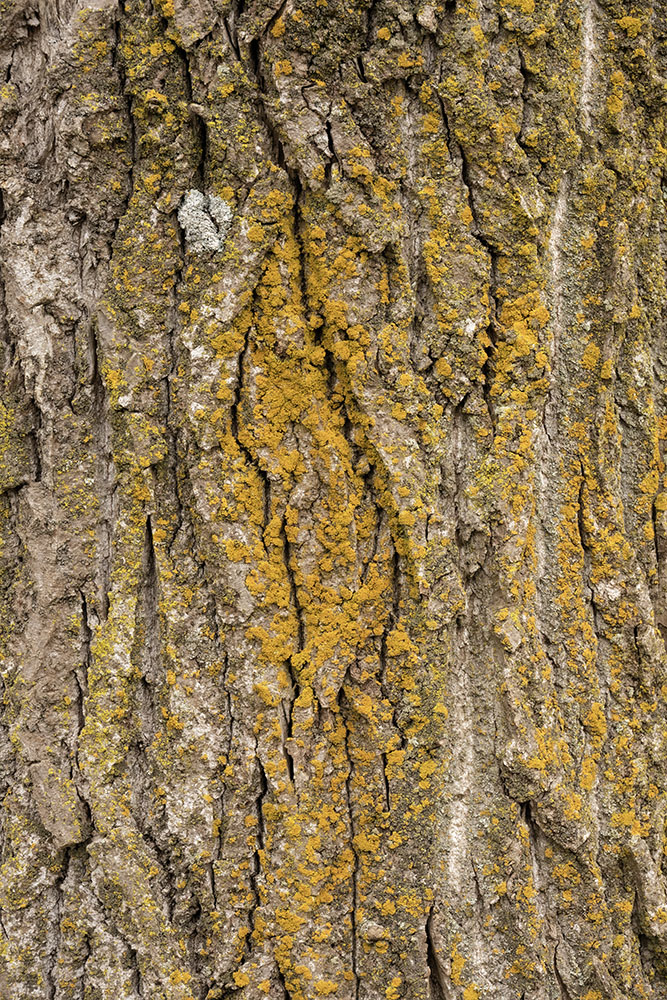
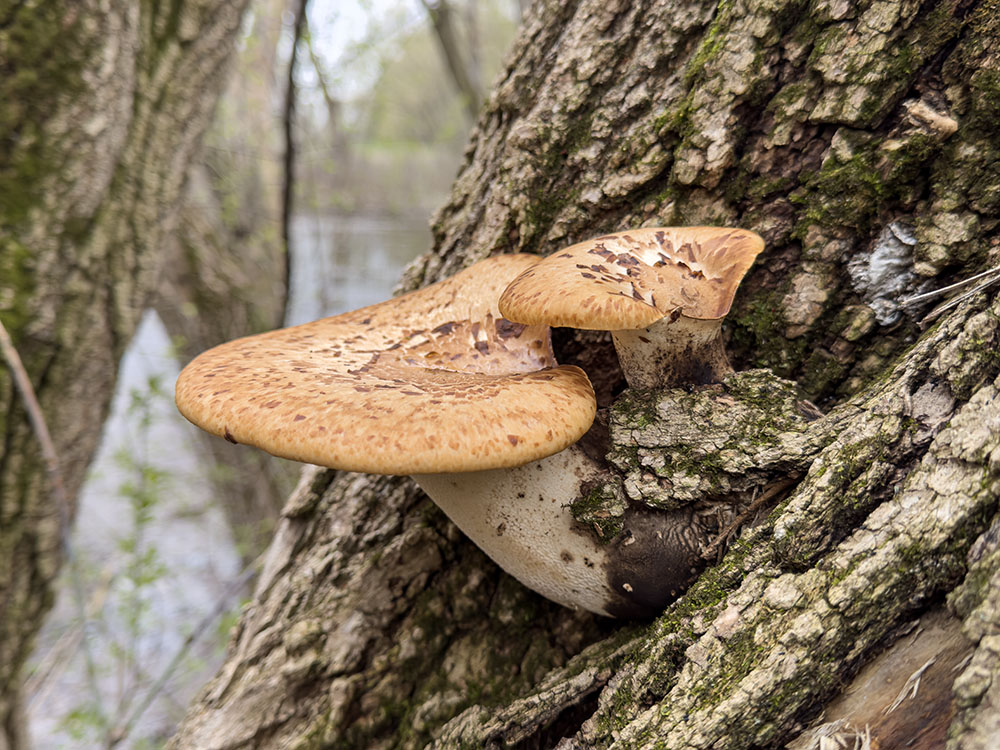
The kingdom of Fungi contains an incredible diversity of life from yeasts we use for making bread and beer to massive underground mycelial networks. Fungi have been adapting to life on land for eons and certainly paved the way for terrestrial plants. Fungi offer an array of ecosystem services, for example some fungi digest leaf litter and help return carbon and other nutrients into the soil. When you spot a mushroom in the forest you are only seeing the fruiting body of that fungus, the reproductive structure that disperses spores. The fruiting bodies of some mushrooms are quite delectable; many species must be foraged because they are not yet cultivated by people. Discretion is of the upmost importance when foraging mushrooms as there are also many poisonous species, some that even look like edible species. I encourage those interested in foraging mushrooms to consult field guides and informed people–as opposed to AI recognition software–to learn to identify them safely.
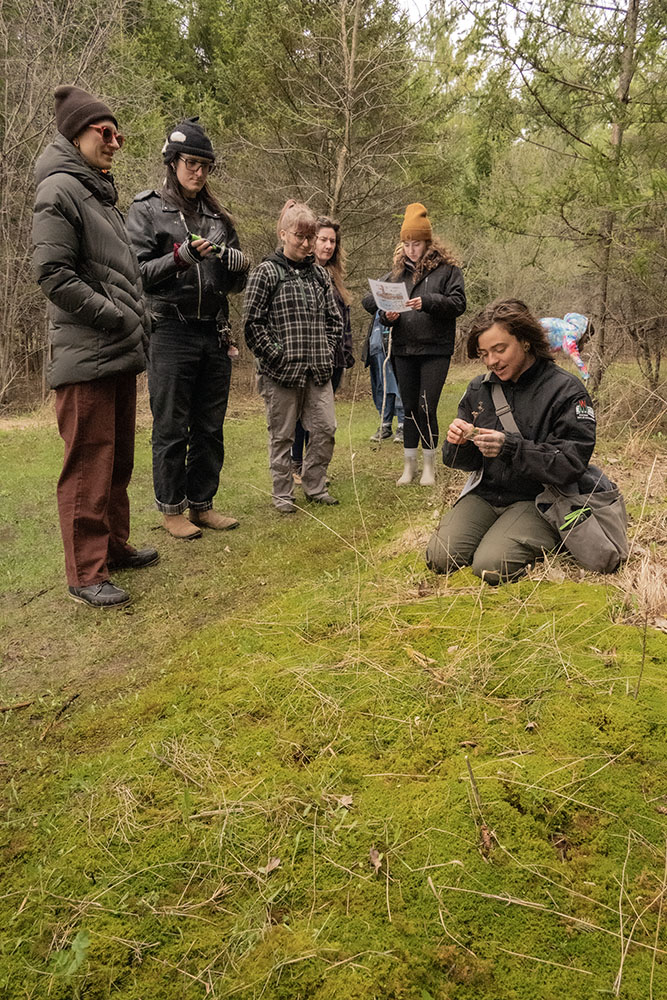
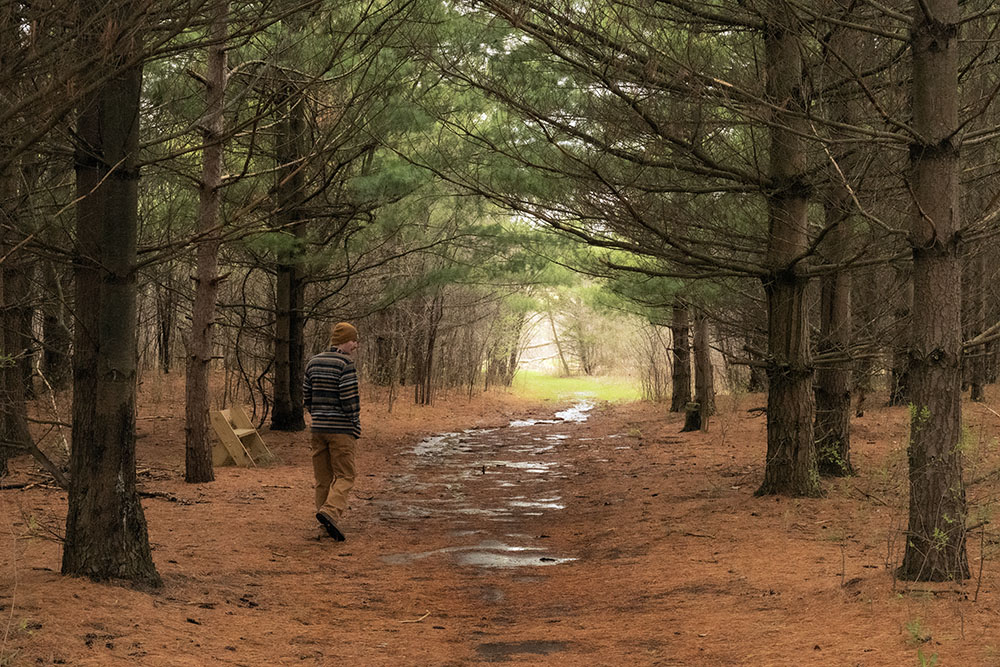
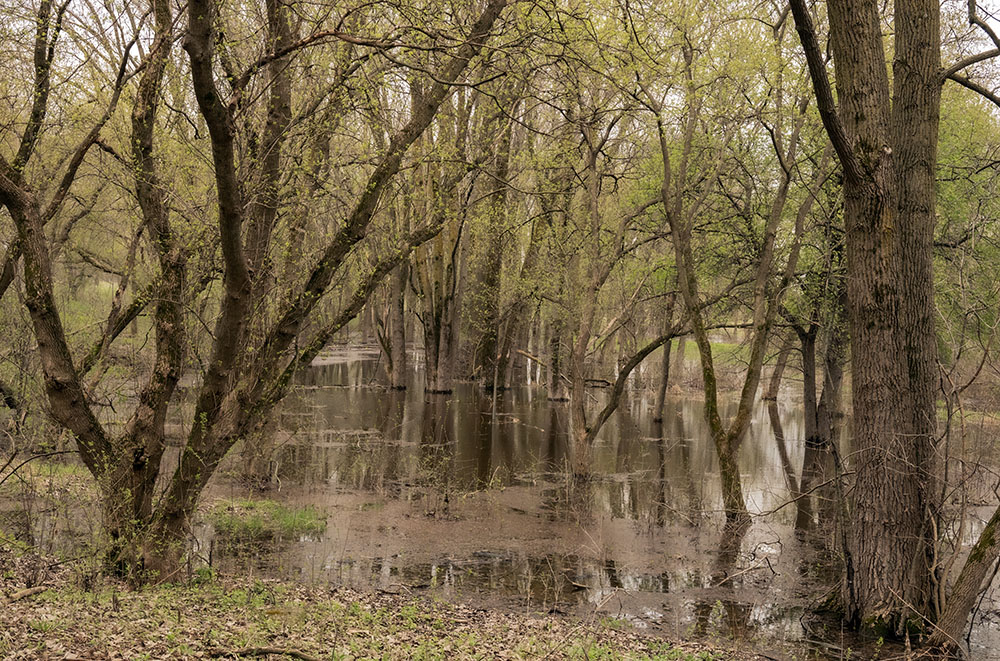
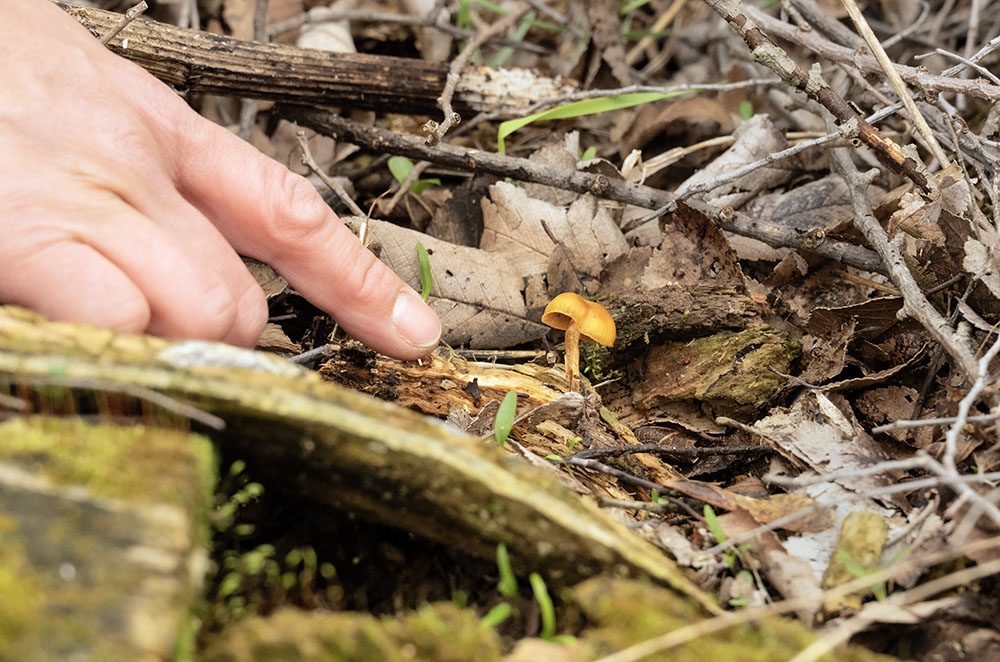
To start our hike, we walked the purple trail from the Nature Center through a deciduous forest towards the pine stand, making stops along the way to admire and touch colonies of lichen, mosses, and fungi. We then walked a connecting trail through prairies before looping back on the blue trail that took us past mature cottonwood trees. We made sure to see a few different plant communities on this hike because moss, lichen, and mushroom species can have varied habitat needs and may have specific tree species they prefer to grow with.
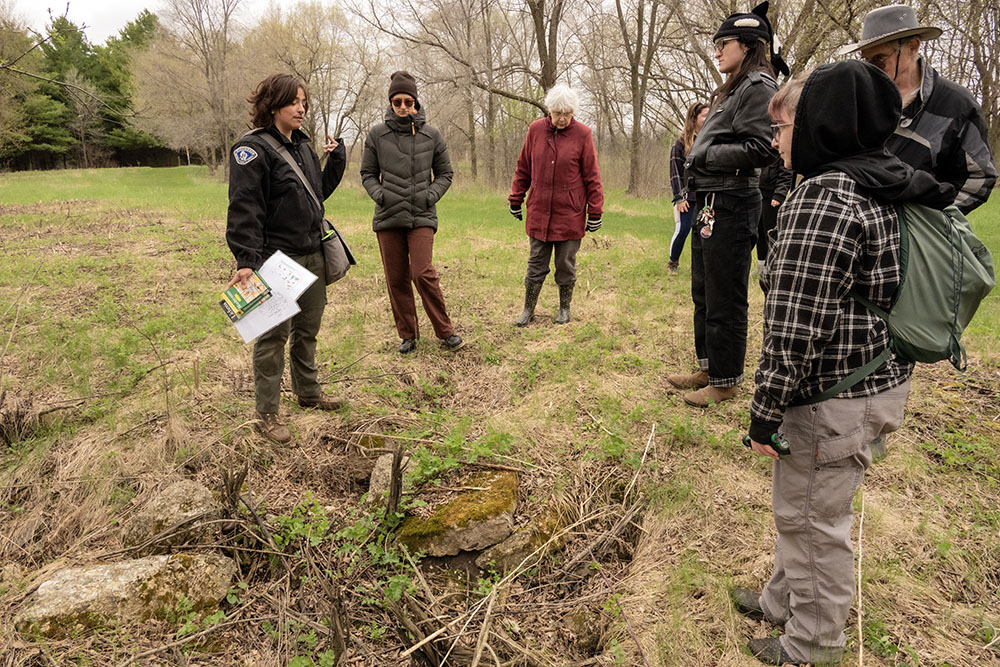
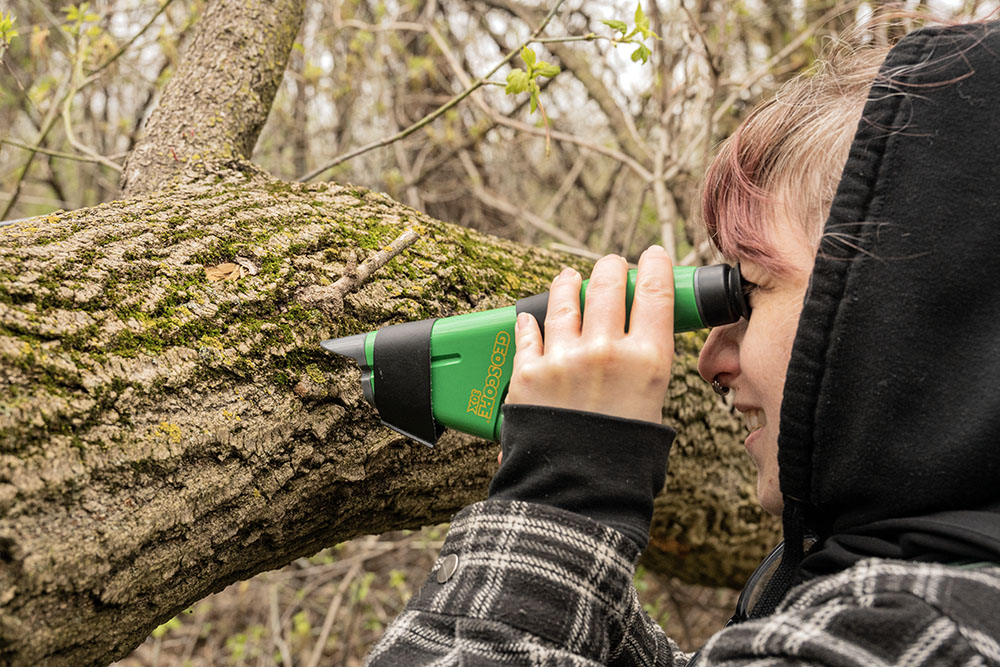
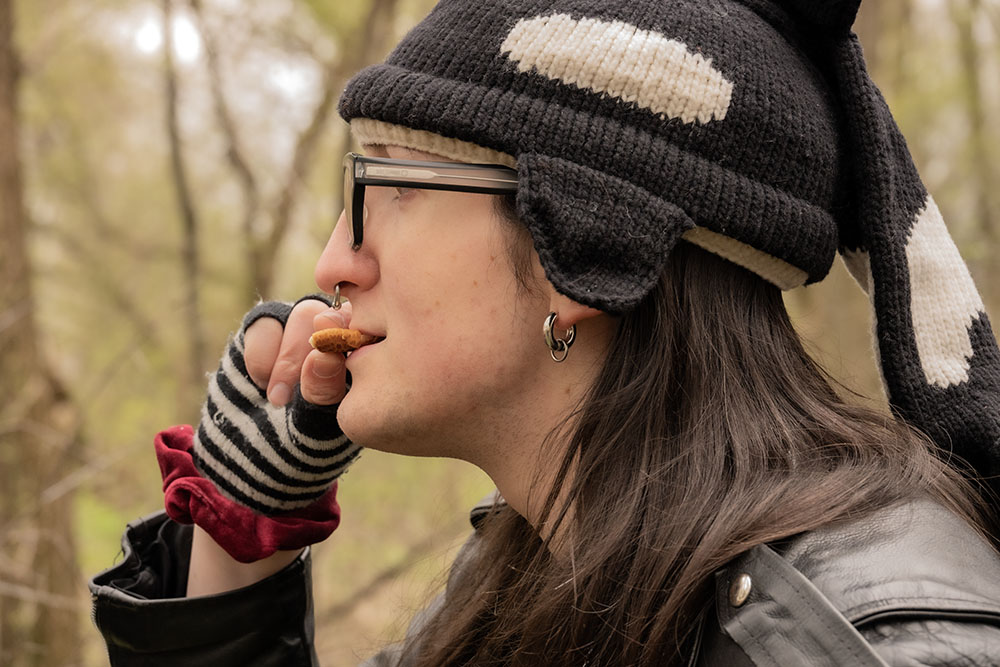
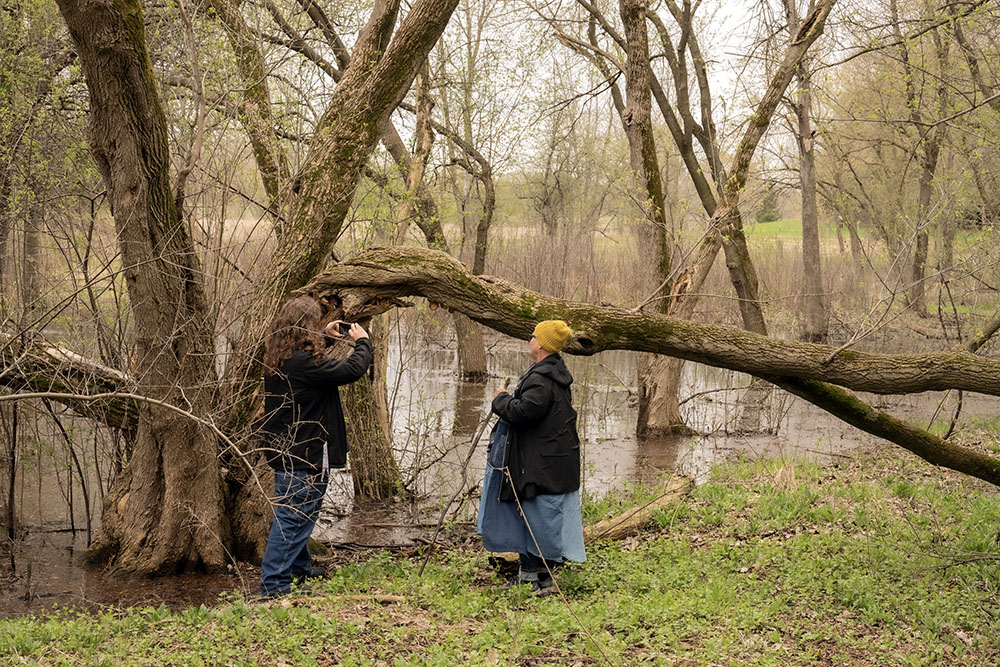
Engaging all our senses and encouraging exploration was of the utmost importance to me when creating this program. Mushroom and lichen field guides were brought along to discuss identification methods. Diagrams demonstrating the structures, life cycles, ecology, and evolution of mushrooms, moss, and fungi were passed around. Boxes with magnifying lens lids and simple microscopes were also provided to better observe the small structures of these organisms. Whenever someone found something interesting, they would call the group over to take a gander together. When our walk was over, we retreated into the Nature Center for a mushroom tasting. I set up hot plates and served up cauliflower, seafood, wood ear, and pearl oyster mushrooms simply cooked in butter so as not to obscure each mushroom’s unique flavor.
It was a pleasure to spend the morning with a lovely group of learners that made this hike not only educational but a ton of fun too. You never know what bit of information or skills you may have to share with your community until you put yourself out there. Get to know your neighbors, be they people, plants, or fungi, and your life will be richer for it. I look forward to leading more programs like “Lichen, Fungi, and Moss. Oh My!” and hope to meet even more engaged community members at the next event.
Havenwoods State Forest is open free of charge 365 days a year for your enjoyment, and the Nature Center offers a variety of free events every Saturday. For more information go to the Havenwoods page on our website.
Related fungi stories:
An official foray finds a wealth of fungi at Muskego Park
Fantastic fungi are among the Treasures of OZ!
Related Havenwoods stories:
Autumn Colors Hike at Havenwoods with Nearby Nature MKE
Lincoln Creek: A Vital Summit and a Visual Tour
Two First Day hikes on New Year’s Day 2025
Middle schoolers descend upon Havenwoods State Forest
Havenwoods goes wild with two dance companies in outdoor performances!
Andie Zei is a park ranger and naturalist educator at Havenwoods State Forest.
Eddee Daniel, writer/photographer, is a board member of Preserve Our Parks, the Project Director of A Wealth of Nature, and editor of The Natural Realm blog.
The Natural Realm blog is part of A Wealth of Nature, which is a project of Preserve Our Parks.
About Preserve Our Parks
Preserve Our Parks, Inc. is an independent nonprofit organization dedicated to the preservation of parks and green spaces. Our mission: To advocate for and promote Milwaukee area parks and open spaces and to strive to protect the tenets of Wisconsin’s Public Trust Doctrine.
For more than 25 years, we have been a leader in advocating for the protection of Milwaukee County park lands, halting many proposals to develop, privatize, or sell local parkland and lakefront spaces. More information about POP, including past accomplishments, is available at www.preserveourparks.org.
One thought on "“Lichen, Fungi, and Moss. Oh My!” at Havenwoods State Forest"
Comments are closed.
It’s the little things.
Really like this post Eddee.
Thanks.