

Invasive Species Through the Seasons
March 10, 2026 | Topics: Stories
By Alejandra Rosales, Gabby Dahl, Josey Schanen, Morgan Kramer of Restoring Lands.
Photography by Eddee Daniel
The week of Feb 23 was the 2026 National Invasive Species Awareness Week! Restoring Lands works all year round to remove invasive species from our preserves, to restore wildlife habitat and improve the health of our ecosystems. Invasive species come in many forms, including plants, animals, aquatic invasives, and insects. Restoring Lands mostly focuses on the removal of invasive plants, but we monitor invasive pests and animals and report them to iNaturalist, Wisconsin Sea Grant, the Southeastern Wisconsin Invasive Species Consortium (SEWISC), or the WI Department of Natural Resources.
Invasive species harm our environment by outcompeting our native plant species, overusing local resources, and negatively impacting soil and forest health. Ultimately, we want plants and animals to thrive in their own local habitats. Our land stewardship team is dedicated to restoring natural habitats on our preserves, with the assistance of volunteers. The Land Steward team reflects below on their experiences with invasive species each season.
Spring
Spring brings new life to the landscape, with increased wildlife activity and plants/fungi emerging from their months of slumber. Spring ephemerals, such as Jack in the Pulpit, Skunk Cabbage, Mayapple and trillium begin their journeys to blossom, contributing to an ecosystem’s increased activity.
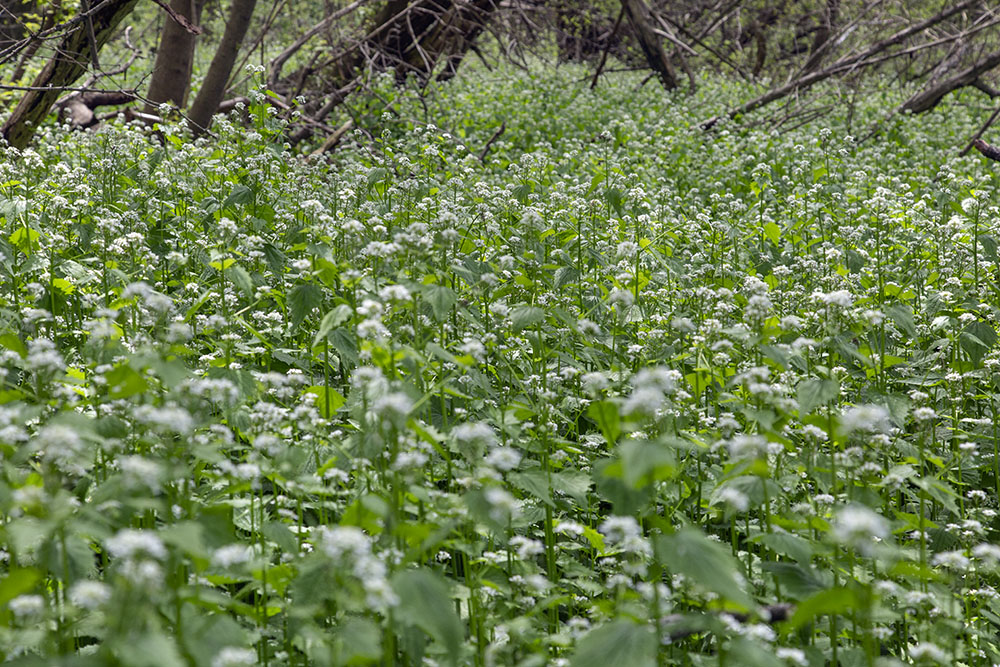
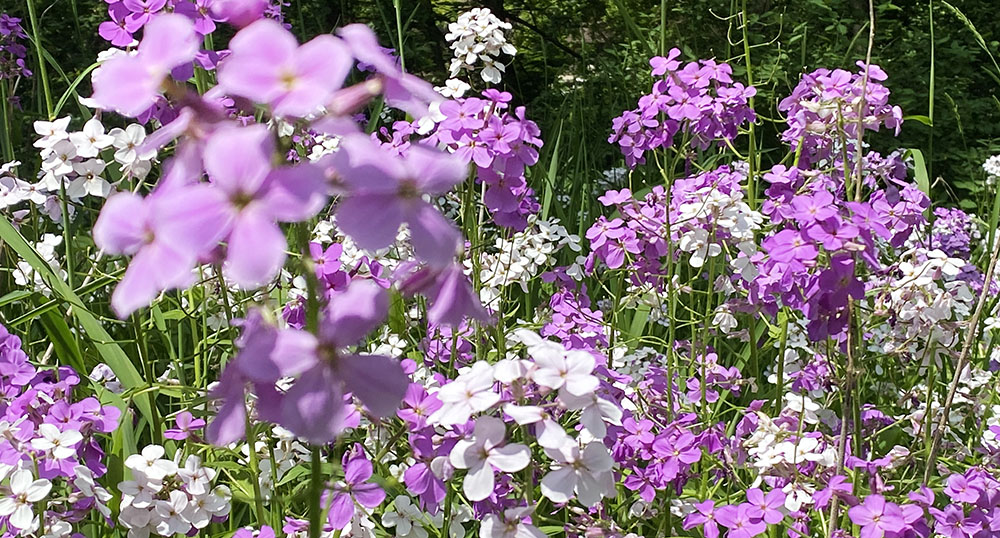
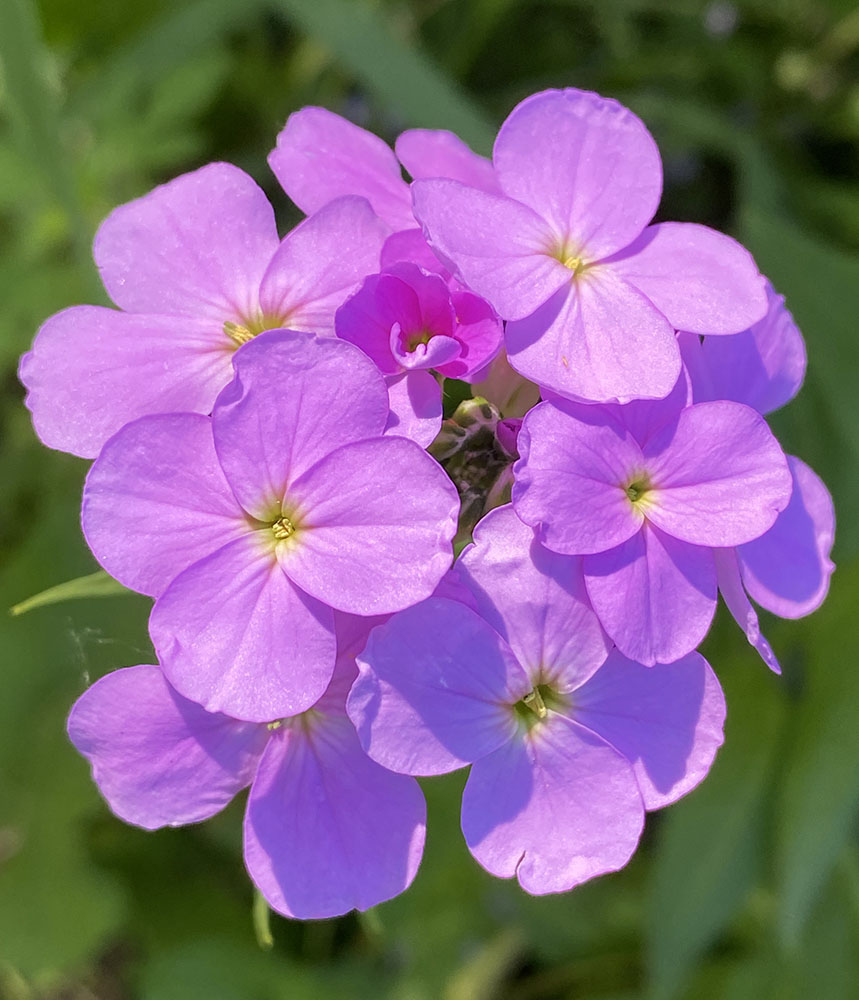
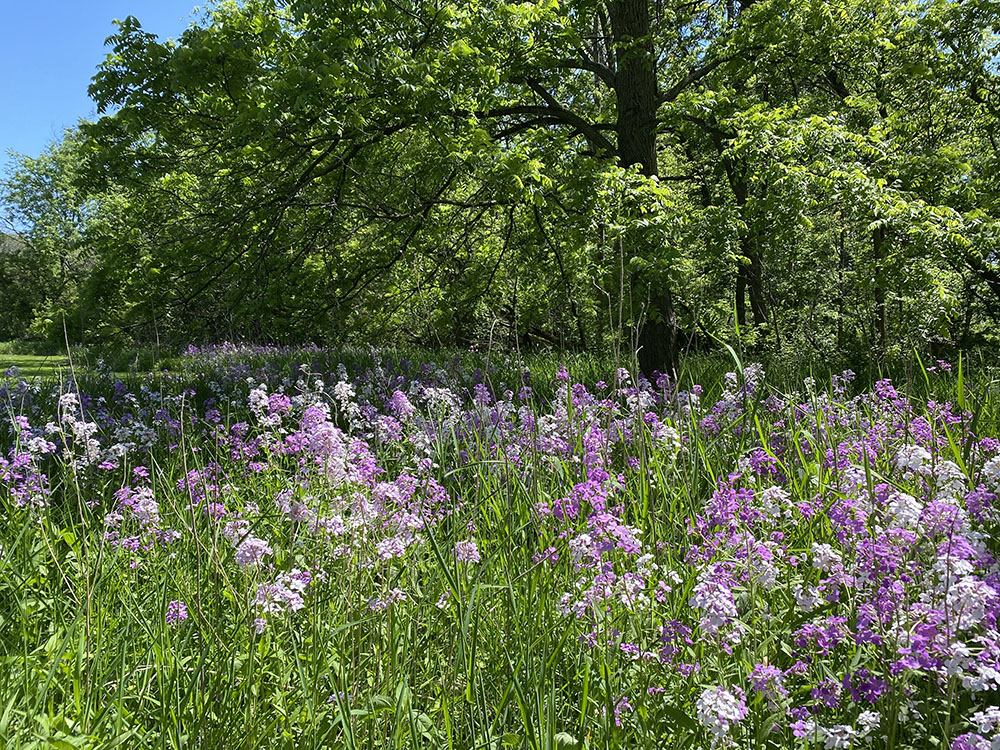
Invasive species such as Garlic Mustard and Dame’s Rocket take advantage of the spring season too. As we transect the habitat, we snatch them up, ensuring the roots are out of the soil. To minimize disturbance and loss of soil nutrients, the plants are shaken to put any removed soil back where it belongs. The Garlic Mustard and Dame’s Rocket are ripped in half and placed on a surface off the ground, trying to minimize them zombifying and reappearing the following year.
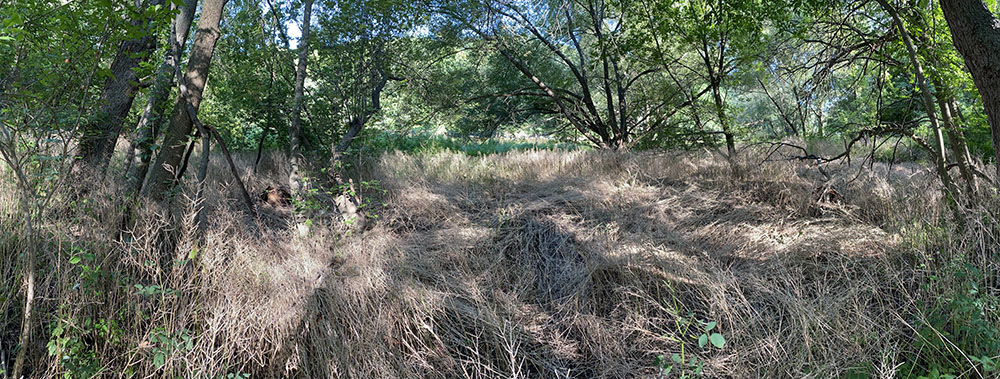
The nauseating smell of Garlic Mustard billows out of the trash bags, though it is a reminder of our hard work. The bundles of Dame’s Rocket have a pleasant scent that encourages you to “stop and smell the flowers”, giving your mind and body a break from the exertion of removal. Volunteers have a huge impact on these efforts, and we are very grateful for their hard work and dedication as we transform the preserves into better conditions.
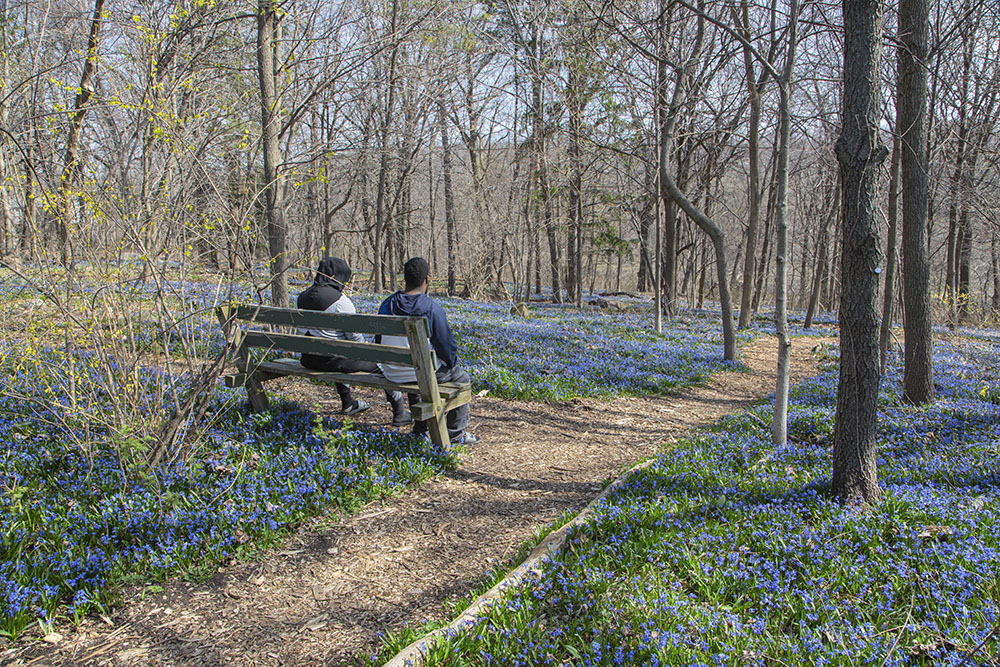
Summer
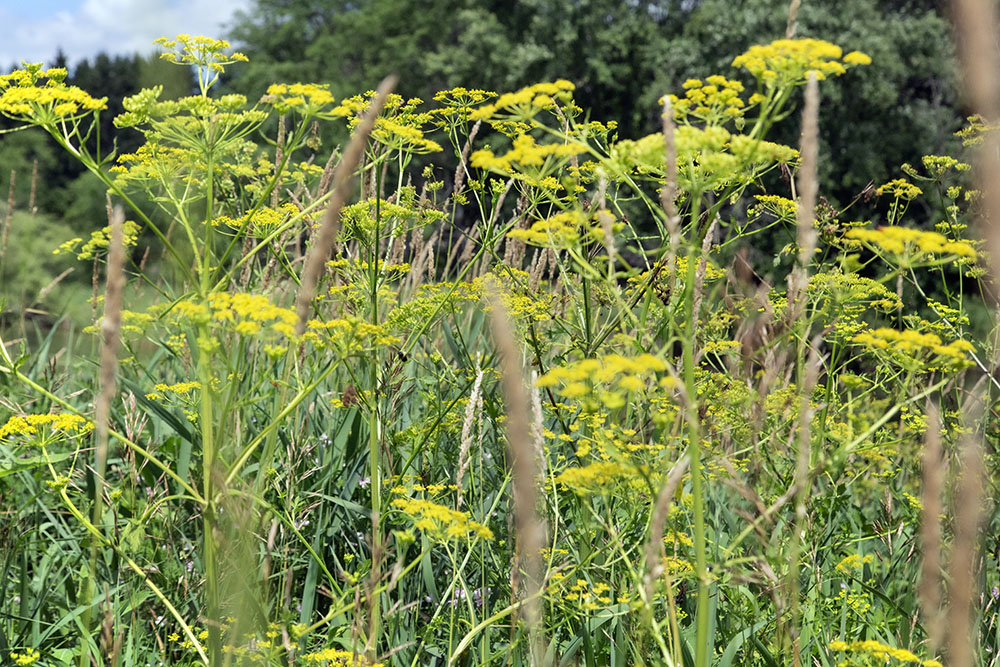
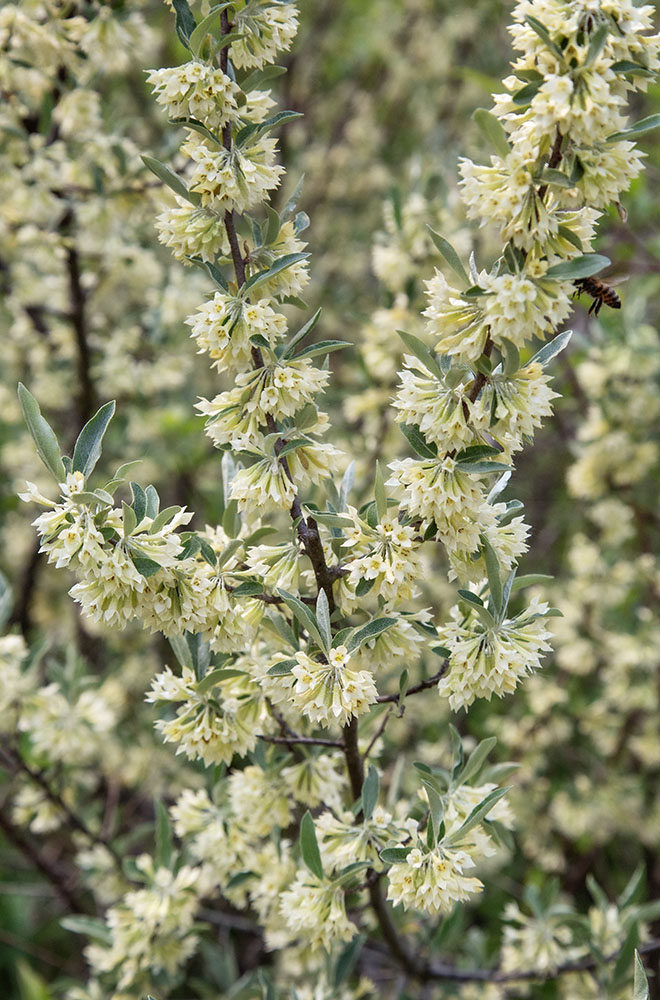
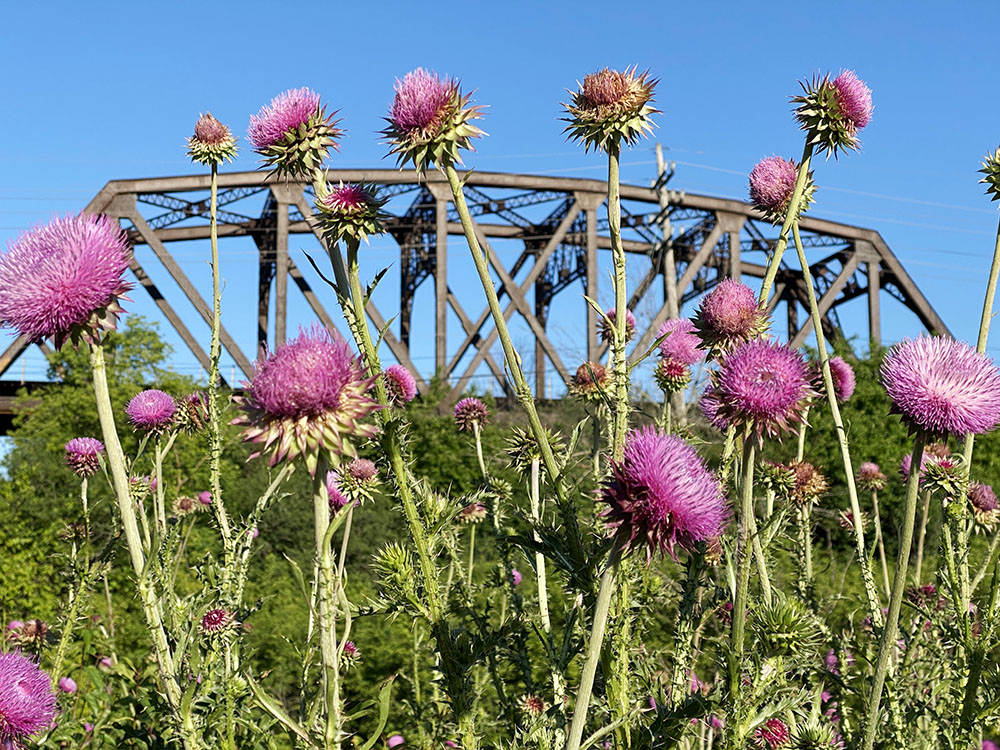
Summer brings new comings and goings, with ephemerals going out and the green tree leaves start to fill in the canopy. It is a stunning transition, but with all seasons it brings life to everything, even the invasives. For example, Autumn olive leaf’s bursting with silver, Canada thistles prickling, and other herbaceous species like parsnips, or ragweed thriving. We’ve also done special removal projects in the summer, like the bio-control of purple loosestrife, an extremely hard to remove invasive plant that grows on our shorelines. We’ve raised and released Purple Loosestrife beetles to eat and decimate the plant populations on our preserves. There are many creative ways to remove non-local species from our environment.
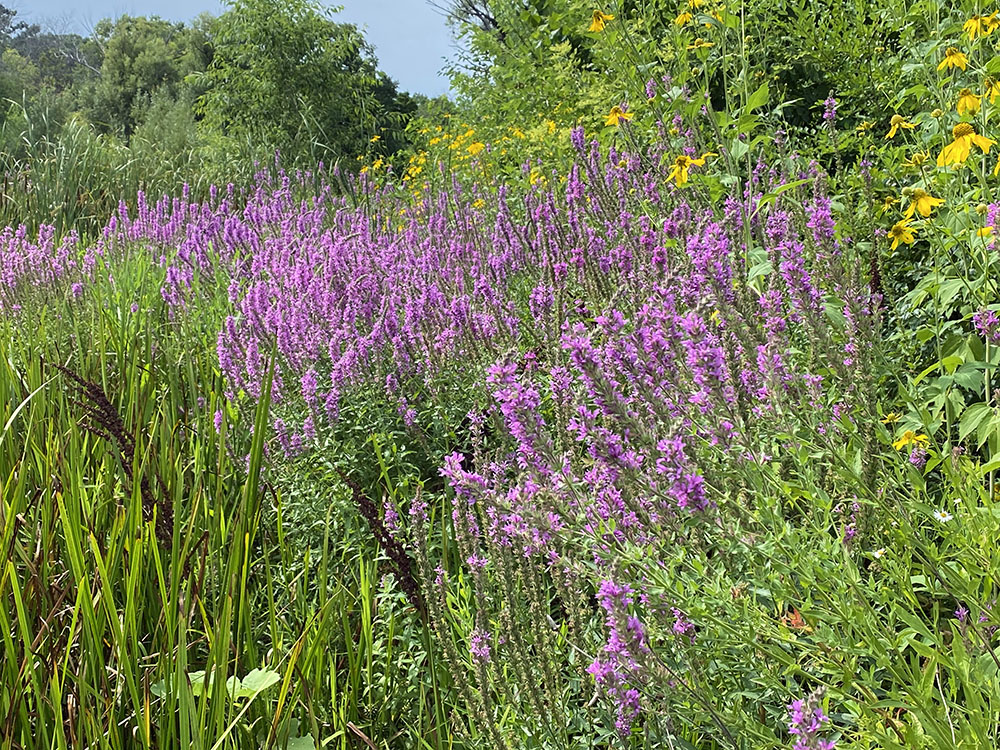
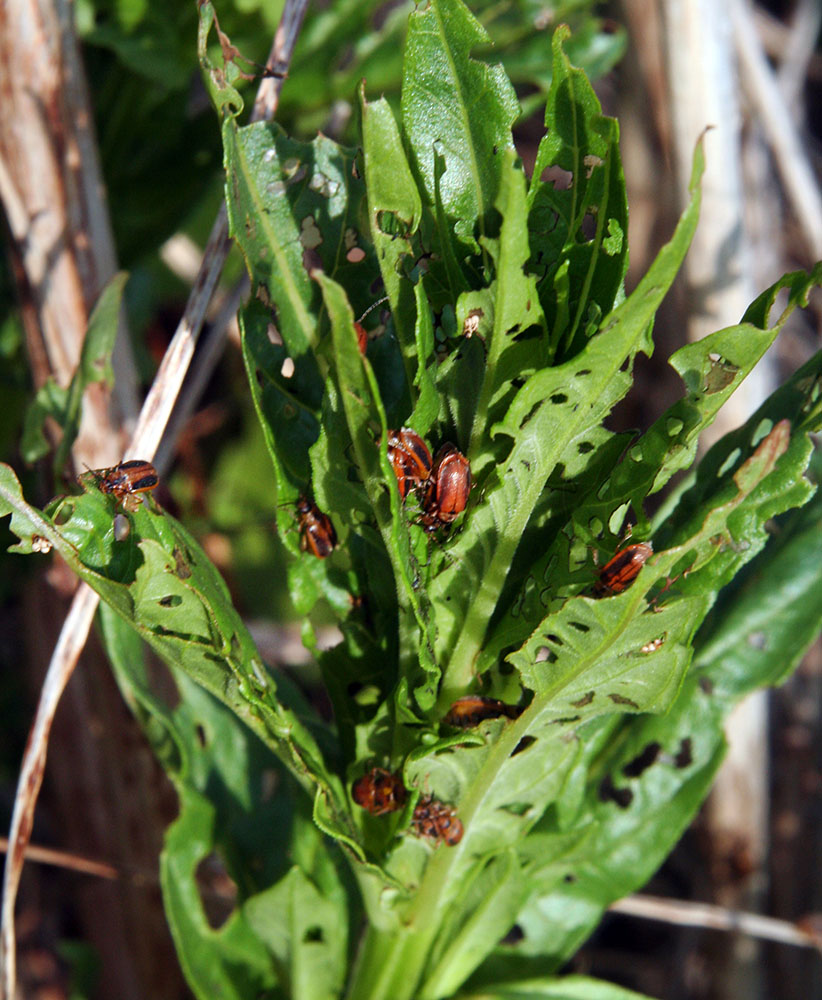
Summer is marked with hot sunny days, removal of some woody species and of many herbaceous species from prairies, and lots of trail maintenance grooming the trails of new plant overgrowth. In the summer, you can see Restoring Lands stewardship staff using various power tools to manage all the work. Maintaining our restoration progress, even if the weather is not especially kind to us.
Fall
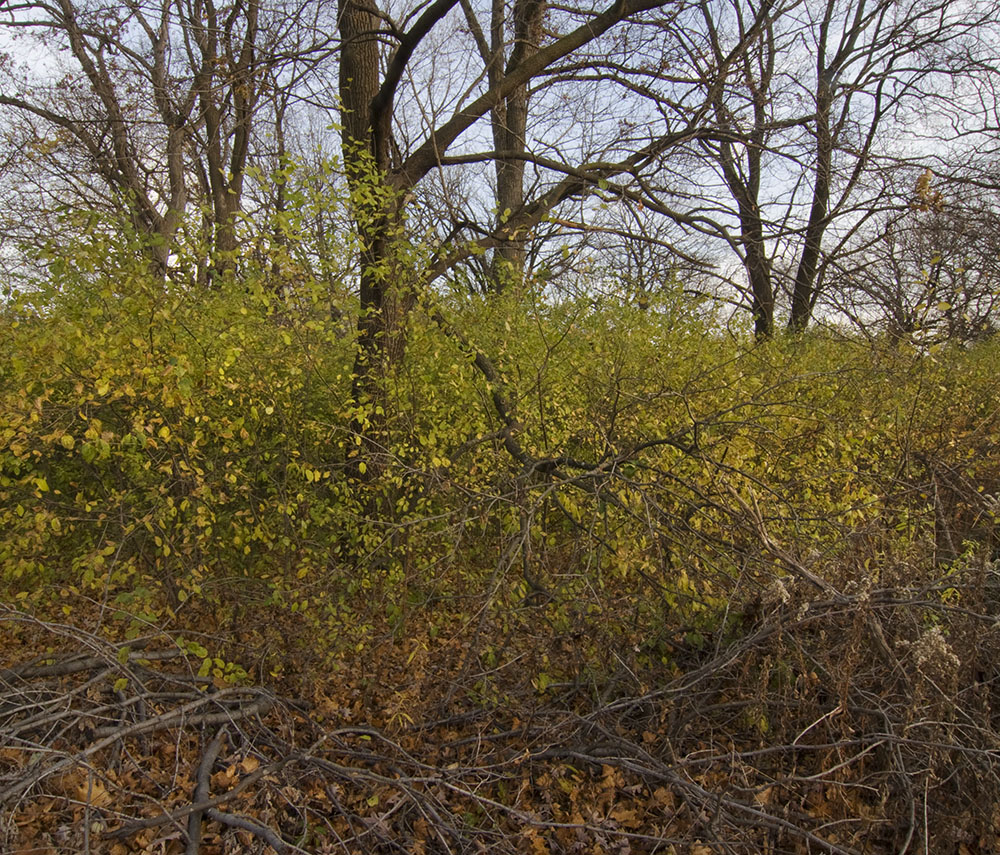
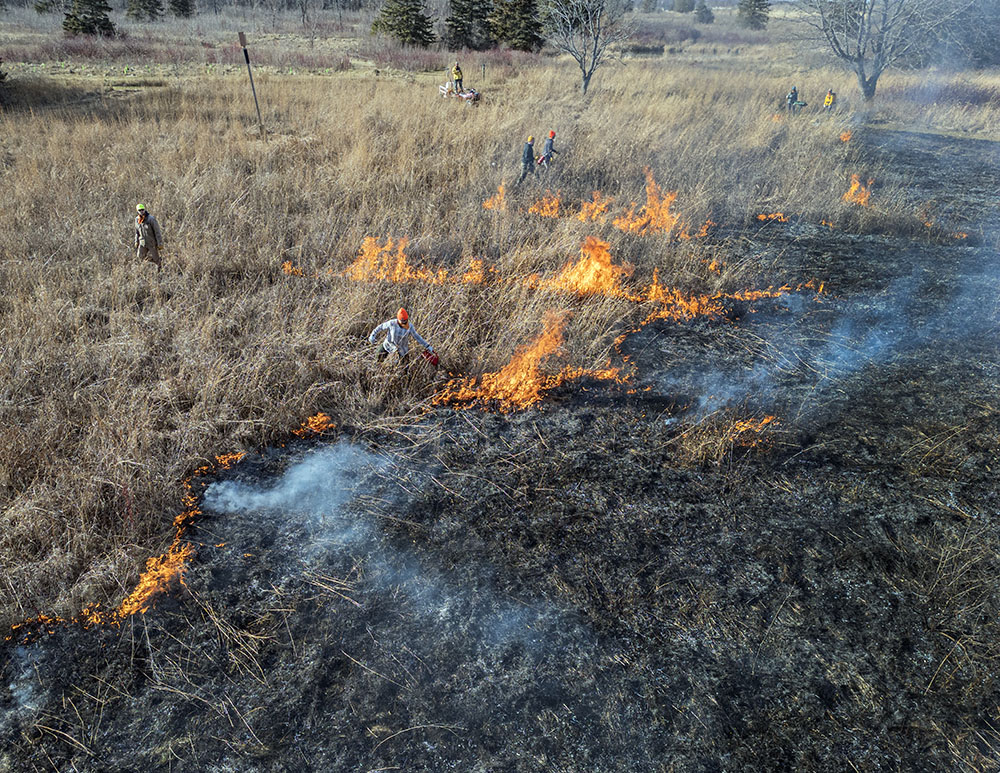
Fall can be a time for changing colors, crunchy leaves, and gathering around a nice bonfire telling spooky stories. For Restoring Lands, we are rounding up the last of our summer invasives and prepping for the future with prescribed burns. In Wisconsin, prairies burns were historically a much more common sight before the majority of the land was turned into farmland. Most Wisconsin natives are adapted to periodic burns and can flourish after a fire clears space and invigorates the soil. Burns also fight against woody invaders to a prairie ecosystem by charring the bark, but prairie plants remain safe underground. Helping to make sure our natives have the best habitat possible is a great way to fight against invasives.
Winter
Many perceive the winter season as being bleak and lifeless. However, paying closer attention to details reveals that life is still thriving. An activity that reveals the winter to be far less monotonous and devoid of life is the identification of trees and shrub species in their leafless winter state. In southern Wisconsin, forests are primarily dominated by deciduous tree and shrub species which lose their foliage in the autumn, and as such it is easy to perceive winter as being “stick season”. However, identifying trees and shrubs through bud and bark morphology reveals more biodiversity than most would expect. It is more difficult to identify trees and shrubs in this condition, but practicing this skill can be very rewarding.
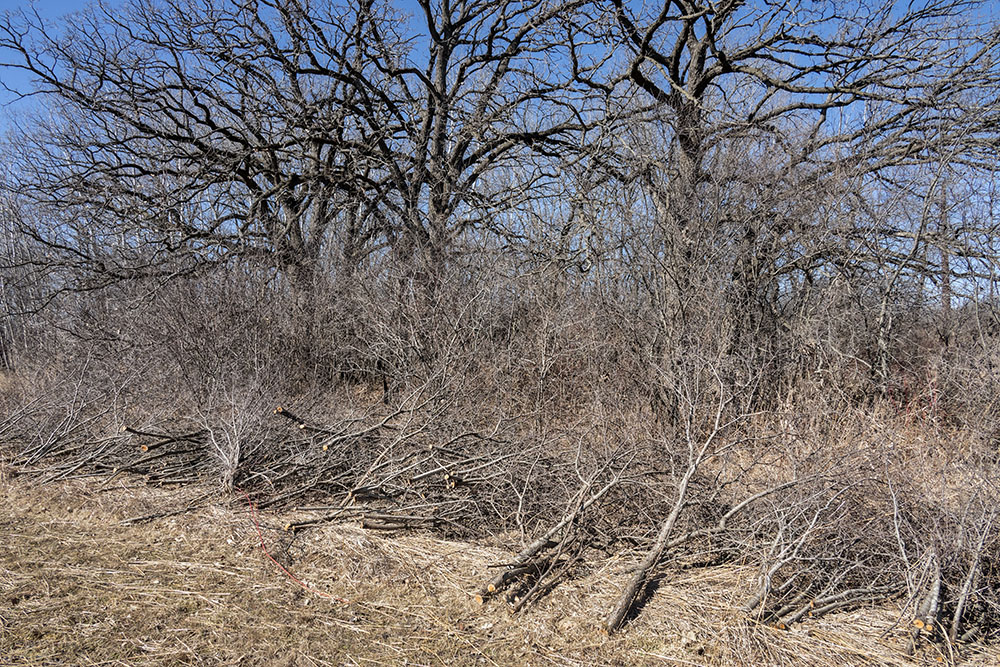
This skill set is critical to distinguishing invasive species like common and glossy buckthorn from native species such as chokecherry and tag alder. Having repetitive experience identifying trees and shrubs in the field, our Land Stewards confidently cut down invaders and apply a small, concentrated quantity of herbicide to prevent regrowth. In the spirit of the persistence of life, the important hands-on work that our Land Stewards carry out does not cease in what is often considered “the dead of winter.”
Conclusion
The removal of invasive species is an ongoing struggle for environmentalists. There are many invasive species that plague our great lakes, local prairies, forests, and rivers. The best way to counter these invasive species is public education and awareness. The fewer invasive plants, animals, and insects that are in people’s backyards, or in public parks, the better health of our environment. To learn about invasive species, follow us for more updates, visit the North American Invasive Species Association (NAISMA) website, signup for webinars with them or local invasive species chapters, or volunteer with us! At our volunteer workdays, we teach people how to remove the most important invasive species each season.
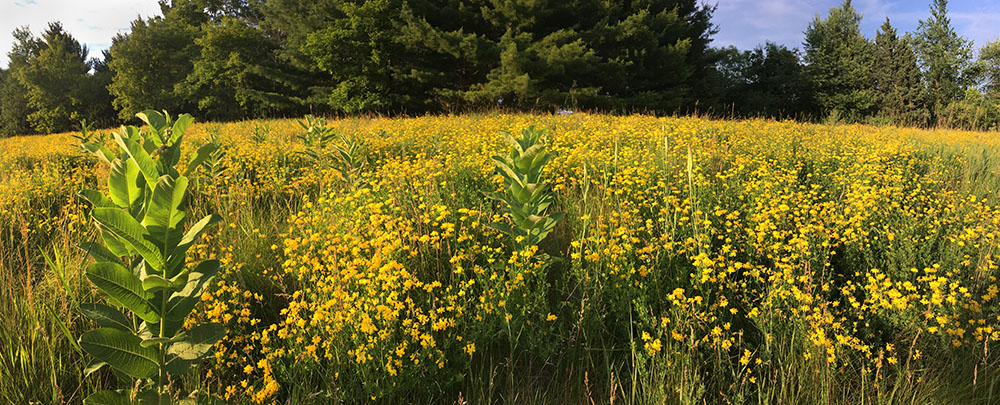
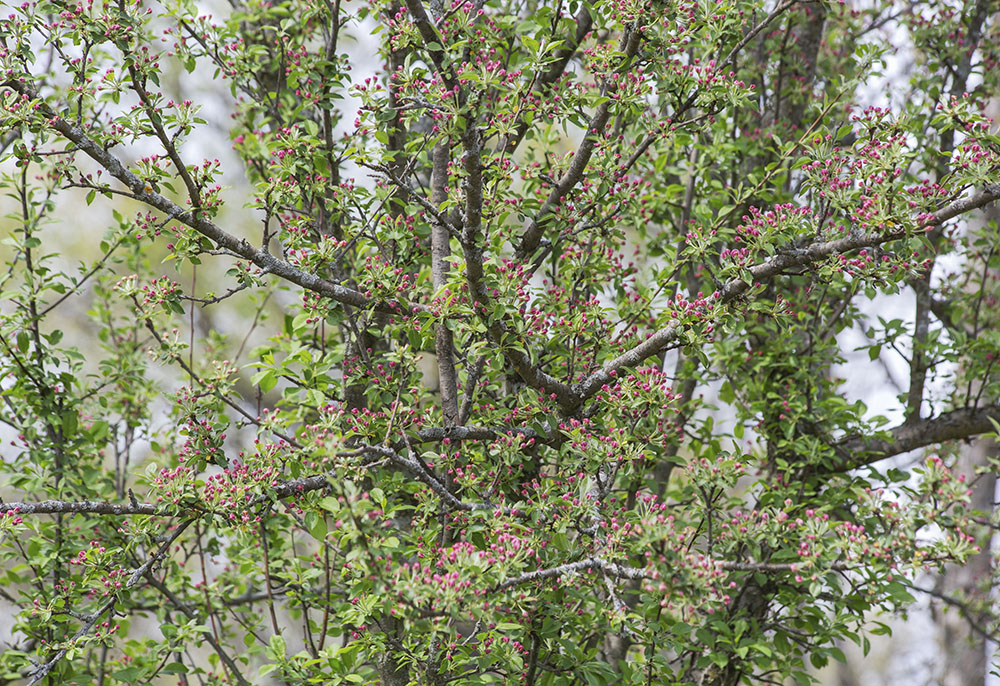
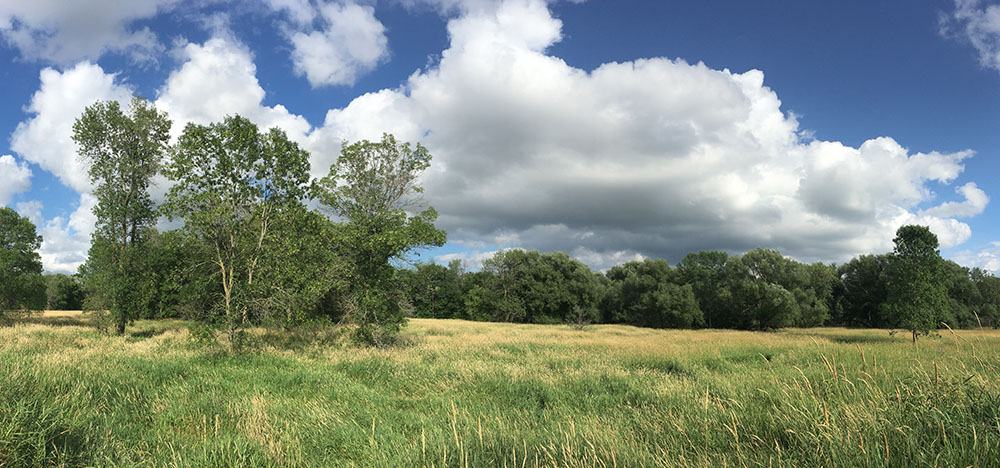
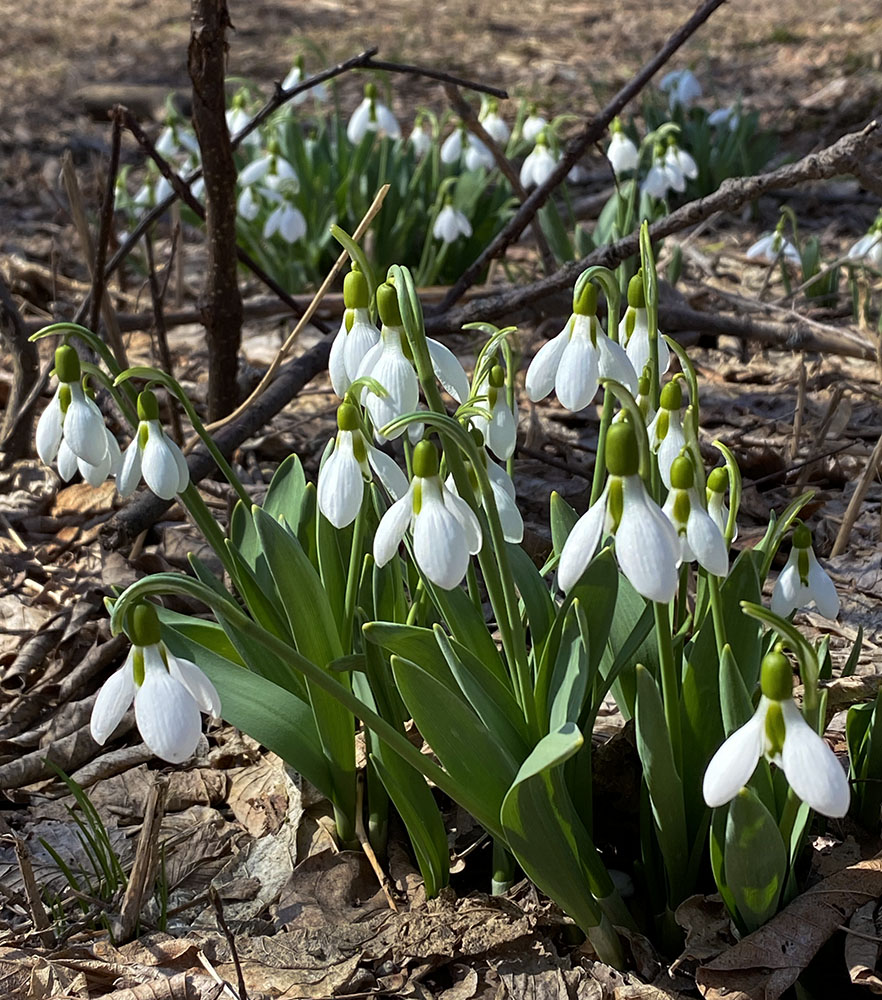
Note: This story was originally published with different photos in the newsletter of Restoring Lands: A Wisconsin Land Trust. The photos in the original version mostly depict Restoring Lands staff and volunteers working to eradicate invasive species. I have substituted photos that represent a variety of invasive species found in our area. You can see the original posted on the Restoring Lands website. The text is reprinted here with permission.
Related stories—invasive species:
Goats Boost Effort to Restore Woods Through their Browsing Habits!
Excitement ensues during a Buckthorn Bash at Eagle Center Prairie!
Buckthorn brigade tackles Sanctuary Woods
Related stories—controlled burns:
Under Control: Burning Lakeshore State Park!
A controlled burn at Forest Beach Migratory Preserve
Emphasizing the “Control” in Controlled Burn at Pringle Nature Center.
Fellenz Woods Preserve: A controlled burn
Alejandra Rosales, Gabby Dahl, Josey Schanen, Morgan Kramer are Land Stewards at Restoring Lands: A Wisconsin Land Trust. Restoring Lands is a project partner of A Wealth of Nature. Eddee Daniel, writer/photographer, is a board member of Preserve Our Parks, the Project Director of A Wealth of Nature, and editor of The Natural Realm blog.
The Natural Realm blog is part of A Wealth of Nature, which is a project of Preserve Our Parks. The Natural Resources Foundation of Wisconsin is a project partner of A Wealth of Nature.
About Preserve Our Parks
Preserve Our Parks, Inc. is an independent nonprofit organization dedicated to the preservation of parks and green spaces. Our mission: To advocate for and promote Milwaukee area parks and open spaces and to strive to protect the tenets of Wisconsin’s Public Trust Doctrine.
For more than 25 years, we have been a leader in advocating for the protection of Milwaukee County park lands, halting many proposals to develop, privatize, or sell local parkland and lakefront spaces. More information about POP, including past accomplishments, is available at www.preserveourparks.org.
A very comprehensive synopsis of invasive species.
I recently heard a Robin Wall Kimmerer talk where she posited thinking about invasives as newcomers and asking them why they are here, what do they have to teach us?
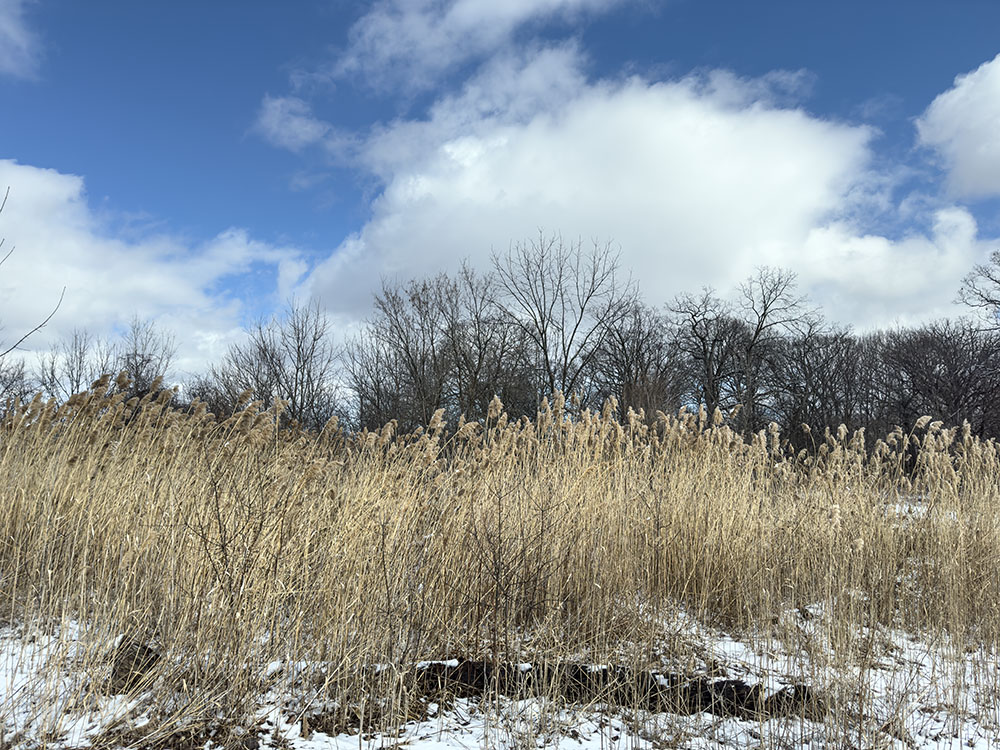
She is aware of how they diminish biodiversity with their aggressive takeovers but perhaps on a bigger timescale, plants like Phragmites have moved into wetlands to help the struggling cattails and may in some future scenario prove to absorb nitrogen, which is in an overabundance due to farming practices. She thinks invasives need more study to learn why they are here but our approach has been to wage war against them. It was a refreshing framework to consider. Her talk will be available in a couple of weeks at the School of the Art Institute of Chicago’s website and YouTube channel.
hello Eddee,
I did not read all of the text, but, I am very surprised and disappointed to learn that “Siberian squill” is an invasive species. Has anyone told the many purveyors of spring bulbs who sell them? This is sad news to me. I don’t see them around, but I have heard of the “snow drops” also and that is also bad news. Bummer. Thanks for the story and the photos.
Thanks for the thoughtful response, Barbara. At some point, I suppose, nature will balance itself out. I think the question is, what species do we want to encourage and discourage for the health of the ecosystem.
Mary: I was disappointed to learn that those two were considered invasive, too. But now my yard is totally infested with squill and it’s clear why!