

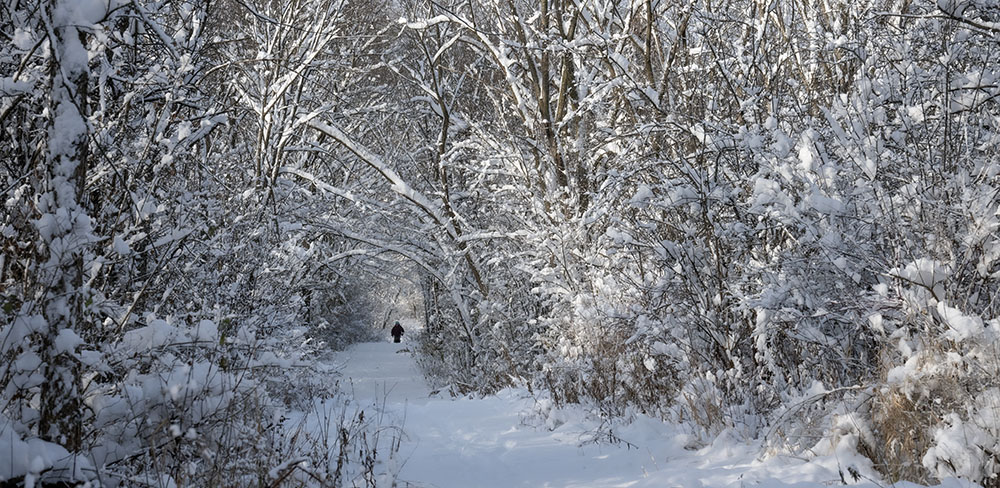
Winter Paints the Urban Wilderness Wilder!
December 9, 2025 | Topics: Places, Stories
By Eddee Daniel
“Nature is not a place to visit. It is home.” ~ Gary Snyder
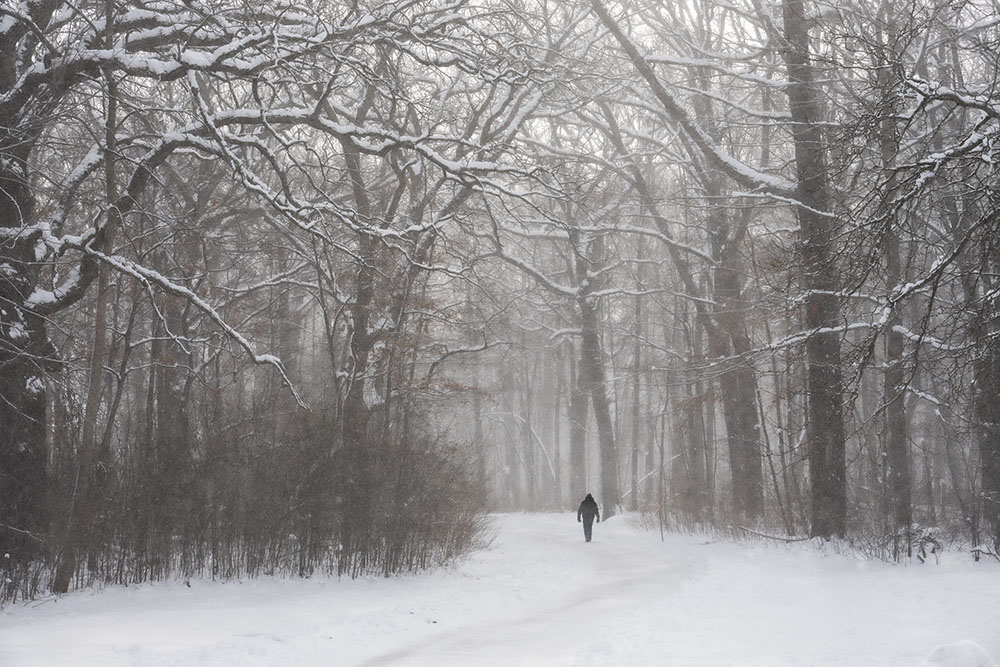
There’s no place so wild that a winter storm can’t make wilder. And when it is the first snowfall of the season, well, the psychological effect is even more pronounced. It happens even before the snow begins to fall. Prompted by catastrophizing forecasts, people besiege grocery stores expecting to hunker down for the apocalypse. Me, I get my winter weather garb out from summer storage. If I had chains for my tires I’d get them out, too. As it turned out, the plows did their job well and, because it was a Saturday and everyone else was hunkered down, the traffic was light and the speeds sensibly slow. I headed for a patch of suburban wilderness well before the storm let up.
Bluhm Farm Park, Muskego
Named for the German settler who cleared the land in 1863, Bluhm Farm Park is essentially a neighborhood park. But approximately half of its fifty acres has been left in a natural state—some of it in a restored natural state! It has a 16-acre woodlot that contains some mature hardwoods that likely predate the arrival of the Bluhm family. That makes it attractive to an urban wilderness adventurer like me. The blowing snow made it feel especially wild that Saturday.

Surprisingly, I was not adventuring alone. Even more surprising, a man on a bicycle—not even one with fat tires—flitted along the snowy trail through the woods ahead of me, too fast and far away for me to capture on camera. And a quartet of young adults paused in front of a snow-covered tree for a selfie, with the wintry wilderness for a backdrop. By the time I made it back to my car the snow was thickening and the already brooding light was dimming further. I put off additional adventures for the next day.
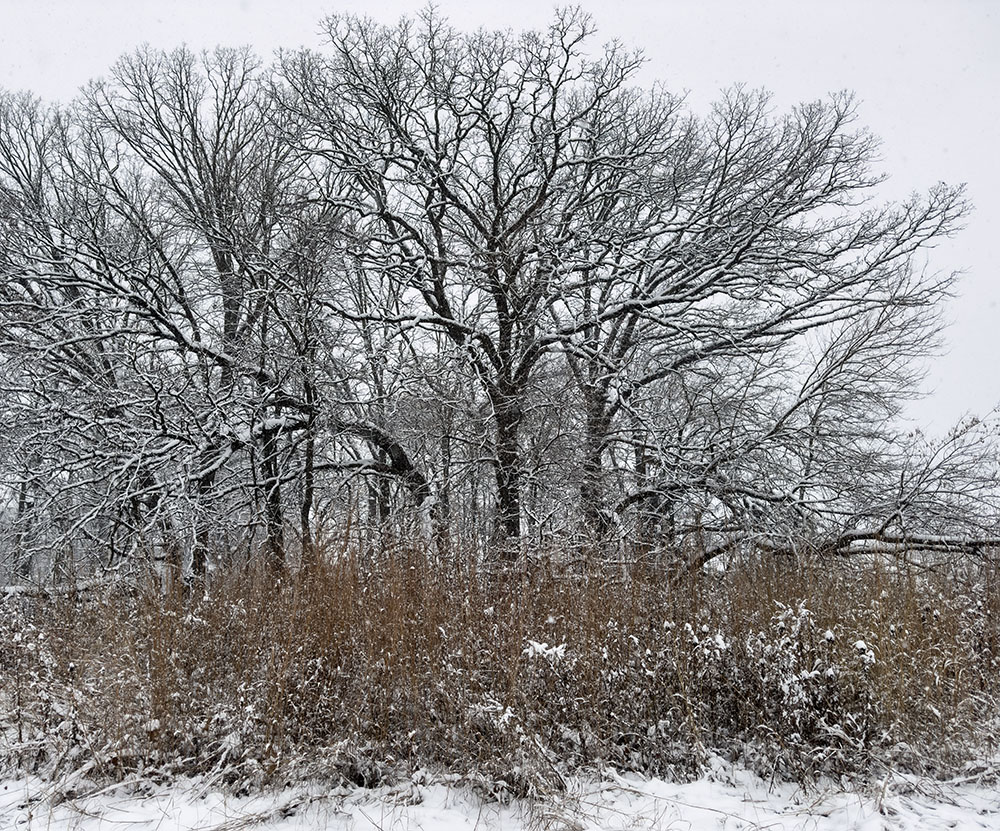
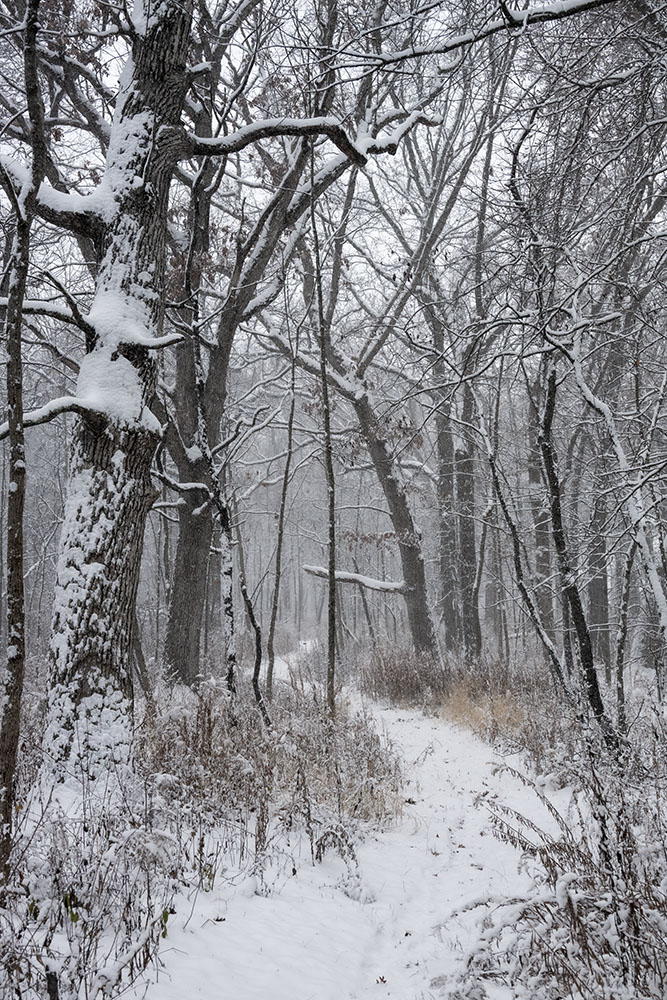
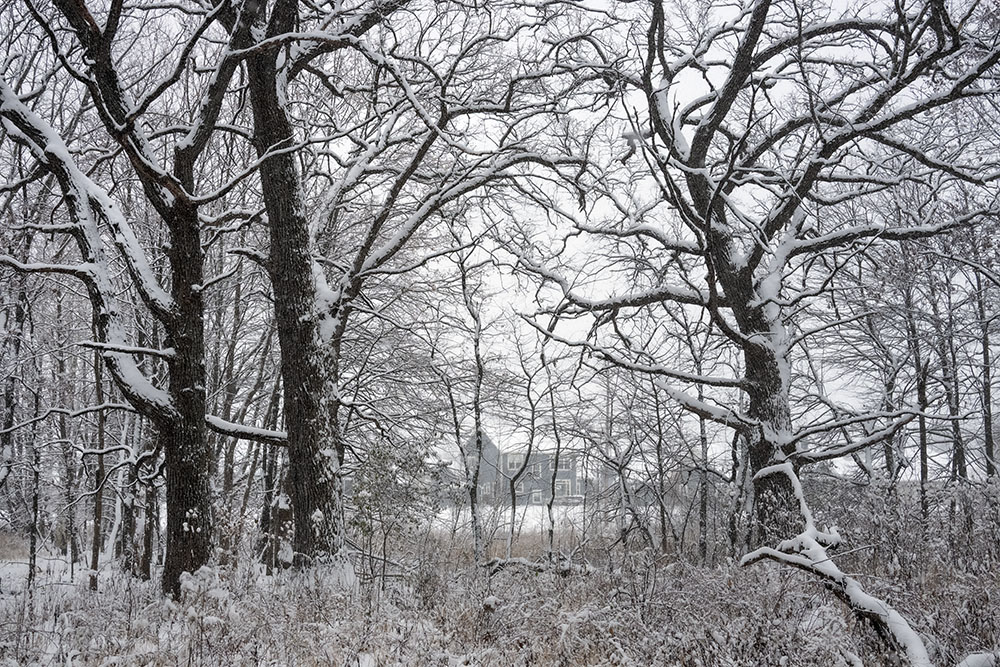
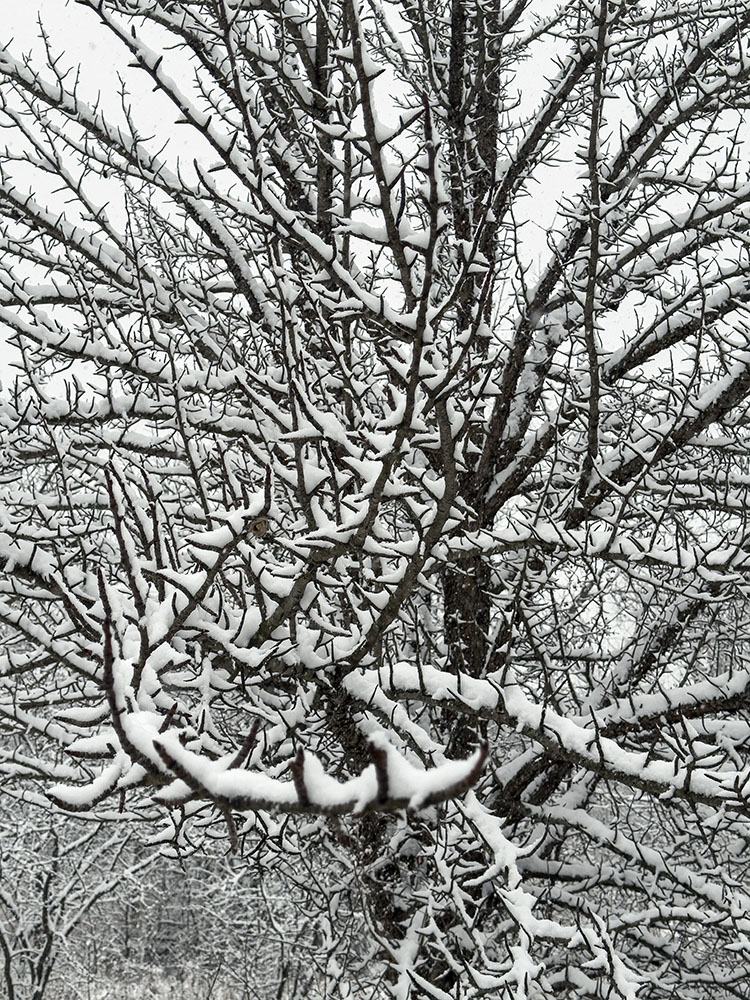
On Sunday I set out bright and early. Well, early at least. The sky at dawn was still overcast. But the snow had stopped and left behind the magical wonderland that only happens under the right conditions: temperature neither too warm nor too cold, heavy snowfall thick and lazy, an absence of wind. I plowed my four-wheel-drive Subaru down my un-shoveled driveway to the sound of neighbors’ shovels scraping on concrete and the buzz of snowblowers. Mine would have to wait until I’d had my fill of adventure. Fortunately, the roads were thoroughly cleared everywhere I went.
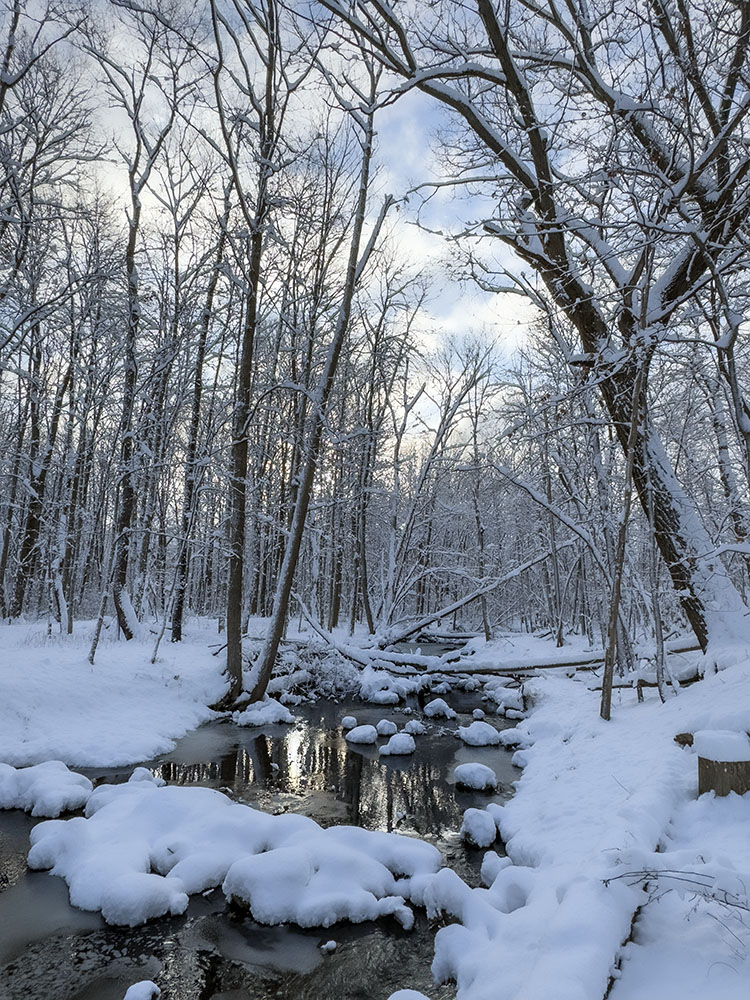
Stigler Nature Preserve, New Berlin
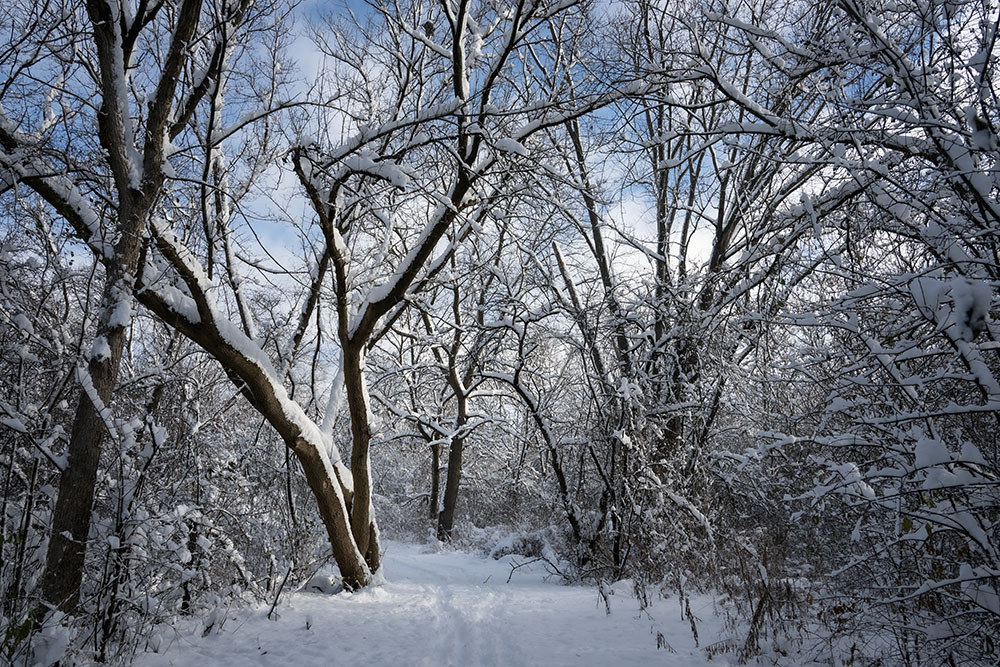
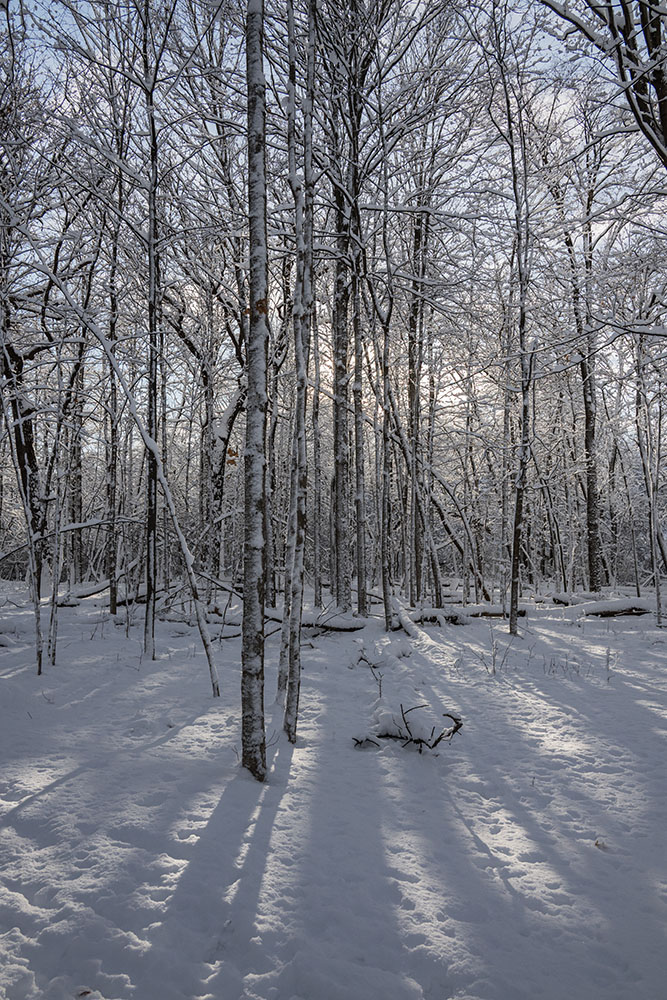
In order to reach this unlikely hidden gem I had to drive past a sprawling industrial/commercial park. If I hadn’t been there before I would be skeptical about finding a beautiful woodland treasure in such a location. I’d never seen it in snow before, which is why I chose it and the other parks in this story. The small parking lot hadn’t been plowed, but I had no trouble getting in or out of it. The 41-acre preserve has a single looping trail. In the summer, you could walk all the way around in under 15 minutes at a brisk pace. The snow and, of course, stopping to take photos made my stay quite a bit longer. The rising sun began to peek out from the thinning overcast more and more along the way. I had the place all to myself until the very end when a single pair of dog walkers showed up.
Moorewood Park, Waukesha
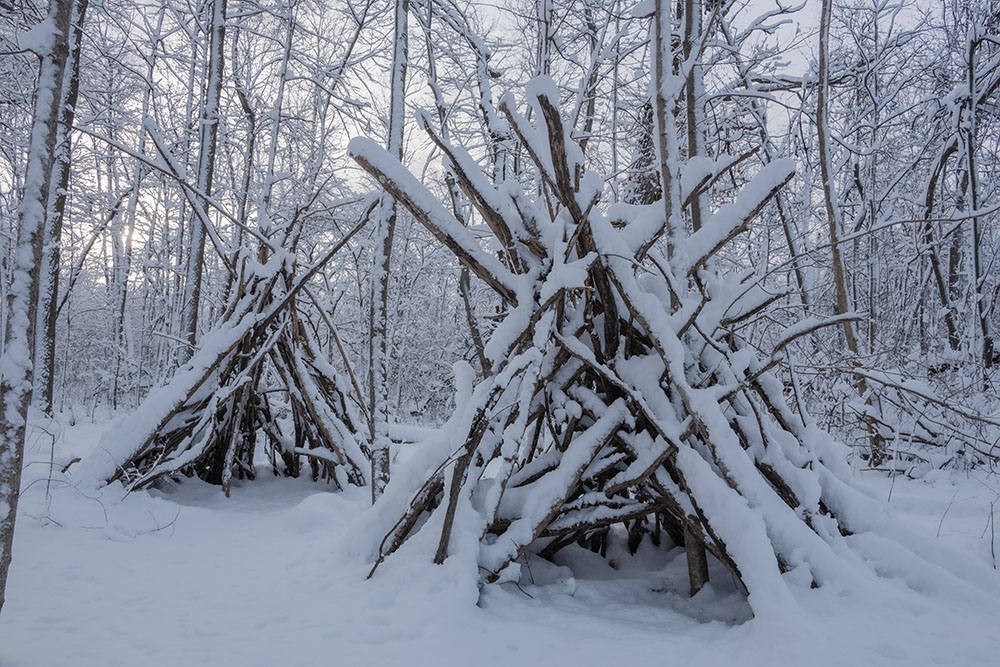
I had planned to go to Woodfield Park in Waukesha next, but when the route to get there went right past this little neighborhood park I decided to take a small detour. I had been there last winter, but not during one of the few moments of snow we had that season. It’s a small park, only 21 acres, but nearly all of those acres are natural, which is unusual for a neighborhood park. It didn’t take me long to walk around the loop trail and take a number of shots. I did have to spend some time mollifying a wary dog that didn’t seem to think I belonged in their park. The dog’s owner was friendly enough though.

Woodfield Park, Waukesha
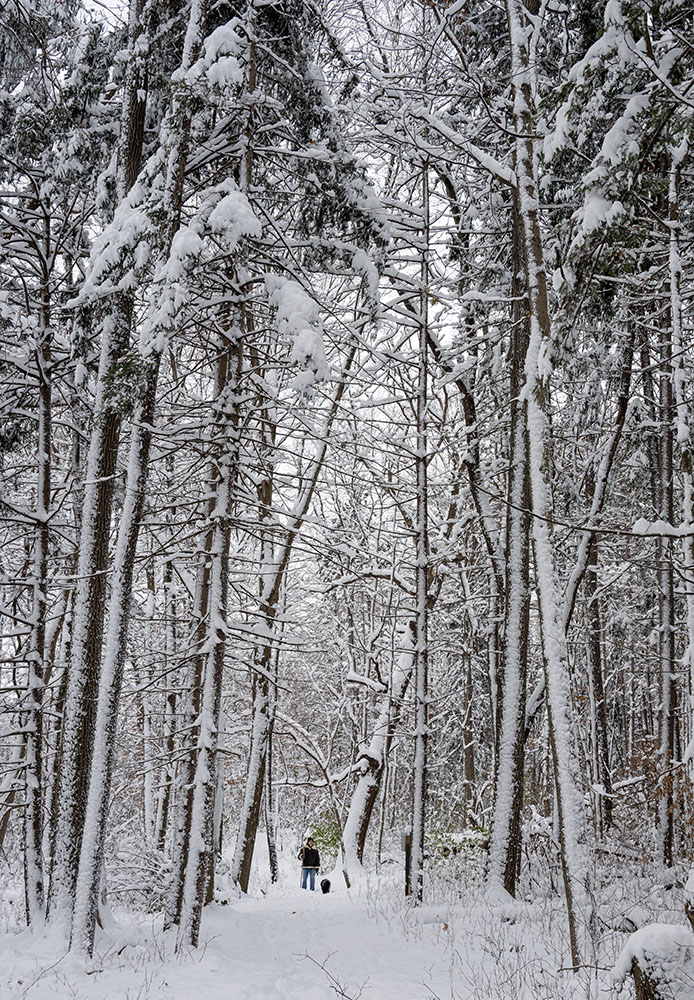
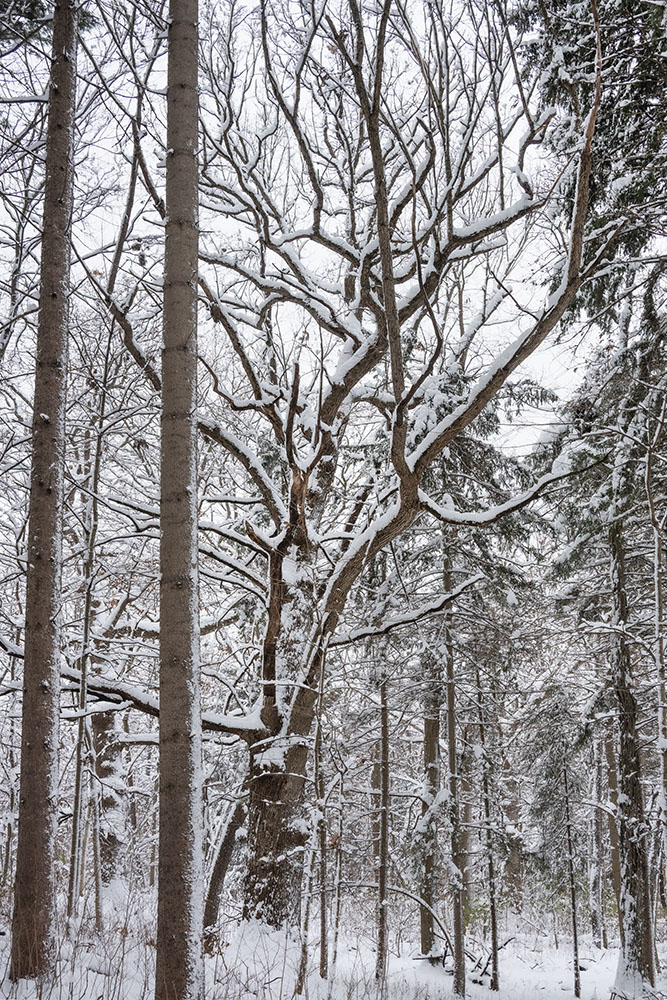
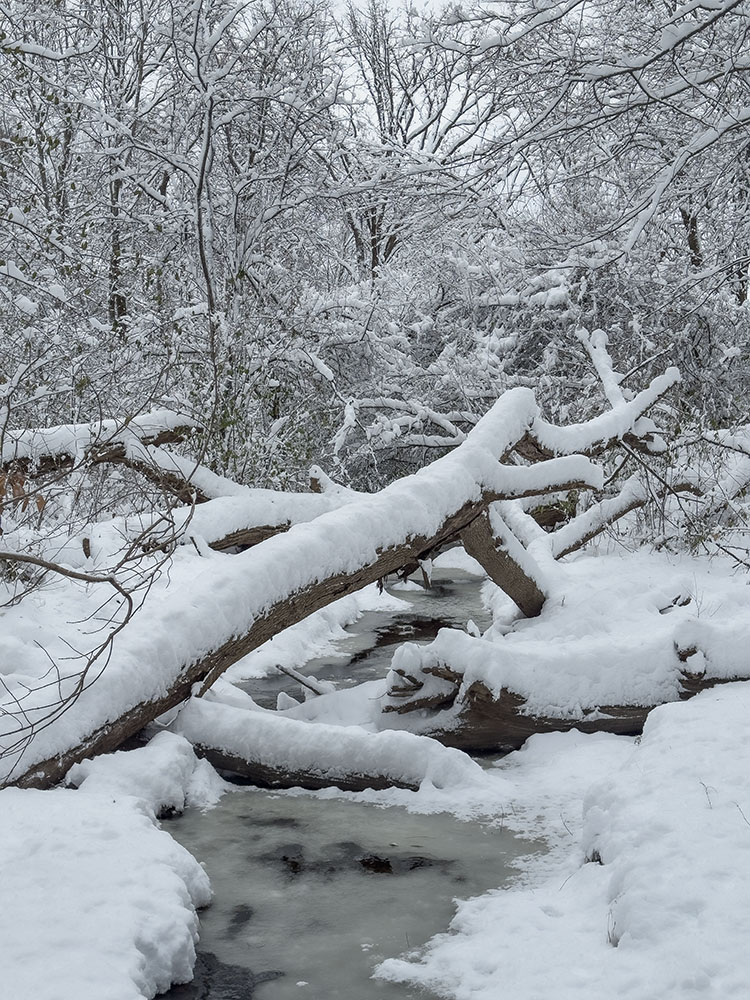
Even more remarkable than Moorewood, Woodfield Park begs the question: What really is a neighborhood park? Its fifty-nine acres are bookended on the north and south by small playgrounds. Otherwise nature rules. Minimal trails, often overgrown and especially wild draped in new snow, suggest that all these acres are primarily the province of wildlife. In other words, it is allowed to be wild. This begs a different question, at least in my mind: Why aren’t more people getting outside to enjoy this wealth of nature right in their backyards? But then, if they did, what would it do to the fifty-acre wilderness? A conundrum.
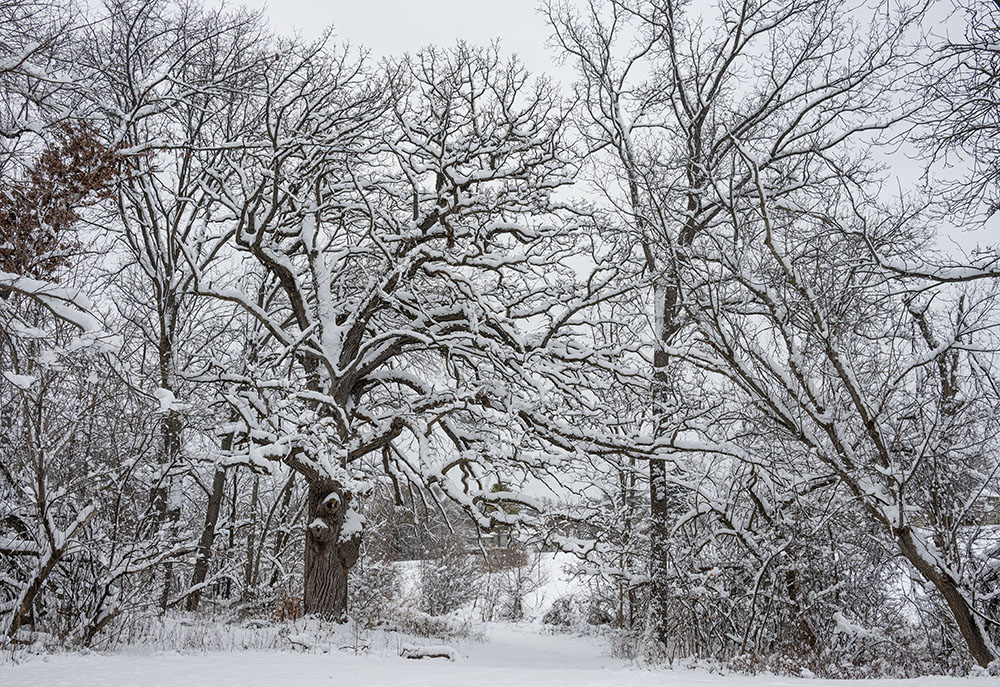
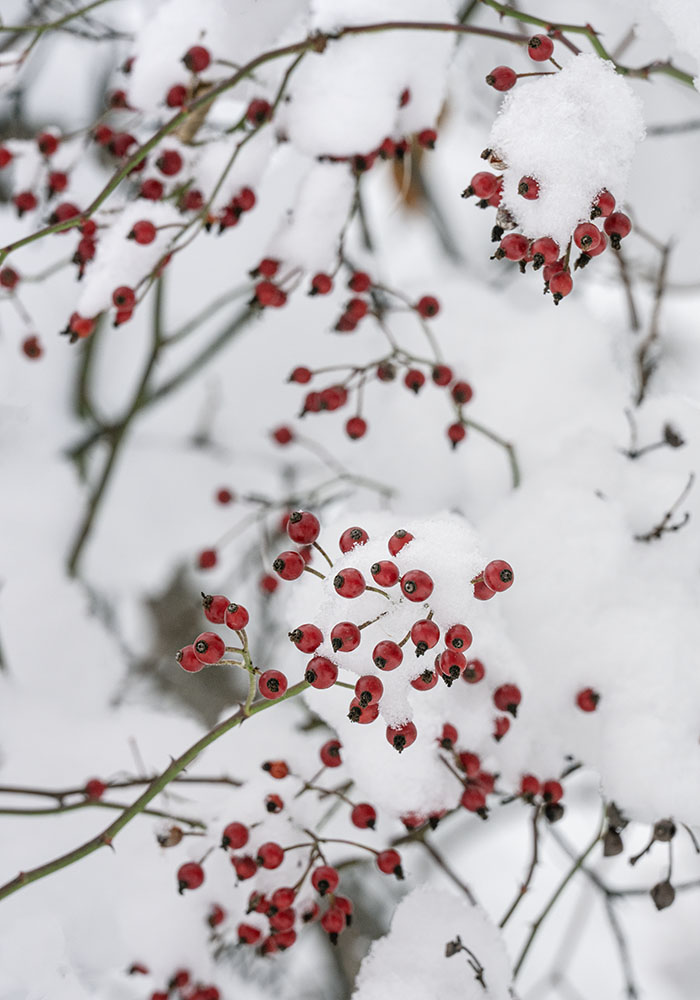
According to Wikipedia, neighborhood parks usually are no more than thirty acres. Woodfield is clearly nonconforming in that respect. They “serve as a social and recreational focal points for neighborhoods and are the basic units of a park system.” People generally get to them on foot, bicycle or public transit since they “primarily serve residents within about a quarter mile of the park.” The issue of how intensively developed they might be is left vague. “They may offer a range of facilities and passive or active (programmed or unprogrammed) recreation…, with opportunities for interaction with nature.” Of course that last phrase is what attracts me to them.
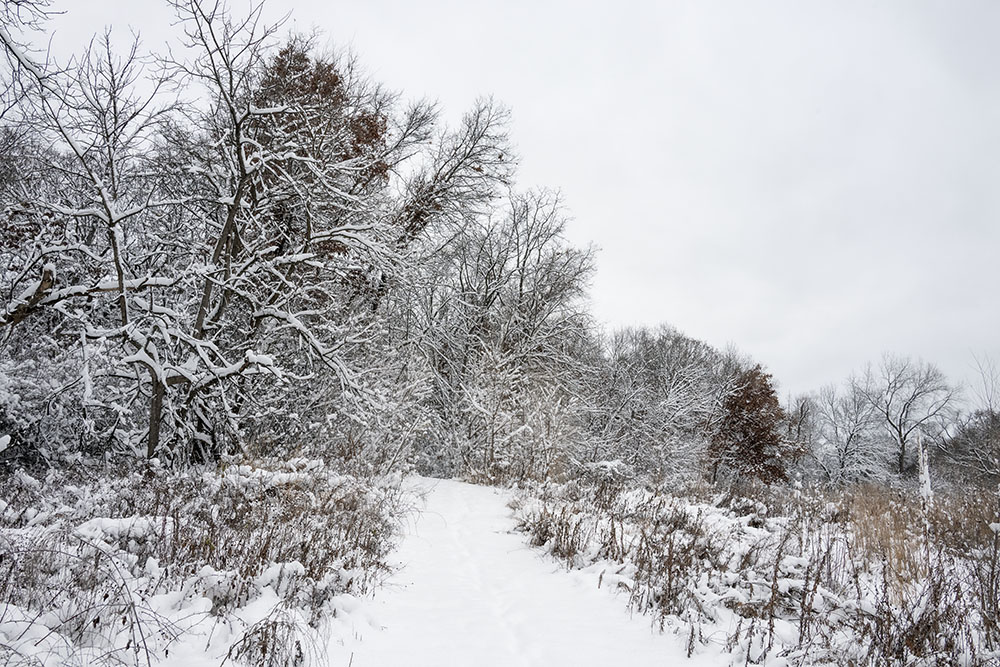
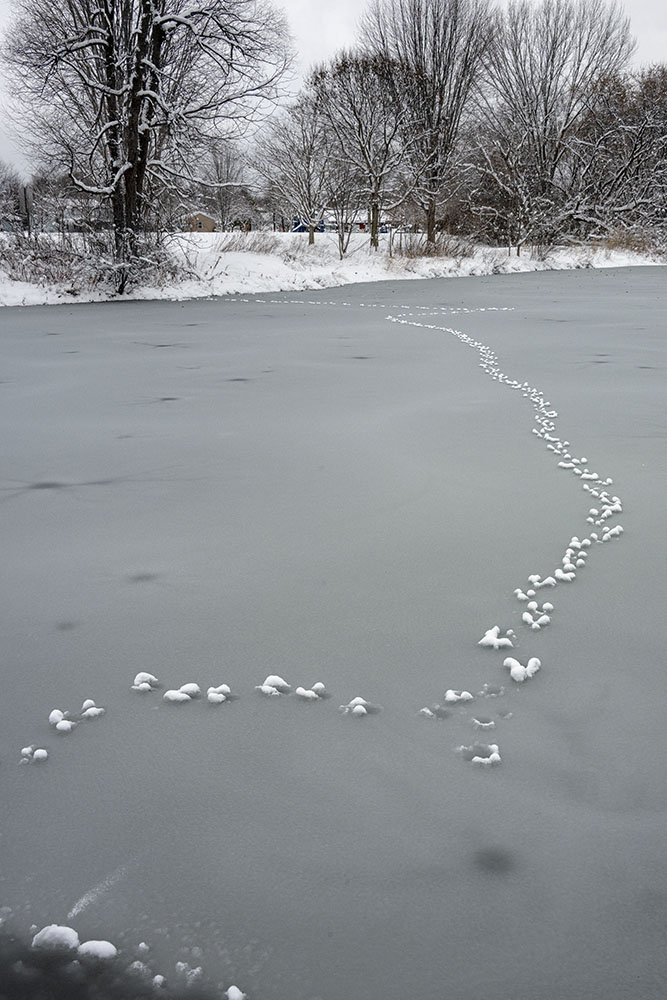
If Woodfield Park were a destination park instead of a neighborhood park it would have a parking lot, which it doesn’t. I’m all for neighborhood parks, especially those that provide “opportunities to interact with nature,” like the four in this story. In fact, I’ve said it before: Every neighborhood should have a park that allows a little bit of wildness into urban denizens’ lives. To paraphrase poet Gary Snyder, who wrote The Practice of the Wild, wildness is not limited to designated wilderness areas, which tend to be far away from where we live. Wildness is everywhere at some scale. We just need to tune ourselves to its frequency. Few ordinary events can help propel us headlong towards the wild as much as a winter storm. As long as we take the time to go out into it.

“A person with a clear heart and open mind can experience the wilderness anywhere on earth. It is a quality of one’s own consciousness. The planet is a wild place and will always be.” ~ Gary Snyder
For more information and additional photos about the parks in this story go to the links in the park titles. The banner photo at the top is from Stigler Nature Preserve.
Related stories:
Close Encounters in a Suburban Enclave or Why Neighborhood Parks Matter
First Snow: A meditation on winter, climate change, and feeling good!
Searching for snow and serenity: Bristol County Park
Hazy Shade of Winter: A January without Snow!
Bonus photos!
Visits to snowy parks in the week since the storm.

Eddee Daniel, writer/photographer, is a board member of Preserve Our Parks, the Project Director of A Wealth of Nature, and editor of The Natural Realm blog. Read more or subscribe at awealthofnature.org. Also available by arrangement for group presentations and guided tours.
The Natural Realm blog is part of A Wealth of Nature, which is a project of Preserve Our Parks.
About Preserve Our Parks
Preserve Our Parks, Inc. is an independent nonprofit organization dedicated to the preservation of parks and green spaces. Our mission: To advocate for and promote Milwaukee area parks and open spaces and to strive to protect the tenets of Wisconsin’s Public Trust Doctrine.
For more than 25 years, we have been a leader in advocating for the protection of Milwaukee County park lands, halting many proposals to develop, privatize, or sell local parkland and lakefront spaces. More information about POP, including past accomplishments, is available at www.preserveourparks.org.
2 thoughts on "Winter Paints the Urban Wilderness Wilder!"
Comments are closed.
“Wildness is everywhere at some scale. We just need to tune ourselves to its frequency.”
Your beautiful photos demonstrate the truth in that observation. It was a beautiful snowfall and it hung around on the trees for folks to regale in it. Thanks for capturing it in your photos.
Thank you Carl!