

March Melt Down at Zillmer Trails: Sign of Spring or Symbol of Climate Change?
April 5, 2026 | Topics: Places, Stories
By Eddee Daniel
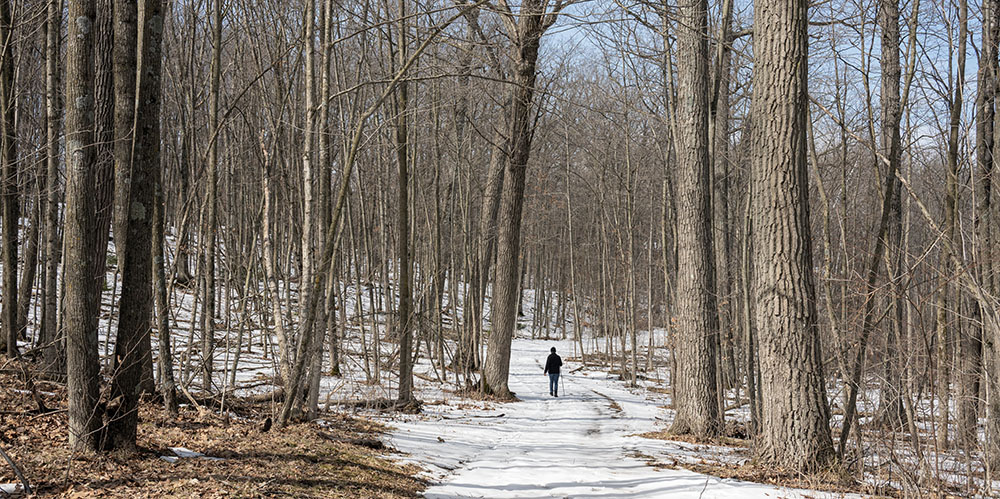
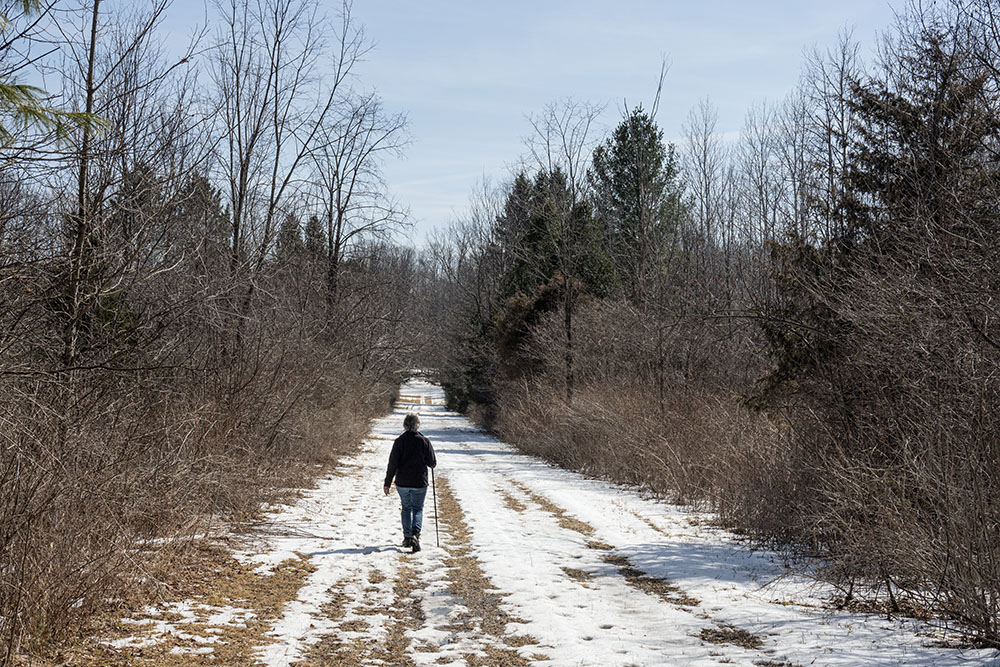
Spring equinox in Wisconsin is always a bit of a tease. It is supposed to be warmer today. The forecast predicted a high in the mid-sixties. But when we arrive at the trailhead in the northern Kettle Moraine State Forest just after noon it is still rather chilly. A deep overcast makes it feel even colder. Another promise, of “partly cloudy,” so far unfulfilled. At the outset the trail and the hills alike are covered in snow, significantly deeper than it is back in Milwaukee. And it is soft, melting snow that makes the hike a bit of a slog, like plodding across squishy sand. Ah, but how quickly conditions can change!
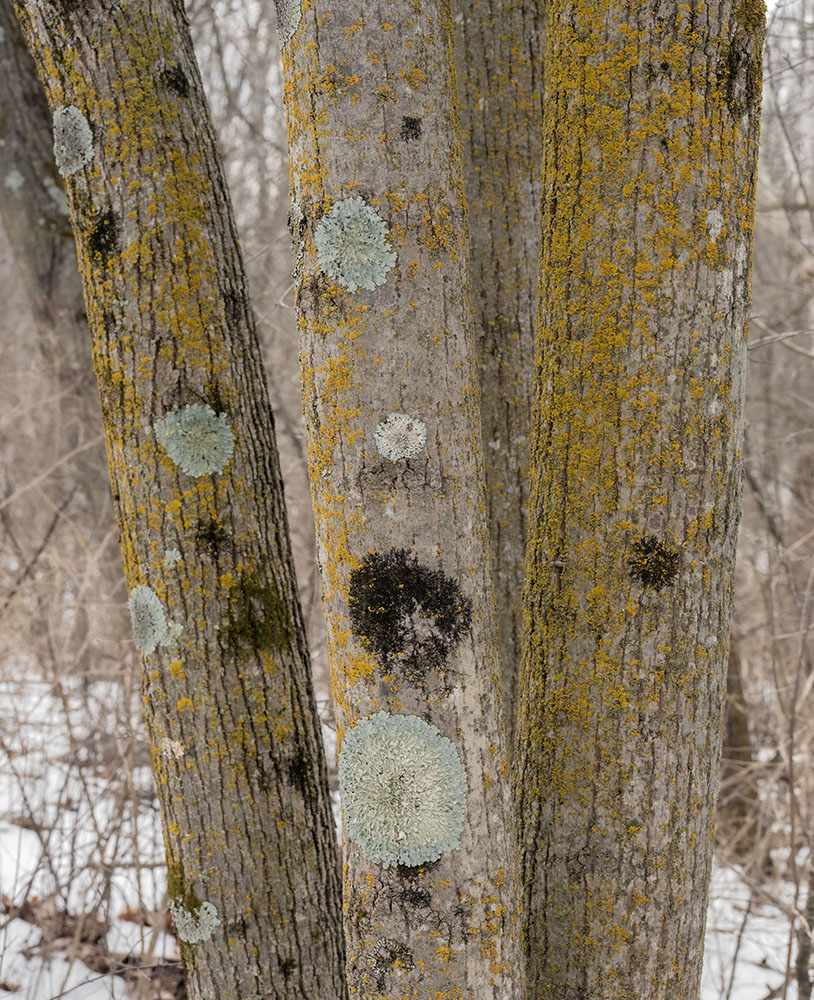
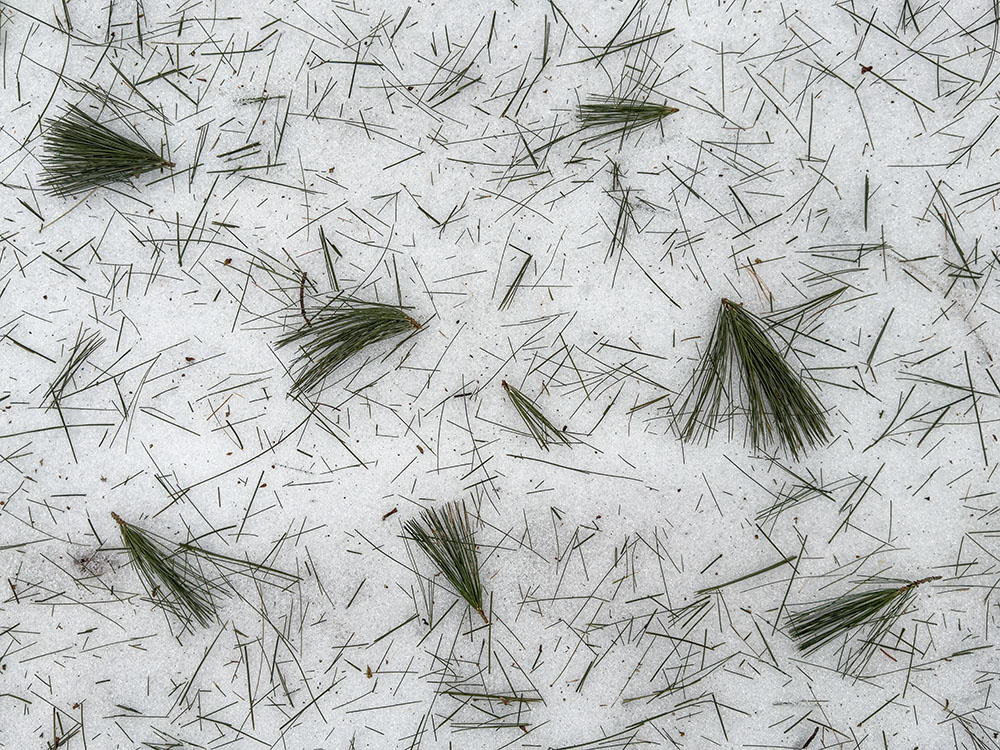
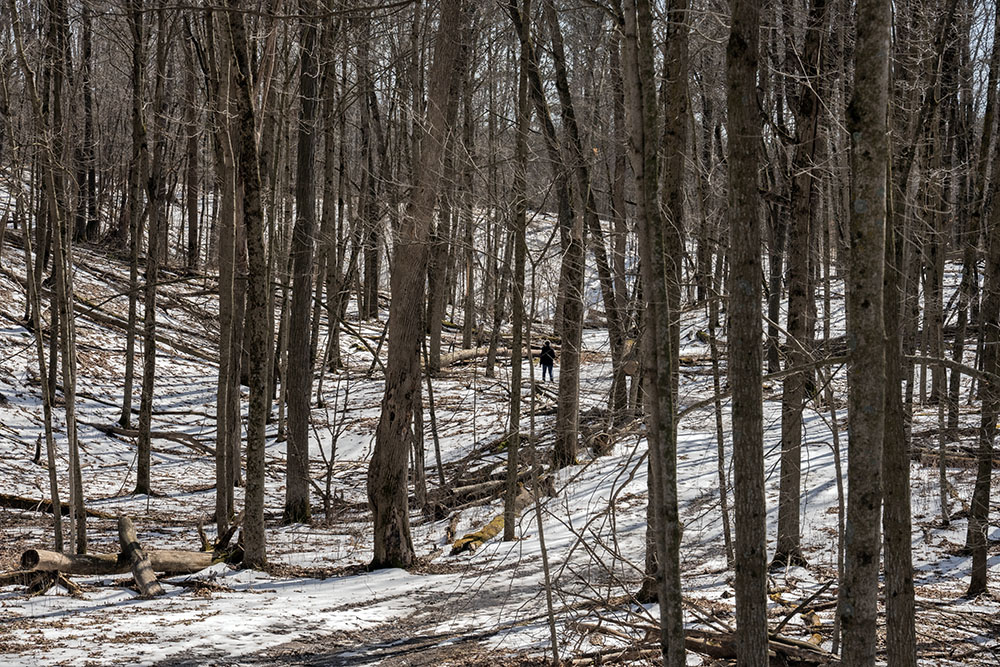
The snow actually brightens up a largely colorless late-winter landscape. The trees are uniformly somber gray, the patches of exposed ground dull umber. Under the gloomy sky even the “evergreen” needles appear closer to black than green. Our eyes, starved for signs of spring, are drawn to simple variations: multi-hued lichens and tree-hugging fungi, the random patterns of fallen pine needles splayed across unbroken snow like a vinyl floor covering. Even with the snow cover, the ever evocative scent of the pines wafts straight into my soul.
A wooden footbridge crosses a small creek, swollen with snowmelt. The flowing water is like an overfed black snake writhing through a white land. We pause at the bridge railing in contemplation. Here, deep in the woods, Milwaukee feels like a foreign country. The water rushes incessantly, insistently under our feet, inexorably cutting its path through the forest to join up with the Milwaukee River, which winds its way towards the city, a tenuous but resilient filament connecting wilderness and civilization.
For a while, the silence is broken only by the crunch of our boots in the snow. Suddenly we hear the rata-tat-tat of an unseen woodpecker somewhere deeper in the forest ahead. It gets noticeably louder and then we see it fly, high in the canopy, a distant flash of black and white, surprisingly large. Possibly a pileated, but we can’t be sure. A smaller woodpecker appears and we hear a percussive chorus of overlapping … rhythmic … tapping.
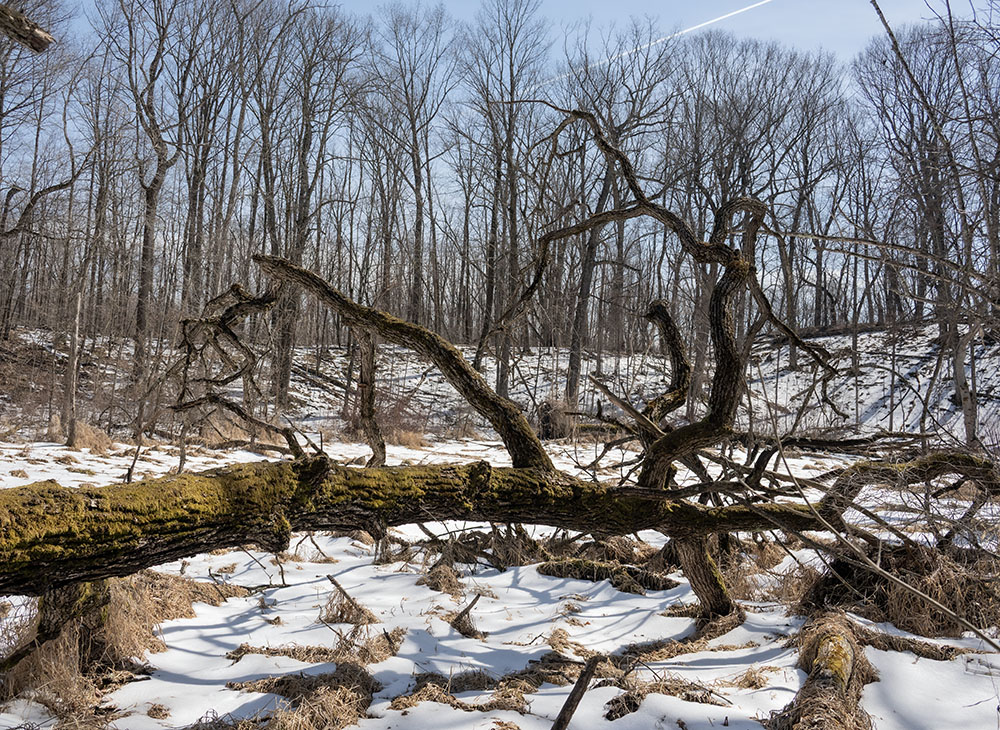
All of a sudden, the overcast sky opens. I imagine the Beatles belting out “Here Comes the Sun!” And maybe I’m still imagining, but immediately the air feels warmer. “The smiles returning to the faces.” As if to underscore the change, the trail begins to rise—while my blood pressure begins to fall. The terrain becomes more rugged, my mind and body more relaxed. “It’s all right….” A kettle drops off on one side, a glacial ridge—moraine or esker perhaps—rises on the other side. Wilderness beckons.
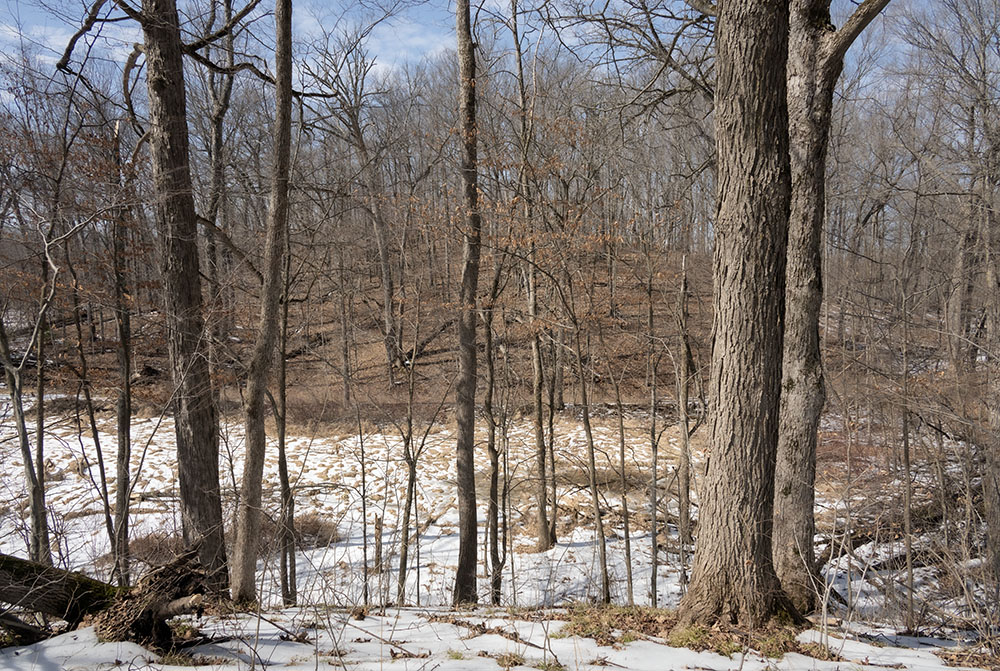
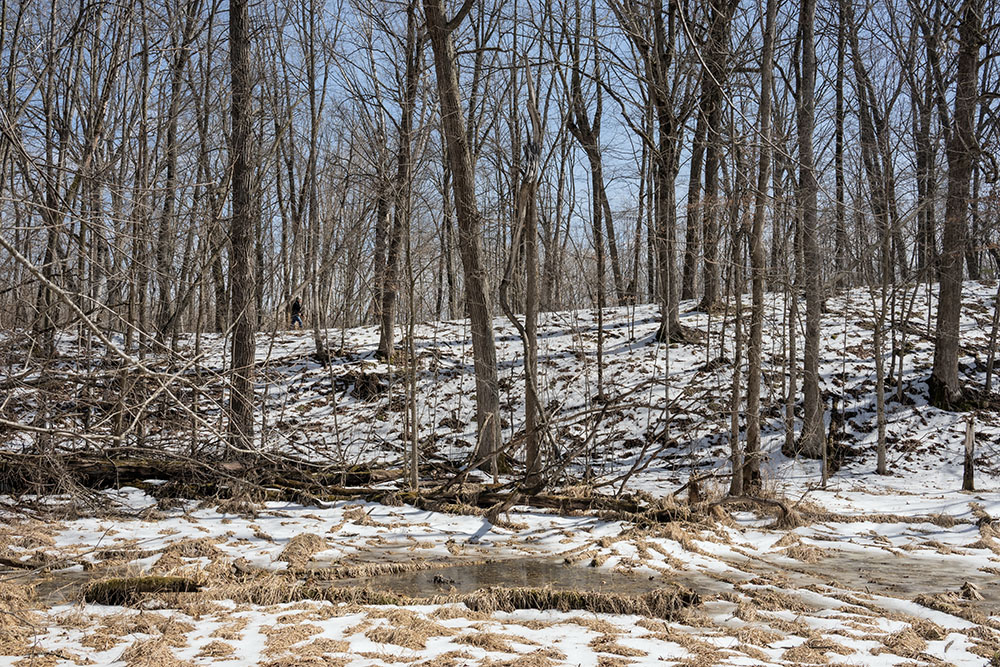
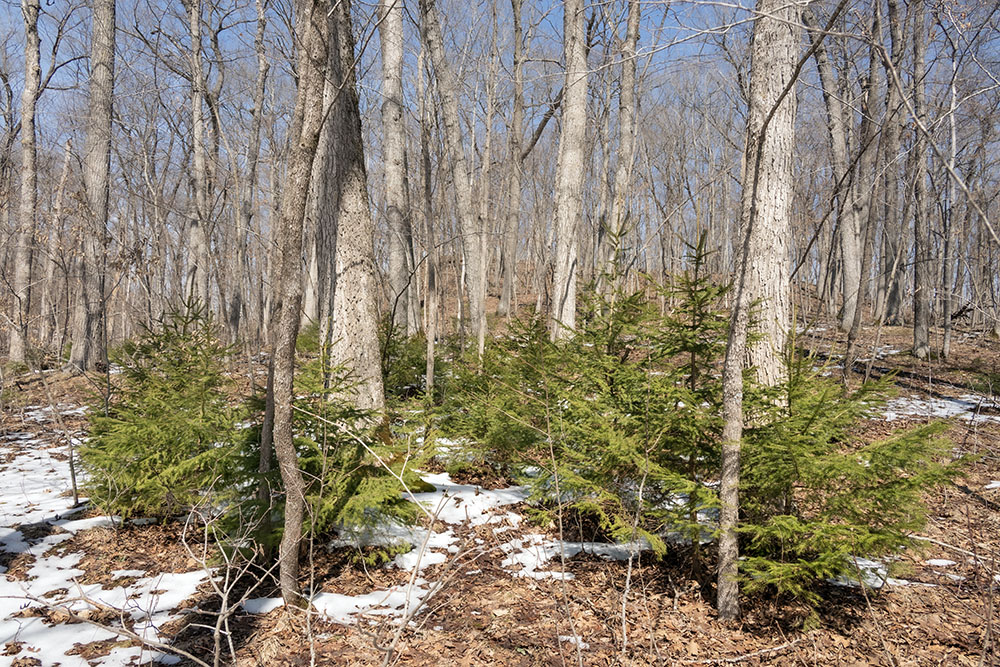
Within minutes the cloud cover vanishes. Sunshine transforms everything. We reach the outer limits of the Red Trail loop and curve around. Turns out we’ve been walking mostly along the snow-covered north sides of hills. Now as we head back along the south-facing slopes, the snow has almost completely disappeared. The bright light makes the gray trees gleam, almost silver. The dull ground cover has given way to the warm, russet hues of fallen leaves. They emit their own redolent, desiccated scent. Young pines fairly glow, emerald needles reaching up to drink in chlorophyll radiating down from above.
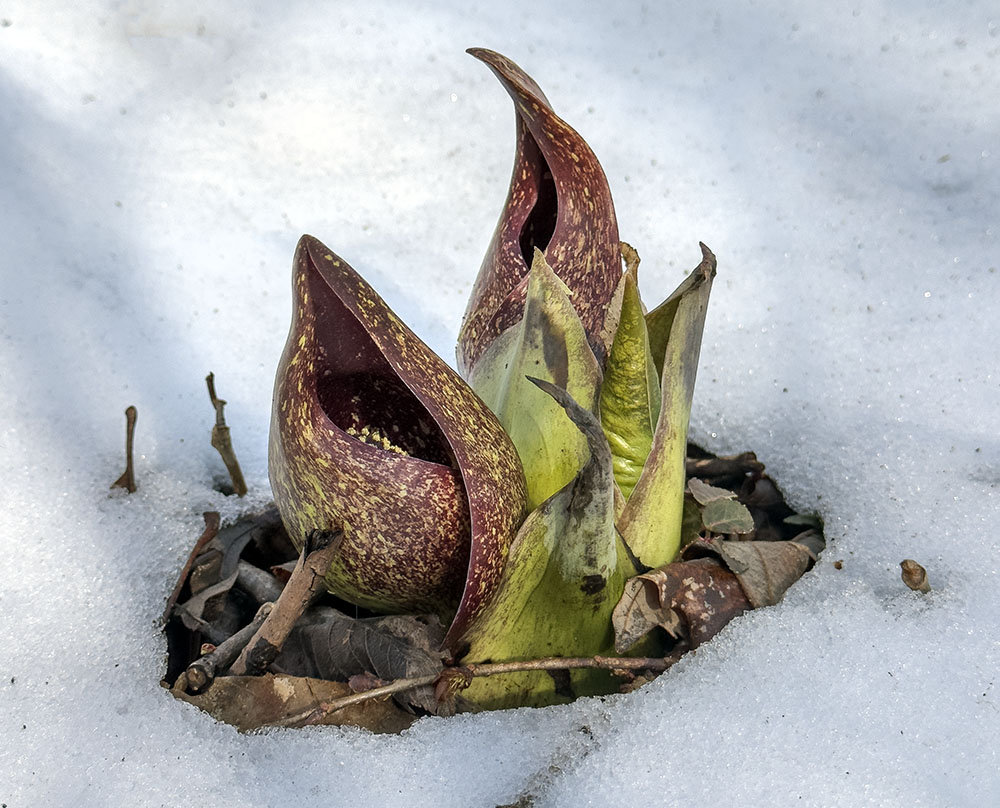
Despite the equinox, the blissful sunshine, and the rapidly warming temperature, I hesitate to call it spring, which suggests blooming wildflowers and budding foliage. Except for a few characteristically modest skunk cabbage blossoms in the hollows, none of that is happening yet. And experience assures me that the warm weather is fickle. Here today, gone tomorrow. (In fact, as I write this account, a few days later, although the snow has thoroughly melted, it once again feels more like winter.) But in the moment, I feel blessed.
I shed a layer, tying my jacket around my waist. The trail loop brings us back around to the creek crossing. I don’t think I’m imagining that the water is even higher than it was a half-hour ago. The trail is sloppier too. In a two-hour hike we’ve walked through every trail condition possible: ankle-deep snow, slush, mud, puddles of standing water. In sunnier spots there are even short stretches of dry trail, each brief instance of which feels like a reprieve.
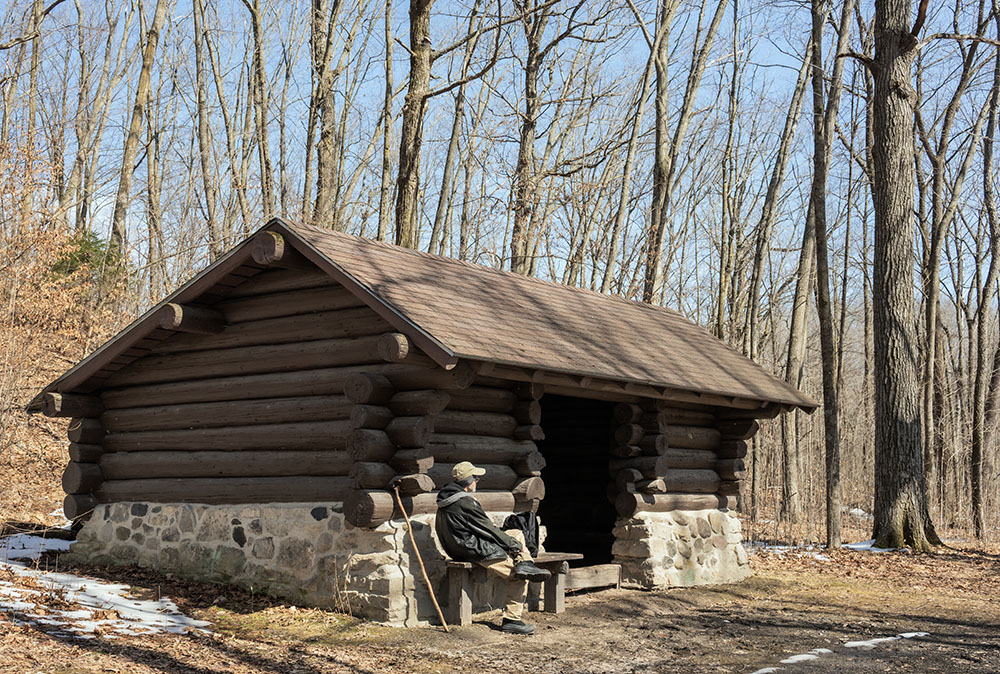
In a clearing visible from the creek we spot a rustic shelter, provided for backpackers to camp overnight (it is reservable, according to the DNR website). It seems like a good place to stop for a rest … and when we reach it we find someone already doing just that. I’ve been surprised all along at not seeing more hikers out on such a fine day. But the bigger surprise comes when we learn that the random person we chance upon out in the wilds of the Kettle Moraine Forest is a fellow nature lover I’ve previously met hiking the Milwaukee County Grounds next to our house! What are the odds?!
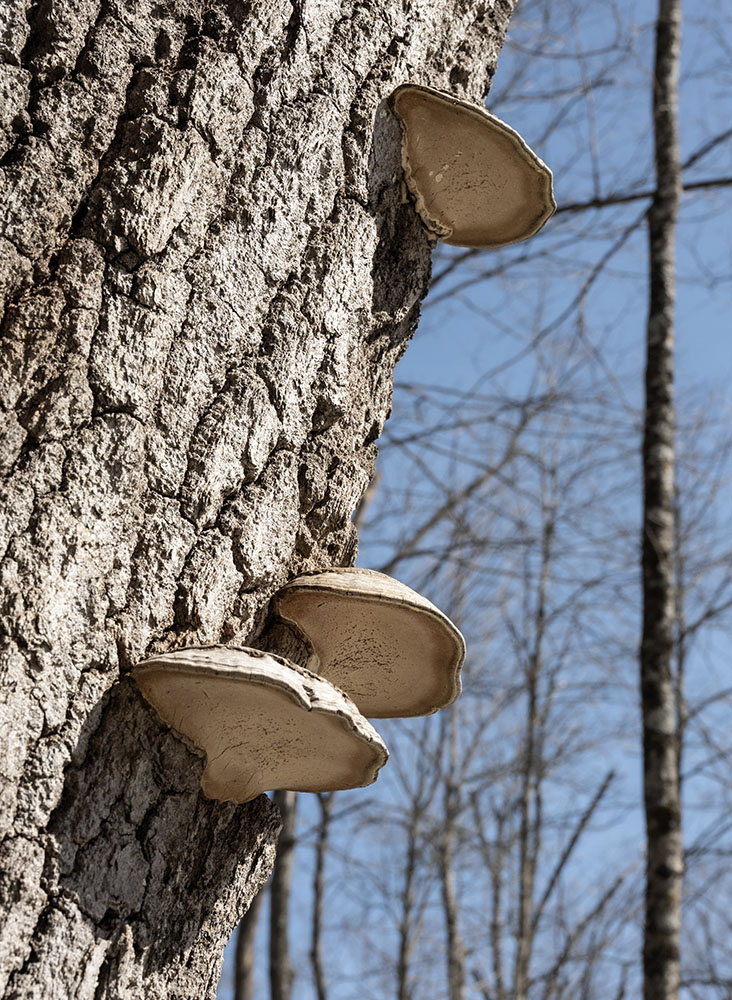
The Zillmer Trails commemorate the life and legacy of Ray Zillmer, who was an ardent conservationist and father of the Ice Age Trail. He was also instrumental in preserving substantial portions of the Kettle Moraine State Forest. Not coincidentally, the Ice Age Trail Visitor Center is located at the northern reaches of the Zillmer Trail System, although we didn’t hike that far this time. As we continue our journey, my mind reaches further back in time. Before European settlers made Zillmer’s efforts to preserve this land in its natural state necessary, the Potawatomi inhabited all of it in harmony with the natural forces that shape and nurture it. Breathing in the forest-steeped air along with the awareness of that history nourishes my spirit.
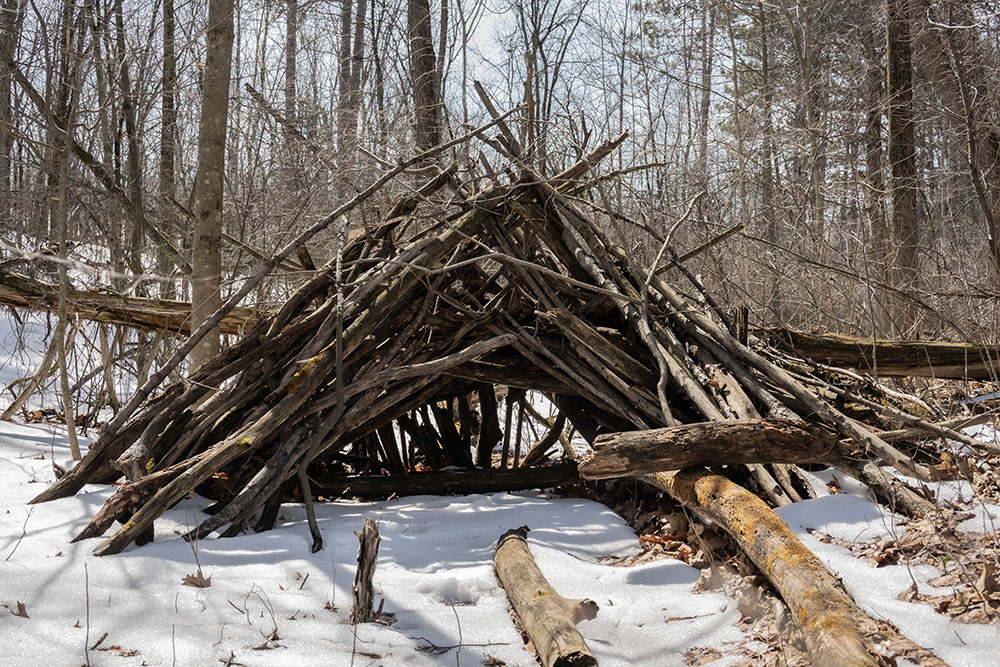
A small hawk, a kestrel perhaps, glides by overhead, buoyed on updrafts of air made humid by the melting snow. We watch as it swerves, soars, shrinks and vanishes, never once flapping its wings. The earlier chill is gone as the sun prevails. I can almost see the snow settling, sinking, disappearing. The Earth soaks it in, recharging groundwater. The creek drains it towards Milwaukee.
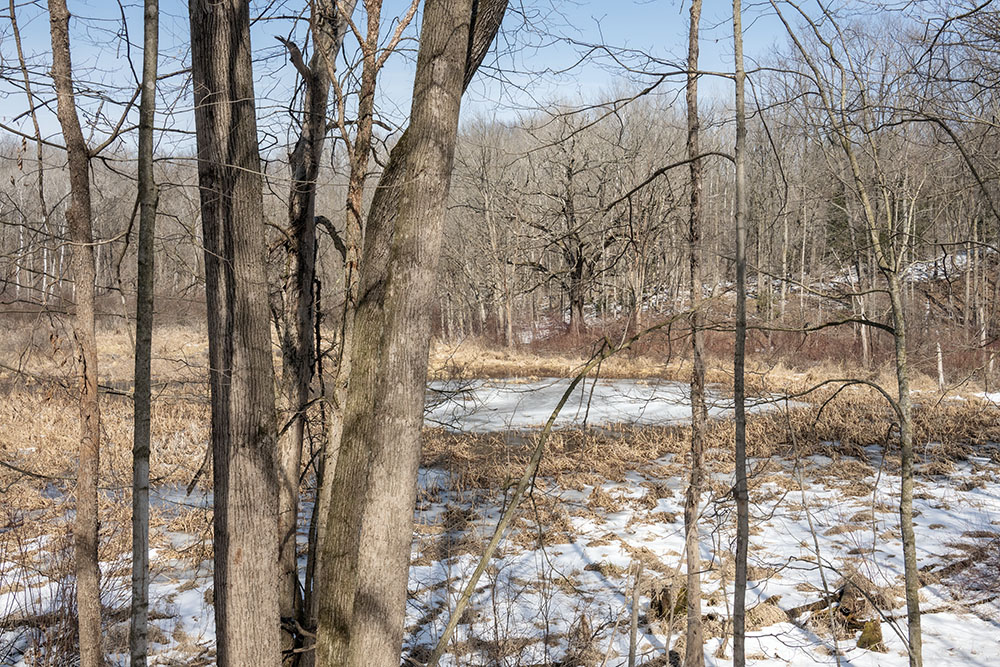
Within a single week straddling the equinox, we’ve had record-breaking warmth followed by a blizzard that dumped over a foot of snow. Then near-record warming again. Now a return to wintry cold. Volatility is a symptom of climate change. While the planet is growing inexorably warmer, day-to-day forecasting is a challenge. And while I’d welcome a warmer spring and earlier budding of leaves and flowers, I mourn the diminishment of winter. The reason the Zillmer Trails are so wide, if you haven’t guessed, is because they double as groomed cross-country ski trails when there is sufficient snow. There hasn’t been much skiing here or anywhere nearby this winter. Today’s melt down isn’t so much a sign of spring, but a symbol of a changing reality.
For more information about and additional photos featuring the Northern Unit of the Kettle Moraine State Forest go to our Find-a-Park page.
Related stories:
Searching for snow and serenity: Bristol County Park
First Snow: A meditation on winter, climate change, and feeling good!
Note: The photo of skunk cabbage was taken in the Honey Creek Parkway in Wauwatosa. All other photos from the Zillmer Trails in the Northern Unit of the Kettle Moraine State Forest.
Eddee Daniel, writer/photographer, is a board member of Preserve Our Parks, the Project Director of A Wealth of Nature, and editor of The Natural Realm blog. Read more or subscribe at awealthofnature.org. Also available by arrangement for group presentations and guided tours.
The Natural Realm blog is part of A Wealth of Nature, which is a project of Preserve Our Parks.
About Preserve Our Parks
Preserve Our Parks, Inc. is an independent nonprofit organization dedicated to the preservation of parks and green spaces. Our mission: To advocate for and promote Milwaukee area parks and open spaces and to strive to protect the tenets of Wisconsin’s Public Trust Doctrine.
For more than 25 years, we have been a leader in advocating for the protection of Milwaukee County park lands, halting many proposals to develop, privatize, or sell local parkland and lakefront spaces. More information about POP, including past accomplishments, is available at www.preserveourparks.org.