

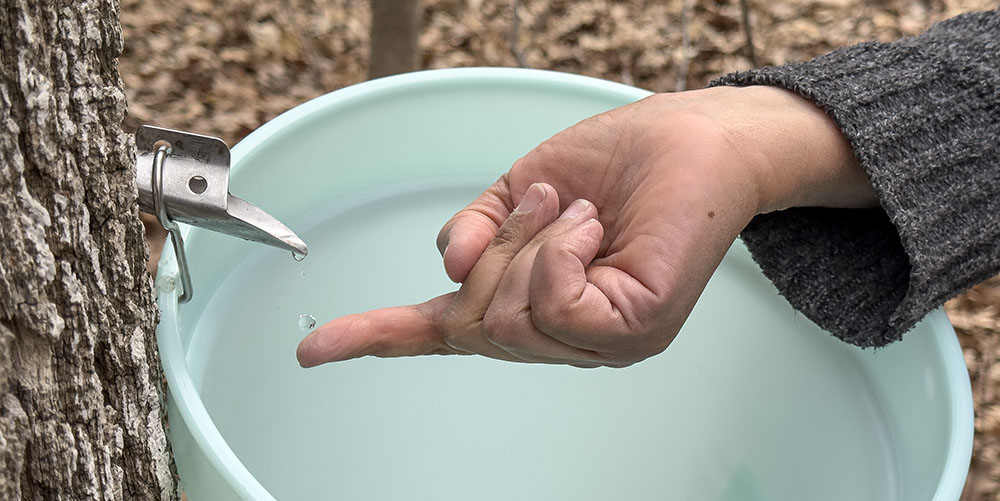
Maple Sugaring at Petrifying Springs County Park
March 21, 2026 | Topics: Events
By Maria Pfister
Photography by Eddee Daniel
Late winter or early spring in much of North America is maple sugaring season! There’s only a narrow window when we can harvest sap and make maple syrup, so this is a special time of year. Pringle Nature Center (PNC) holds two public “Maple Syrup Hikes” each year at Petrifying Springs County Park, Kenosha, to celebrate the season and teach the community how we get this delicious natural resource.
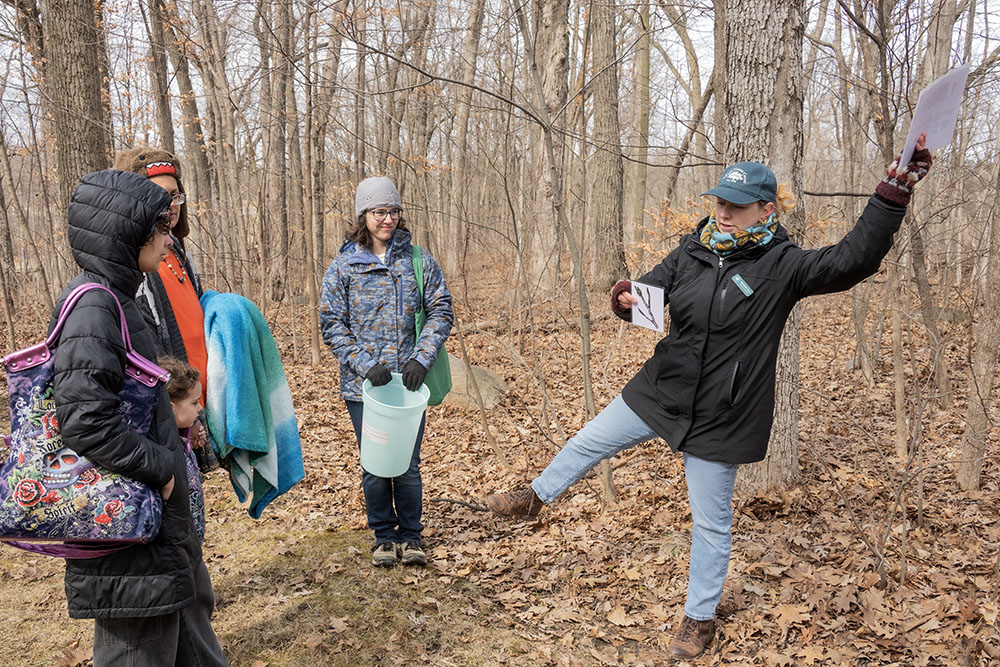
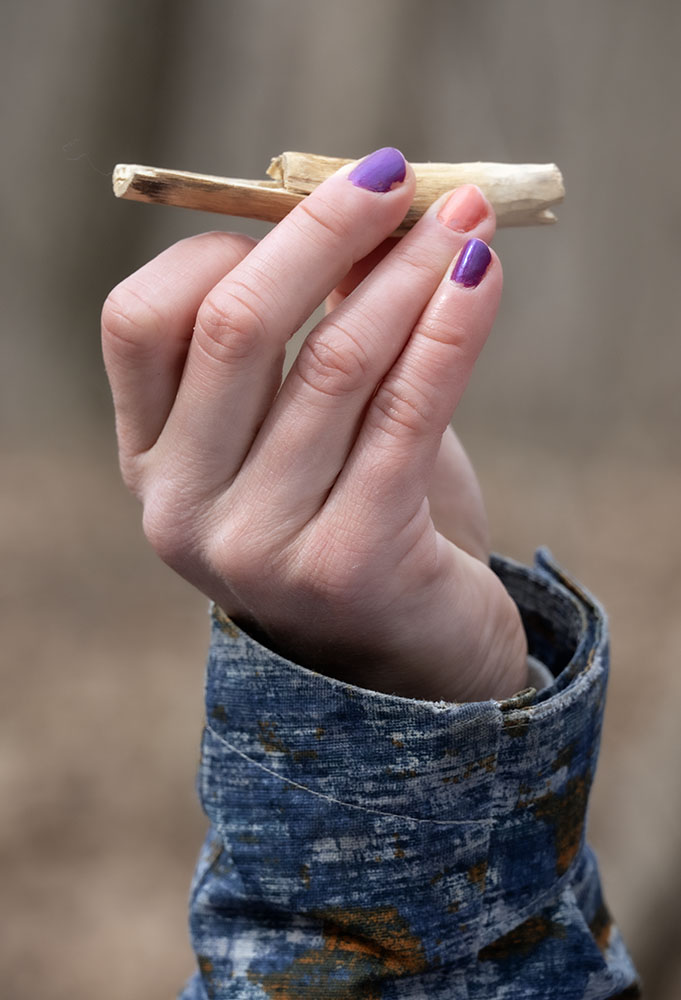
Our first stop in this adventure is all about identifying a sugar maple tree. PNC educators talk about the leaves, bark, branches, buds, and fruits of the tree. Participants are encouraged to find a brown maple leaf on the ground, left over from fall of last year. Once everyone in the group is educated on the characteristics of a sugar maple tree, we are off to the next stop on our hike: sap and changing seasons.
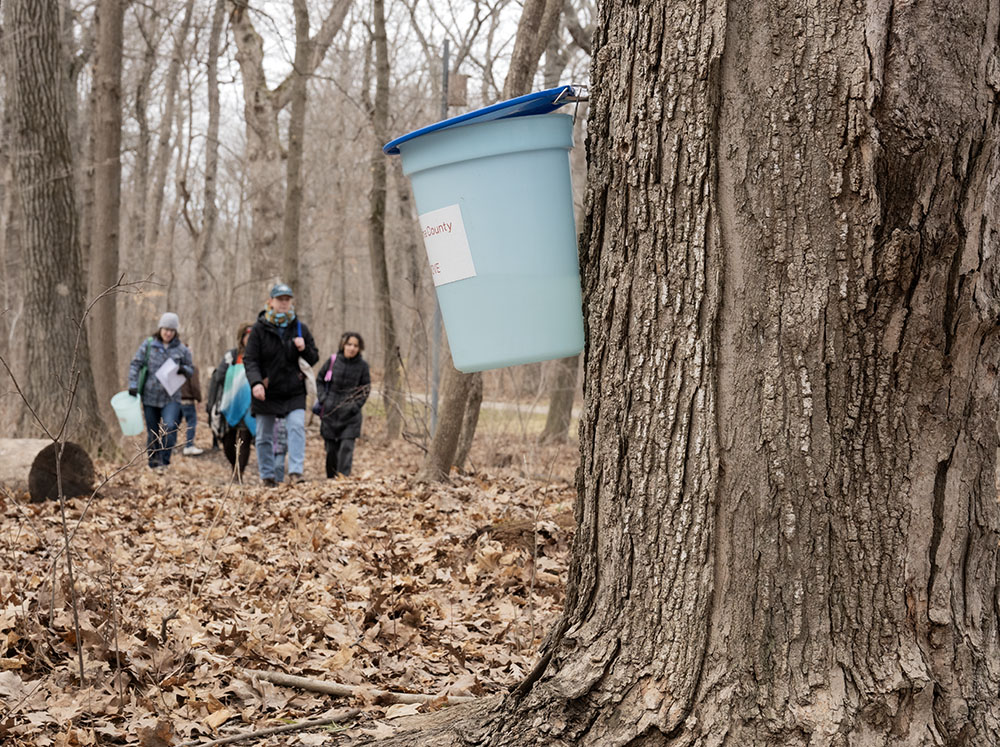
In the winter time, sap is stored in the roots of deciduous trees. When the weather starts to warm up in spring, the tree sends the sap into the branches to start making food for itself to grow. When the temperatures are above freezing during the day, and below freezing at night it is the perfect time to start collecting the sap. That is when we say it is “flowing.” Most tree sap contains two percent or less of sugar. Sugar maple tree sap contains up to five percent sugar! That is why it is the most ideal for collecting and making syrup.
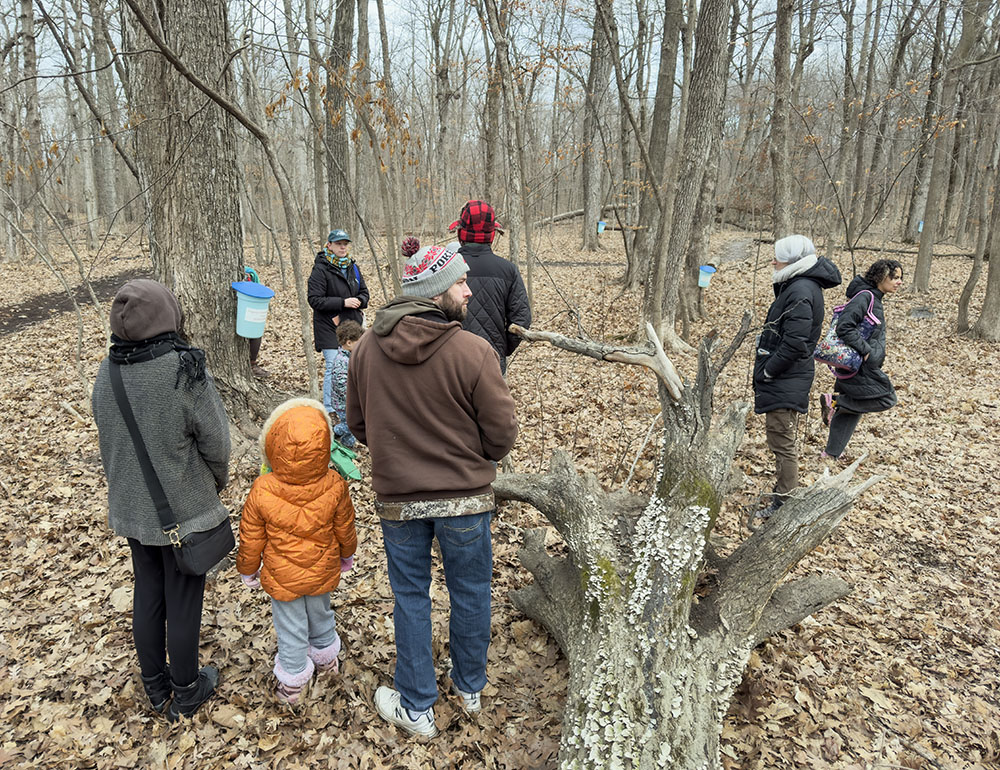
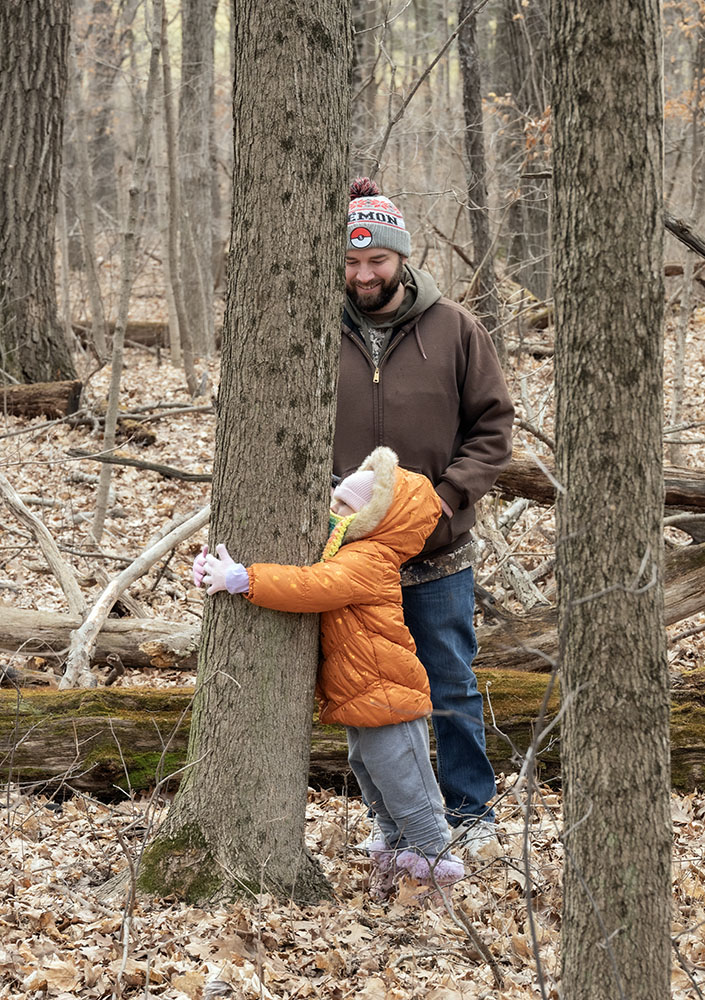
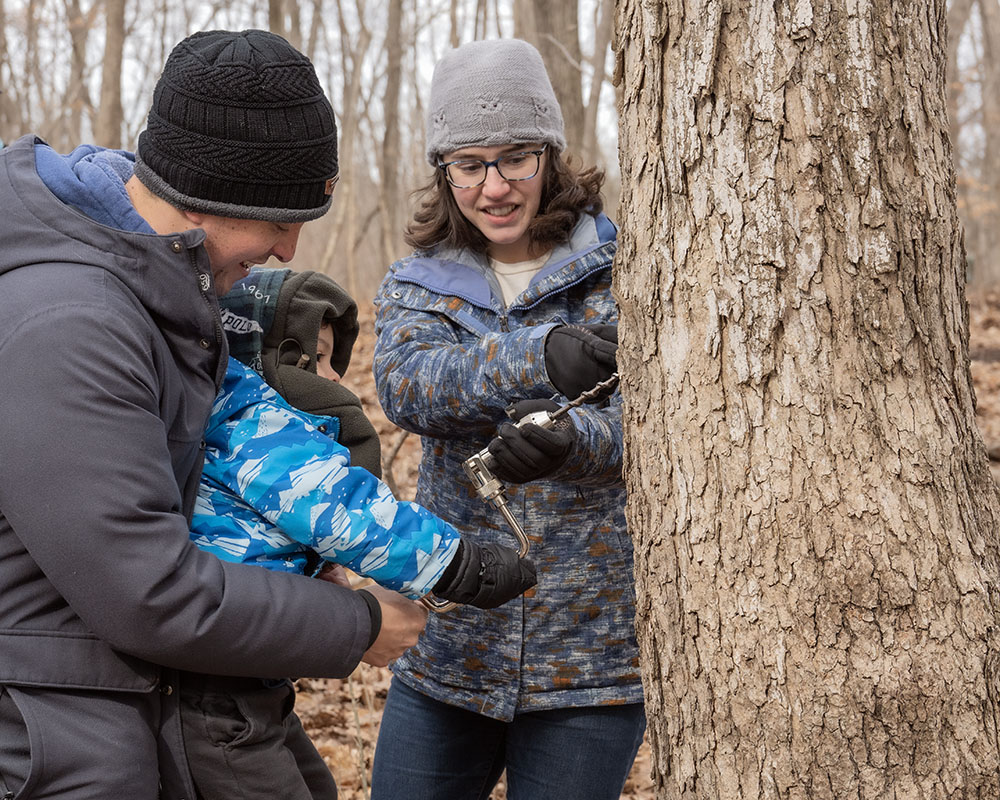
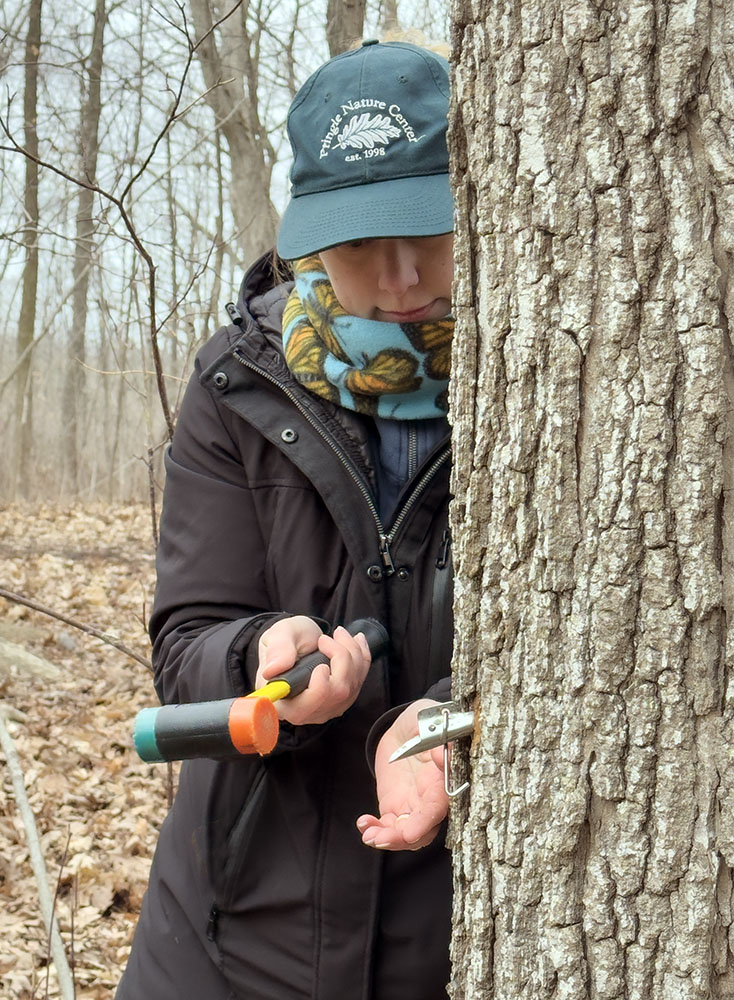
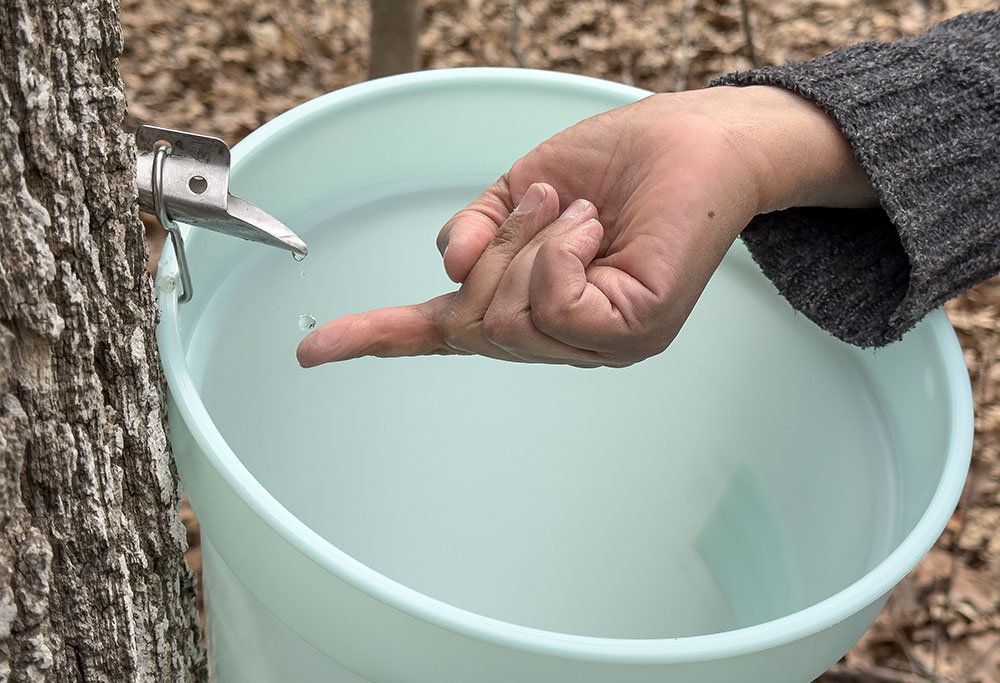
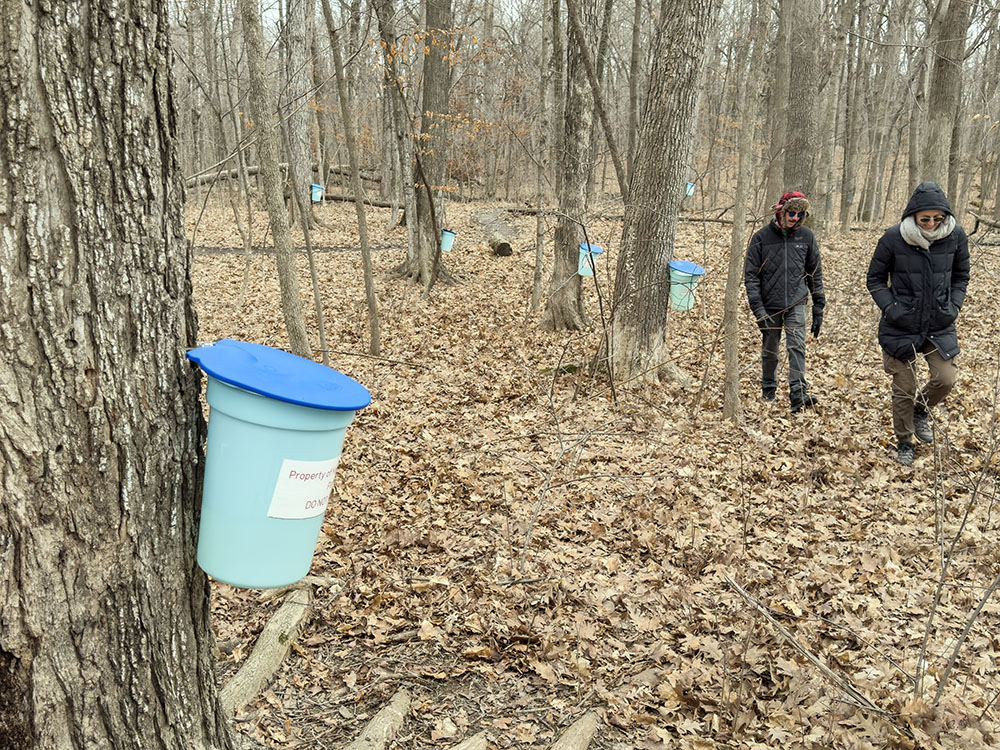
Now it is on to the “sugar bush” to identify and tap a sugar maple tree. Participants in the hike can see some trees already tapped and collecting sap. We review the characteristics of a maple tree and decide on a tree big enough to tap. Using a hand drill, we make a hole in the tree about two to three inches deep. If we are lucky with a warm day, we will see the sap starting to drip out while we are drilling! We then insert a spile (a type of spout designed for the purpose) and hang the bucket for collecting the sap.
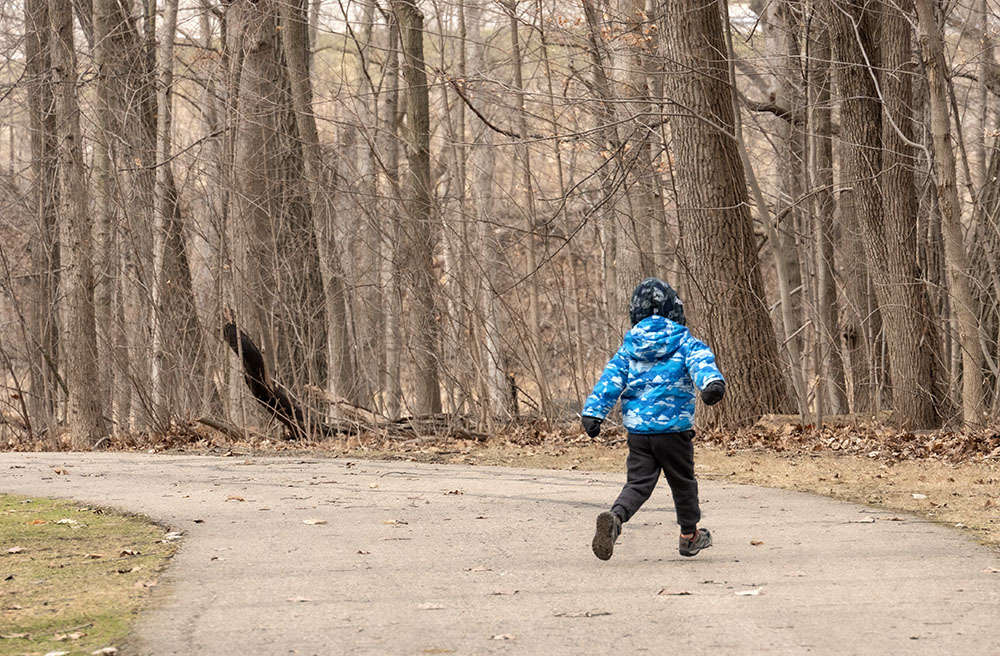
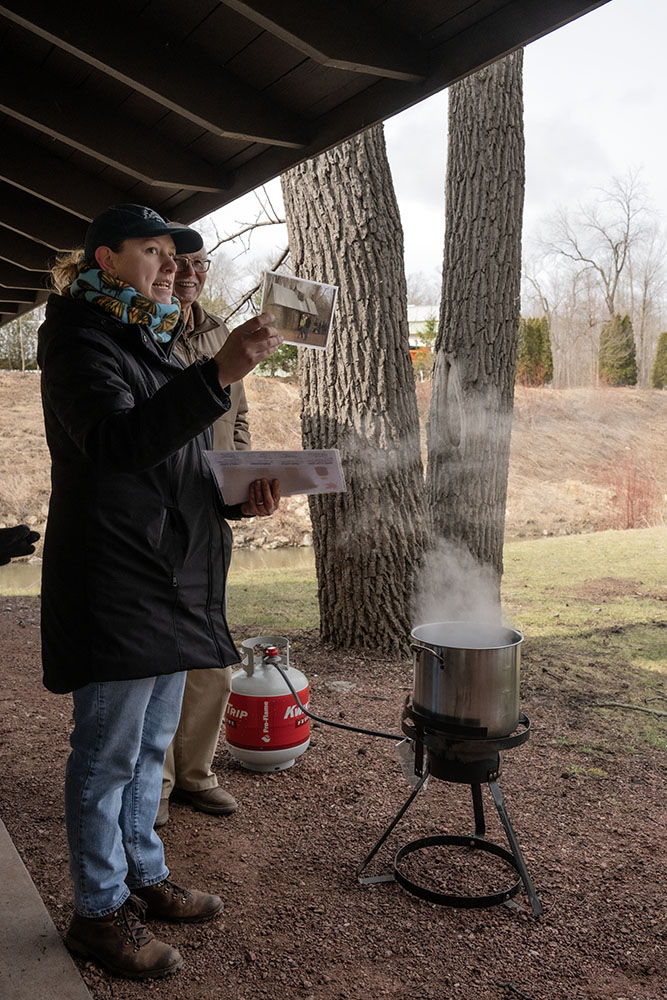
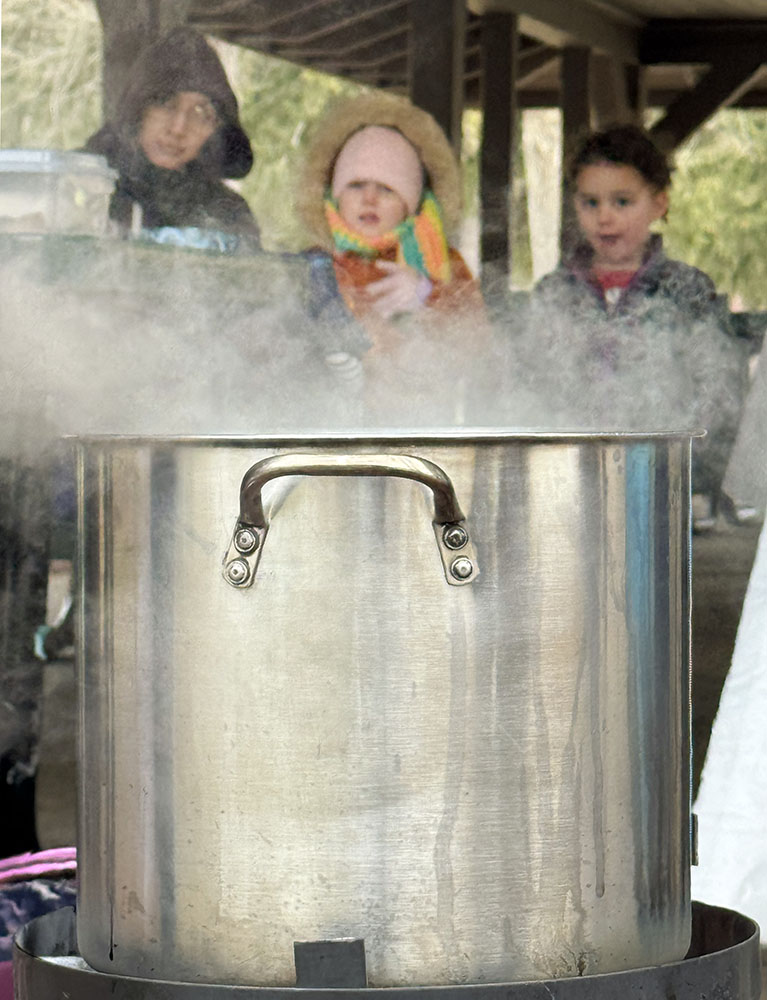
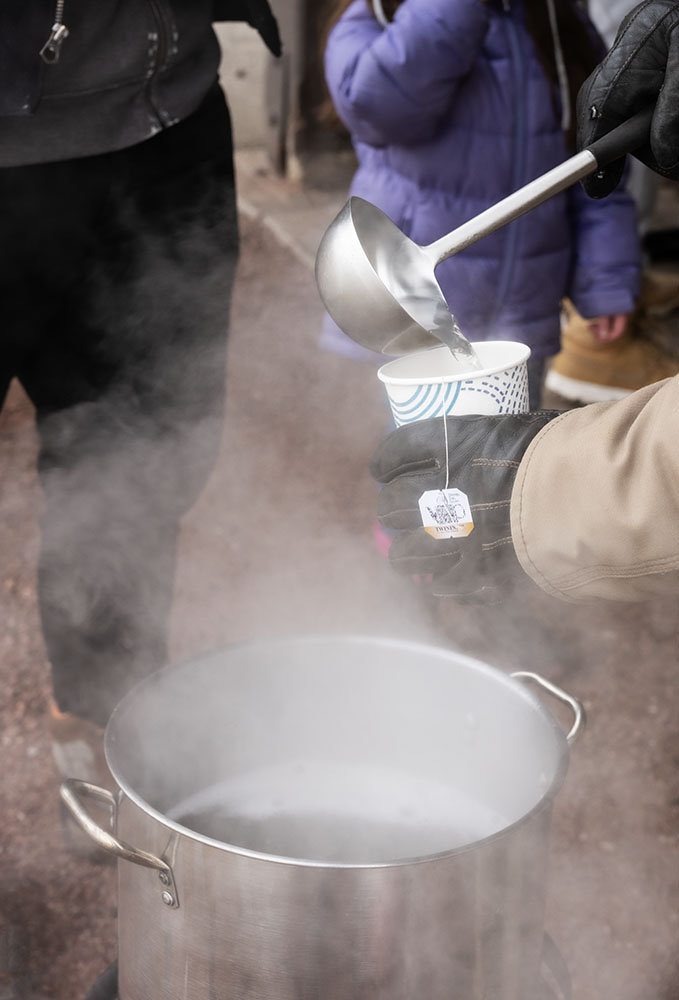
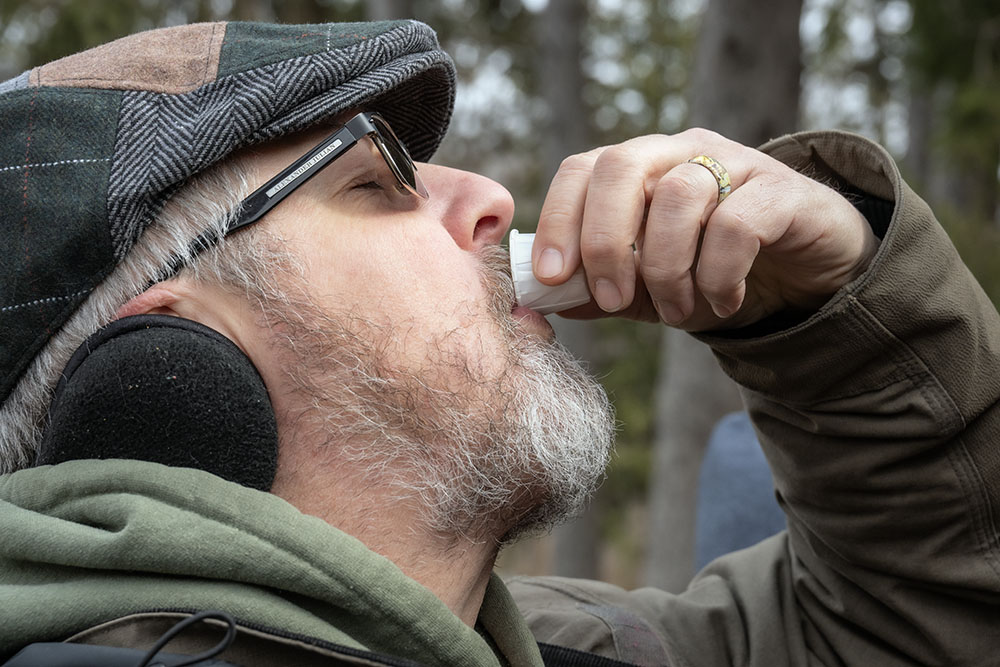
The last stop on our Maple Syrup Hike is back to the pavilion where we started. Now is the time to learn about how the sap gets turned into syrup. It takes about forty gallons of sap to make just one gallon of syrup! The sap is boiled down, which evaporates the water, so that only the sweet, sugary syrup is left. Because sap is around 95% water to begin with, it takes a long time to get the syrup we love. PNC has been collecting a few gallons of sap for this program, and boils it for visitors to sample. At the conclusion of the program, we offer samples of hot sap water and pre-made maple syrup to our group. Participants have the option of adding a tea bag to their sweet sap water or drinking it plain. Either way, it is a sweet treat at the end of an enlightening journey.
Go to our Find-a-Park pages for more information and stories about Pringle Nature Center and Petrifying Springs County Park.
Related story:
Area Nature Centers Tap Maples for Syrup—and Fun!
Maria Pfister is Environmental Education Director at Pringle Nature Center. Eddee Daniel, writer/photographer, is a board member of Preserve Our Parks, the Project Director of A Wealth of Nature, and editor of The Natural Realm blog. Pringle Nature Center is a project partner of A Wealth of Nature.
The Natural Realm blog is part of A Wealth of Nature, which is a project of Preserve Our Parks.
About Preserve Our Parks
Preserve Our Parks, Inc. is an independent nonprofit organization dedicated to the preservation of parks and green spaces. Our mission: To advocate for and promote Milwaukee area parks and open spaces and to strive to protect the tenets of Wisconsin’s Public Trust Doctrine.
For more than 25 years, we have been a leader in advocating for the protection of Milwaukee County park lands, halting many proposals to develop, privatize, or sell local parkland and lakefront spaces. More information about POP, including past accomplishments, is available at www.preserveourparks.org.