

Kettle Moraine Oak Opening recognized by the Old Growth Forest Network
May 24, 2026 | Topics: Events, Places
By Eddee Daniel
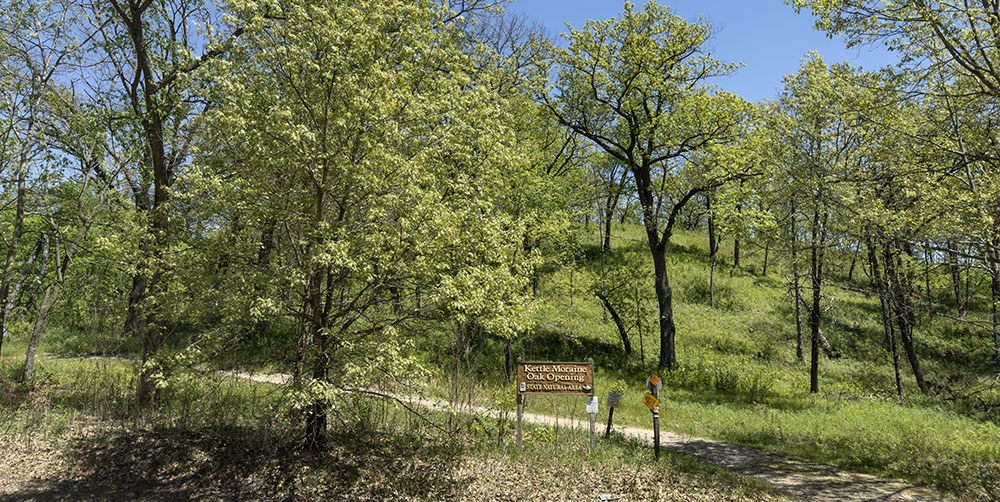
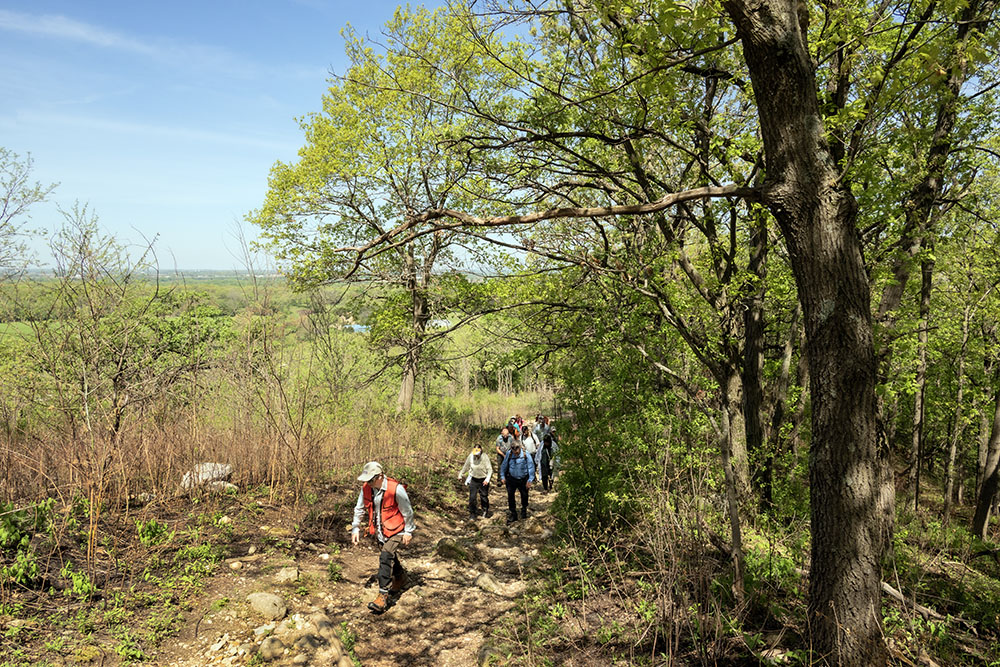
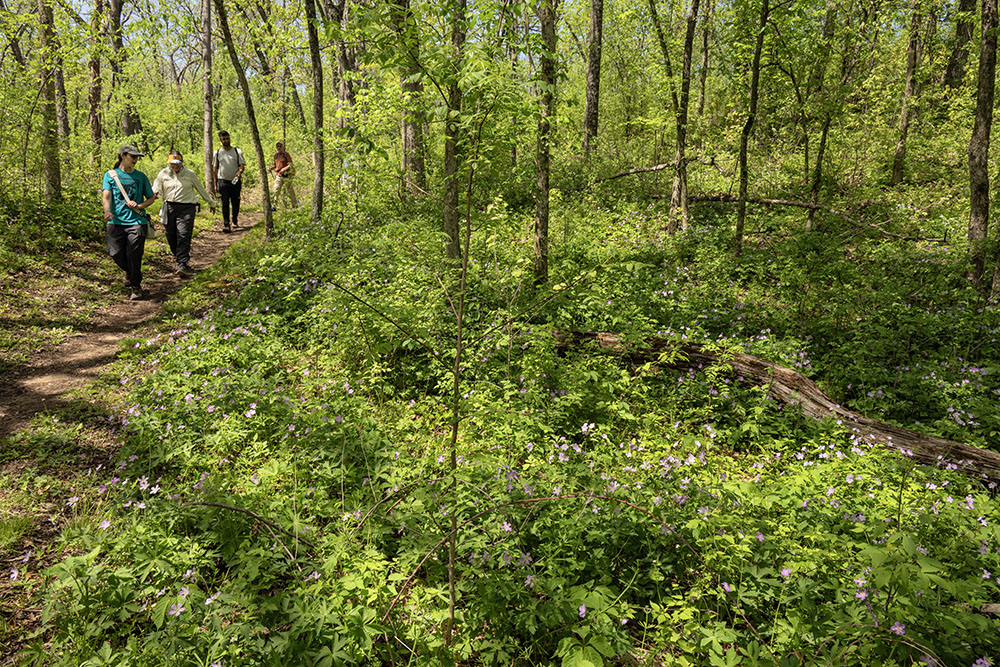
It was a hot, sultry morning, the kind of mid-May day that teases you into thinking summer has arrived. Leaves budding throughout the forest cast the atmosphere in a fresh yellow-green tint. The canopy hadn’t filled in enough yet to create enough shade to temper the heat. The glacial terrain made for a rugged hike; before long sweat began trickling inside my shirt. However, I heard no complaints from the dozen hikers in our group. The mood was unreservedly celebratory. We were there to commemorate the induction of this particular forest into the national Old-Growth Forest Network (OGFN).
“Crunching up and down gravelly hillsides under the spell of gnarly oaks and a chorus of warblers in the springtime. It doesn’t get much better than that!” said Nick Sanchez, Forest Conservation Manager for the OGFN. “Kettle Moraine Oak Opening is a fantastic addition and an excellent representative for Jefferson County, WI in the national Old-Growth Forest Network.”
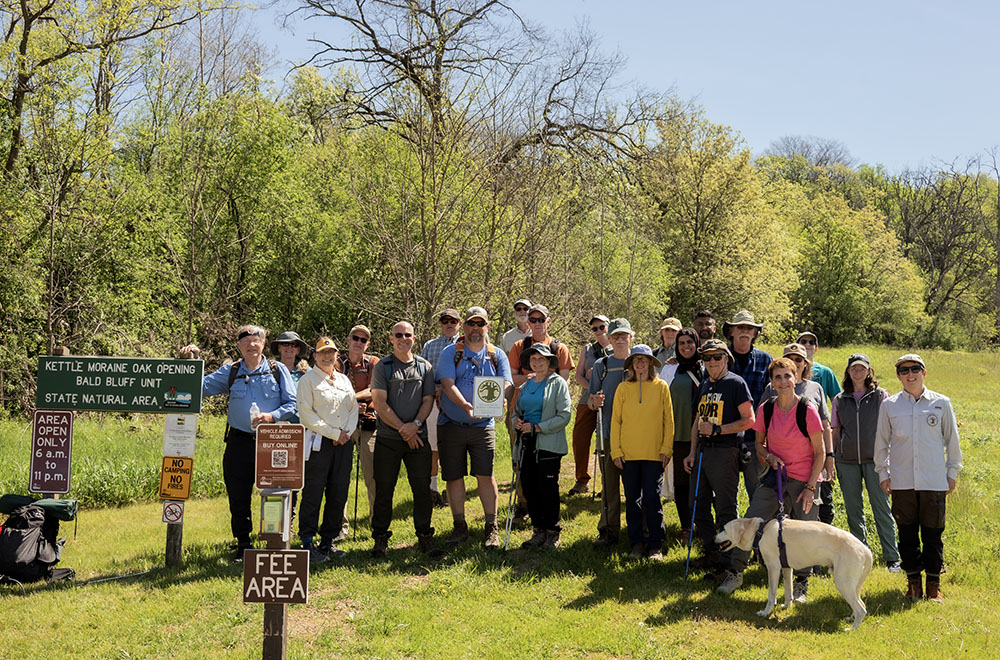
The OGFN is a nonprofit organization working to establish a national network of protected old-growth forests. Their goal is to recognize at least one forest in every forested county in the United States, creating a roadmap of family-friendly hikes that showcase the beauty, complexity and diversity of the nation’s oldest forests.
The Kettle Moraine Oak Opening is a 632-acre State Natural Area within the vast Southern Unit of the Kettle Moraine State Forest. Designated as a State Natural Area in 1991, K-MOO (as it is lovingly referred to by locals) is located in the heart of the jumbled and rugged landscape of the interlobate moraine, an area famed for its glacially-formed kettles, kames, and gravelly hills and ridges that settled between the Green Bay and Lake Michigan lobes of the last glacier. The oak opening and associated woodlands are dominated by open-grown bur and black oaks, some of which are well over a century old. Small dry prairie openings occur on gravel knobs and steep south and west-facing ridges.
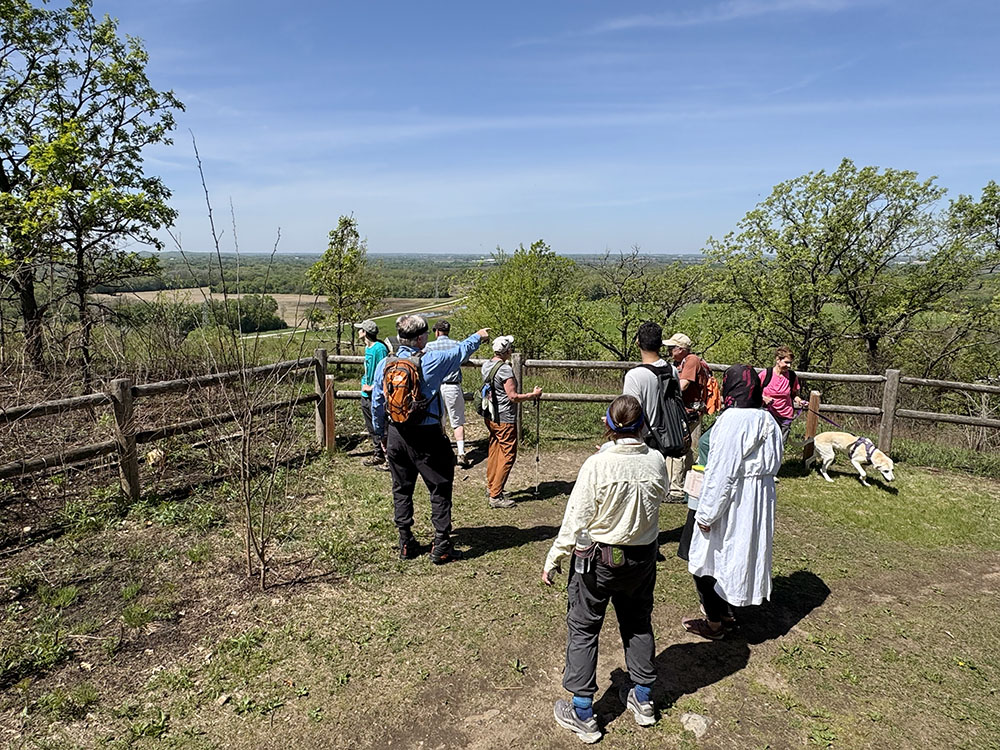
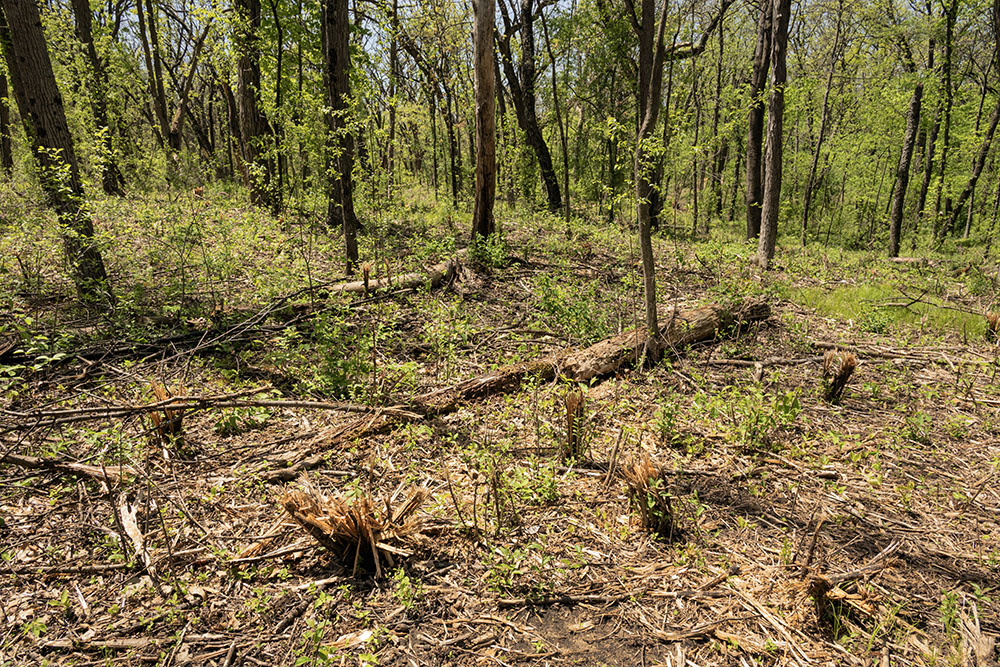
The first leg of our hike takes us up a steep, gravely trail to the top of Bald Bluff, which is not only the largest of those gravel knobs, but also the highest point in Jefferson County. An overlook provides a broad view of farms and prairie land to the west. We can’t help noticing on both sides of the trail the blackened ground cover and leafless understory that indicates recent burning. This is not the result of wildfire, however. The Wisconsin DNR uses a regular cycle of prescribed fire, aka controlled burning, to help manage the native vegetation, reduce invasive species and preserve the open-growth character of the forest. Our commemorative hike turns out to include a first-hand experience with the importance of human stewardship, not only for protecting a beautiful, complex and biodiverse old-growth forest but also maintaining it.
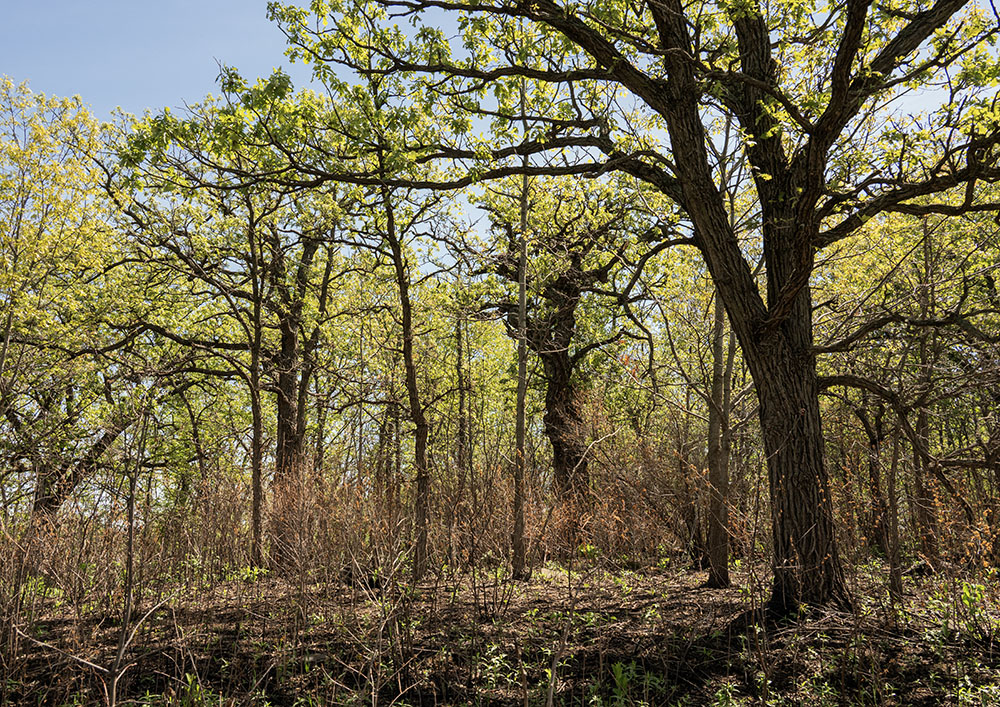
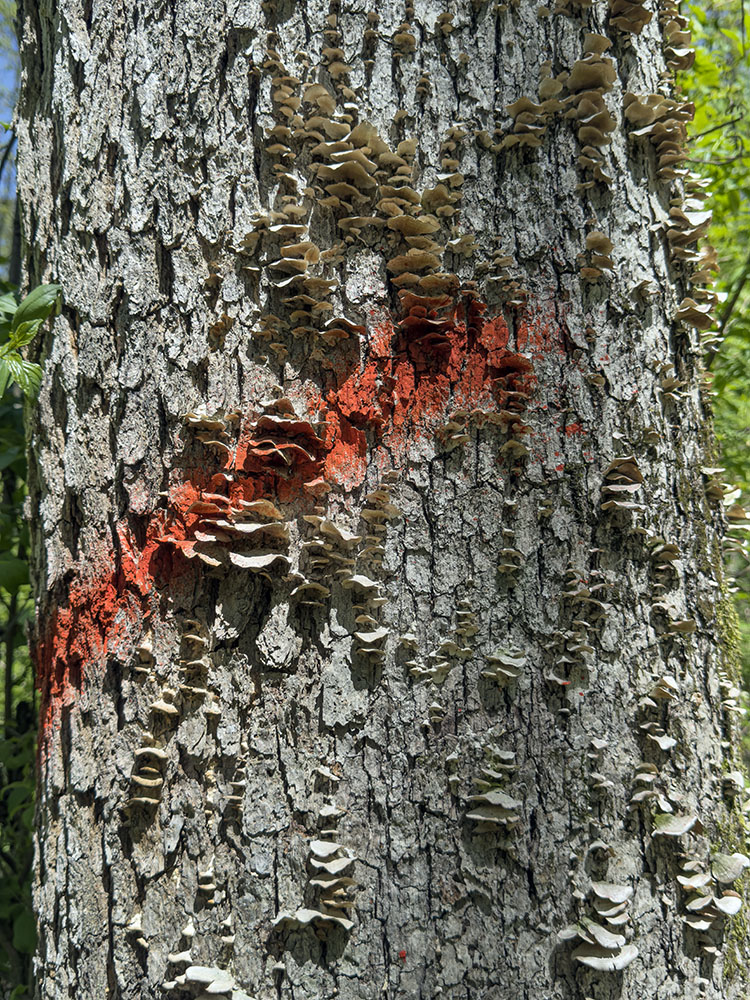
What constitutes an old-growth forest? That may sound like an obvious question with a predictable answer. But in fact the criteria for inclusion in the OGFN go beyond having old trees. In addition to ancient living trees, an old-growth forest must have a substantial number of ancient and standing dead trees, along with fallen trees in all stages of decomposition. All are indicators of a healthy mature forest ecosystem. It is plain to see as we walk that KMOO has all of them in abundance.
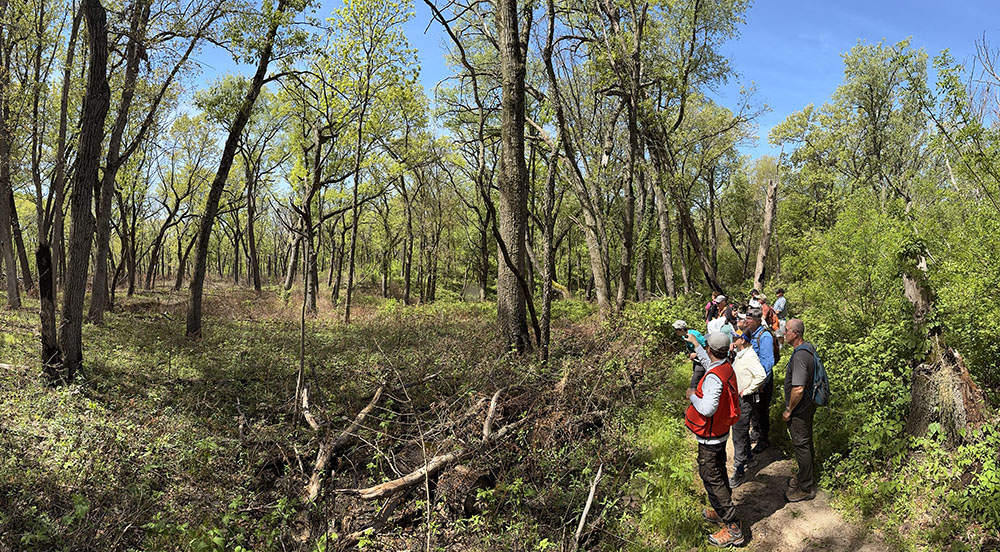
Our three-mile hike isn’t along just any old trail, either. It is a portion of the Blue Spring Lake Segment of the Ice Age National Scenic Trail, which is itself a small portion of the entire 1,200-mile trail that traces the line of terminal moraines and other topographic features left behind by the glaciers. While KMOO is the 11th Wisconsin forest to be recognized by the OGFN (out of more than 320 nationally), it is the first that coincides with the Ice Age Trail.
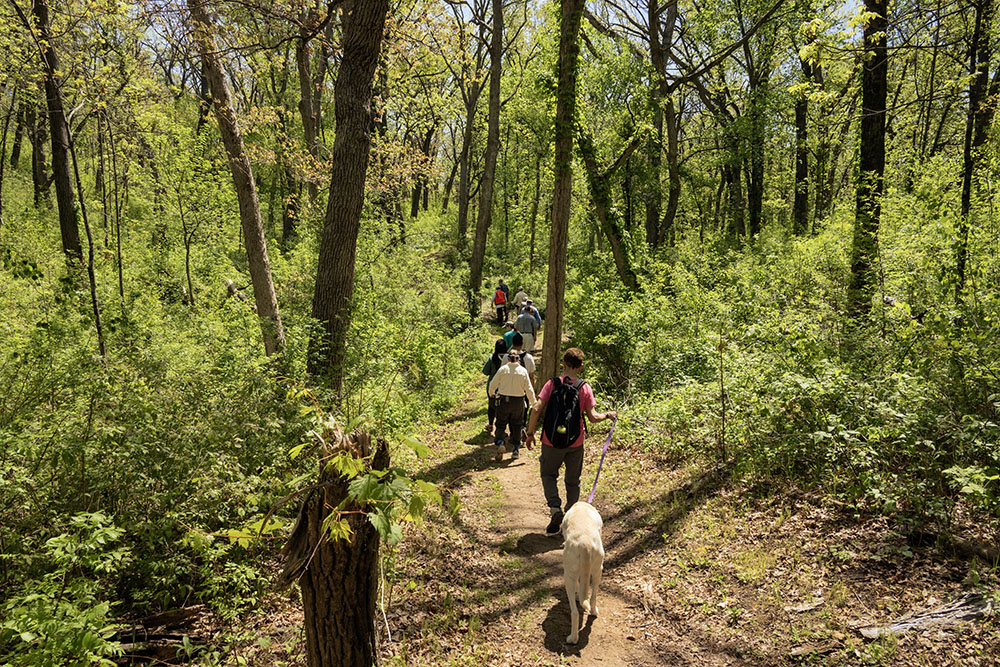
“It’s exciting that the Ice Age Trail passes through a place now officially recognized as old-growth forest,” says Melissa Pierick, Director of Marketing and Community Relations for the Ice Age Trail Alliance. “The Trail already connects people to some of Wisconsin’s most remarkable landscapes. This designation highlights just how special those experiences can be. Now as hikers walk among the old oaks, they’ll appreciate the beauty, history and biodiversity that make the Kettle Moraine Oak Opening so extraordinary.”
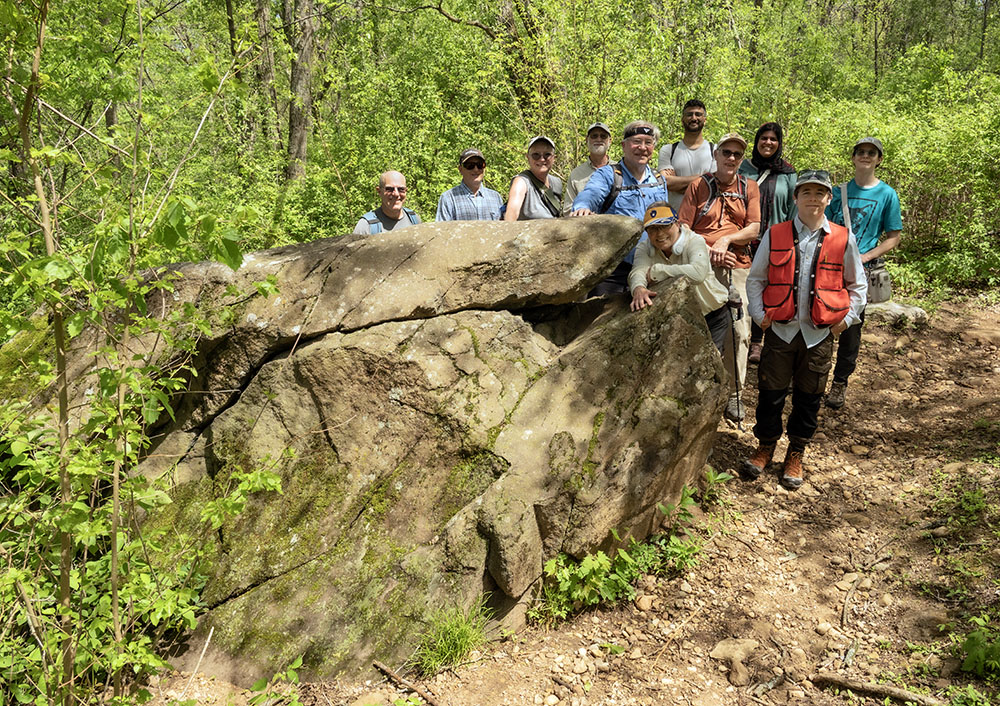
Our hike culminated in a visit to a well-known local landmark called the “stone elephant.” Signage along the trail had created anticipation. While its size was impressive for a glacial erratic (a stone carried along by the glacier and deposited far from its source), one needs a bit of imagination to see the elephant in it, and a baby elephant at that! But the celebratory mood carried the day and again I heard no complaints.
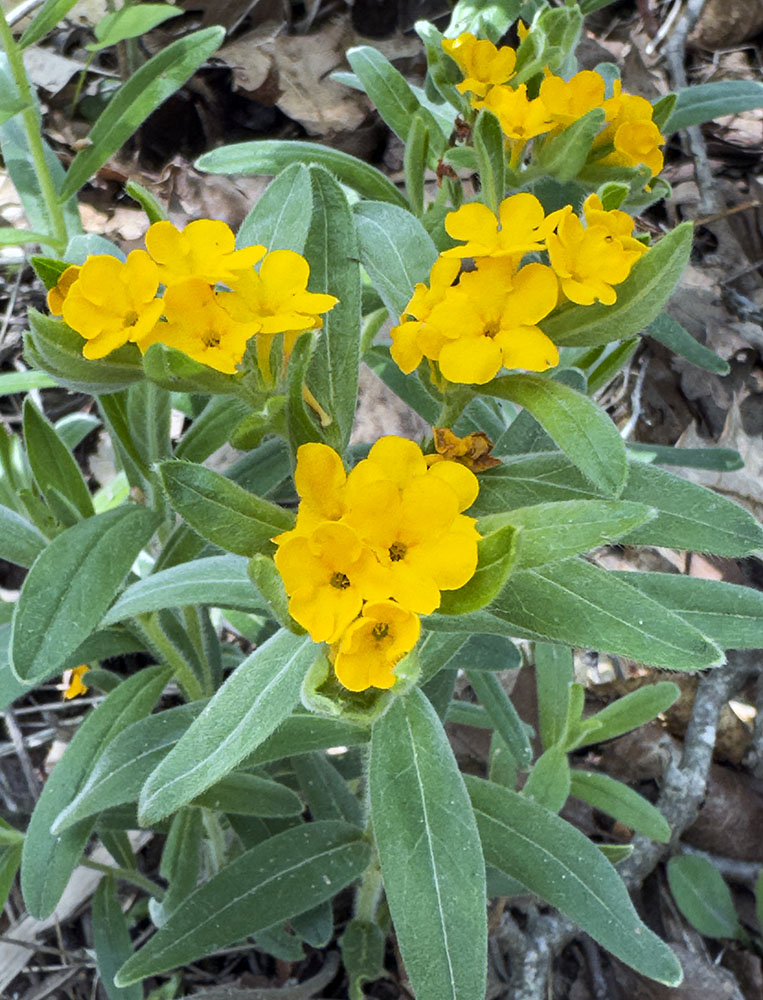
Prior to the hike a brief induction ceremony took place not far from the Bald Bluff trailhead. On hand were OGFN staff, Ice Age Trail Alliance volunteers, and members of Friends of the Kettle Moraine State Forest – Southern Unit. Among them was Bill Davidson, who lives in nearby Eagle, WI, and who was responsible for nominating KMOO for the award. He shared these comments in a follow-up email:
“This section of the Ice Age Trail has been one of my favorite hiking trails in the area and I walk it often. How excited I was to learn that sections contain old growth. There was no question that KMOO should be the nominee for Jefferson County. I’m extremely happy that we now have a portion of the Ice Age Trail in OGFN’s network. They’re two great organizations and both really came together to make the dedication and guided hike a success.”
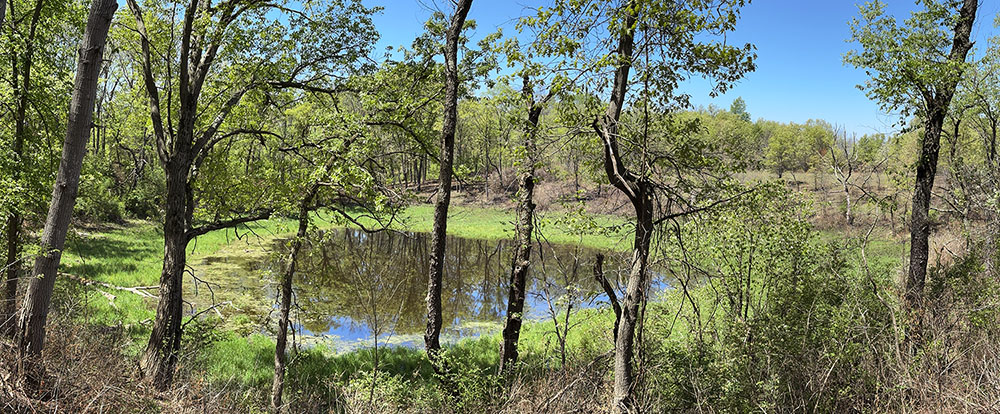
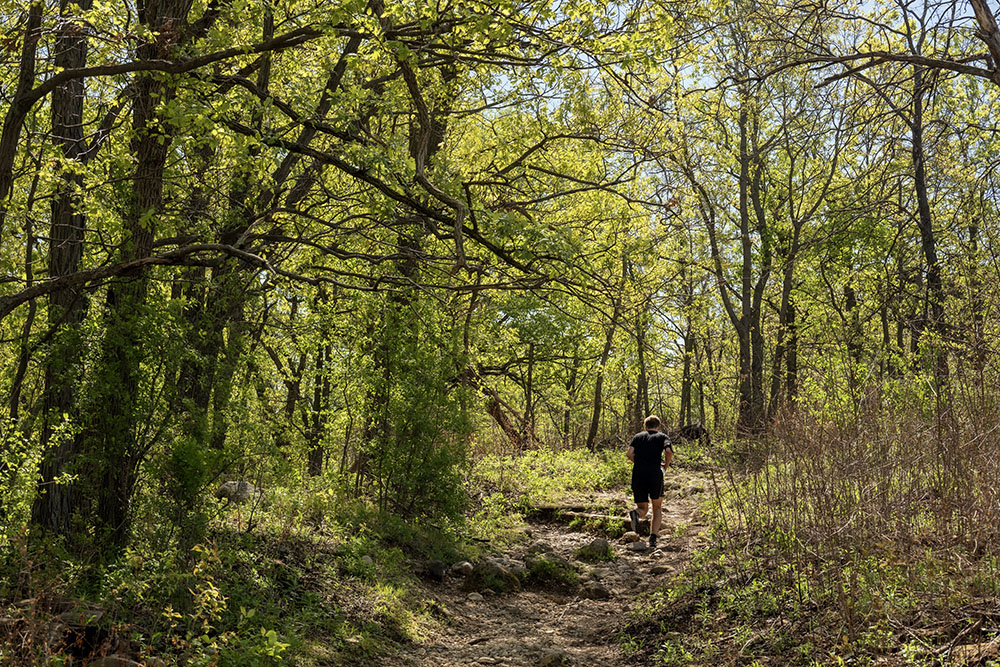
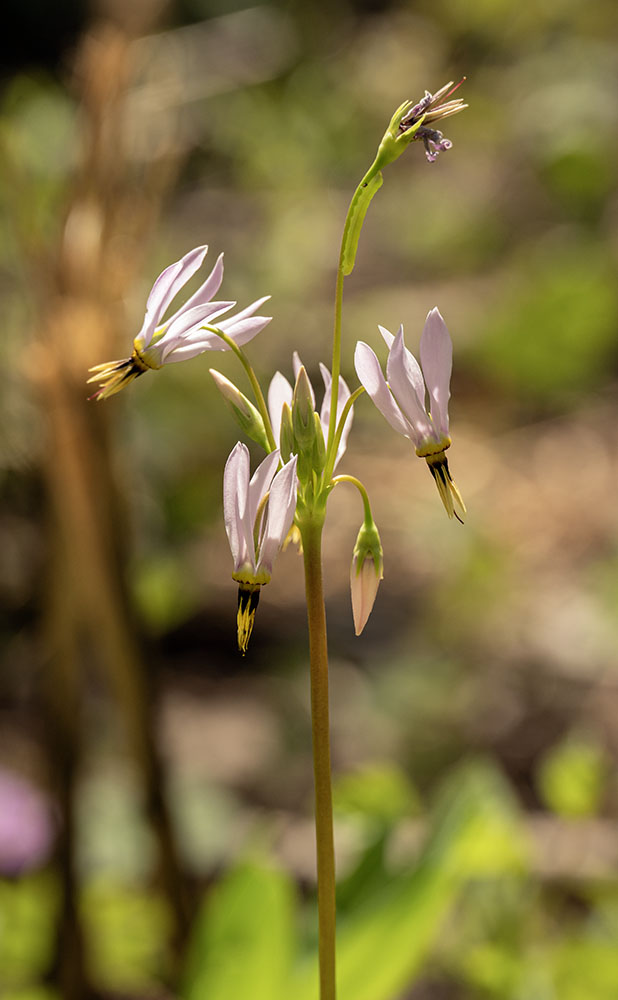
For more information about the Kettle Moraine State Forest – Southern Unit go to our Find-a-Park page.
For more information about the Old-Growth Forest Network go to their website.
This is the third OGFN induction publicized here in The Natural Realm. Here are the others:
Bristol Woods is inducted into the Old-Growth Forest Network
An old-growth forest in Milwaukee County gets recognition!
Other related stories:
The State of Milwaukee’s Urban Forest
The Old-Growth Forest Network provided much of the factual information for this story in a press release.
Eddee Daniel, writer/photographer, is a board member of Preserve Our Parks, the Project Director of A Wealth of Nature, and editor of The Natural Realmblog. Read more or subscribe at awealthofnature.org. Also available by arrangement for group presentationsand guided tours.
The Natural Realm blog is part of A Wealth of Nature, which is a project of Preserve Our Parks.
About Preserve Our Parks
Preserve Our Parks, Inc. is an independent nonprofit organization dedicated to the preservation of parks and green spaces. Our mission: To advocate for and promote Milwaukee area parks and open spaces and to strive to protect the tenets of Wisconsin’s Public Trust Doctrine.
For more than 25 years, we have been a leader in advocating for the protection of Milwaukee County park lands, halting many proposals to develop, privatize, or sell local parkland and lakefront spaces. More information about POP, including past accomplishments, is available at www.preserveourparks.org.
One thought on "Kettle Moraine Oak Opening recognized by the Old Growth Forest Network"
Comments are closed.
Beautiful expose’!