

Kettle Moraine in the rain: Autumn color and fantastic fungi!
October 6, 2026 | Topics: Places, Stories
By Eddee Daniel
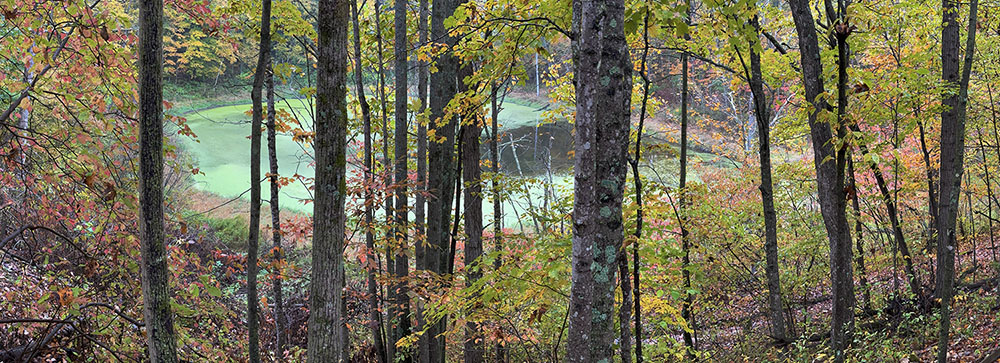
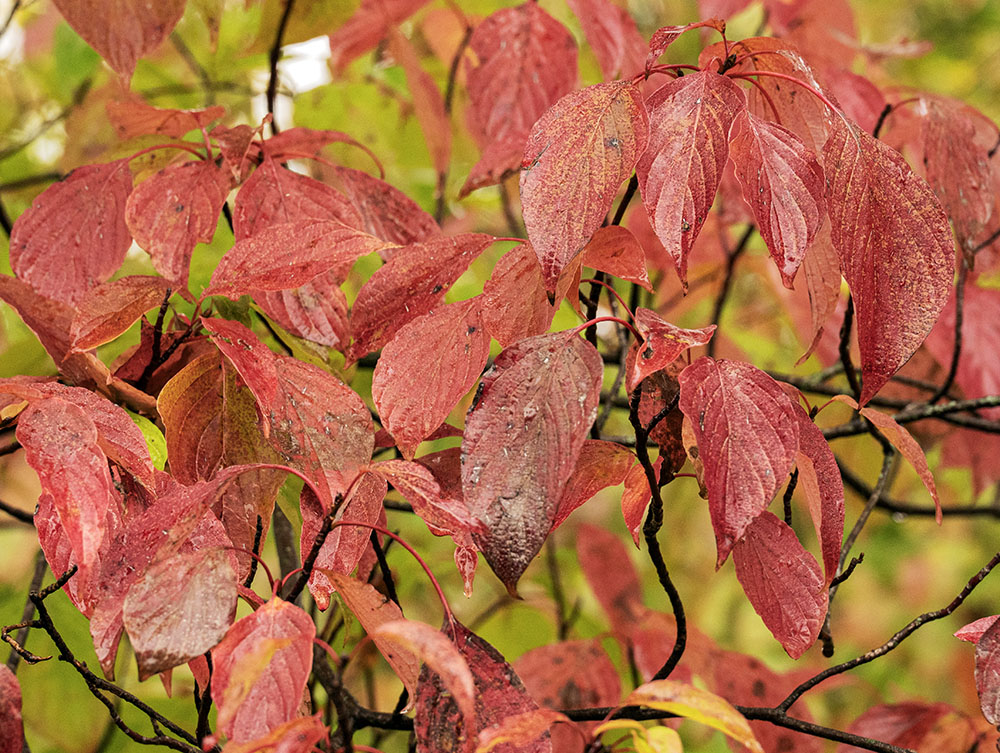
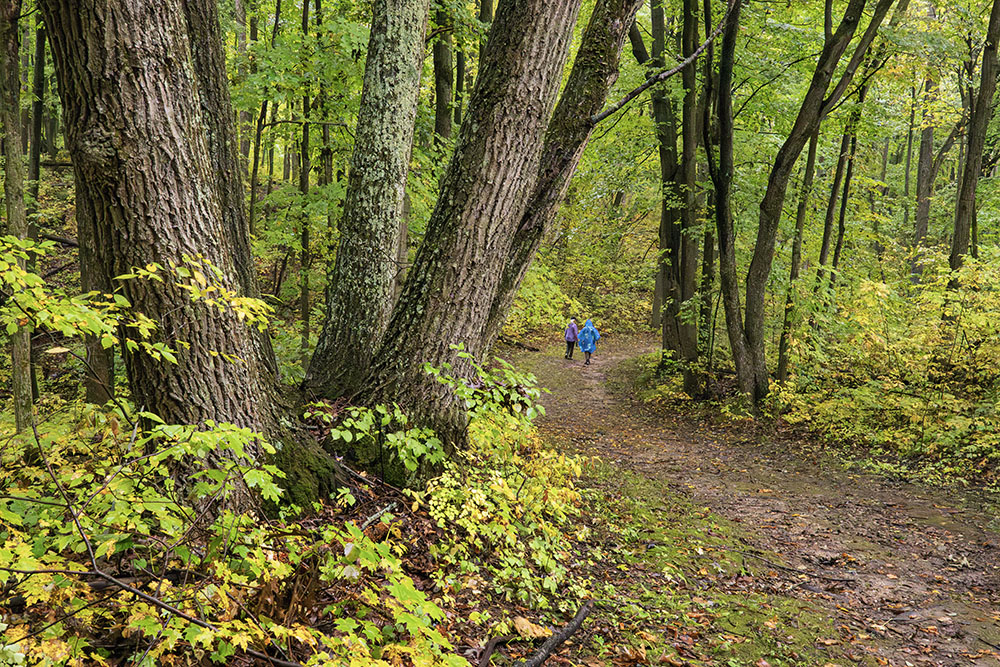
There’s nothing like a rainy day to bring out the intensity of autumn colors—and mushrooms! Both were in abundance on a recent hike in the northern Kettle Moraine. (The photo above is the Greenbush Kettle.)
I don’t usually hike in the rain. If it had been just me I might have stayed home, stayed indoors, curled up on the couch with a book. But having been signed up weeks in advance for a group tour sponsored by Schlitz Audubon Nature Center, I went. Good decision! It turned out to be a remarkable outing.
Butler Lake
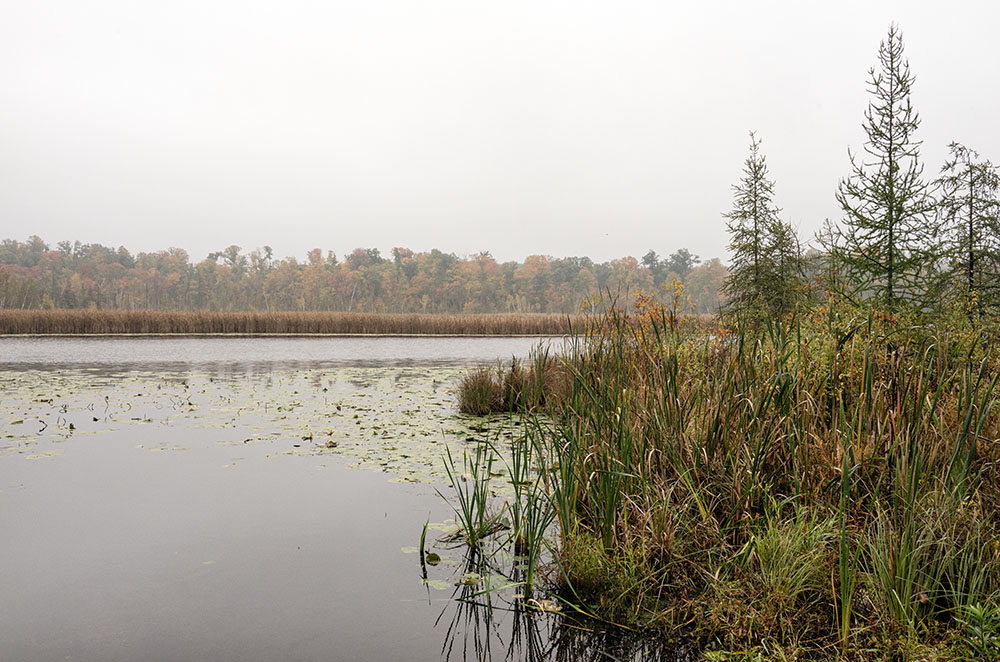
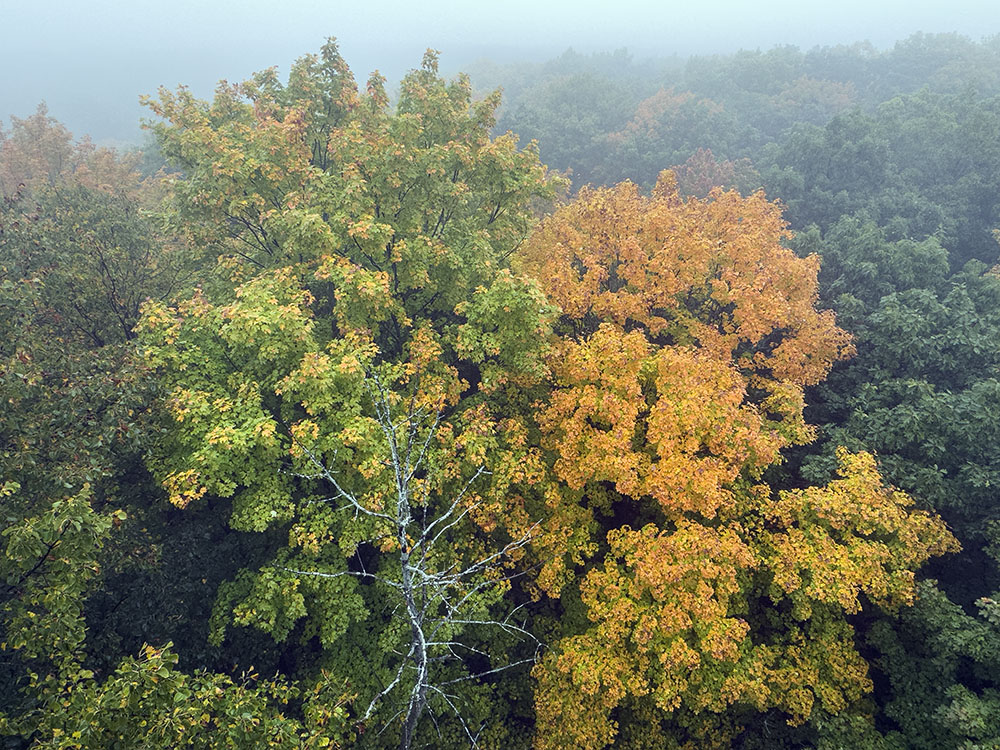
The hour-long drive from Milwaukee to the northern Kettle Moraine took me from still mostly green late summer foliage deep into autumn. Rain pummeled the windshield the whole way, but by the time I arrived at Butler Lake, first stop on the tour, it had diminished to a faint, refreshing drizzle. The mist-shrouded far shore of the lake displayed an entire range of autumn colors. Tamaracks, the deciduous conifers, on the near shore remained green while a palisade of cattails across the water had already gone dull brown. Although muted by the mist, every earth-toned shade of rich red-orange-yellow rose above the cattails in the form of maple, beech, ash and oak leaves.
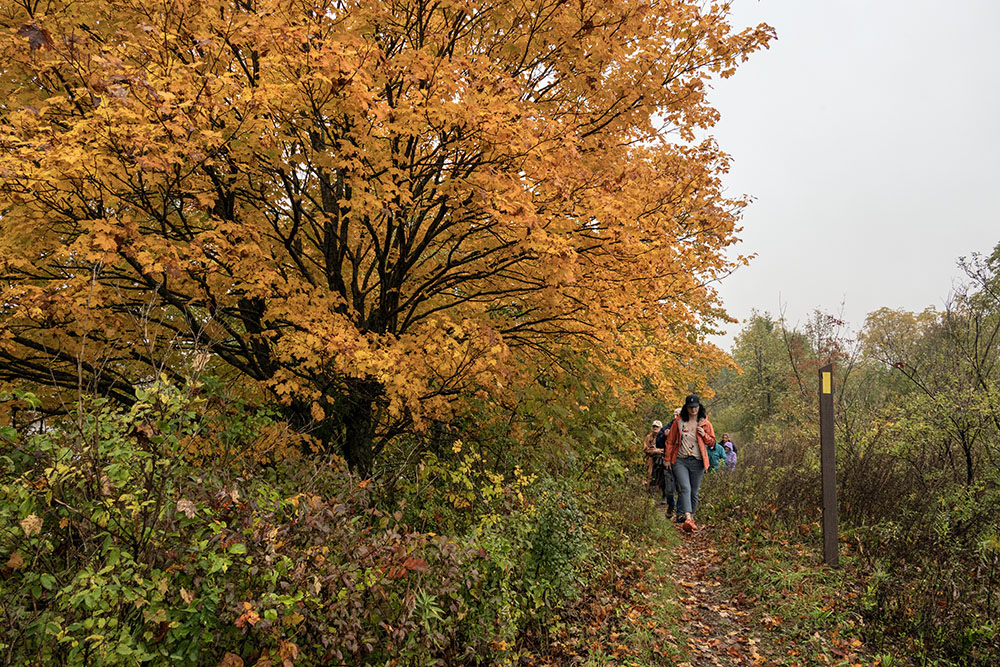
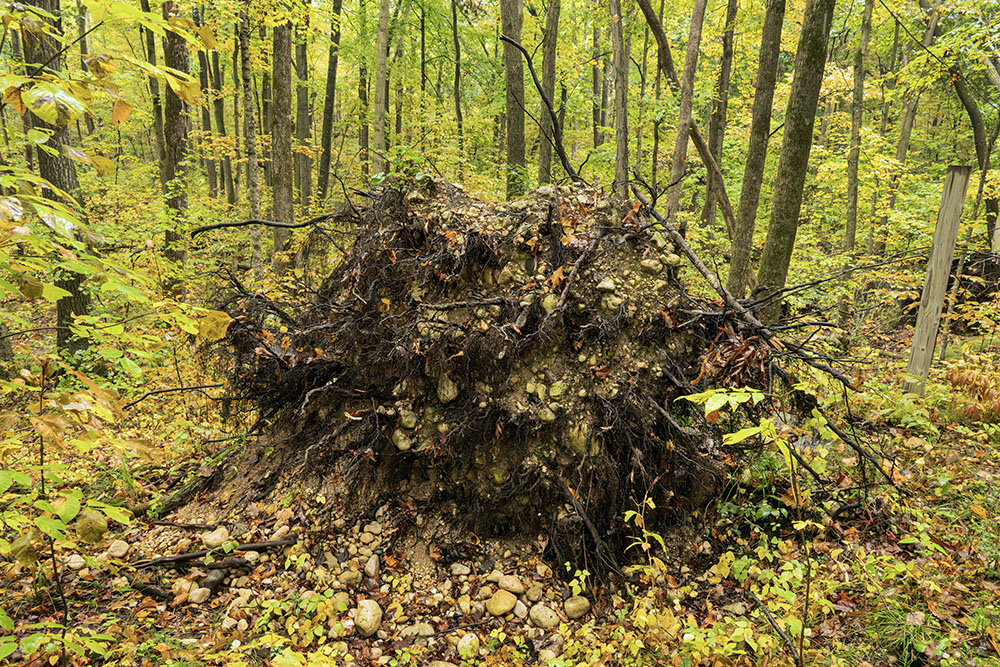
Our first short hike of the day took us along the Ice Age National Scenic Trail on top of a portion of an esker that stretches for several miles. This being the Kettle Moraine and a guided tour we learned all about the various glacial features that we encountered. An esker is a relatively thin ridge created when water from the melting glacier ran in streams underneath the receding ice, depositing rocky till as it moved along. Butler Lake itself is an example of a Kettle. These were formed when gigantic chunks of ice broke off the retreating glacier. The chunks, buried in sediment, left a depression when they eventually melted. Some, like Butler Lake, filled with water, but there are also dry kettles. Kettle lakes can be quite large. Most of the lakes in Waukesha County’s “lake country,” such as Nagawicka Lake, are kettle lakes.
Parnell Tower
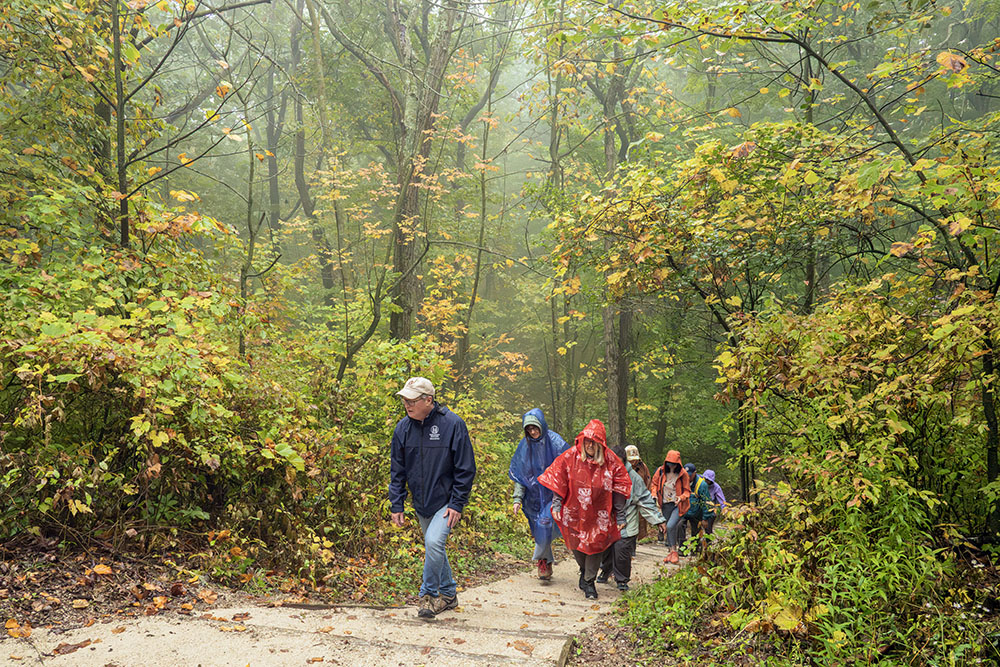
Our second stop took us to Parnell Tower. It was a short but very steep hike up from the parking lot to the top of the glacial kame on which the tower sits. A kame is a conical mountain, or mound if it’s not that large, created when rocks and silt fell vertically through a hole in the melting glacier—like the mound of sand that falls through an hourglass. The most famous kame in Southeastern Wisconsin is Holy Hill, on which perches the basilica that gives it its name.
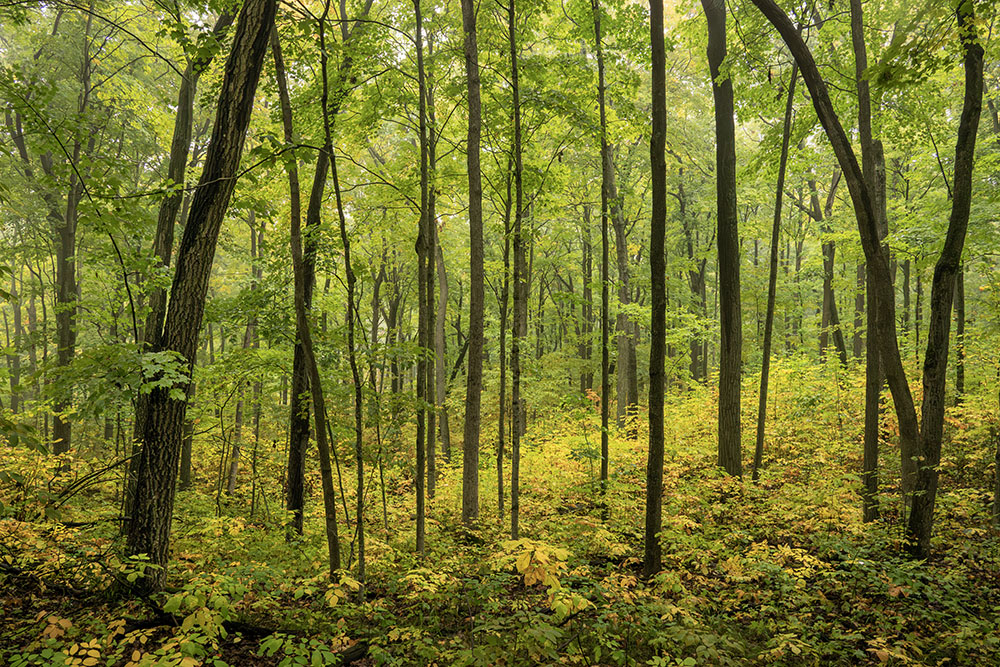
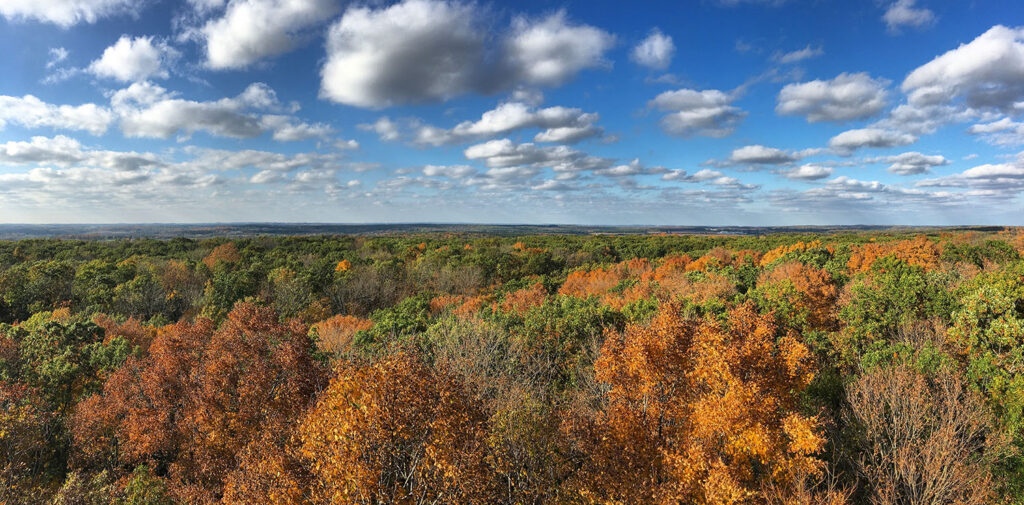
It was still drizzling as we ascended the tower. The sky had settled overhead like a downy, supersaturated pillow. On a clear day you can see for many miles in all directions, but not today! Maybe a couple hundred yards before the forest canopy dissolved into mist.
It was on the brief descent to our cars that I noticed the first mushrooms of the day. I didn’t know then that they were omens for what would become the dominant theme of our final destination.
Greenbush Recreation Area
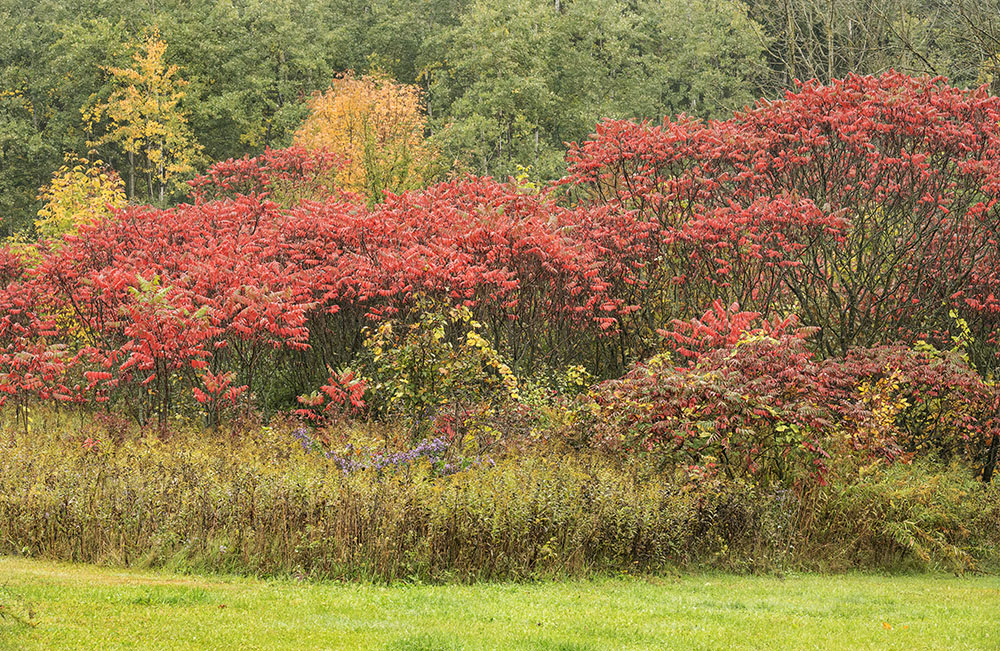
In the northernmost portion of the Kettle Moraine State Forest, the Greenbush Recreation Area is intensively developed for recreation. An extensive network of crisscrossing trails accommodates equestrians and mountain bikers as well as hikers. The trail map looks like a spaghetti bowl of color-coded trails. They all do seasonal double duty as well. In the winter the hiking trails become cross country ski trails, the mountain bike trails switch to snow shoeing, and bridle trails allow for snowmobiles. The Ice Age Trail, reserved exclusively for hiking, also cuts through it all. I had to wonder what it’s like on a busy day! But we had the place to ourselves in the rain.
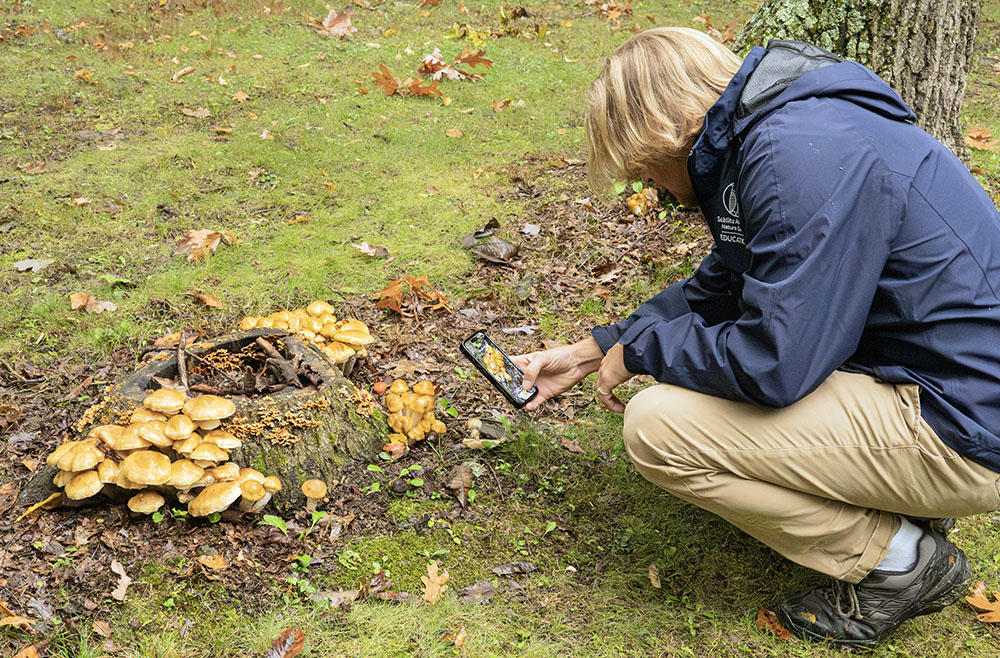
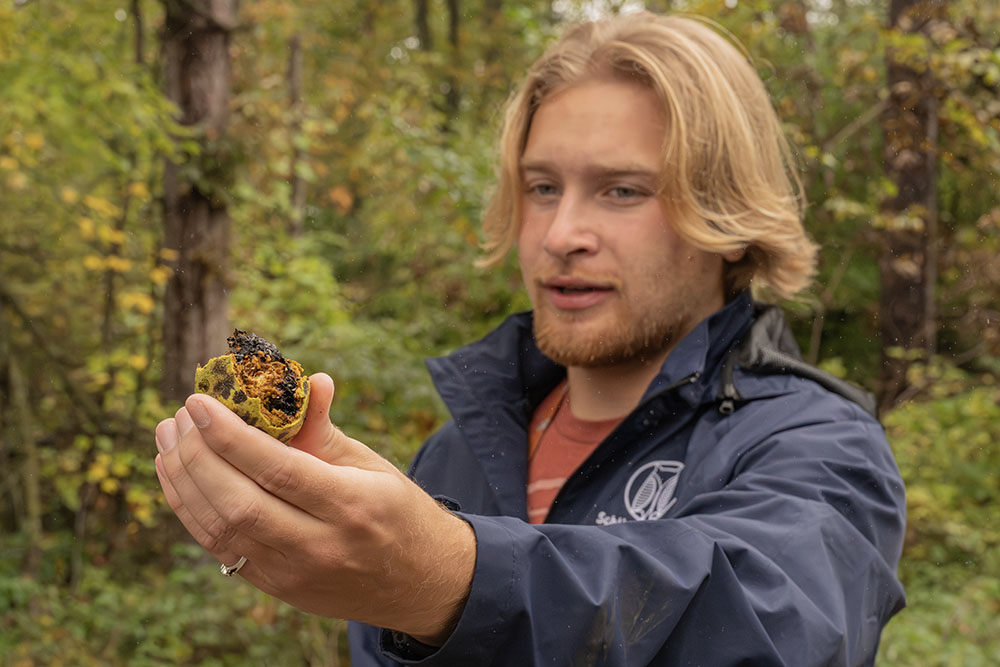
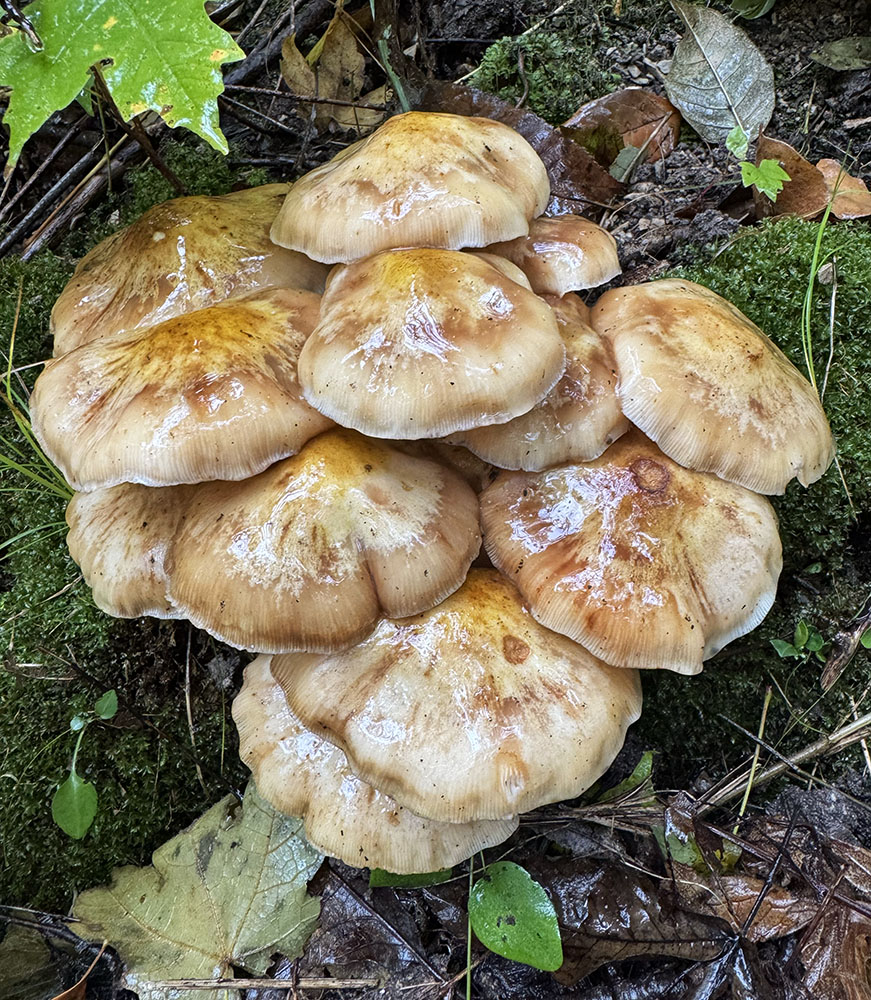
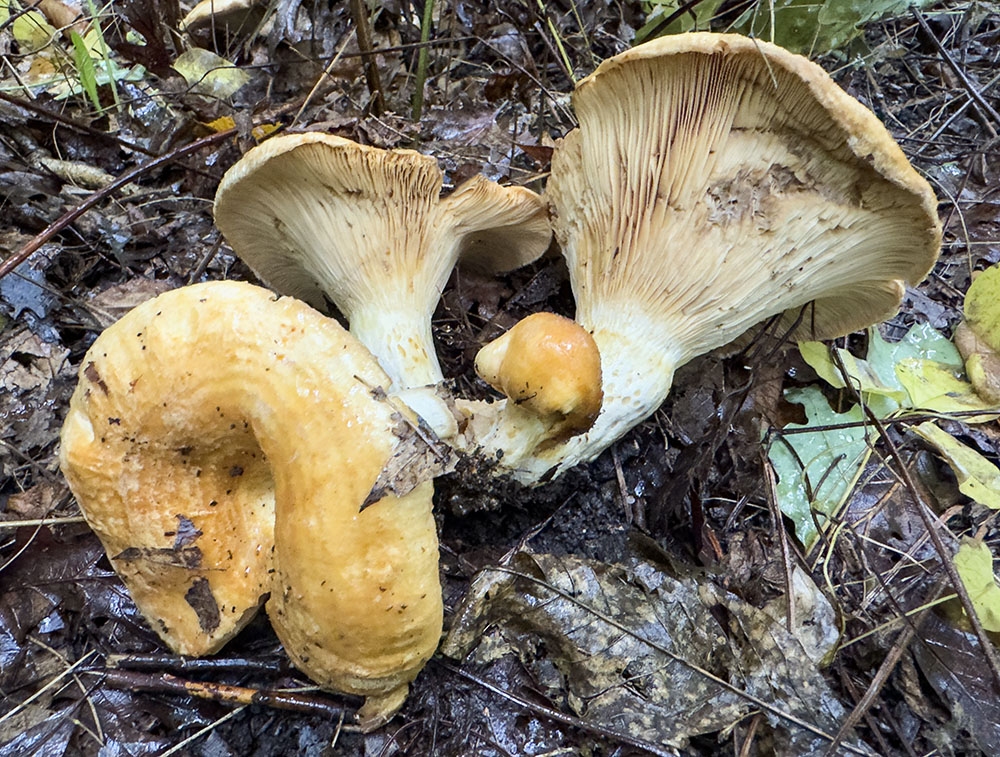
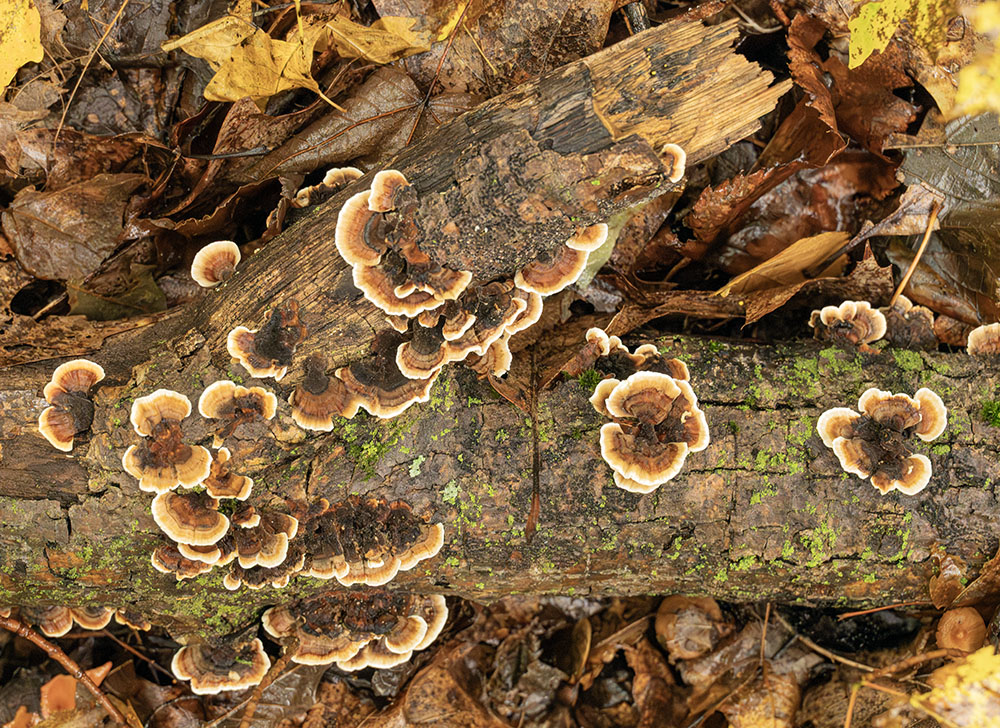
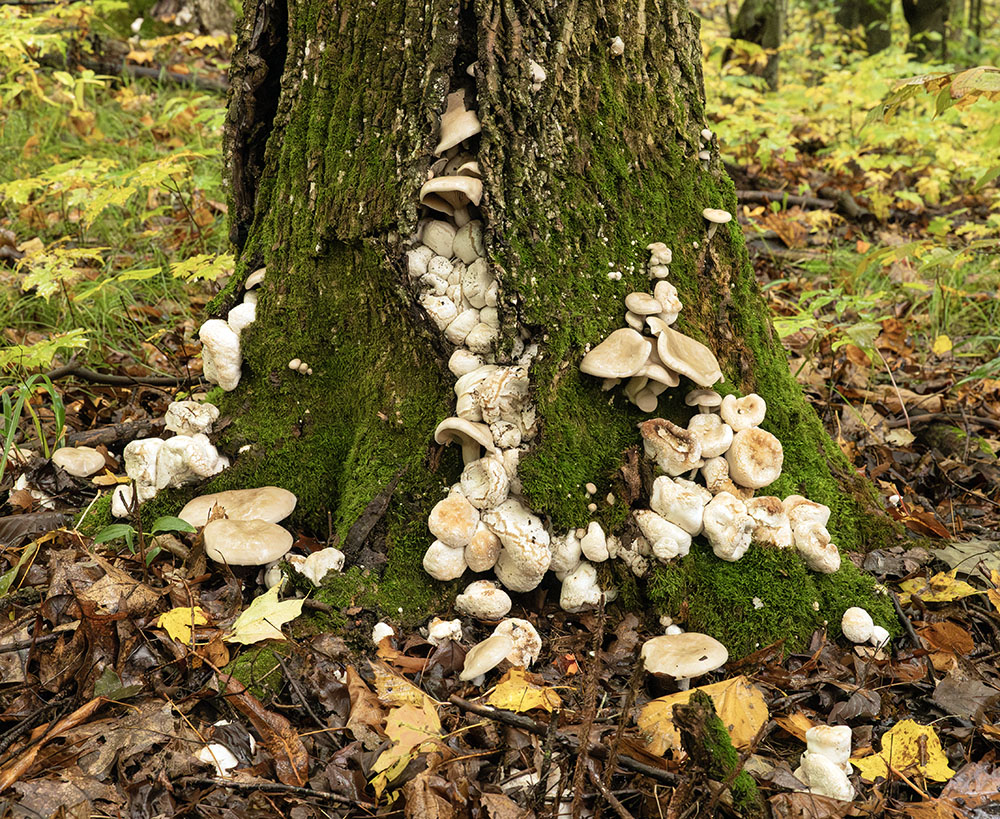
We hiked the 1.5-mile red trail, one of the shorter loops, but our longest hike of the day. Before we even got to the trailhead, however, we stopped in the picnic area where it is located to admire several colonies of mushrooms that had popped up on this soggy day. Jim, one of our Schlitz Audubon educator guides was a specialist in fungi, which gave us a leg up on identifying what we encountered. (However, he explained that fungi identification can be downright tricky in the field and the iNaturalist app on my phone concurred on occasion.)
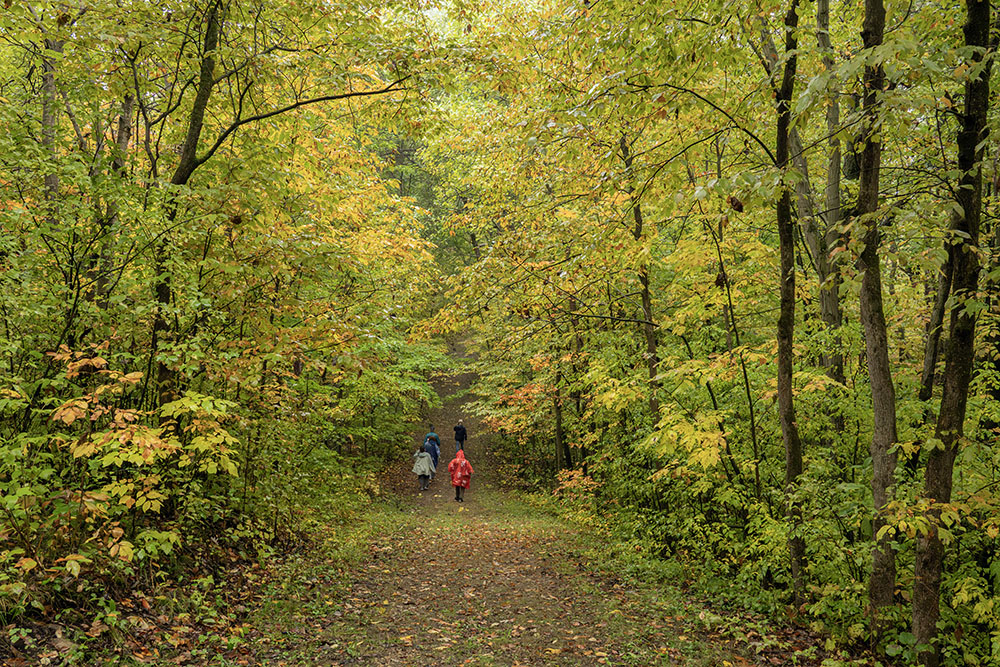
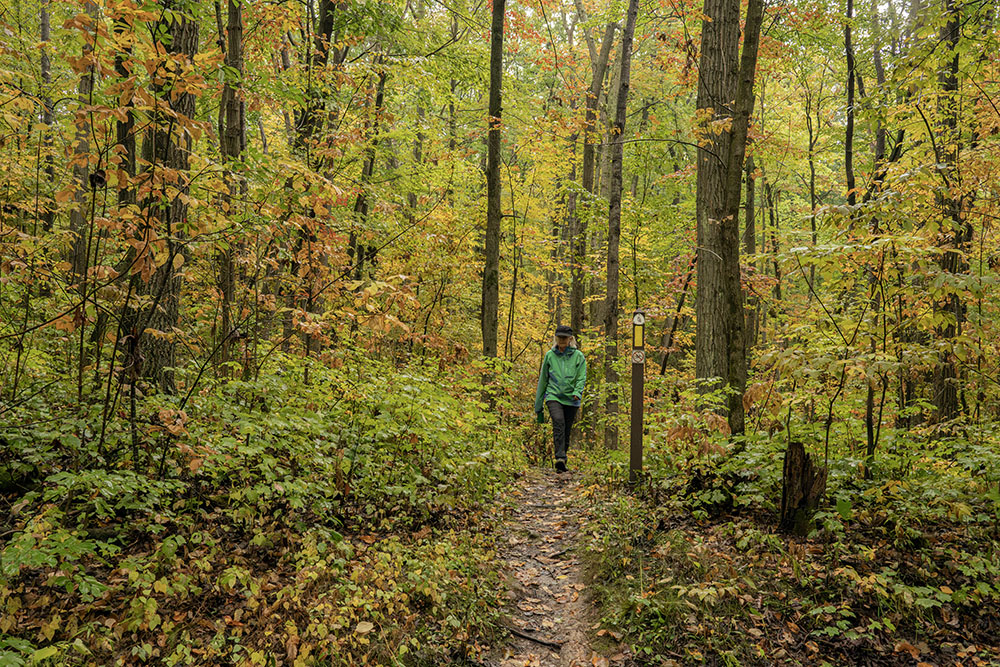
Heading down the trail immediately felt like entering a giant wormhole. Or Alice’s rabbit hole descending into Wonderland. Although wide enough to accommodate winter skiing, the canopy closed in tightly overhead, the light further dimmed by the heavy cloud cover and continuing drizzle. We plunged down steep drops, climbed equally steep up slopes, meandering every which way. My normally good sense of direction met its match in these circumstances. Without the periodic appearance of red trail markers to lead me on I wouldn’t have known which of the many maze-like crossing trails to take!
“Would you tell me, please, which way I ought to go from here?” asked Alice.
“That depends a good deal on where you want to get to,” said the Cheshire Cat.
“I don’t much care where–” said Alice.
“Then it doesn’t matter which way you go,” said the Cat.
“–so long as I get SOMEWHERE,” Alice added as an explanation.
“Oh, you’re sure to do that,” said the Cat, “if you only walk long enough.”
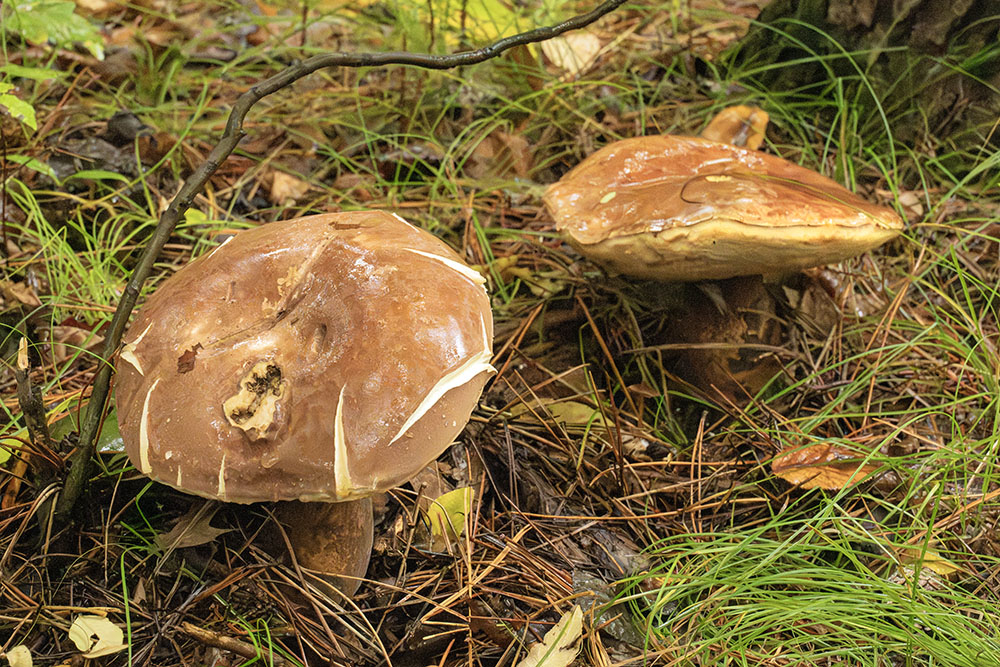
Unlike Alice, we were cautioned not to ingest any of the mushrooms we discovered all along the trail. But I wasn’t the only one bending down often to snap photos of all the curious shapes, sizes and arrangements of them. “Curiouser and curiouser!” as Alice might have put it.
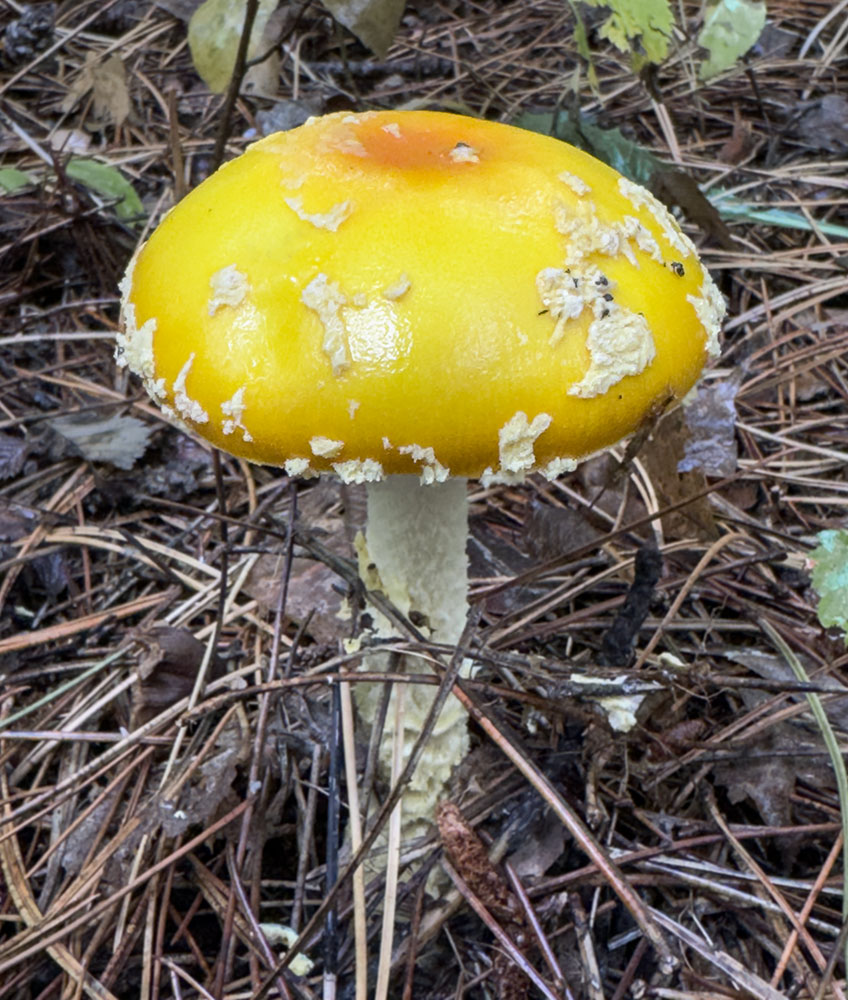
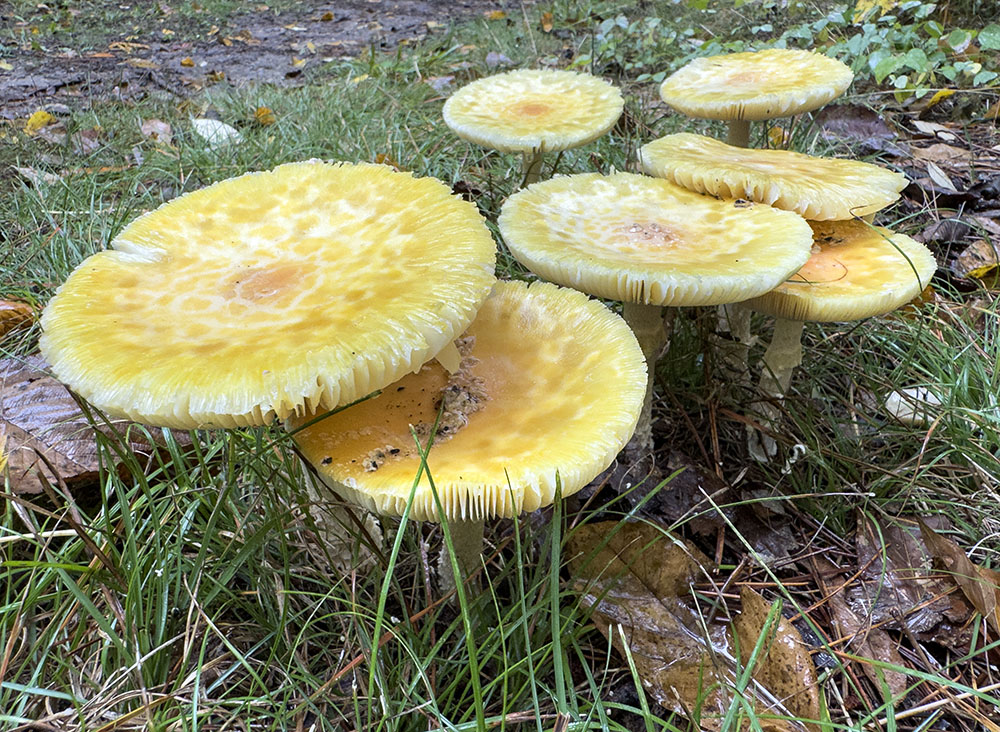
A colorful amanita frostiana mushroom.
Thanks go to Educators Tom Finlay and Jim Thielke of Schlitz Audubon Nature Center for leading an informative tour. To learn more about Schlitz Audubon programs go to their website.
For more information about the Northern Unit of the Kettle Moraine State Forest go to our Find-a-Park page.
Related stories:
Mangan Woods: A surprising hidden gem shaped by the glaciers!
Ridge Run Park—A Glacial Wonderland in All Seasons!
Eddee Daniel, writer/photographer, is a board member of Preserve Our Parks, the Program Director of A Wealth of Nature, editor of The Natural Realm blog, and a member of Schlitz Audubon Nature Center.
The Natural Realm blog is part of A Wealth of Nature, which is a program of Preserve Our Parks. Schlitz Audubon Nature Center is a project partner of A Wealth of Nature.
About Preserve Our Parks
Preserve Our Parks, Inc. is an independent nonprofit organization dedicated to the preservation of parks and green spaces. Our mission: To advocate for and promote Milwaukee area parks and open spaces and to strive to protect the tenets of Wisconsin’s Public Trust Doctrine.
For more than 25 years, we have been a leader in advocating for the protection of Milwaukee County park lands, halting many proposals to develop, privatize, or sell local parkland and lakefront spaces. More information about POP, including past accomplishments, is available at www.preserveourparks.org.