

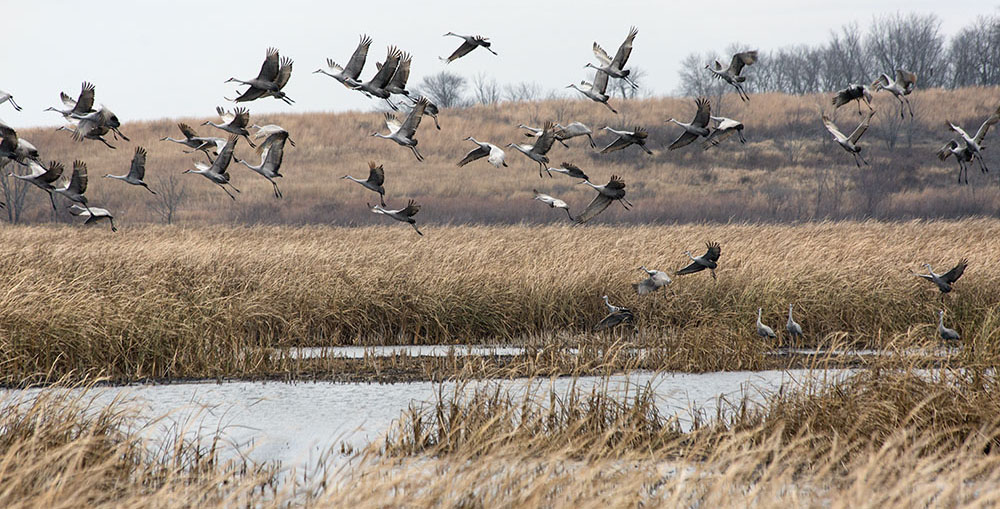
Horicon Marsh is for the birds … and the birders!
November 2, 2026 | Topics: Places, Stories
By Eddee Daniel
Across the morning sky,
All the birds are leaving,
Ah, how can they know it’s time for them to go?
Before the winter fire,
We’ll still be dreaming.
I do not count the time
Who knows where the time goes?
I’ve loved this song, sung by Judy Collins, since it was released in 1972. It has a melancholy mood that has only grown more trenchant over the decades. Who knows where the time goes? And yet, in the end it is uplifting. Unbidden, the melody found its way back into my brain as I stood looking out at Horicon Marsh, watching myriad geese, ducks, cranes and other waterfowl make their way across the morning sky.
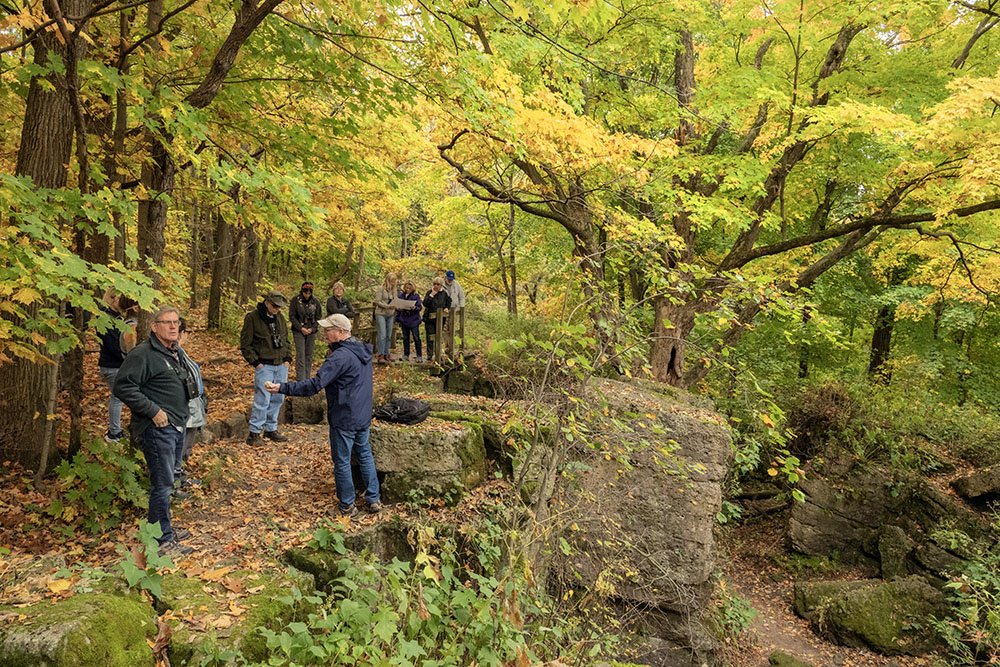
I was with a group of birders organized by Schlitz Audubon Nature Center for a tour of the marsh. Our tour began, however, some distance away from the marsh itself at Dodge County Ledge Park. The ledge in the name refers to a prominent cliff, from the top of which there is an excellent view of the wide expanse of Horicon Marsh in the distance. The cliff is an outcropping of the famous Niagara Escarpment, which begins in Southeastern Wisconsin and makes a 650-mile arc through Door County, around Lakes Michigan and Huron, and down into New York State. It gets its name from the even more famous falls.
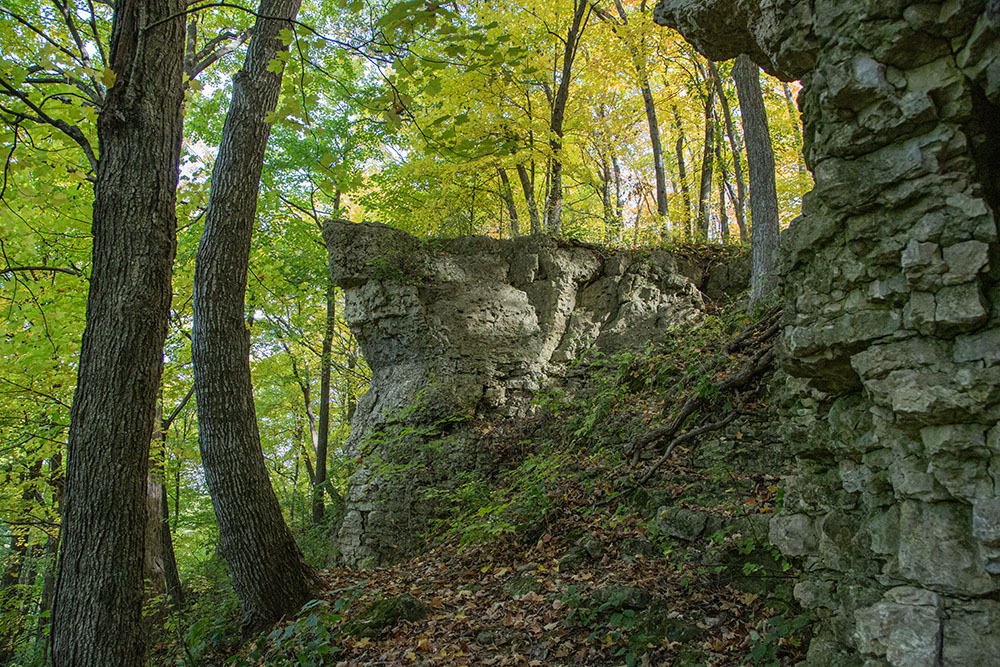
Ledge Park is an appealing destination itself, especially in autumn when the colors of the foliage are peaking (which I’ve written about before). But since our primary objective was to get to the marsh, we took just enough time to get a good peek from the overlook—and to count whatever birds were visible or audible along the way. As it turned out, in the short time we spent there twenty-two species were observed, including killdeer, red-bellied woodpecker, ruby-crowned kinglet, pine siskin, dark-eyed junco, and orange-crowned warbler, among others more predictable. A flock of about 200 ring-billed gulls even flew overhead.
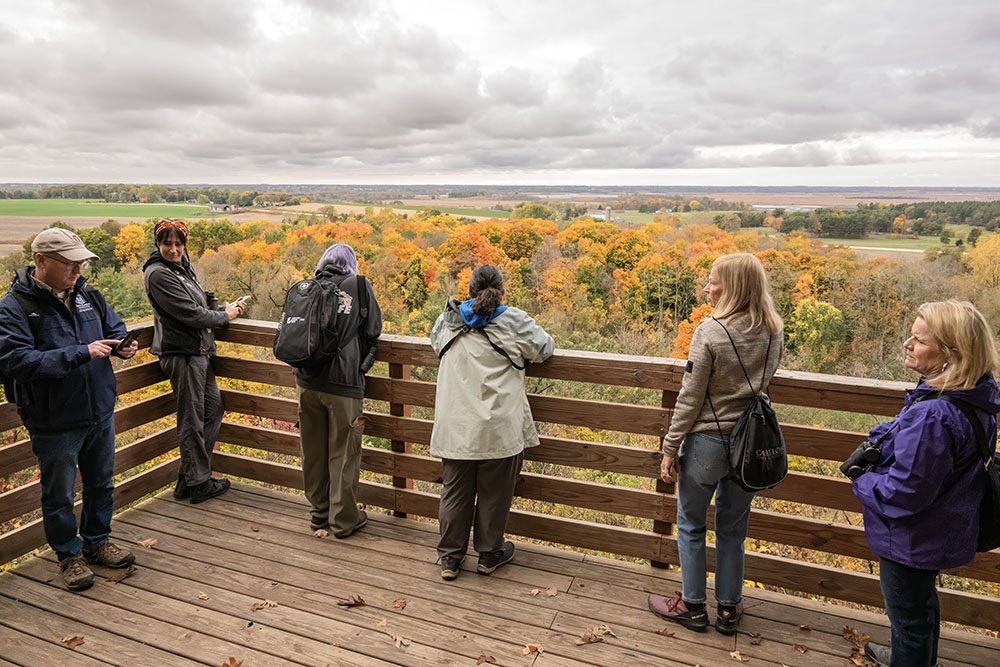
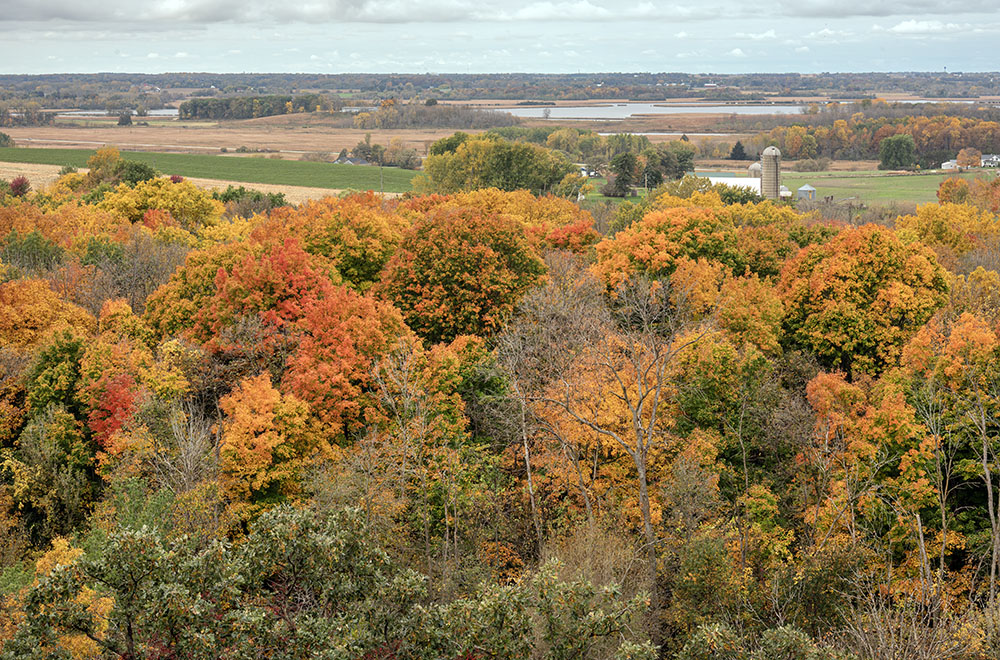
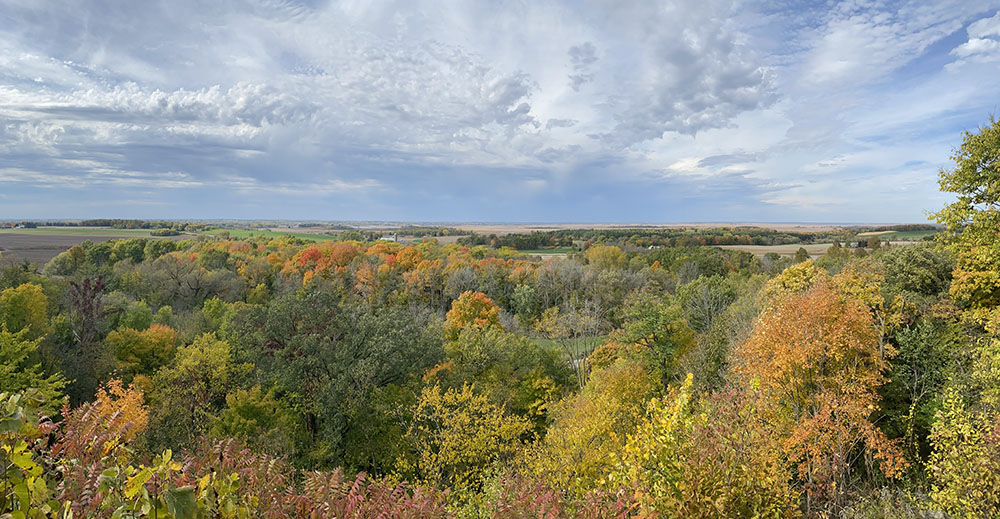
Before departing for our next stop, Tom Finlay, our tour guide, set the tone for our little adventure by reading to us a passage from Aldo Leopold’s A Sand County Almanac.
“A dawn wind stirs on the great marsh. With almost imperceptible slowness it rolls a bank of fog across the wide morass. Like the white ghost of a glacier the mists advance, riding over phalanxes of tamarack, sliding across bog meadows heavy with dew. A single silence hangs from horizon to horizon.
“… A sense of time lies thick and heavy on such a place. Yearly since the ice age it has wakened each spring to the clangor of cranes. The peat layers that comprise the bog are laid down in the basin of an ancient lake. The cranes stand, as it were, upon the sodden pages of their own history. These peats are the compressed remains of the mosses that clogged the pools, of the tamaracks that spread over the moss, of the ice sheet. An endless caravan of generations has built of its own bones this bridge into the future, this habitat where the oncoming host again may live and breed and die.”
~ Aldo Leopold
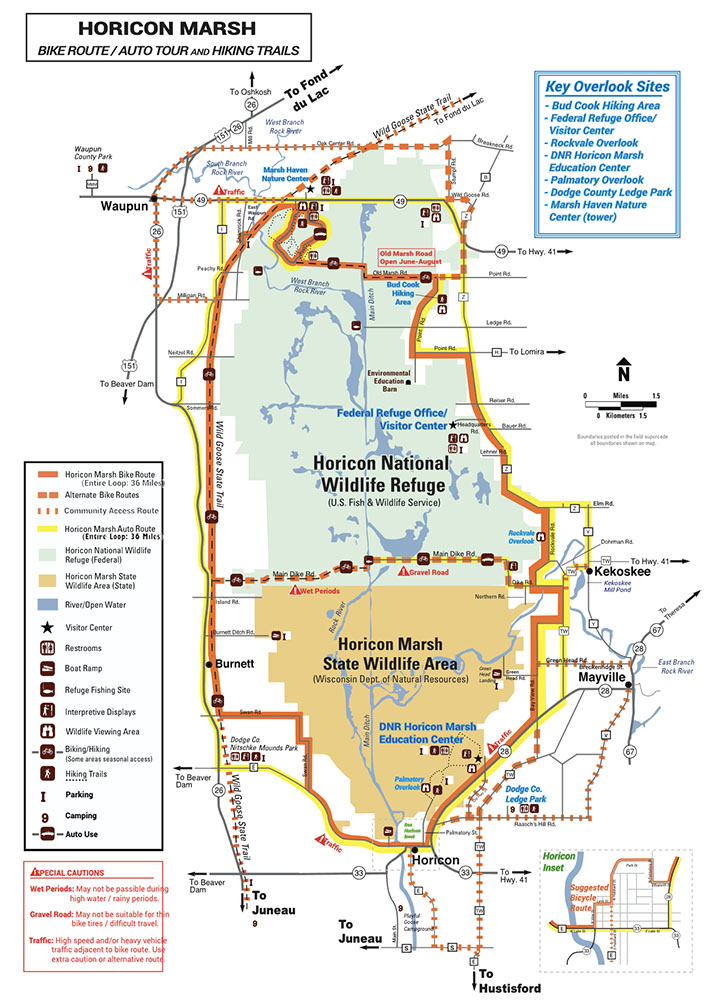
As can be seen from the map of the overall region, Horicon Marsh is jointly administered by the Wisconsin DNR and the U.S. Fish and Wildlife Service. We made two stops in the State Wildlife Area, which occupies the southern third of the marsh. Being a marsh, the landscape is mostly dead flat. Above its vast stillness, the overcast sky roiled with invisible energy. Overlooks are provided on a couple of the relatively higher spots around the edges. Our first stop was Quick’s Point/Palmatory Overlook, a peninsula that juts out into the marsh at its southern tip.
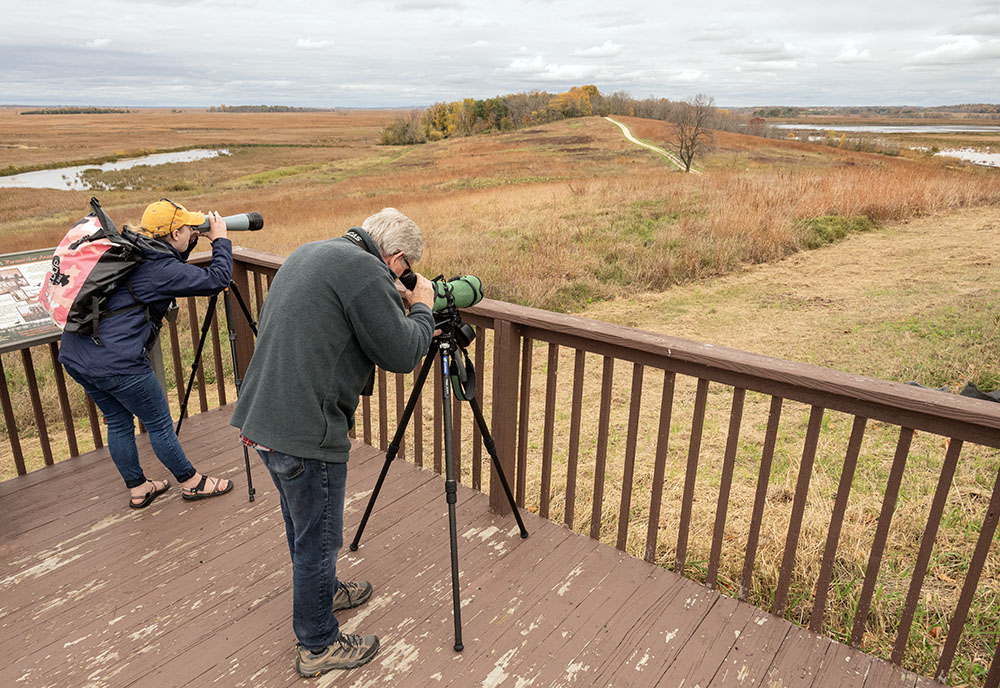
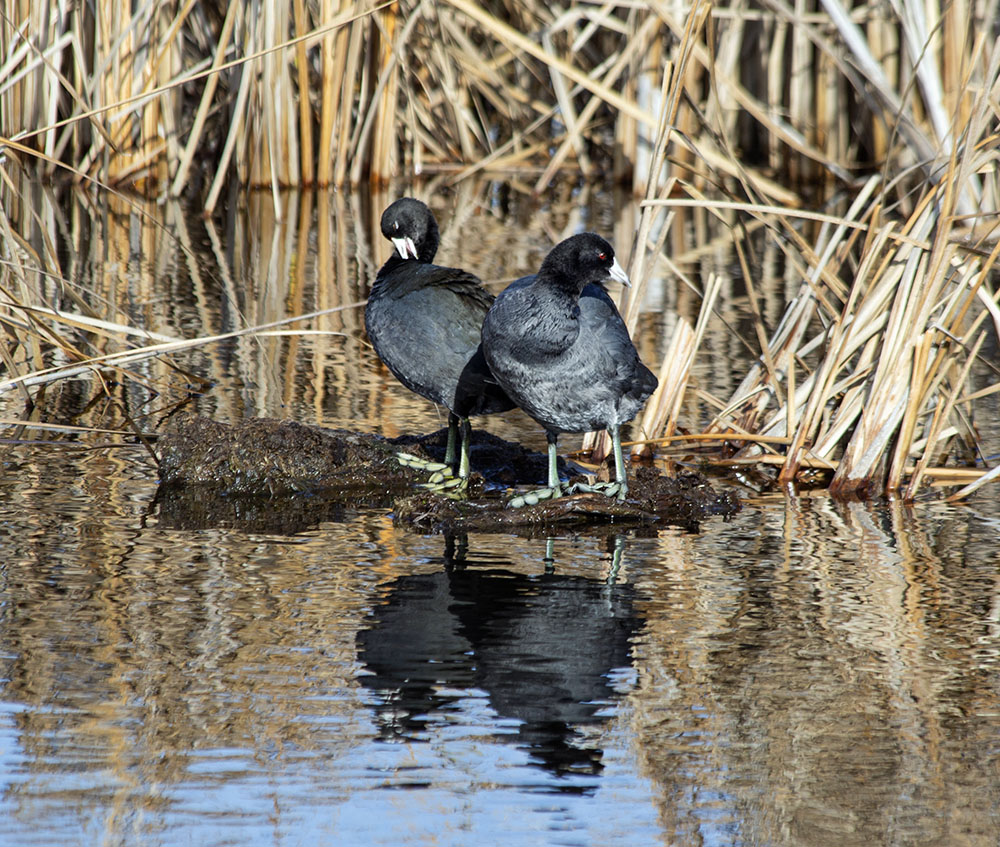
Scopes were set up on tripods, binoculars came out all around, and the uniformity of the landscape vivified, punctuated with restless avian life, the wetland wilderness animated. The count began in earnest. As expected, waterfowl dominated. We saw northern shoveler, gadwall, American coot, pied-billed grebe, great egret, sandhill crane and American white pelican, along with about 500 Canada geese. Other kinds of birds included goldfinch, bluebird, downy woodpecker, and a single northern harrier.
Finlay explained that our good fortune in being able to observe so many species of birds—that they exist here at all—is due to diligent efforts by the state and federal agencies, as well as other interested parties, to restore the marsh. Historically, marshes were seen as impediments to “productive” activities, primarily farming. Horicon suffered the fate of many wetlands throughout the country. It was dammed, dredged, and drained. Leopold decried the practice in his “Marshland Elegy:”
“[The new overlords] did not include soil, plants or birds in their ideas of mutuality. The dividends of such a balanced economy were too modest. They envisaged farms not only around, but in the marsh. An epidemic of ditch-digging and land-booming set in. The marsh was gridironed with drainage canals, speckled with new fields and farmsteads.”
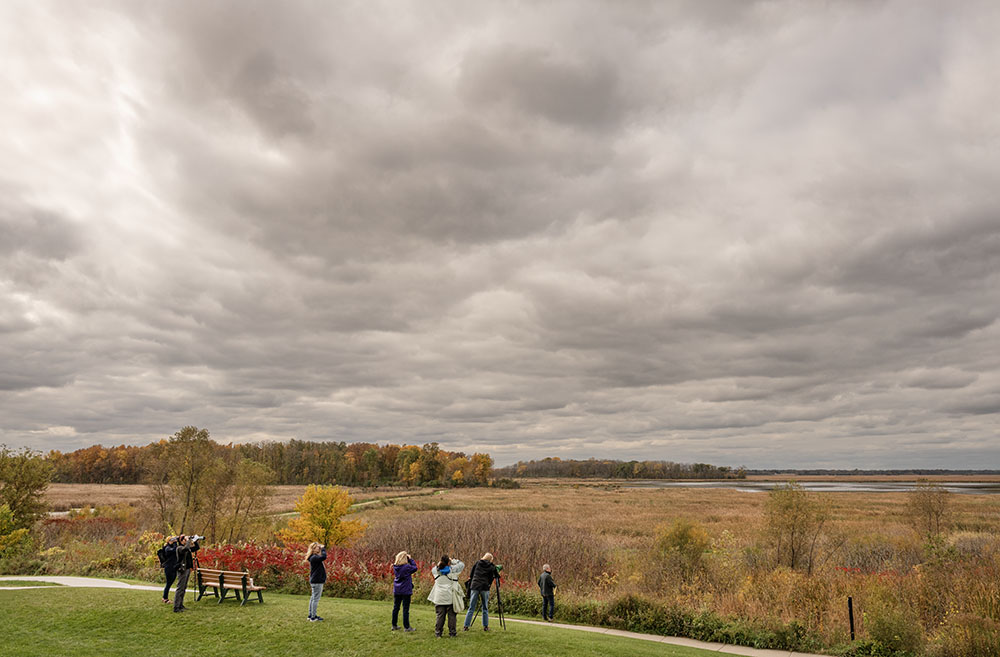
The farms proved sufficiently unproductive that they didn’t last long. Eventually local conservationists led the fight to restore the marsh. Scars remain. Everywhere we stopped it was easy to spot where the vast, now uncultivated marsh was still interrupted by the straight lines of dikes and ditches.
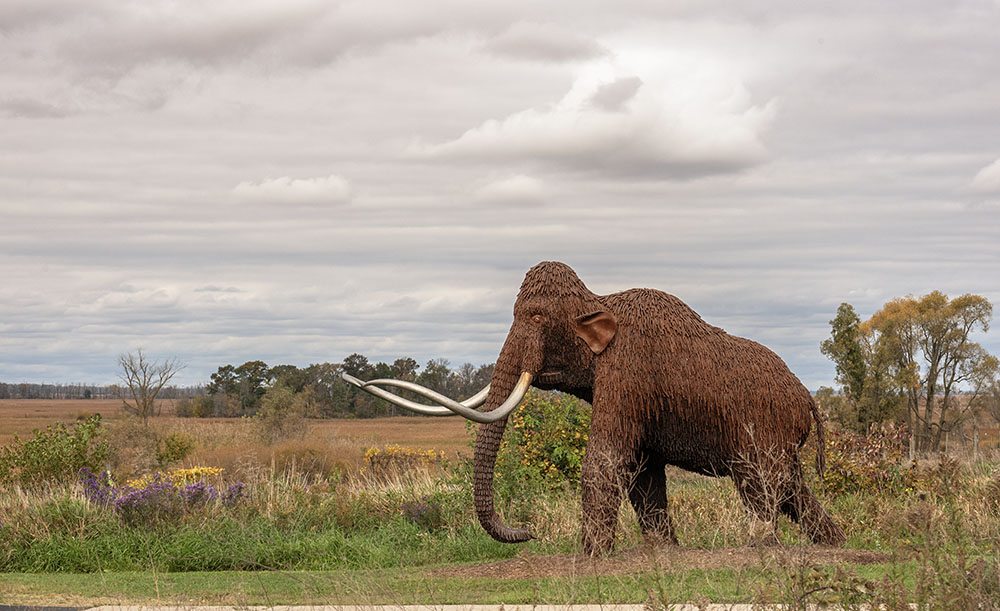
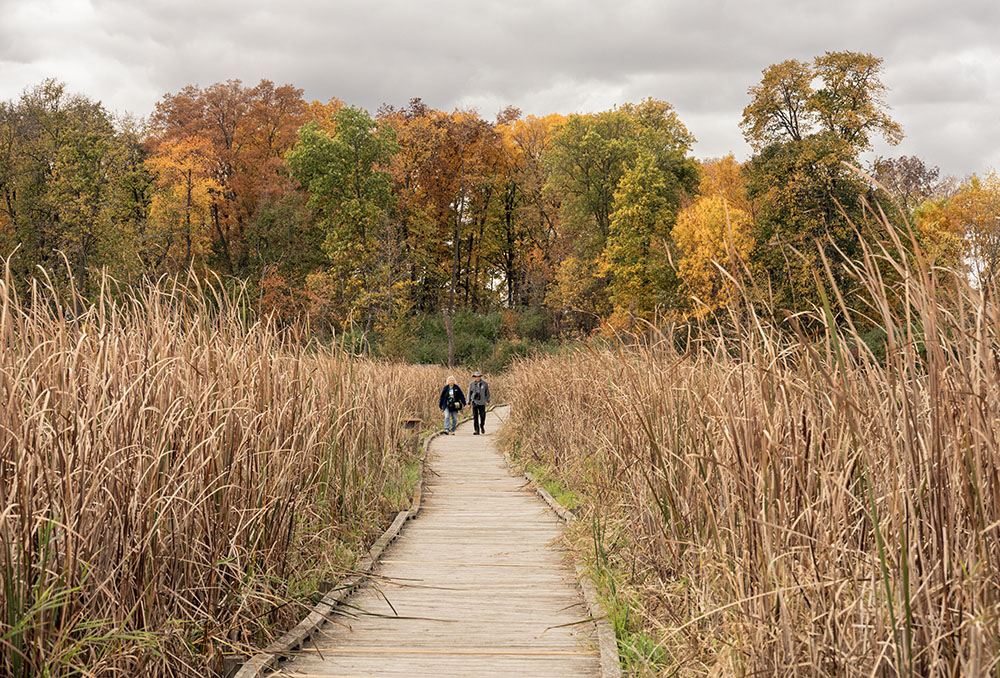
Our next stop was at the DNR’s Horicon Marsh Education Center, which stands on a hill with clear panoramic views out to the horizon. A network of trails leads out into the marsh along the tops of dikes. A boardwalk allows you to have an even closer connection with the wetland. Patches of open water harbored rafts of waterfowl. Another eleven species were observed. The one that seemed to excite everyone the most was the single snow goose nestled in brilliant white feathers amongst the hundreds of drabber Canada geese and a variety of ducks all around it. Between the two State Wildlife Area stops we added 25 species to our list.
“Our ability to perceive quality in nature begins, as in art, with the pretty. It expands through successive stages of the beautiful to values as yet uncaptured by language. The quality of cranes [or snow geese] lies, I think, in this higher gamut, as yet beyond the reach of words…
“Like winds and sunsets, wild things were taken for granted until progress began to do away with them. Now we face the question whether a still higher ‘standard of living’ is worth its cost in things natural, wild, and free. For us of the minority, the opportunity to see geese is more important than television, and the chance to find a pasque-flower is a right as inalienable as free speech.”
~ Aldo Leopold
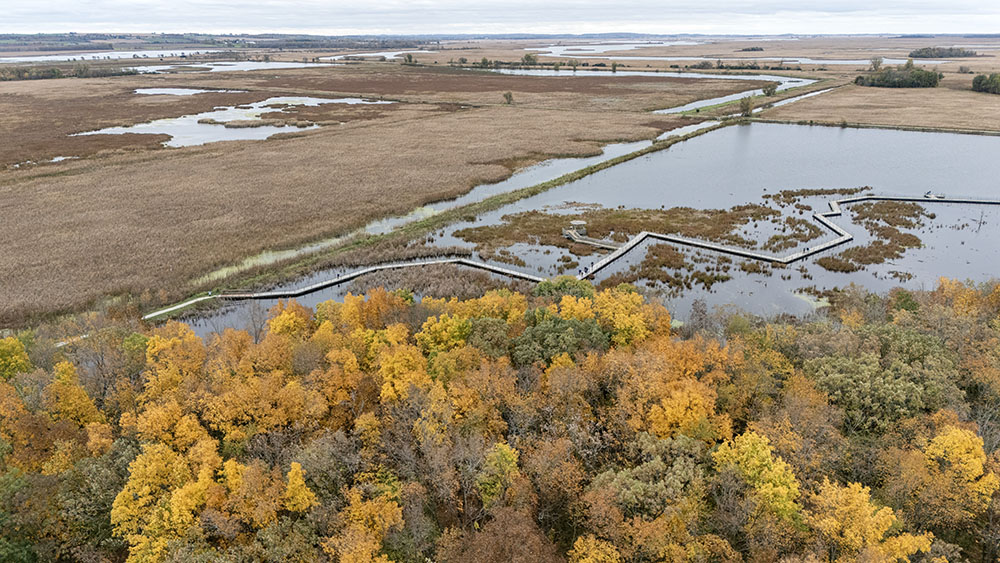
Our final stop took us to the far northern end of the marsh where the U.S. Fish and Wildlife Service has created a kind of marshland recreation area. In addition to marsh overlooks there is an auto tour route, a hiking trail, and an extensive boardwalk that zigzags out into the marsh and open water. You might have noticed that all my talk about observing different species of birds did not result in a lot of photos of them. Mea culpa. It’s true that birders have it a lot easier than photographers, since they only have to hear a bird’s song or spot one at a great distance. But I’ve also handicapped myself with a relatively short 300 mm zoom lens. So I have to get pretty close for a good shot.
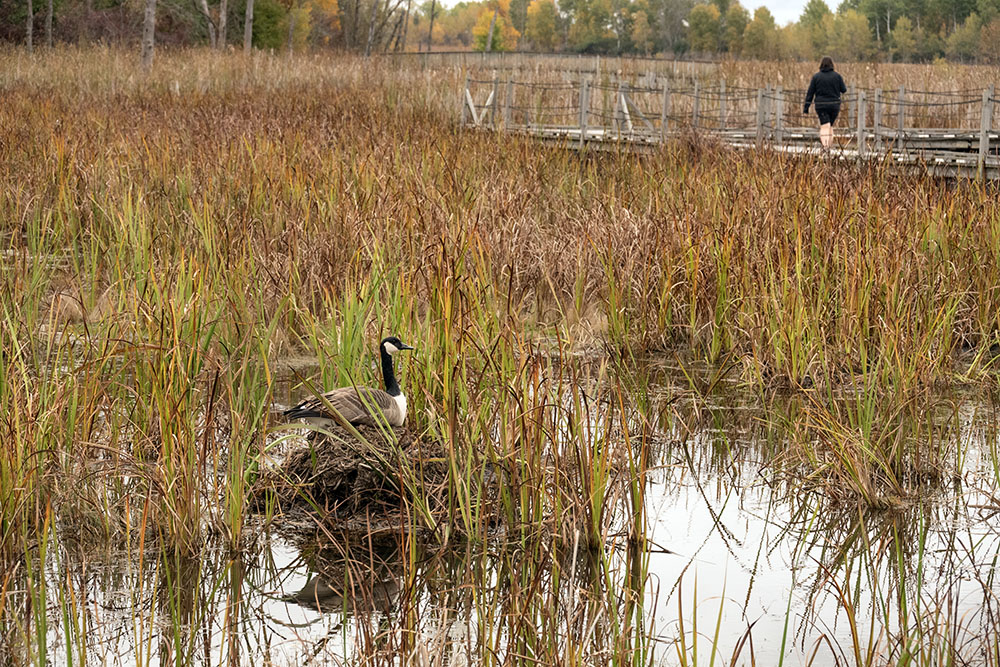
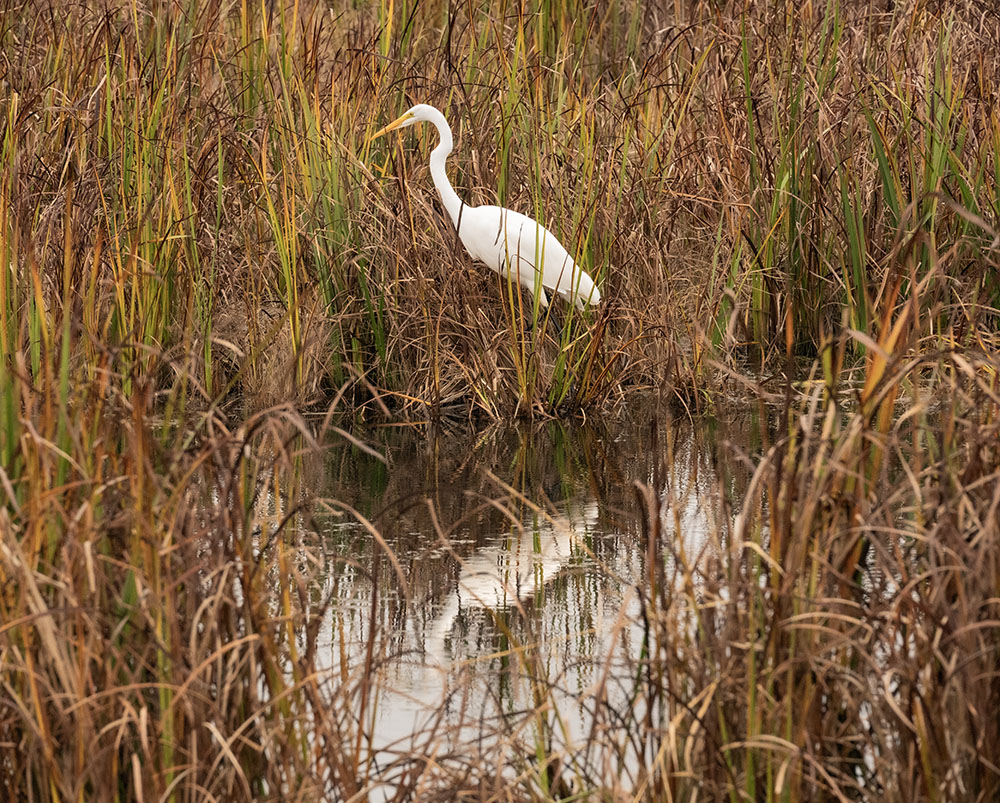
But I got lucky at this site as a few nearby birds held still long enough to capture. One particularly cooperative great white egret even hopped around from place to place without getting too far off. The group’s accumulated count of twenty-three species here in the National Wildlife Refuge included most of the same ones seen previously. However, a lone bald eagle made an appearance. In a follow-up email, environmental educator and tour guide Aubrey Fulsaas summed the tour up: “Searching out the less common species that were migrating with the mallards and Canada geese was a fun activity and really highlighted the wonder of Horicon Marsh, where both common and uncommon species can coexist during migration, when a stopover site is able to provide such abundant resources.”
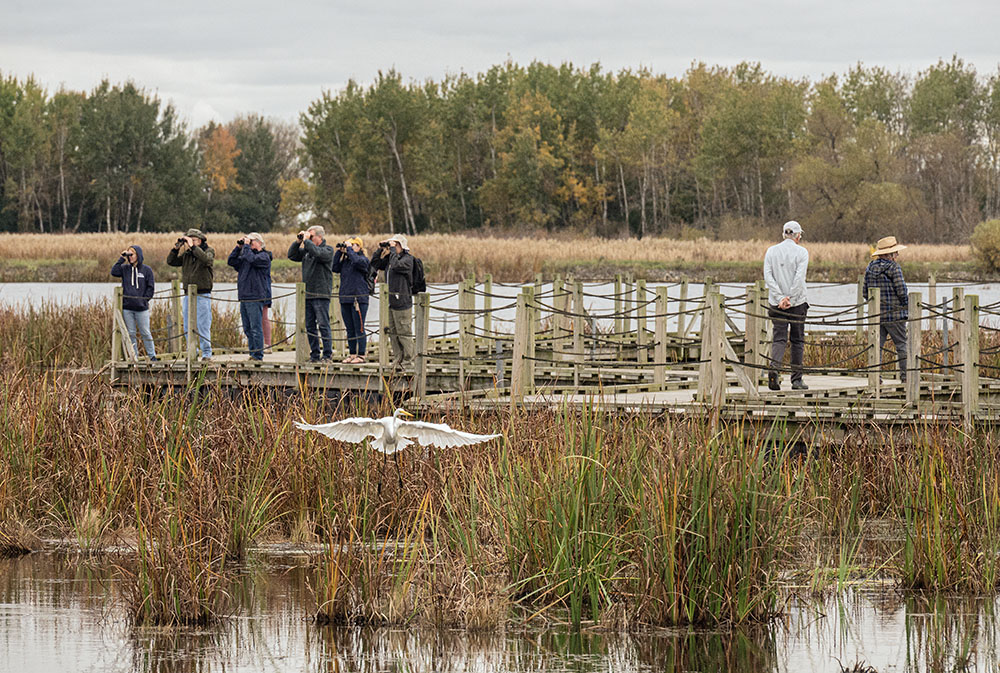
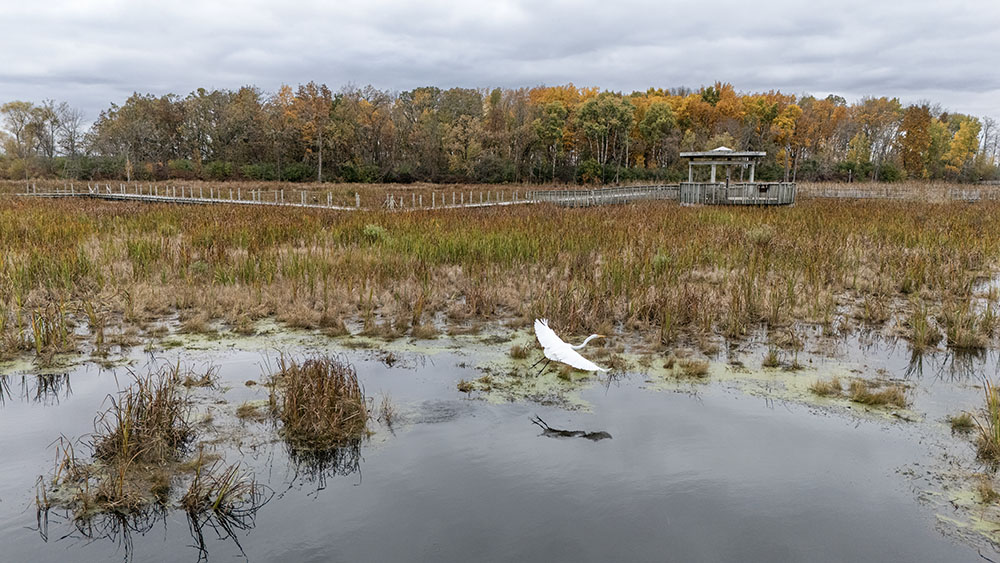
Our tour wound down and we readied for departure, our miniature human migration from Milwaukee to Horicon nearing its conclusion. Merely a day-long endeavor, facilitated by our automobiles. Millions of birds of all sizes and kinds continue to migrate south for the winter using only their wing power. Their time is measured in seasons of the year. The restored marsh counts time by a different measure—the “endless caravan of generations.” Having emerged from its glaciated origins some 10,000 years ago, it then survived the depredations of human development. And now … and on into the future…. Who knows where the time goes?
So come the storms of winter,
And then the birds in spring again.
I do not fear the time
Who knows how my love grows?
Who knows where the time goes?
Thanks go to Schlitz Audubon Nature Center tour leaders Tom Finley and Aubrey Fulsaas for shepherding the group and for compiling the final bird count.
Related stories:
The Spectacular View from the Ledge! (Dodge County Ledge Park)
Maquoketa: Reaching Deep into the Niagara (Niagara Escarpment)
Hiking the Niagara Escarpment on National Trails Day: Oakfield Ledges SNA
Nitschke Mounds County Park: History and Nature Combined (Dodge Co Pk near Horicon)
Notes:
All of the photos in this story were shot during the tour except as noted. The banner photo at the top of a flock of sandhill cranes was taken in 2017 in the Horicon Marsh State Wildlife Area.
The Aldo Leopold quotations are from A Sand County Almanac and Sketches Here and There, which includes Marshland Elegy.
The lyrics of the song Who Knows Where the Time Goes are by Sandy Denny, sung by Judy Collins in her 1972 album Colors of the Day.
Eddee Daniel, writer/photographer, is a board member of Preserve Our Parks, the Project Director of A Wealth of Nature, editor of The Natural Realm blog, and a member of Schlitz Audubon Nature Center—which also is a project partner of A Wealth of Nature.
The Natural Realm blog is part of A Wealth of Nature, which is a project of Preserve Our Parks.
About Preserve Our Parks
Preserve Our Parks, Inc. is an independent nonprofit organization dedicated to the preservation of parks and green spaces. Our mission: To advocate for and promote Milwaukee area parks and open spaces and to strive to protect the tenets of Wisconsin’s Public Trust Doctrine.
For more than 25 years, we have been a leader in advocating for the protection of Milwaukee County park lands, halting many proposals to develop, privatize, or sell local parkland and lakefront spaces. More information about POP, including past accomplishments, is available at www.preserveourparks.org.