

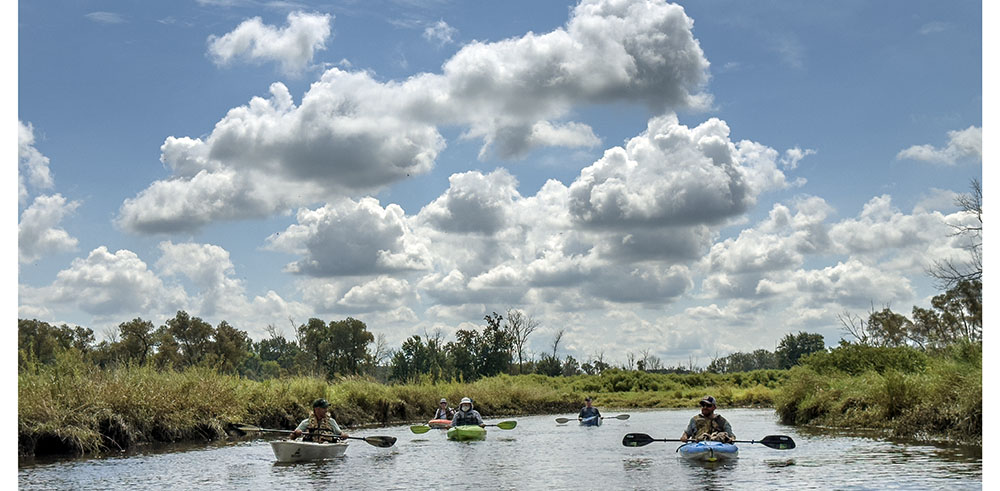
Exploring a natural wonder and connecting people with nature!
January 13, 2026 | Topics: Places, Stories
Kayaking the Rock River in Theresa Marsh with the DNR
By DNR Wildlife Biologist Steffen Peterson
With an introduction and photography by Eddee Daniel
Introduction
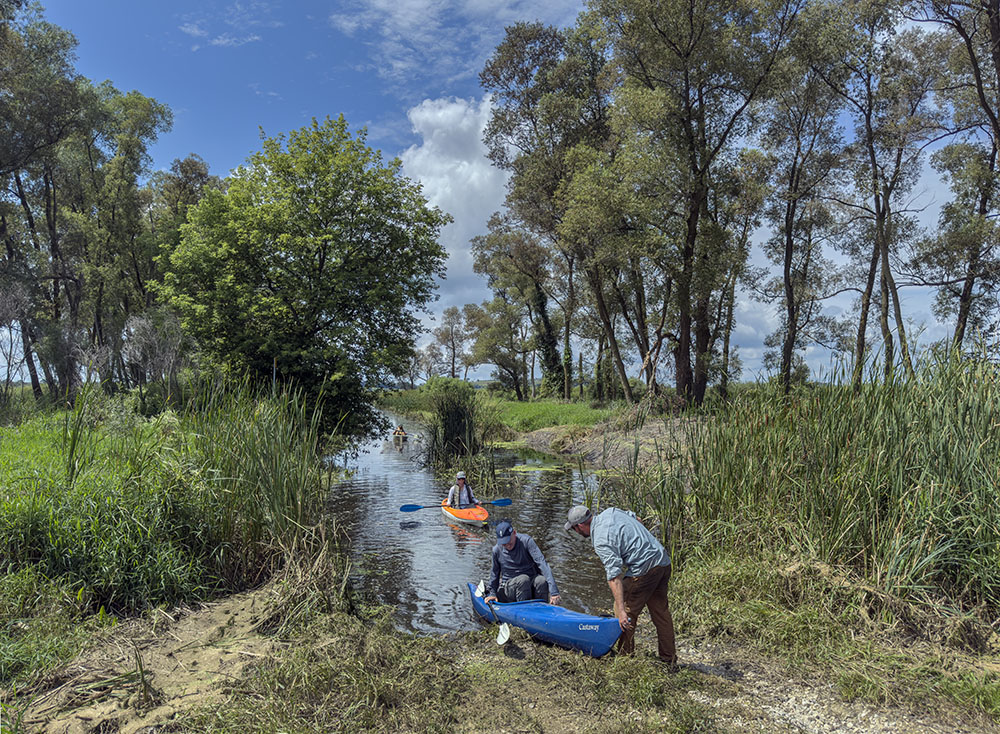
The mosquitoes were fierce. In order to get to the launch site we had to carry our boats about a hundred yards down a grassy slope. That wouldn’t have been onerous except that every step we took inspired millions of voracious mosquitoes to rise up out of the depths of the matted grass. I’ve seen much larger mosquitoes, but I’ve never been assaulted by such a teeming mass of them. Fortunately, we left them behind once we were on the water and paddling downriver.

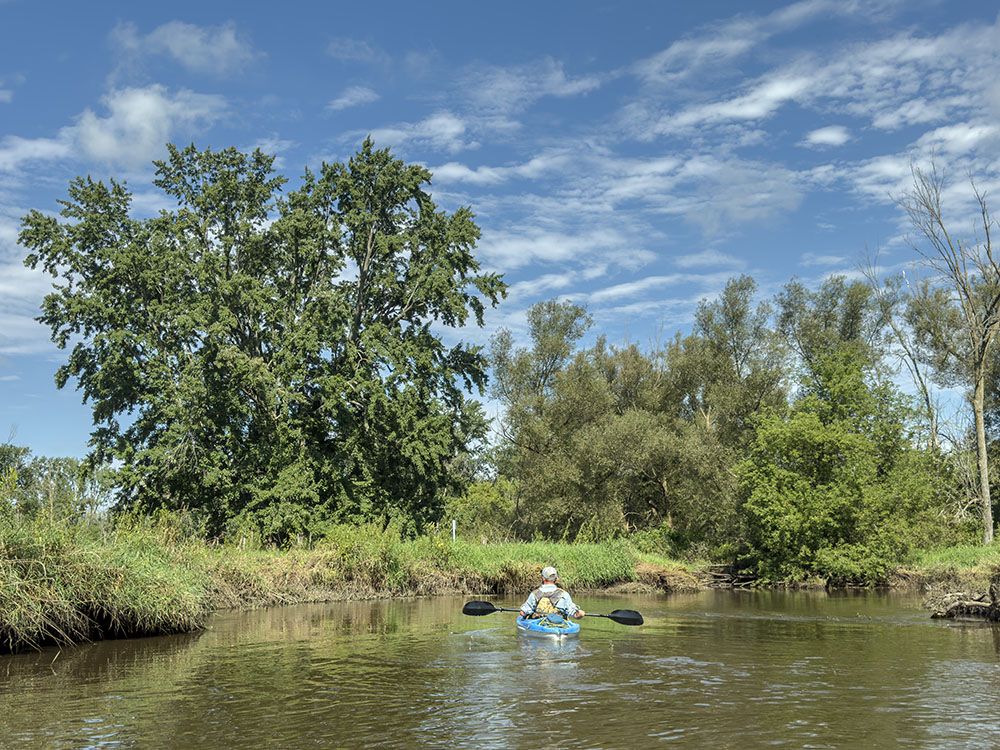
The first half of our five-mile route was through woodlands. In a few places the narrow river was blocked by trees downed in the recent (August) flooding. The first time we came upon one, Steffen whipped out a handsaw and cut through it. The second time the trunk was larger and I wondered how we would get through it. Then Steffen pulled a chainsaw out and made short work of it! Later we came upon a mature oak lying across the river. The trunk must have been 4-5 feet in diameter! We weren’t about to cut our way through this one.
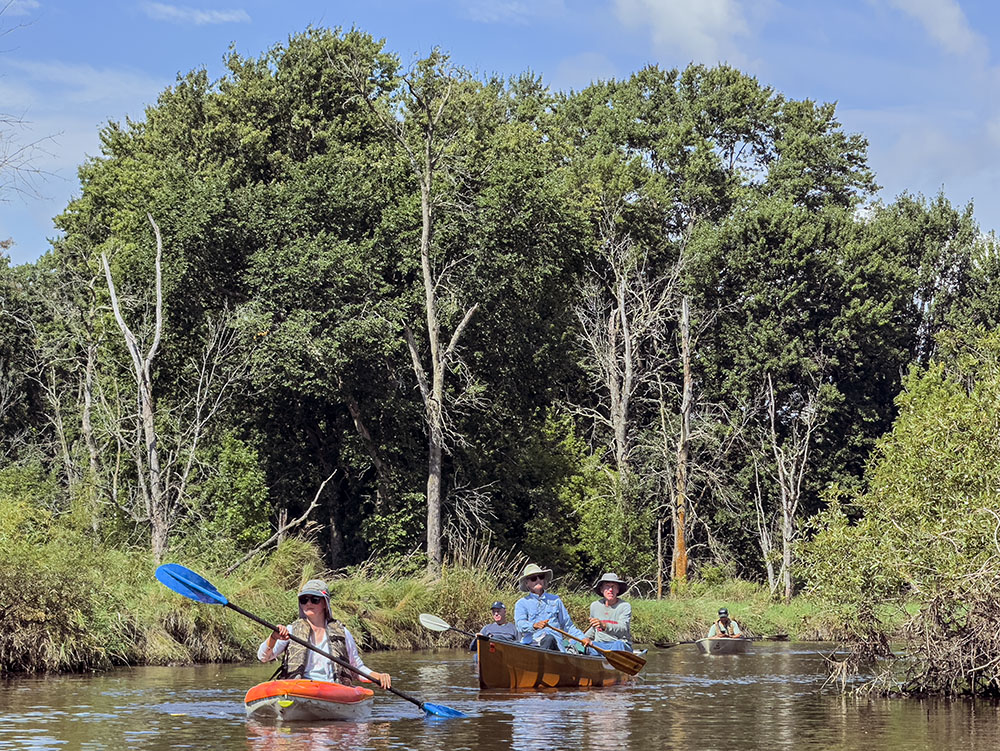
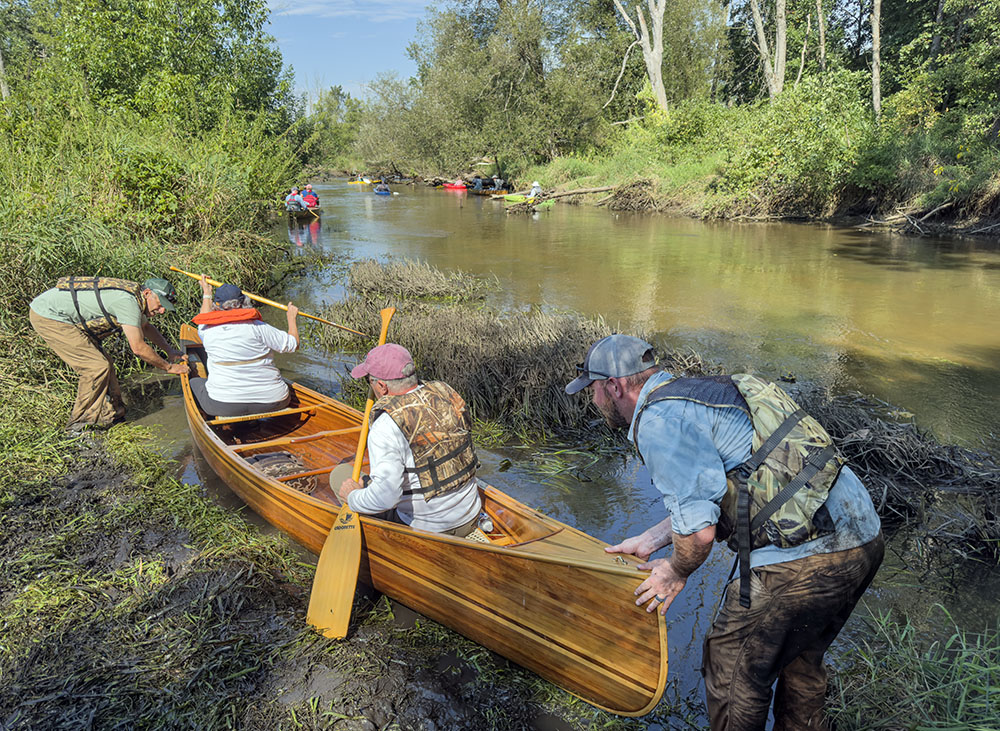
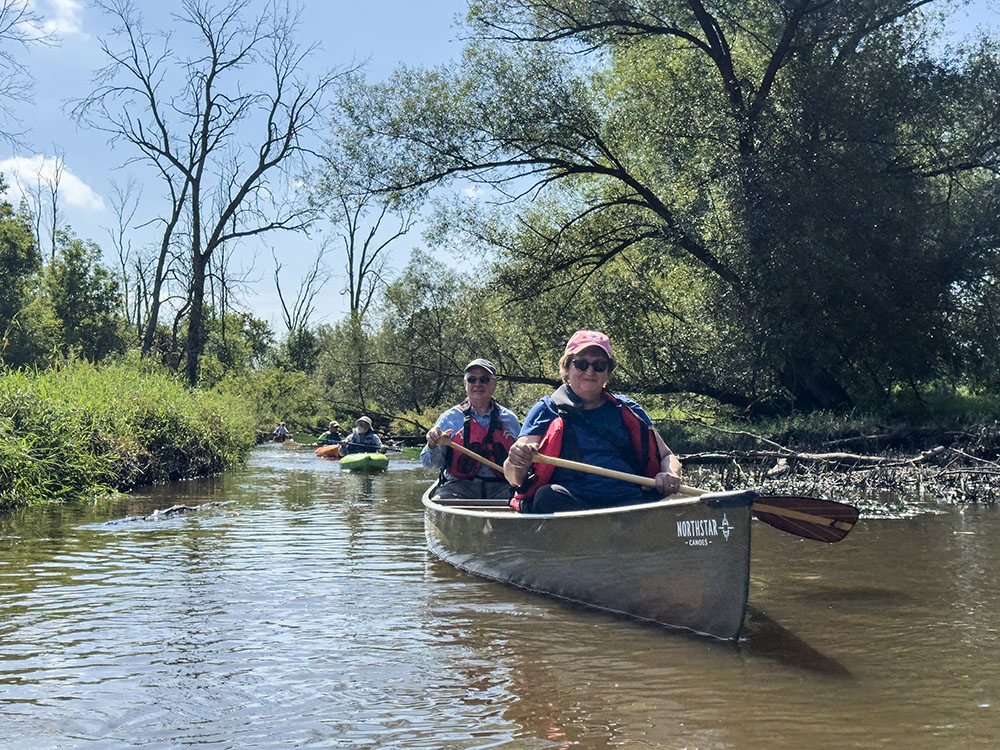
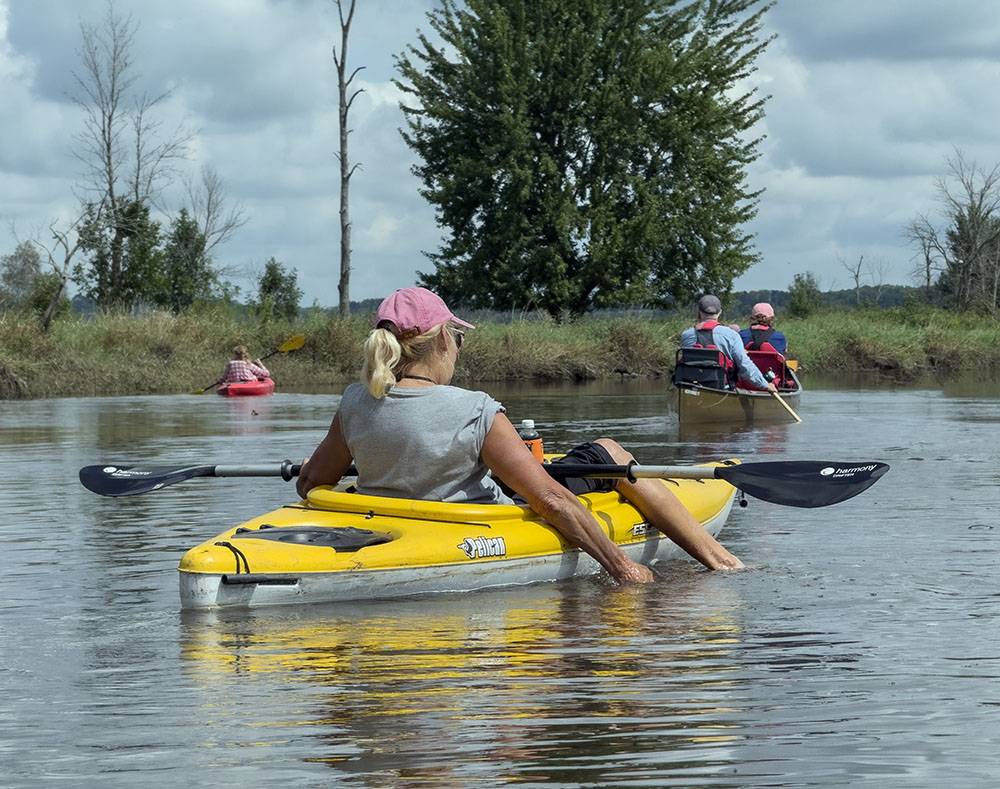
But our guides were prepared, having previously scoped out how to portage around it. The second half of the trip was through cattail marsh, where the most eventful features were the clouds going by. We stopped periodically during the four-hour tour, not only to rest but also to learn all about Theresa Marsh. I found it fascinating and so I asked Steffen to summarize his remarks to go along with the photos I shot of the tour, which he did in a follow-up email.
~ Eddee Daniel
Kayaking the Rock River in Theresa Marsh with the DNR
By Steffen Peterson
I was first asked by the Natural Resources Foundation of Wisconsin (NRF) to lead a 2024 field trip as part of their initiative for citizens to “explore Wisconsin’s natural wonders.” NRF is a statewide nonprofit formed in 1986 to support DNR programs impacted by declining budgets. Their mission is “to protect our state’s lands, waters, and wildlife by providing funding, leading partnerships, and connecting all people with nature.”
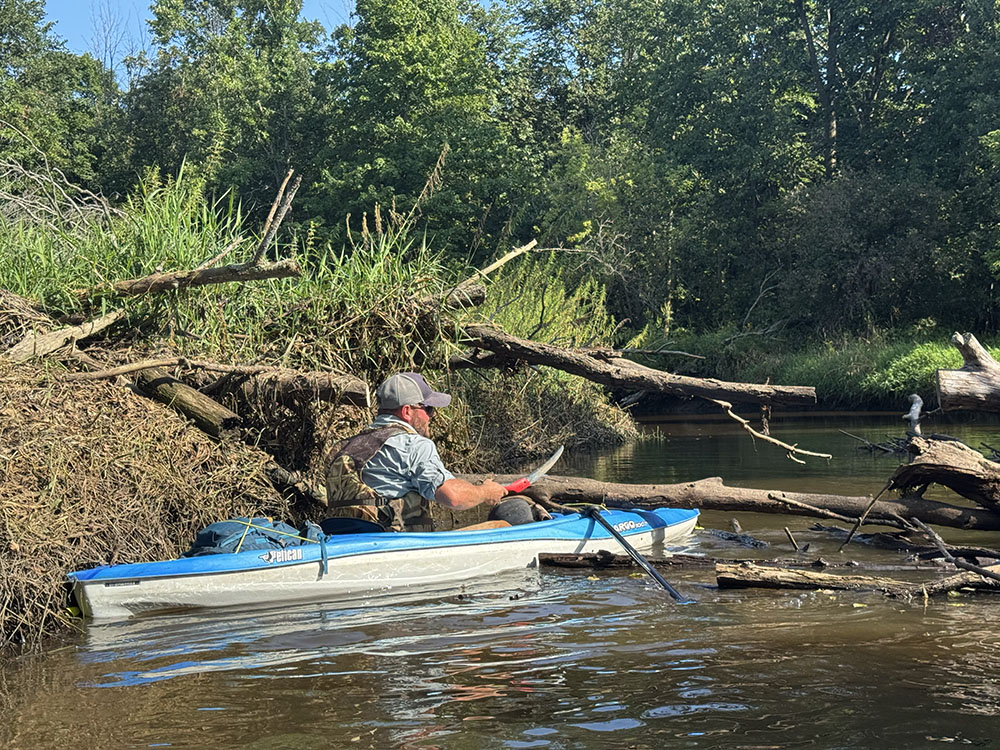
When asked to lead an NRF trip, I jumped at the opportunity to showcase one of our properties and the hard work our team accomplishes. I stepped into my current position in 2023 and had always wanted to paddle a 5-mile section of the Rock River as it flows into Theresa Marsh from the south. So I rounded up a group of colleagues in the spring of 2024 to pre-paddle this section and remove downed trees and log jams to make it more navigable.
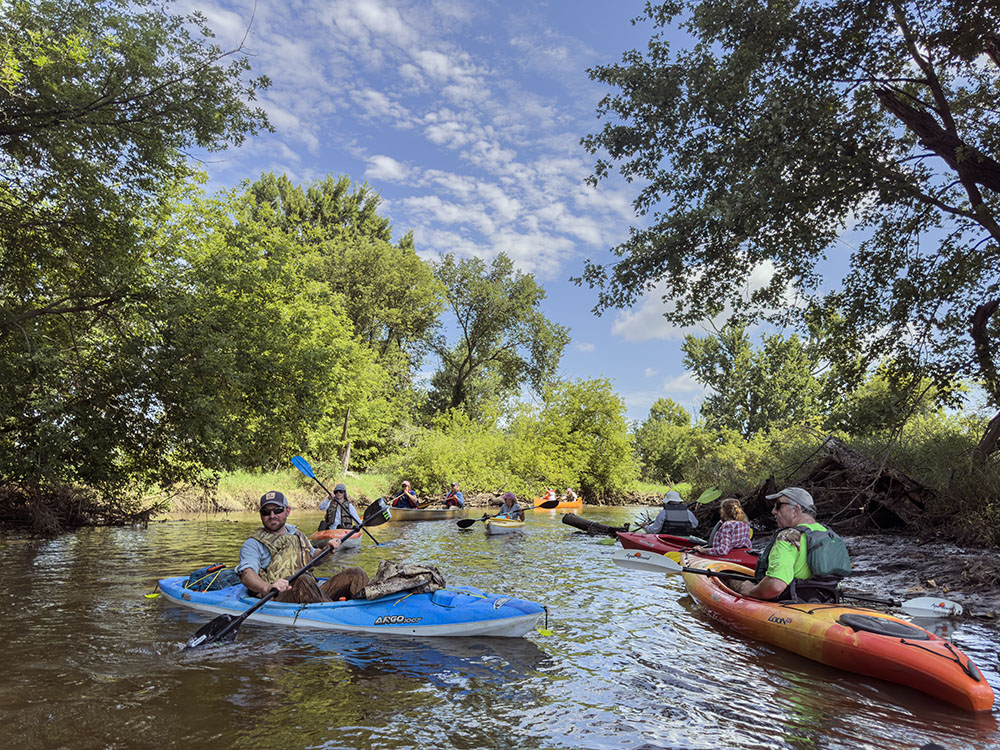
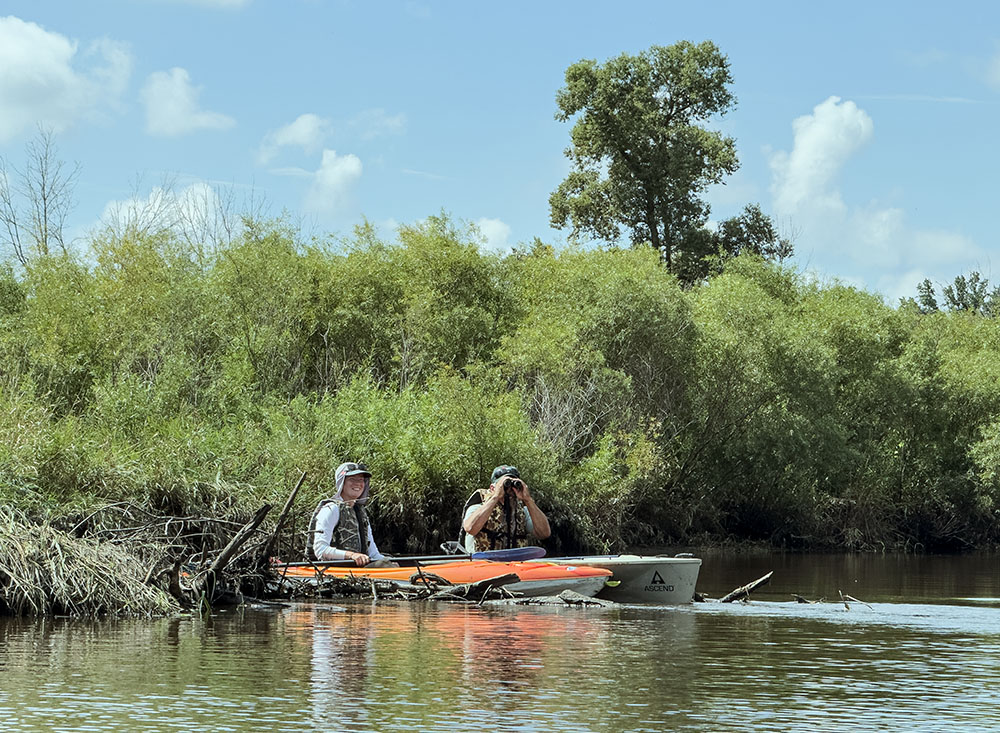
Water-levels on the marsh are variable and drastically fluctuate with rain events. Consequently, the navigability of the Rock River is equally dynamic. I intimately faced this fact both years when we have hosted this trip. In 2024, after my team and I cleared the river of low-hanging branches, debris and logjams, a significant rainstorm brought in heavy flows of water down the river and erased much of the work we accomplished ahead of our trip. The attendees found themselves not only participating in a paddle of the Rock River and Theresa Marsh but watching the area biologist put on a masterclass in chainsaw and hand-tool work.
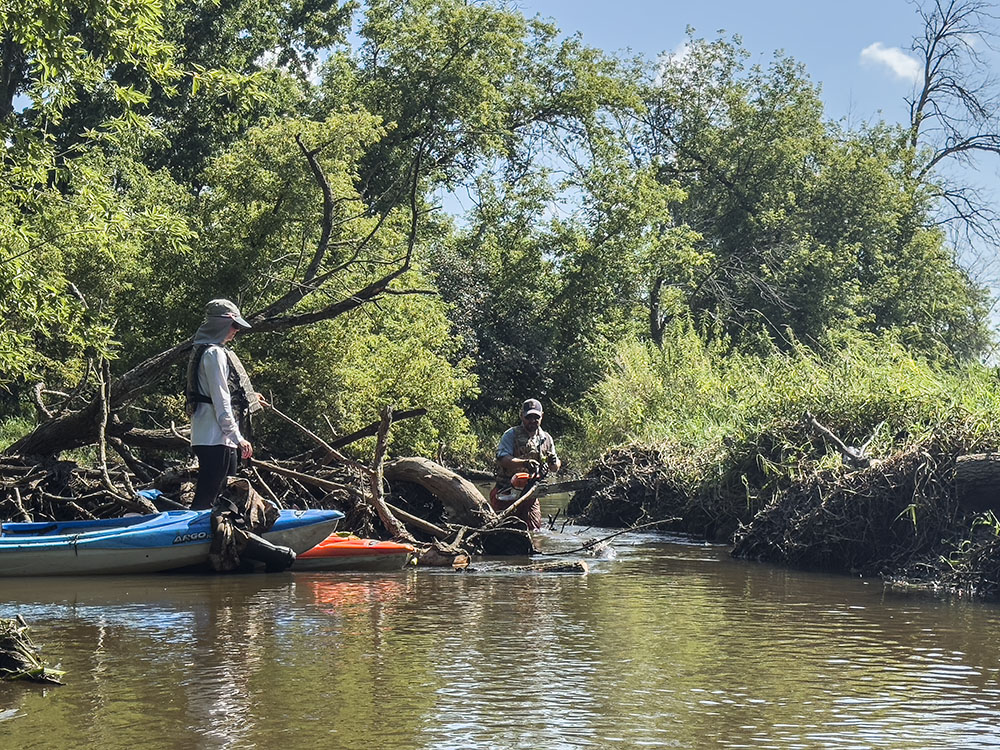
Worried about delaying the trip, I was pleasantly surprised to hear the participants encouraging and cheering me on through each tree I cut. We bonded as we made our way around, over, and under obstacles while taking breaks to point out birds and discuss natural history and habitat management along the way. I couldn’t help but agree to do it all over again in 2025.
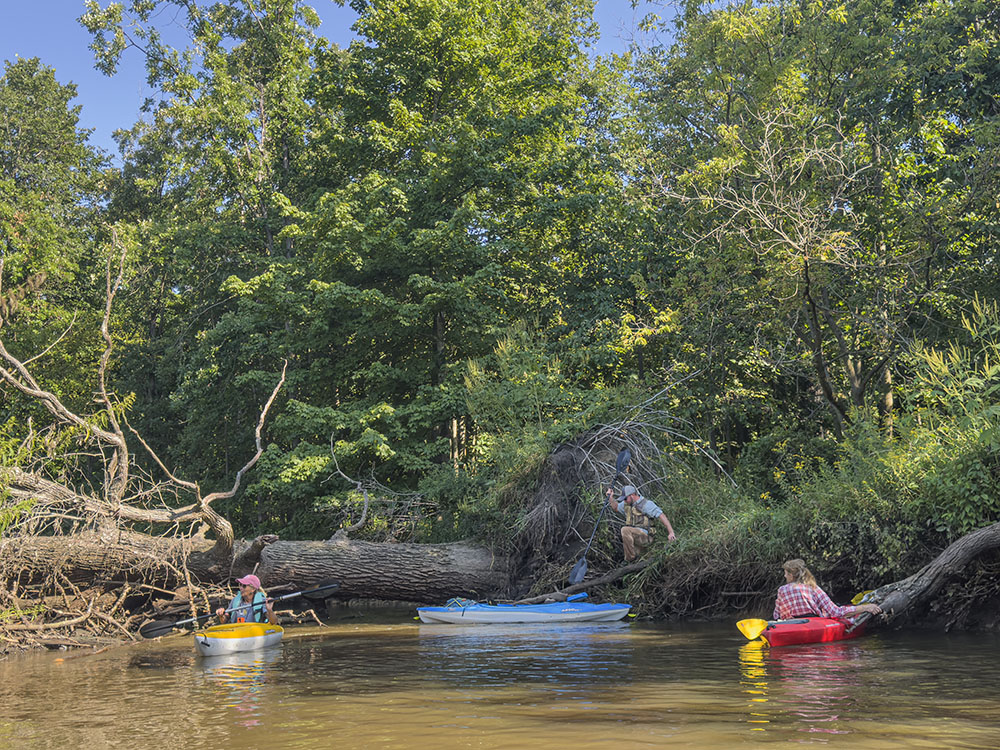
For the 2025 Theresa Marsh field trip, I scheduled a late summer paddle for Friday September 22nd. The water level that pools behind the Theresa Dam and floods Theresa Marsh can be raised and lowered by the DNR for management purposes. It had been drawn down for much of the previous year to allow construction to take place on the main dike system adjacent to the dam. I anticipated returning water levels at this time would allow our field-trip participants good paddling conditions.

In addition, a significant drawdown provides a chance to see a bumper-crop of annual vegetation that grows on the moist soils of exposed mud flats. The energy-rich seeds and other plant parts (e.g., leaves, roots, and tubers) of these moist-soil wetland plants are a critical part of the diet of wintering and migrating waterfowl.
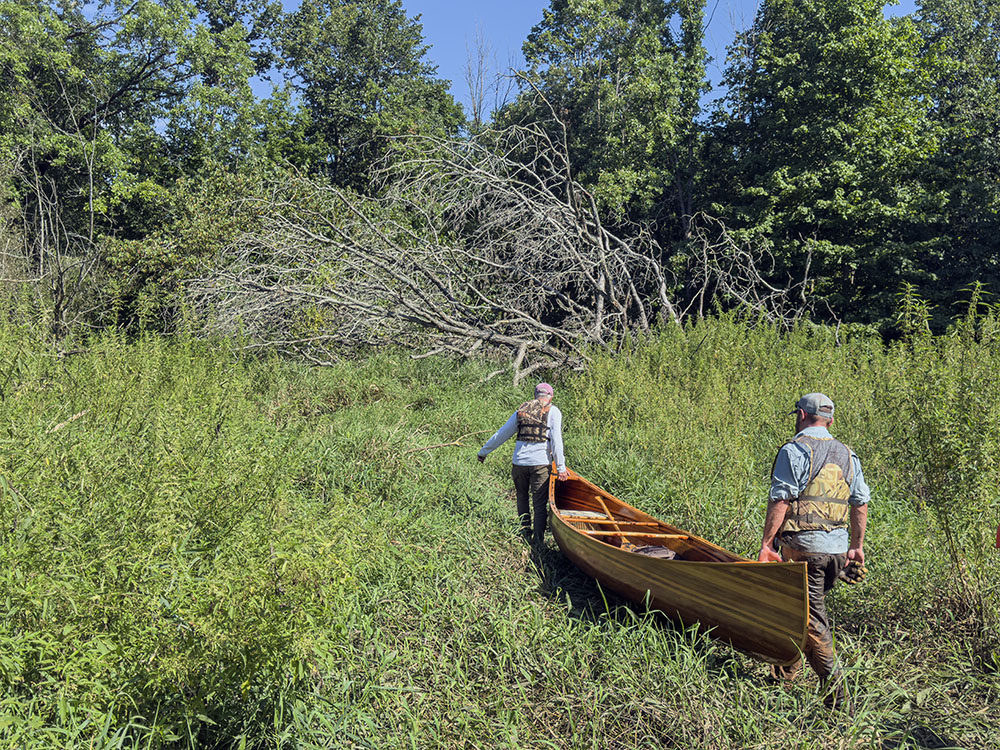
Despite our efforts, once again we were forced to navigate past obstacles, this time created by the August flooding that so significantly impacted the Milwaukee area. Wildlife Management staff cleared a few areas of debris and guided paddlers through a make-shift portage to avoid a large, downed Bur oak. Once again, I was blown-away by the positive attitudes of our participants.
Highlights of the trip included various bird sightings: a great-blue heron, numerous Green herons, an immature bald eagle, various marsh birds and waterfowl. Also, as planned, a diversity of moist soil annual plants (e.g., barnyard grass, smartweed, rice cutgrass, sedge) and vegetation characteristic of the Wildlife Area’s emergent marsh vegetation (cattail, native and invasive phragmites, broadleaf arrowhead aka “duck potato”). A mild day with a small breeze made paddling pleasant and, for the most part, kept the mosquitos at bay—as long as we were moving.
Theresa Marsh History:
A glacial lake with a southern outflow once occupied the marsh. Subsequent glacial activity created the present outlet flowing to the west. It also resulted in a vast tamarack and lowland hardwood forest, which was logged during settlement times, leaving open marshland. Over the years various agricultural enterprises were attempted in drained portions of the marsh, including cattle ranching, canary grass seed production, muck farming and mint farming, which ultimately failed due to short growing seasons and flooding.
The Wisconsin Conservation Commission approved the acquisition of the Theresa Wildlife Area in 1948. By the late 1960s, nearly 5,000 acres had been purchased. In 1968, a dam was constructed on the East Branch Rock River to allow water level control over hundreds of acres for waterfowl management. In subsequent years several sub-impoundments were constructed across the wildlife area to improve brood-rearing and stopover wetland habitat for waterfowl. Uplands were planted to grassland to provide nesting cover for mallard and blue-winged teal.
Today, Theresa Marsh Wildlife Area includes nearly 5,500 acres of state-owned lands and 300 acres of publicly accessible easements located in northwestern Washington and northeastern Dodge counties. The East Branch of the Rock River flows north through the core of the wildlife area. Wetlands, primarily emergent marsh and bottomland hardwood forest, border the river and cover 80% of the property. Uplands are composed of a mix of grassland, farmland, and upland hardwood forest.
Theresa Marsh is a state “Wildlife Area,” which is managed predominantly for hunting, fishing, and trapping activities. However, it is an excellent venue for other recreational endeavors such as birding and wildlife viewing, canoeing/kayaking, and hiking.
Management
Water levels at Theresa Marsh are managed to provide diverse wetland habitats, primarily emergent and deep-water marsh. Beginning in spring, some wetland impoundments are dewatered to expose mudflats in order to provide shallow water for migrating shorebirds and allow germination of wetland plants. Wetland annual plants produce large, energy-rich seeds and attract an abundance of invertebrates. These stopover wetlands are reflooded in fall to make these food sources available to migrating waterfowl.
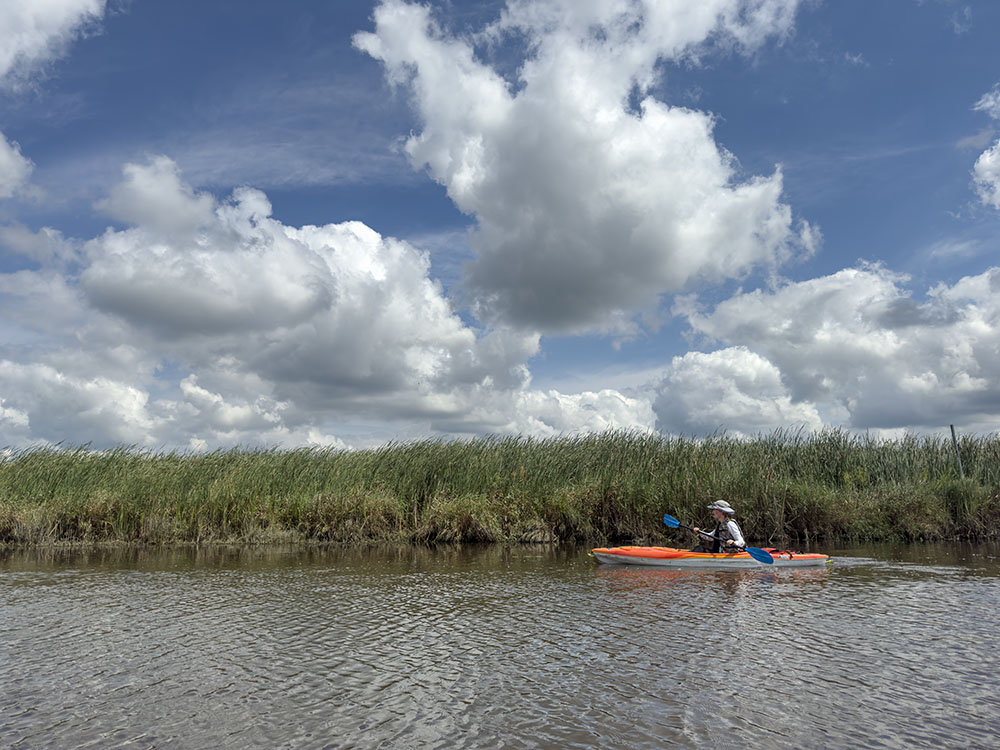
In other wetland impoundments water is retained throughout the year to provide brood-rearing habitat for mallards, blue-winged teal, wood ducks, and Canada geese and a nesting habitat for black terns. Periodically, prescribed fire is used in the marsh to manage invasive cattails and encroaching shrubs, increase plant diversity, and allow wetland annuals to germinate. Two wildlife refuges provide food and resting areas for waterfowl.
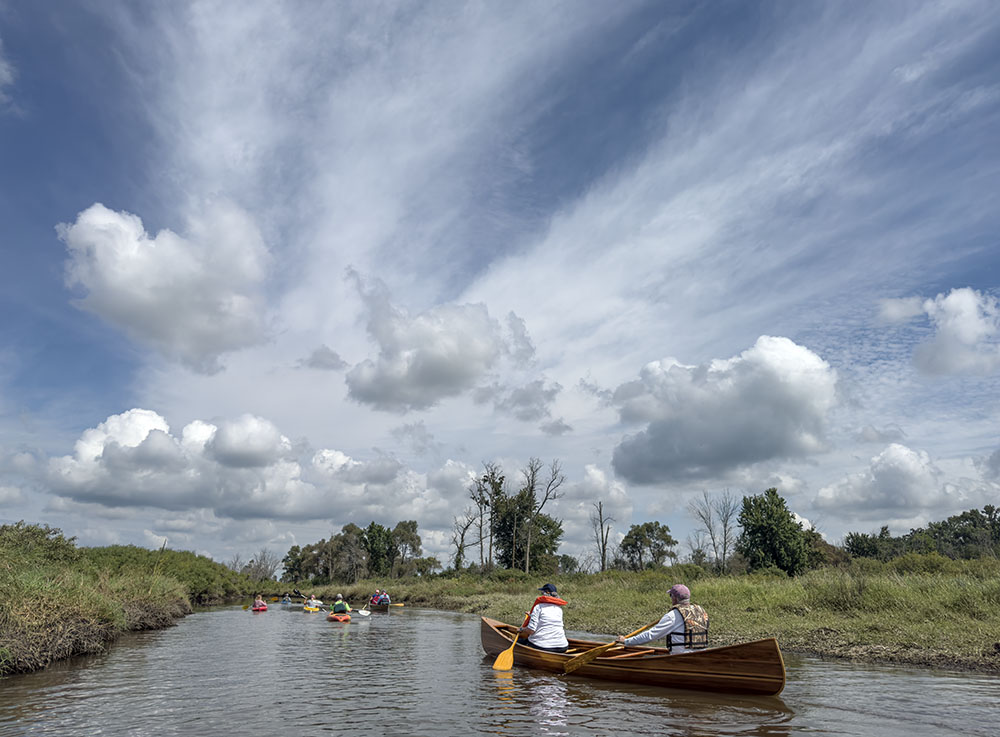
Upland grasslands are dominated by tall grass prairie. Grasslands are managed using periodic fire, mowing, and haying to provide nesting cover for mallard, blue-winged teal, and wild turkey and cover and forage for white-tailed deer, wild turkey, and ring-necked pheasants. Pheasants are stocked in upland grasslands throughout the pheasant hunting season.

Farmed fields of corn, hay, soybeans, winter wheat, and other crops provide forage and cover for a variety of wildlife species. Additionally, farming is used to prepare sites for conversion to prairie or forest.
This was one of a total of 278 field trips offered by NRF statewide in 2025. Enrollment in these trips require an NRF membership and those revenues support the Foundation’s mission.
For more information about NRF field trips go to the NRF website.
For more information about Theresa Marsh Wildlife Area go to our Find-a-Park page.
Related stories (NRF tours):
Touring the Mukwonago River Oak Barrens with The Prairie Enthusiasts
Young Prairie: Restoration and Recreation
A photography lesson in Three Bridges Park
Birding, Boats, and Breweries on the Milwaukee River
Touring restoration sites on the Milwaukee River in Ozaukee County
Steffen Peterson is a Wildlife Biologist in the WIDNR Bureau of Wildlife Management who covers Washington and Ozaukee County and functions as property manager for Theresa, Allenton, and Jackson Marsh Wildlife Areas.
Eddee Daniel, writer/photographer, is a board member of Preserve Our Parks, the Project Director of A Wealth of Nature, and editor of The Natural Realm blog.
The Natural Realm blog is part of A Wealth of Nature, which is a project of Preserve Our Parks. The Natural Resources Foundation of Wisconsin is a project partner of A Wealth of Nature.
About Preserve Our Parks
Preserve Our Parks, Inc. is an independent nonprofit organization dedicated to the preservation of parks and green spaces. Our mission: To advocate for and promote Milwaukee area parks and open spaces and to strive to protect the tenets of Wisconsin’s Public Trust Doctrine.
For more than 25 years, we have been a leader in advocating for the protection of Milwaukee County park lands, halting many proposals to develop, privatize, or sell local parkland and lakefront spaces. More information about POP, including past accomplishments, is available at www.preserveourparks.org.