

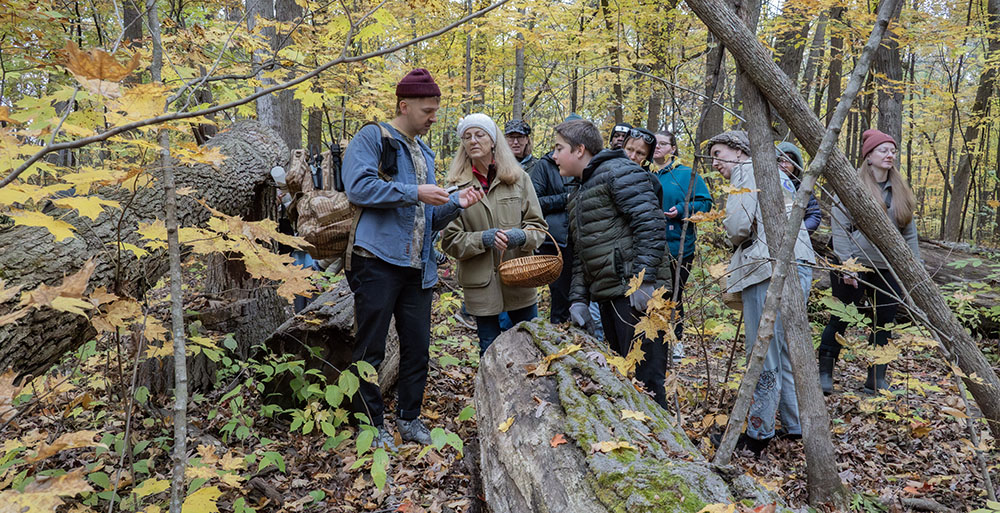
An official foray finds a wealth of fungi at Muskego Park
December 20, 2025 | Topics: Events, Places
By Eddee Daniel
It was my first foray. I had no idea what to expect, except that we would be looking for mushrooms. Well, maybe that’s not quite true. I guess I expected a small group of participants. Because I was stunned when more and more people kept showing up outside the warming hut next to the Muskego Park beach. We ended up with thirty-six hardy individuals raring to get into the woods to search for and identify as many kinds of fungi was they could. My curiosity about how this would work out grew with the crowd.
The conditions were less than ideal, it seemed to me. It was late October and you may recall the roller coaster of high and low temperatures we had back then. That Saturday morning was not one of the warm spells, bottoming out near freezing, accompanied by a dense overcast that threatened cold rain. No one appeared deterred.
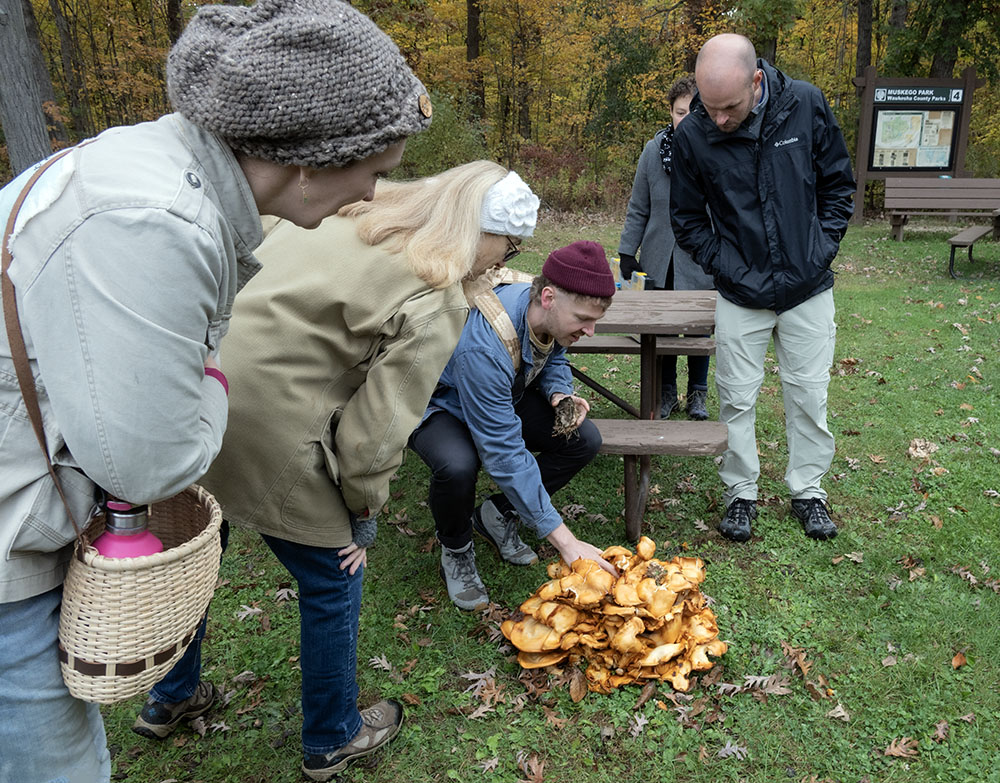
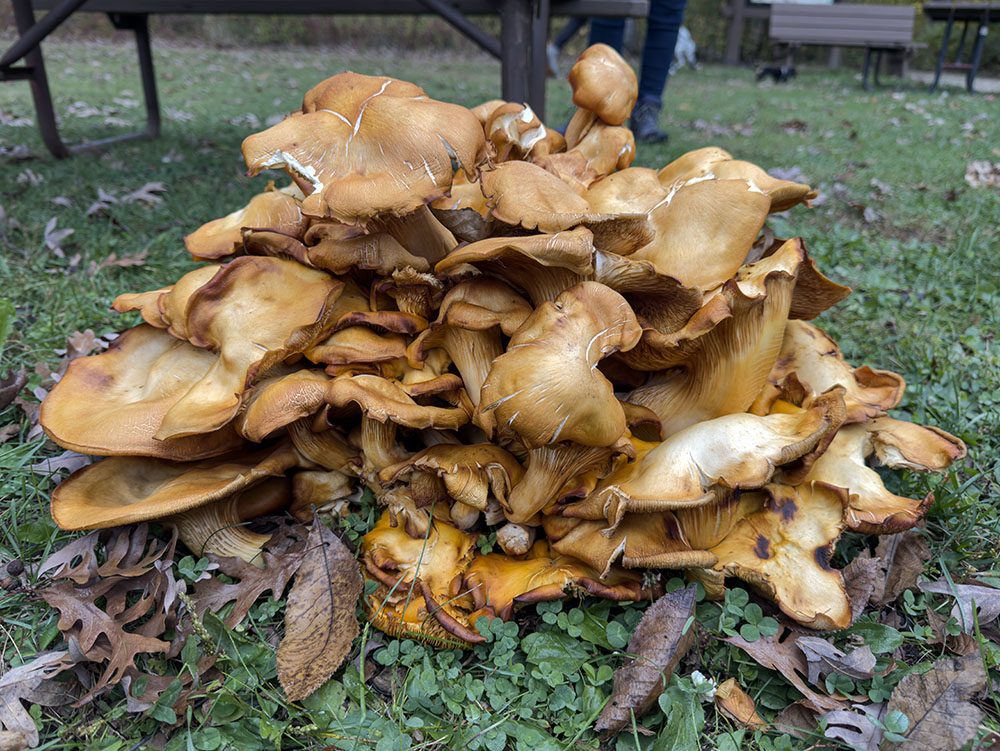
One of the more spectacular finds of the day greeted us even before entering the forest, next to a picnic table. It looked unreal, as if placed there deliberately for us to find. Everyone gawked at an enormous colony of Eastern Jack-o’-Lantern mushrooms. While not edible, these mushrooms have a rather spectacular quality: bioluminesce (which was hard to detect in daylight). Lots of cell phones came out. It seemed like an auspicious beginning to our quest.
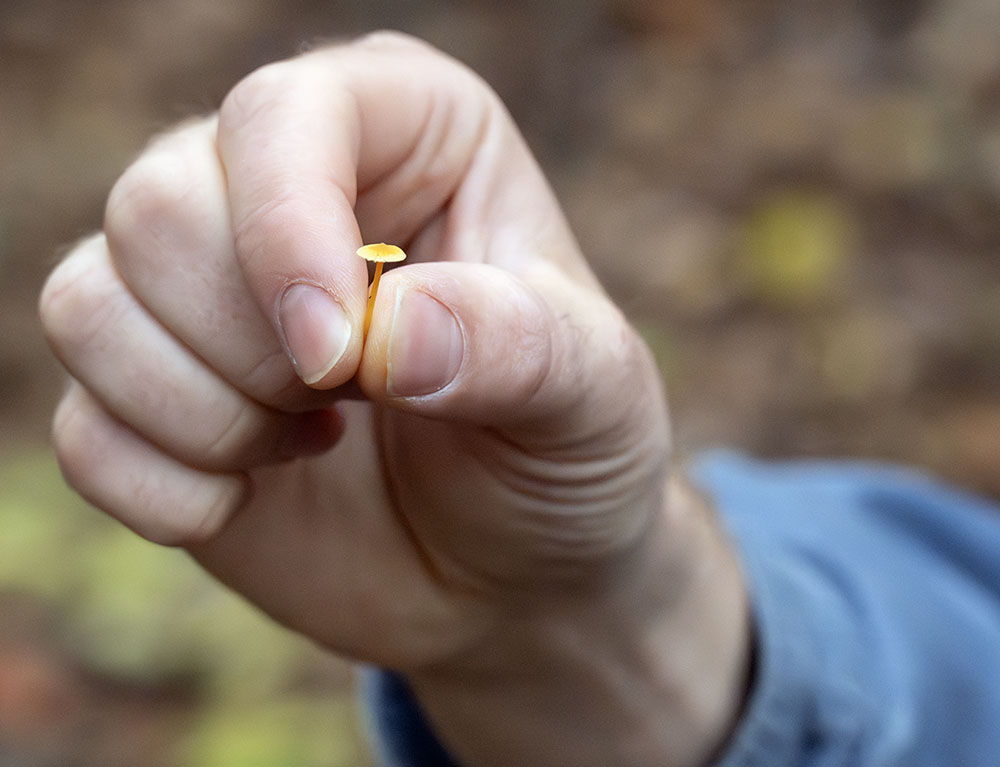
Almost the very next thing we saw, shortly after entering the forest, was one of the smallest fungi of the foray, a Walnut Mycena. I quickly became amazed at some of these mushroom hunters’ ability to find identifiable tiny bits of organic matter in the tumult of forest detritus.
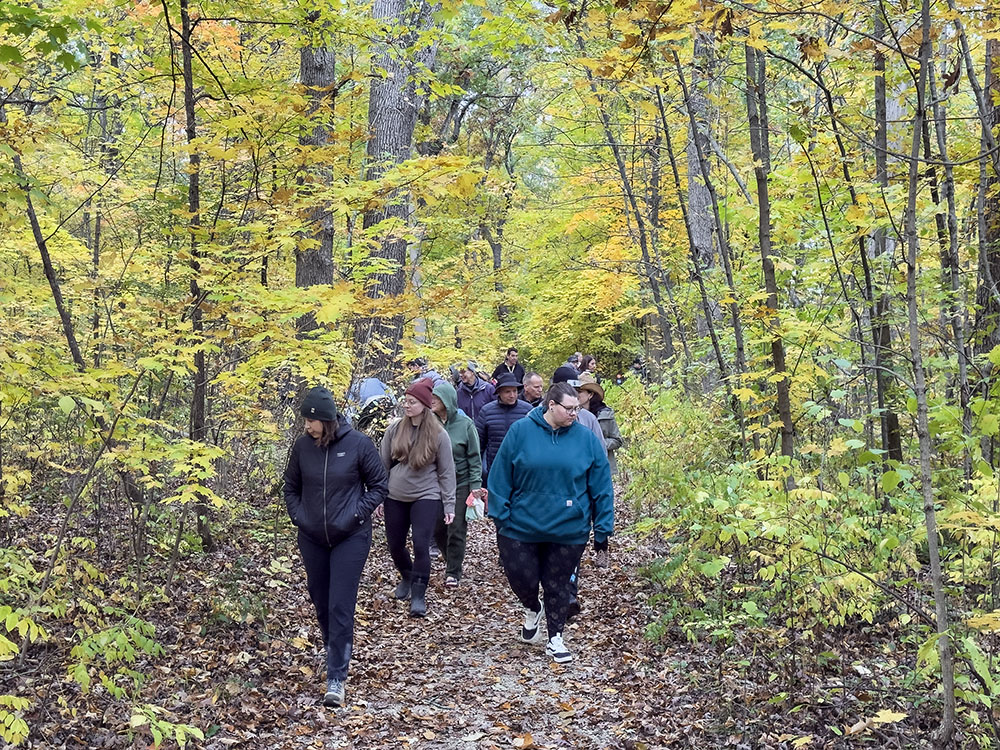
During his opening remarks, foray organizer Brennon Strnad of the Wisconsin Mycological Society gave us a pep talk of sorts. He explained that we would essentially be foraging and he encouraged us to collect samples of what we found. We were to bring them all back to the picnic shelter for identification and to share with the group. Harvesting mushrooms does not harm the organism, he assured us, which generally will regrow quickly. He also warned everyone not to eat anything they found until it was properly identified by an expert.
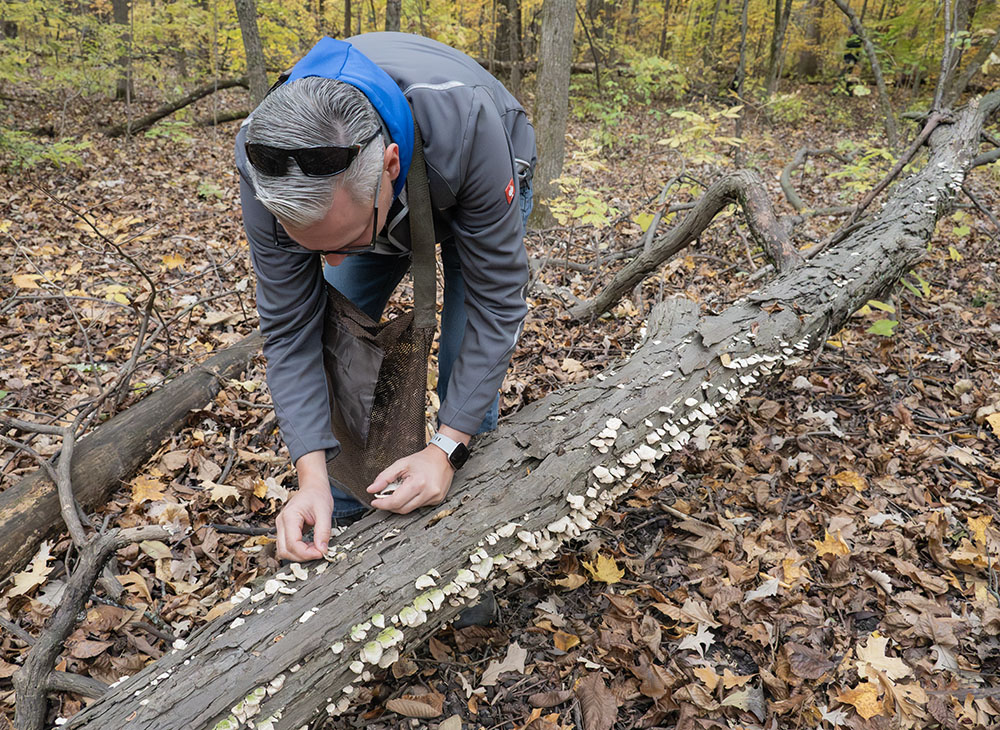
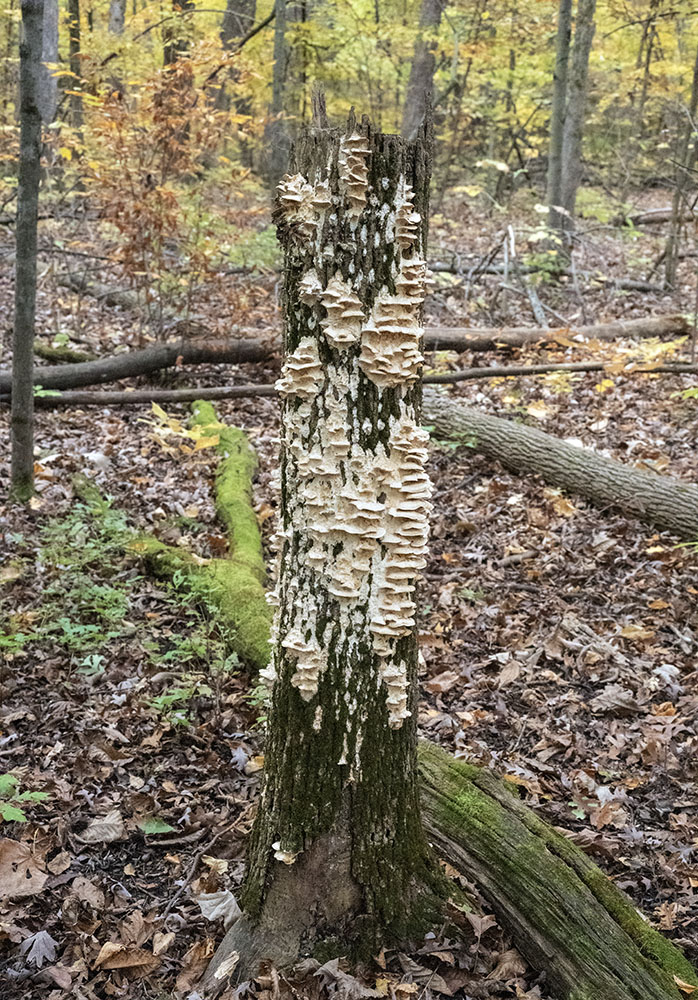
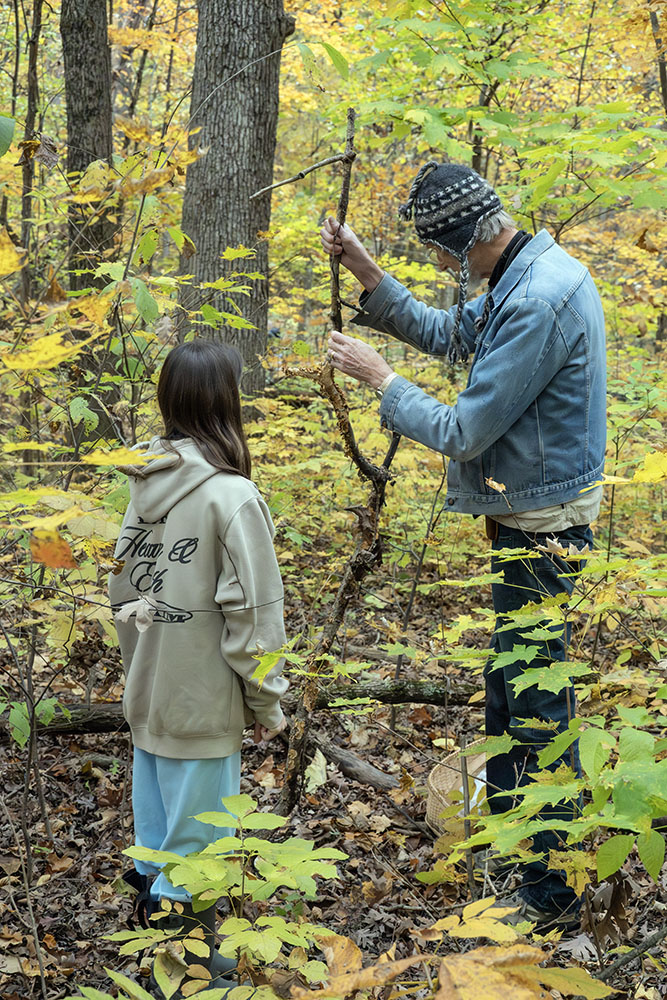
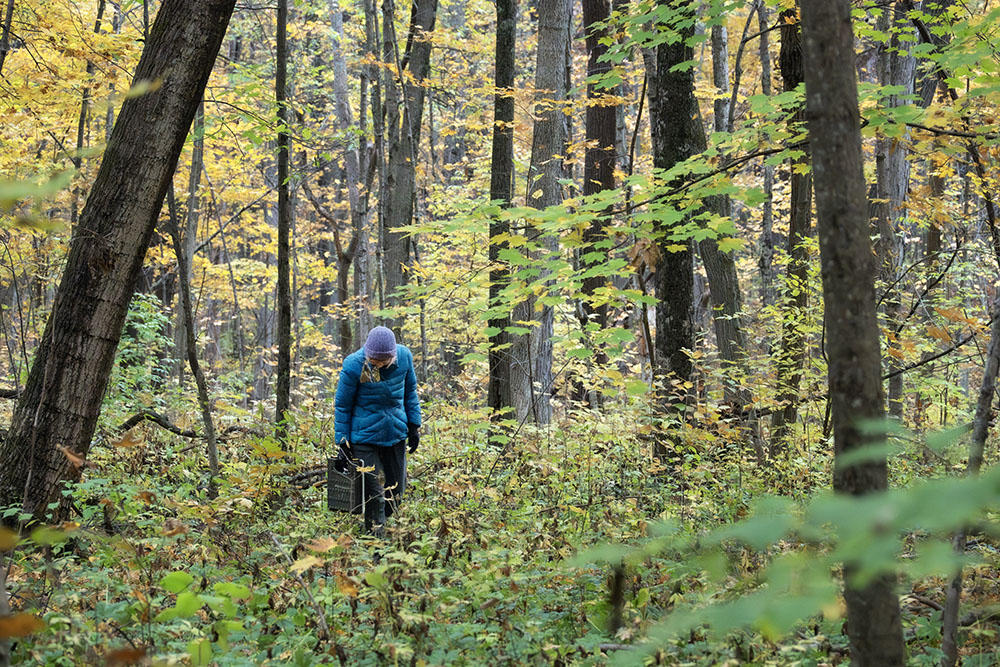
At first the group mostly stayed on the trail, examining the ground and tree trunks close by. A few, though, immediately set off deeper in the forest. Before long, others strayed farther afield. Lots of mushrooms were found just about everywhere we looked. Brennon himself traveled with a sizable entourage eager to see what he discovered and learn from him what each item was. He proved himself very capable at finding even the smallest of fungi.
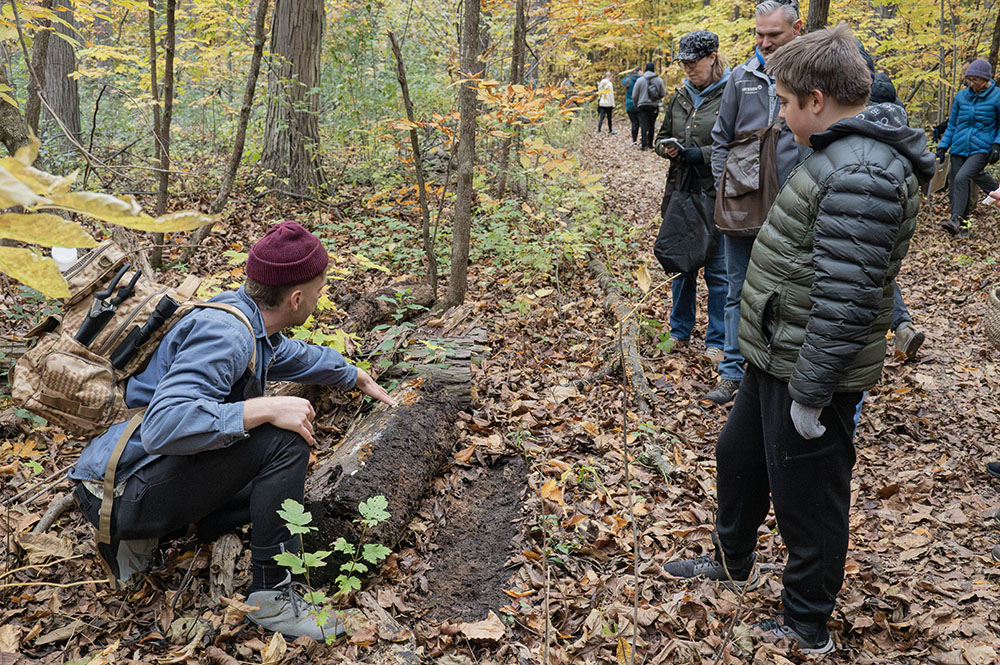
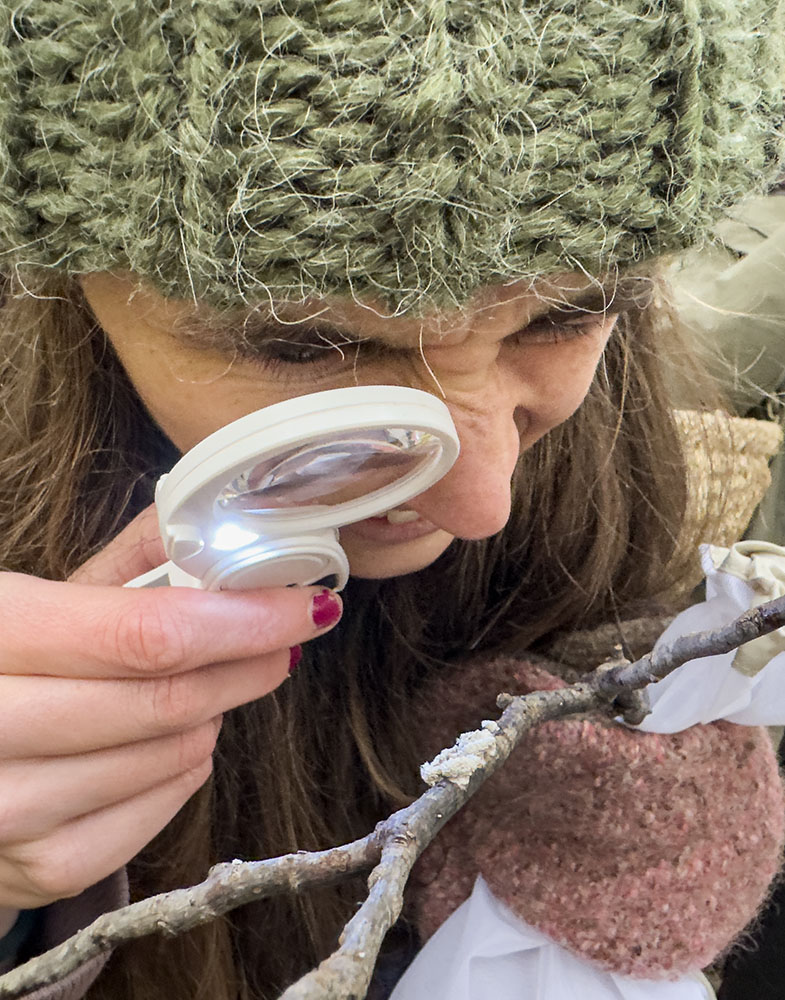
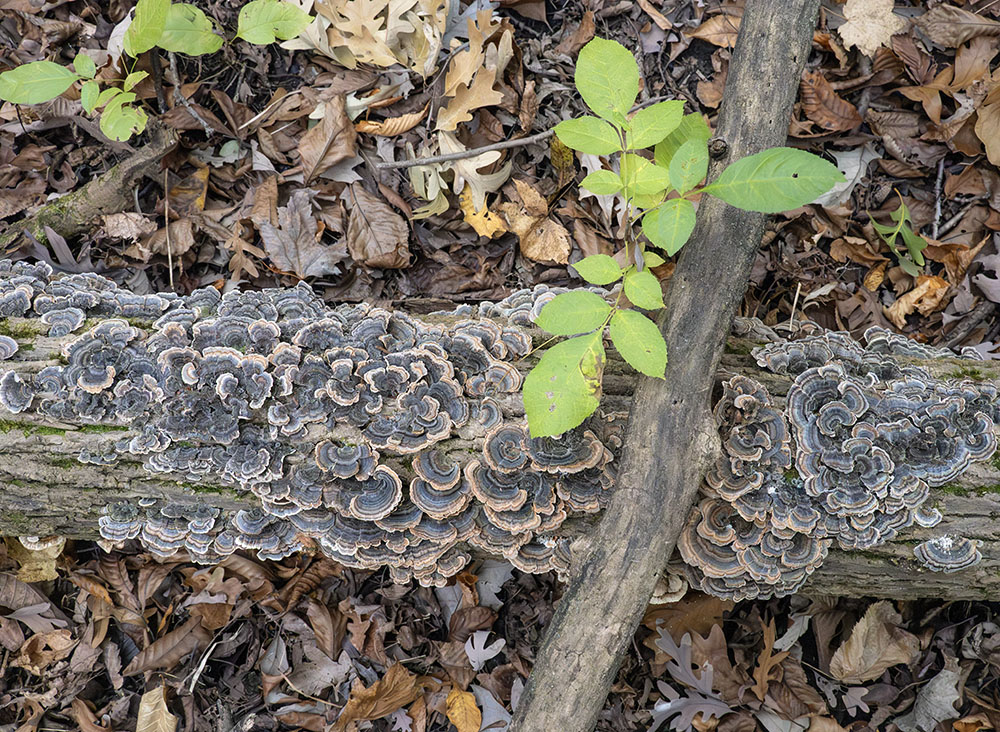
At one point I watched as he turned over a log, which is a hit and miss operation. He found nothing this time. When I asked what he was hoping to find he replied, in a follow-up email: “The underside of logs are a great place to find an obscure form of fungi called “crust fungi.” Crust fungi are not united by ancestral relations but simply by their habit of growing flat and wide on their substrate— they hail from all over the fungal tree of life; many different fungal groups have contributed a family member in crust form. Their obscurity causes them to be overlooked by a lot of fungi enthusiasts and they don’t have any culinary value. But when you do this long enough, their relative oddity becomes interesting.”
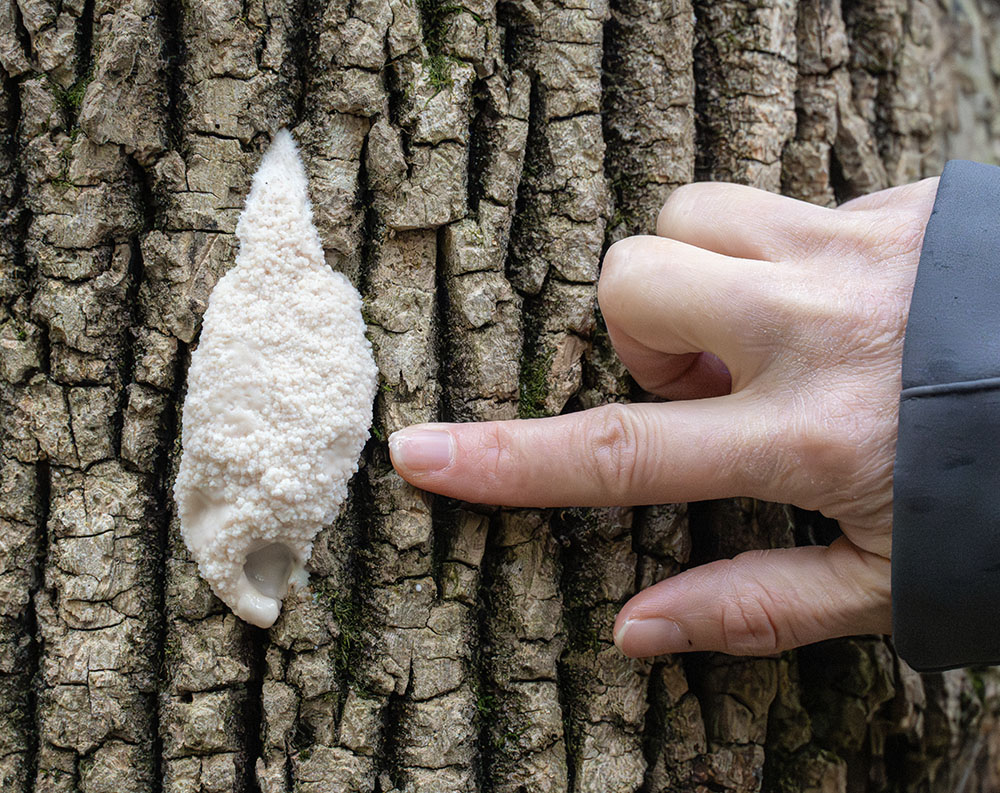
Now and then someone would inquire about a mysterious growth that looked like fungus but turned out not to be. Usually these were slime molds, like the tiny bulbous wolf’s milk that comes in shades of peach and lavender. Then there was the more impressively large patch of Brefeldia maxima slime mold that someone spotted just about eye level on a tree trunk. It looks so much like a dollop of tapioca pudding that has been slapped onto the tree that its common name is tapioca slime mold.
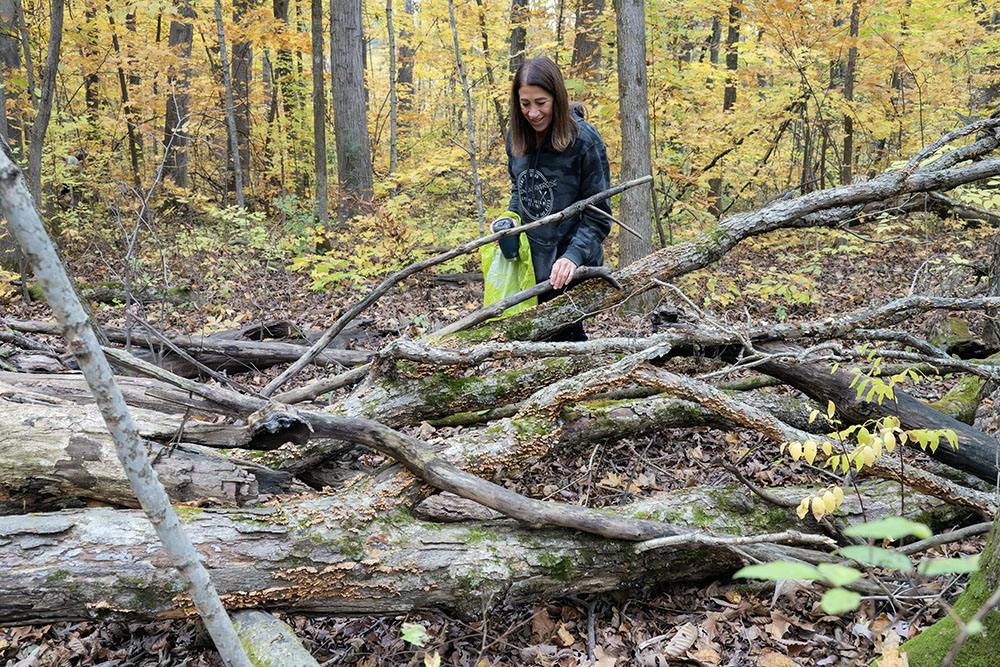
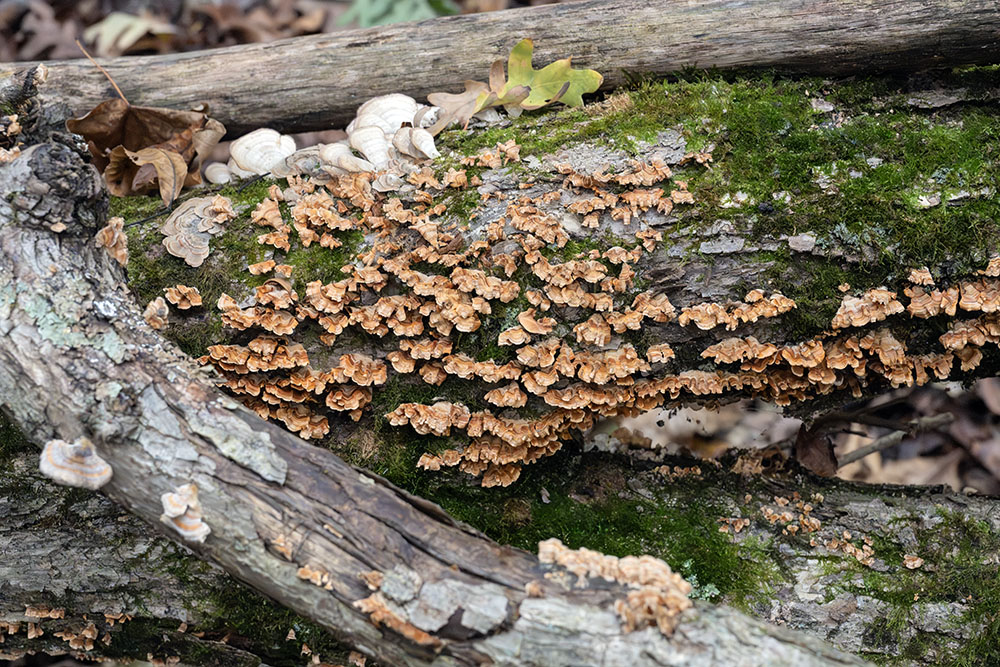
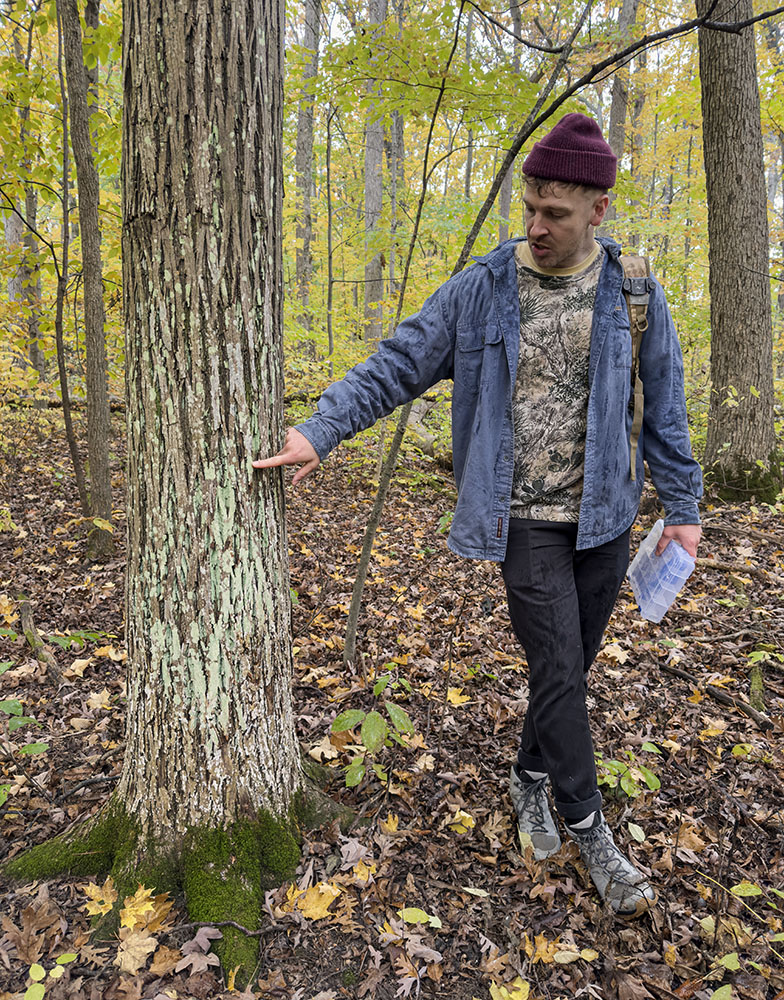
Our hunt took the group deep into a 60-acre section of Muskego Park identified as the Hardwood State Scientific Area. It is an old-growth southern dry-mesic forest dominated by white and red oaks. But it is highly diverse. There are a significant number of sugar maples—which were largely responsible for the golden glow in the forest—along with many other species such as bitternut hickory, shagbark hickory, butternut, walnut, white ash, basswood, black cherry, and ironwood. The DNR website waxes eloquent about the spring ephemeral wildflowers, but has nothing to say about wealth of fungi that our band of foragers was finding all around us.
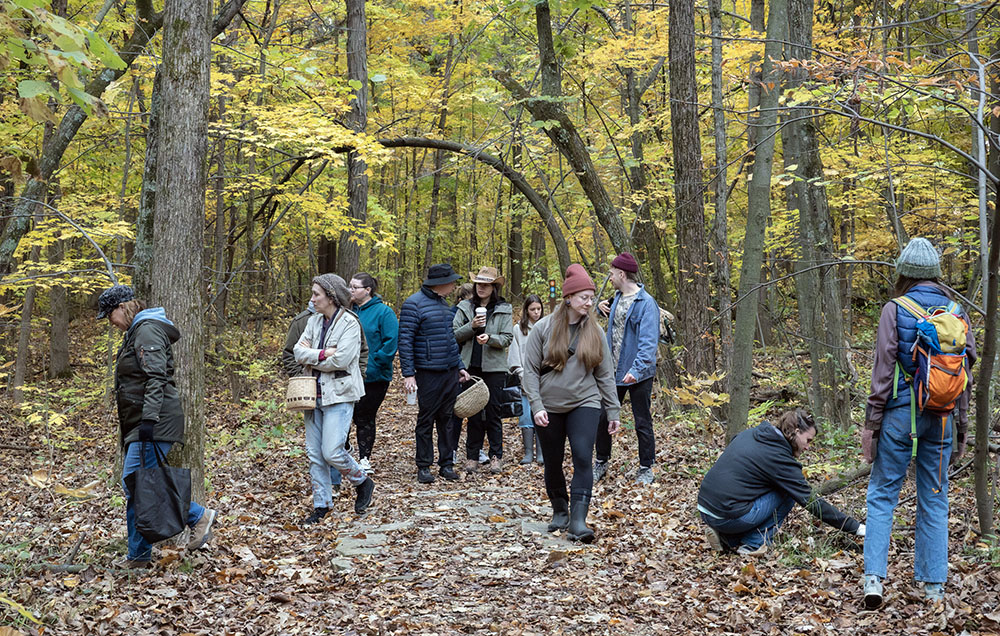
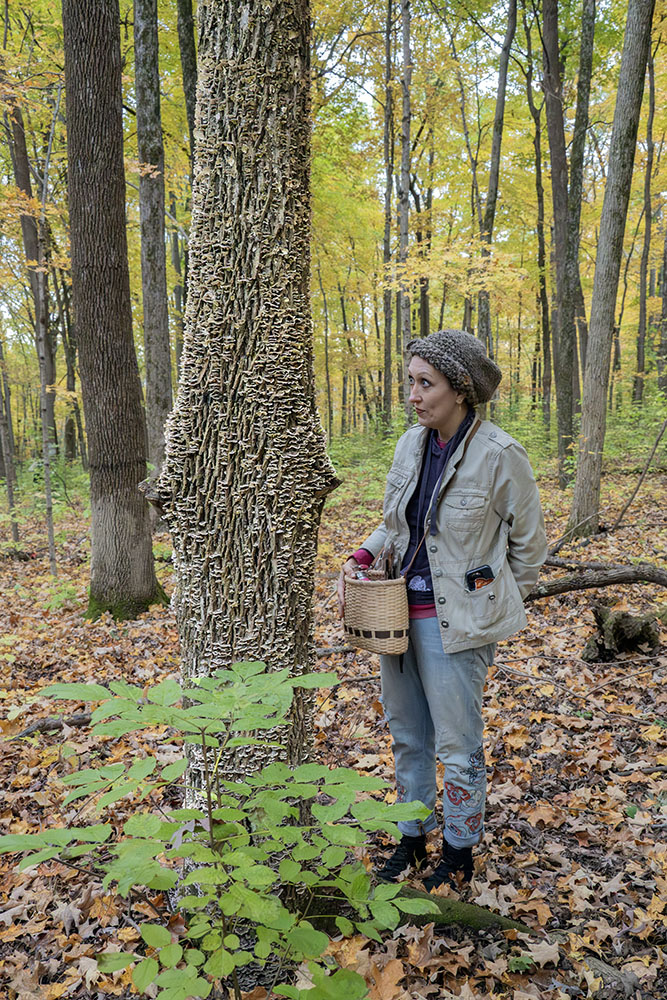
After about an hour the sky made good on its threat of rain. At first it was a light drizzle that no one seemed to mind. The search went on uninterrupted. Gradually, though, it intensified until I became more concerned about shielding my camera than taking pictures with it. Although most of the other participants were better prepared for rain than I was, we all moved along faster in order to return to the picnic shelter.
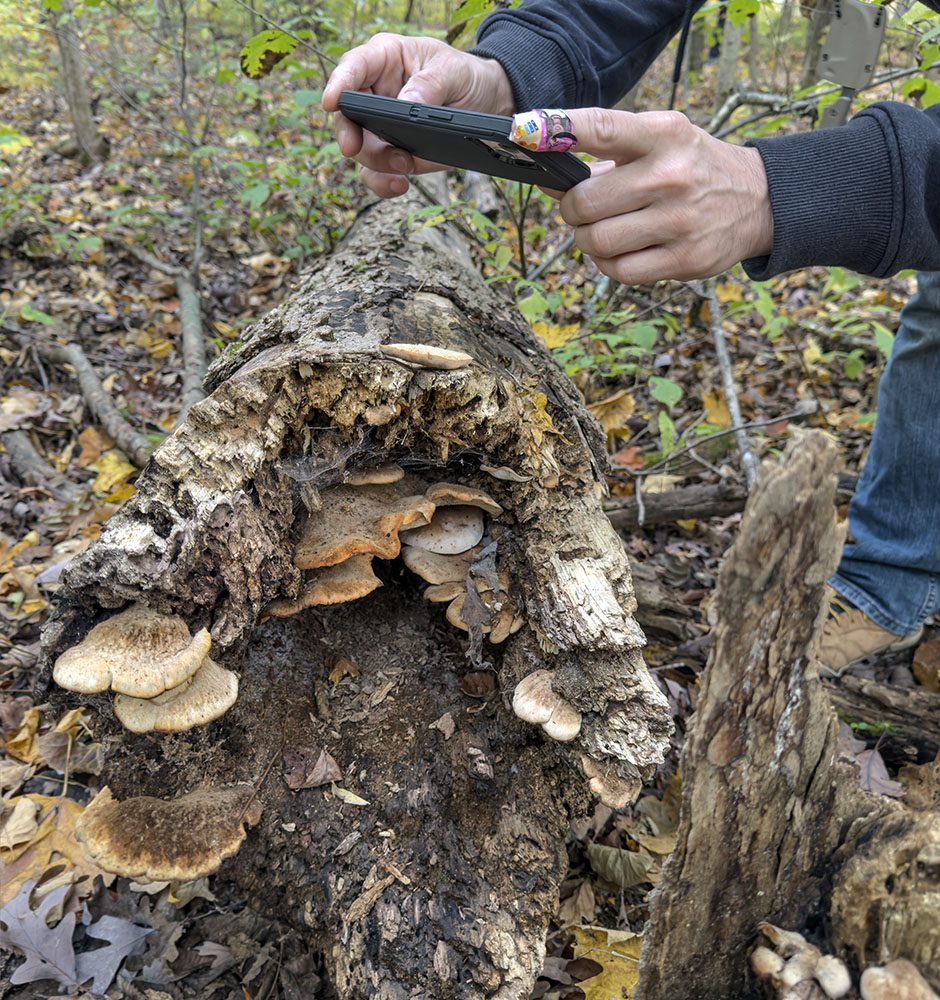
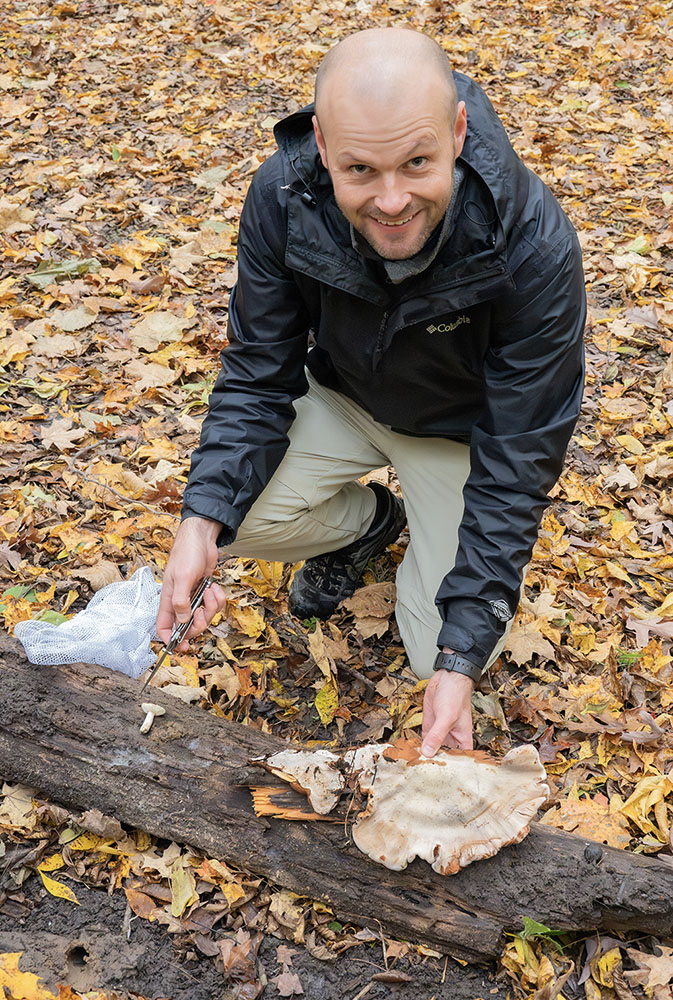
When we got there everyone laid out their finds on one of the tables for show and tell. Brennon did most of the telling. He held up a variety of the found fungi, named each one and explained a little bit about it, whether it was edible or not, and so forth. He explained that there are a couple ways to categorize the mushrooms we found: “The first way would be to group the mushrooms based simply on similarities in their appearance: mushrooms that all have a cap, a central stem, and gills are lumped into one group called the “agarics”, whereas mushrooms that grow in a shelf-like form from wood and have small pores on their underside rather than gills are called “polypores.” Agarics and polypores are by no means the only forms out there—there are dozens of different forms from corals to crusts and from boletes to puffballs and truffles.” *
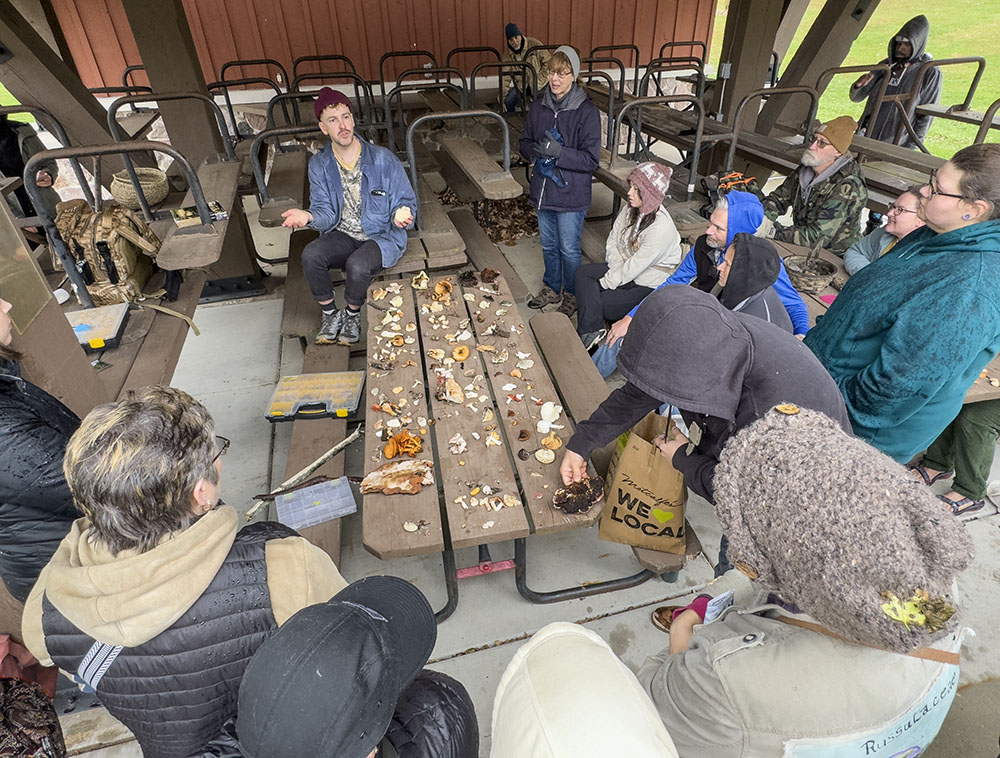
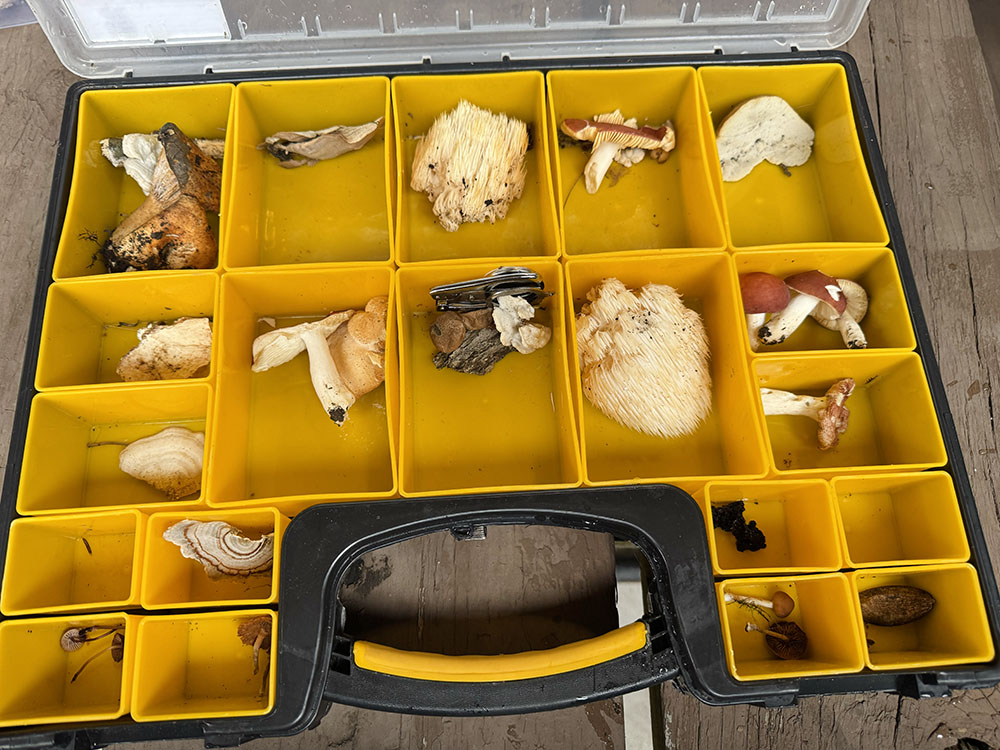
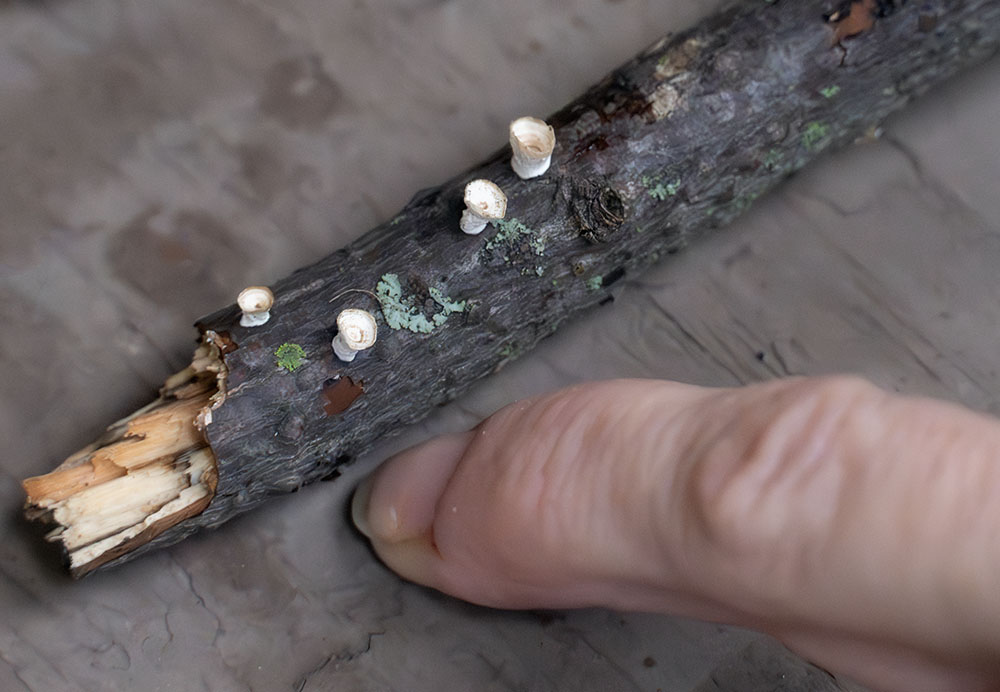
The foray was sponsored by the Wisconsin Mycological Society (WMS), which is dedicated to the study and enjoyment of mushrooms and other fungi throughout the state of Wisconsin. This was an example of a “Day-out Foray,” which takes place over two or three hours. WMS also holds weekend “Retreat Forays.” Not only are WMS’s forays held to help people learn about fungi they might find in Wisconsin’s forests, but WMS gets special permission from the DNR to make these collections because we, as foray participants, are coincidentally conducting biodiversity surveys, acting as citizen scientists to help the DNR inventory fungal life. “WMS makes a list of the species collected and shares them with the DNR. Some of the more interesting or obscure fungi are even saved for further testing with advanced methods like DNA sequencing and DNA barcoding through WMS’s partnership with University of Wisconsin-La Crosse. Those fungi are photographed and documented on the social platform iNaturalist: Muskego Park Foray 2025 – iNaturalist.” *
For more information go to the WMS website.
Note: Check the rules for foraging before collecting specimens in a park. Some parks and park systems (such as Milwaukee County Parks) prohibit foraging.
* These quotes were provided in a follow up email by Brennon Strnad, Secretary of the Wisconsin Mycological Society. I want to thank Brennon for leading the foray and for his follow-up help with plant identification.
For more information about Muskego Park go to our Find-a-Park page.
Related stories:
Fantastic fungi are among the Treasures of OZ!
Wetland Monitoring: Citizen scientists join in the fun! (Muskego Park)
Eddee Daniel, writer/photographer, is a board member of Preserve Our Parks, the Project Director of A Wealth of Nature, and editor of The Natural Realm blog. Read more or subscribe at awealthofnature.org. Also available by arrangement for group presentations and guided tours.
The Natural Realm blog is part of A Wealth of Nature, which is a project of Preserve Our Parks.
About Preserve Our Parks
Preserve Our Parks, Inc. is an independent nonprofit organization dedicated to the preservation of parks and green spaces. Our mission: To advocate for and promote Milwaukee area parks and open spaces and to strive to protect the tenets of Wisconsin’s Public Trust Doctrine.
For more than 25 years, we have been a leader in advocating for the protection of Milwaukee County park lands, halting many proposals to develop, privatize, or sell local parkland and lakefront spaces. More information about POP, including past accomplishments, is available at www.preserveourparks.org.
One thought on "An official foray finds a wealth of fungi at Muskego Park"
Comments are closed.
Great story about our day at Muskego park!
Thank you!
Great way to end 2025. Looking forward to 2026!